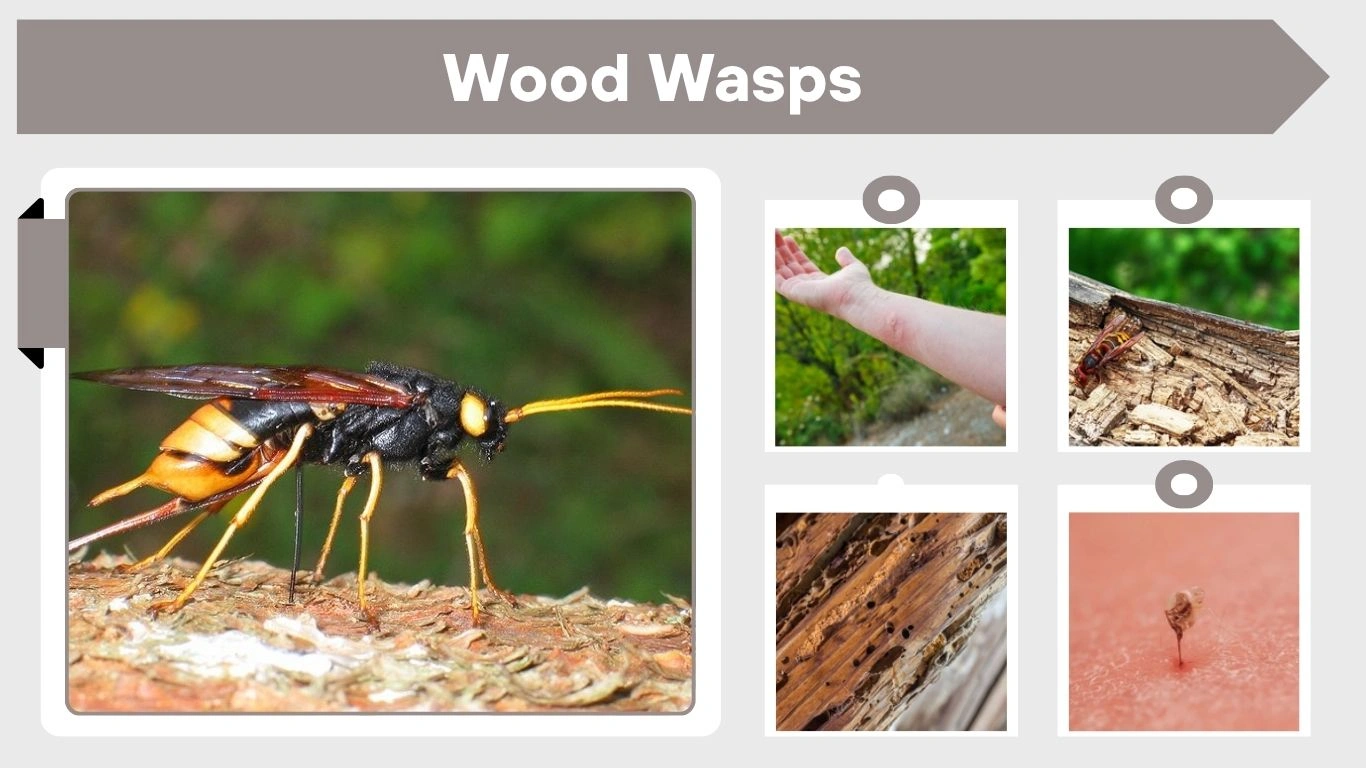
Wood wasps are often misunderstood insects that people notice around wooden structures, trees, or firewood. Many assume these insects eat wood or cause serious damage like termites, but the reality is different. Understanding their behavior, appearance, and impact can help you respond appropriately without unnecessary concern. This guide explains what wood wasps are, why they interact with wood, and what you should do if you find them in or around your property.
What Are Wood Wasps?
Wood wasps, also known as horntail wasps, belong to the Siricidae family. Unlike common wasps, they have a more cylindrical body and lack the narrow waist typically seen in stinging wasps. These insects are commonly found in forests and areas with abundant timber, where they play a role in natural wood decomposition.
Common Types of Wood Wasps
- Sirex wood wasp (one of the most studied species)
- Giant horntail wood wasp (large and noticeable)
- European wood wasp (invasive in some regions)
- Blue or black wood wasps (various color variations)
Where They Are Commonly Found
- Dead or dying trees in forests
- Stacked firewood or lumber piles
- Wooden fences, decks, and untreated structures
- Regions like Europe, North America, and parts of Asia
Do Wasps Eat Wood or Just Chew It?
One of the most common questions is whether wood wasps actually eat wood. The answer is no—they do not consume wood like termites. Instead, they interact with wood in a different way that often leads to confusion.
Wood wasps drill into wood primarily to lay their eggs. When the larvae hatch, they do not feed on the wood itself. Instead, they rely on a symbiotic fungus introduced by the female wasp during egg-laying. This fungus breaks down the wood fibers, making it easier for the larvae to survive. This process can give the impression that the insects are eating wood, but in reality, they are feeding on the fungus.
Difference Between Wood Wasps and Other Insects
- Paper wasps chew wood fibers to build nests
- Termites consume wood as a food source
- Carpenter bees tunnel into wood but do not eat it
Why Are Wasps Attracted to Wood?

Wasps are often seen around wooden surfaces, which raises concerns for homeowners. However, their attraction to wood is usually linked to environmental factors rather than feeding behavior.
Wood wasps are particularly drawn to wood that is soft, damp, or already weakened. This makes it easier for them to drill into the surface and deposit their eggs. Untreated wood is especially vulnerable because it lacks protective coatings that deter insects. Additionally, the natural scent of sap or decay can attract these insects, signaling a suitable place for reproduction.
In some cases, other types of wasps may also interact with wood, but for different reasons. For example, paper wasps scrape wood fibers to construct their nests, which can make it seem like they are damaging the material. Understanding this distinction helps avoid misidentifying the problem and applying the wrong solution.
How to Identify a Wood Wasp

Correct identification is important because wood wasps are often confused with more harmful pests. Their appearance is distinct once you know what to look for, and recognizing these features can prevent unnecessary alarm.
Physical Characteristics
- Long, cylindrical body shape
- No narrow “waist” like typical wasps
- Strong wings and slow flight pattern
- A pointed rear end, often mistaken for a stinger
Color and Size Variations
- Black wood wasps with glossy bodies
- Black and white patterned species
- Metallic blue wood wasps
- Large species reaching several centimeters in length
Signs of Wood Wasp Infestation
Spotting the signs of wood wasps early can help you determine whether action is needed. Unlike termites, their activity is usually easier to notice and less destructive overall.
Common Indicators
- Small, round exit holes in wood surfaces
- Fine sawdust (frass) near wooden structures
- Adult wasps emerging from wood
- Weak or slightly damaged timber areas
Where You Might Notice Them
- Firewood stored near your home
- Wooden beams, fences, or decks
- Dead tree trunks or fallen logs
- Lumber that has been exposed to moisture
Wood Wasp Damage: How Serious Is It?

Wood wasp damage is generally much less severe than that caused by termites or carpenter ants. These insects typically target wood that is already dead, dying, or untreated. Because of this, their presence often indicates existing wood conditions rather than being the primary cause of damage.
In most cases, the impact is cosmetic or minor. The tunnels created by larvae can slightly weaken wood, but this rarely leads to structural failure. However, if large numbers of wood wasps infest the same area over time, the cumulative effect may become noticeable.
Wood Wasp Damage vs Other Pests
- Termites cause extensive structural destruction
- Carpenter ants hollow out wood for nesting
- Wood wasps mainly affect non-structural or weakened wood
Do Wood Wasps Sting or Bite?

Many people worry about the risk of being stung when they see large wood wasps. While they may look intimidating, their behavior is very different from aggressive wasp species. Understanding their defensive habits can help reduce fear and prevent unnecessary reactions.
Can Wood Wasps Sting?
- Only females can sting, using a modified egg-laying organ
- Stings are rare and usually occur only if handled
- They are not aggressive or territorial
- Most people never experience a sting
Do Wood Wasps Bite?
- Wood wasps do not bite humans
- Their mouthparts are not designed for biting people
- They focus entirely on wood and reproduction
Are Wood Wasps Dangerous?
Wood wasps may appear large and threatening, but they are generally harmless to humans and pets. Unlike social wasps such as yellowjackets, they do not defend nests or attack in groups. Their primary goal is reproduction, not aggression.
For most people, wood wasps pose very little risk. Even when disturbed, they tend to fly away rather than confront a threat. The only real concern is for individuals who are highly allergic to insect stings, though such cases are uncommon with wood wasps.
Wood Wasp Life Cycle
Understanding the life cycle of wood wasps helps explain why they appear suddenly in wooden materials. Their development takes place mostly inside wood, which is why infestations often go unnoticed until adults emerge.
Stages of Development
- Eggs are laid deep inside wood by the female
- Larvae hatch and feed on fungus within the wood
- Pupation occurs inside tunnels
- Adult wasps emerge through exit holes
How Long They Live
- Larval stage can last months or even years
- Adult lifespan is short, usually a few weeks
- Most of their life is spent hidden inside wood
How to Get Rid of Wood Wasps

If you notice wood wasps around your home, the solution often involves addressing the wood itself rather than the insects directly. Since they rely on specific conditions, removing those conditions is the most effective approach.
Simple Removal Methods
- Remove and discard infested wood
- Avoid storing untreated firewood indoors
- Keep wooden materials dry and well-ventilated
Professional and Chemical Control
- Apply borate-based wood treatments
- Use insecticides in severe infestations
- Contact pest control professionals if needed
How to Prevent Wood Wasps in Wood
Prevention is the best strategy when dealing with wood wasps. By making your environment less attractive to them, you can significantly reduce the chances of infestation.
Effective Prevention Tips
- Seal and treat exposed wood surfaces
- Store firewood away from your home
- Use pressure-treated or kiln-dried lumber
- Regularly inspect wooden structures
FAQs
Do wood wasps eat wood?
Wood wasps do not eat wood. They drill into it to lay eggs, and their larvae feed on fungus that grows inside the wood rather than the wood itself.
Can wood wasps sting humans?
Yes, female wood wasps can sting, but they are not aggressive. Stings are rare and usually only happen if the insect is handled or threatened.
Why is a wasp chewing wood on my house?
This is usually a paper wasp collecting wood fibers to build its nest, not a wood wasp burrowing into the structure.
Are wood wasps harmful to homes?
They typically infest dead or untreated wood, so the damage is usually minor and not structurally dangerous.
How do you stop wasps from burrowing into wood?
Seal and treat wood, keep it dry, and remove any infested materials. Proper storage and maintenance are key to prevention.