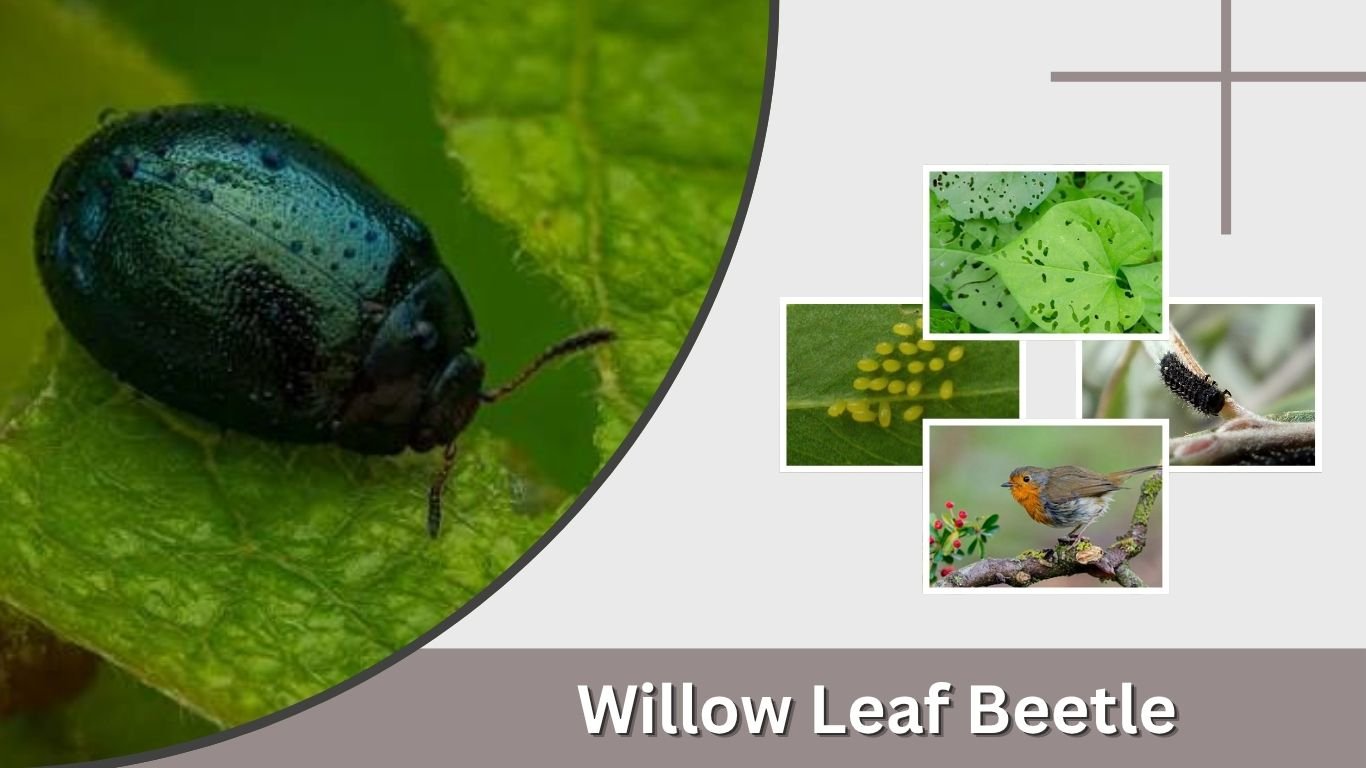
The willow leaf beetle is a small, leaf-feeding insect that commonly attacks willow trees and sometimes other related plants. Both adults and larvae damage foliage by chewing holes and removing soft leaf tissues, leaving leaves brown or skeletonized. Heavy infestations can weaken young trees and reduce their overall appearance. Several willow leaf beetle species exist, including the imported willow leaf beetle and Sierra willow leaf beetle. Understanding their identification, life cycle, and feeding behavior is essential for effective management. This guide covers willow leaf beetle damage, larvae, treatment, and natural control methods.
What Is a Willow Leaf Beetle?
Willow leaf beetles are small insects belonging to the family Chrysomelidae. They primarily feed on willow trees, although certain species also attack poplars, cottonwoods, and related plants.
The name willow leaf beetle refers to several species rather than one specific insect. Their appearance varies from metallic blue or green to reddish-brown or dark gray.
Most adults spend their lives near suitable host plants. Both adults and larvae feed on foliage, occasionally causing extensive damage during population outbreaks.
How to Identify a Willow Leaf Beetle
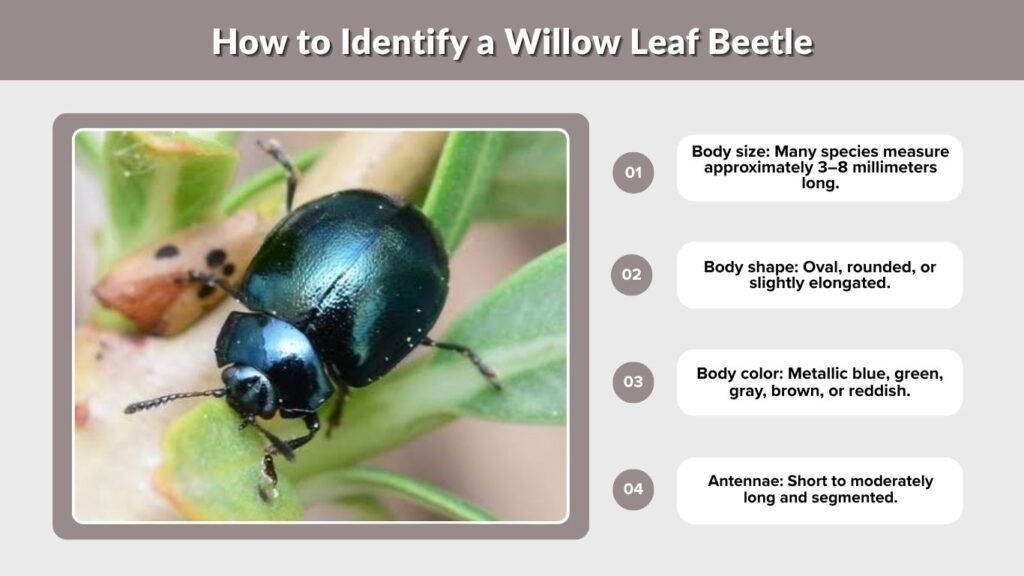
Willow leaf beetles are generally small, oval-shaped insects with hardened wing covers. Their coloration and markings depend on the species, making accurate identification important.
Adult imported willow leaf beetles are particularly recognizable by their shiny blue-black or metallic green bodies.
Willow Leaf Beetle Identification Features
- Body size: Many species measure approximately 3–8 millimeters long.
- Body shape: Oval, rounded, or slightly elongated.
- Body color: Metallic blue, green, gray, brown, or reddish.
- Wing covers: Smooth or finely textured, sometimes with contrasting markings.
- Antennae: Short to moderately long and segmented.
- Feeding behavior: Adults chew holes in willow leaves, while larvae often skeletonize foliage.
Examining leaf damage alongside the insect’s appearance can help distinguish willow leaf beetles from other garden pests.
Common Types of Willow Leaf Beetles
Several beetle species feed on willow foliage across North America and Europe. Their appearance, geographic distribution, and feeding habits differ.
Common Willow Leaf Beetle Species
- Imported Willow Leaf Beetle (Plagiodera versicolora): A small metallic blue-green beetle that feeds on willow, cottonwood, and poplar foliage.
- Sierra Willow Leaf Beetle (Chrysomela aeneicollis): A western North American species commonly associated with willows in mountain habitats.
- Blue Willow Beetle (Phratora vulgatissima): A small, dark metallic species that damages willow foliage, particularly in Europe.
- Gray Willow Leaf Beetle (Tricholochmaea decora): A grayish-brown species that sometimes causes noticeable defoliation.
- Cottonwood Leaf Beetle (Chrysomela scripta): A yellowish beetle with dark markings that feeds on cottonwoods, poplars, and willows.
Correct species identification helps gardeners understand the potential damage and suitable control methods.
Imported Willow Leaf Beetle Identification
The imported willow leaf beetle (Plagiodera versicolora) is one of the most familiar willow-feeding beetles in eastern North America.
Adults typically measure around 3–5 millimeters long and have rounded, metallic blue or greenish-black bodies.
They lay clusters of bright yellow eggs on leaf undersides. Their larvae feed together, removing soft leaf tissues and leaving a skeletonized appearance.
This species originated outside North America and has become established in numerous regions. It is especially noticeable on ornamental willows during warmer months.
Willow Leaf Beetle Larvae and Eggs
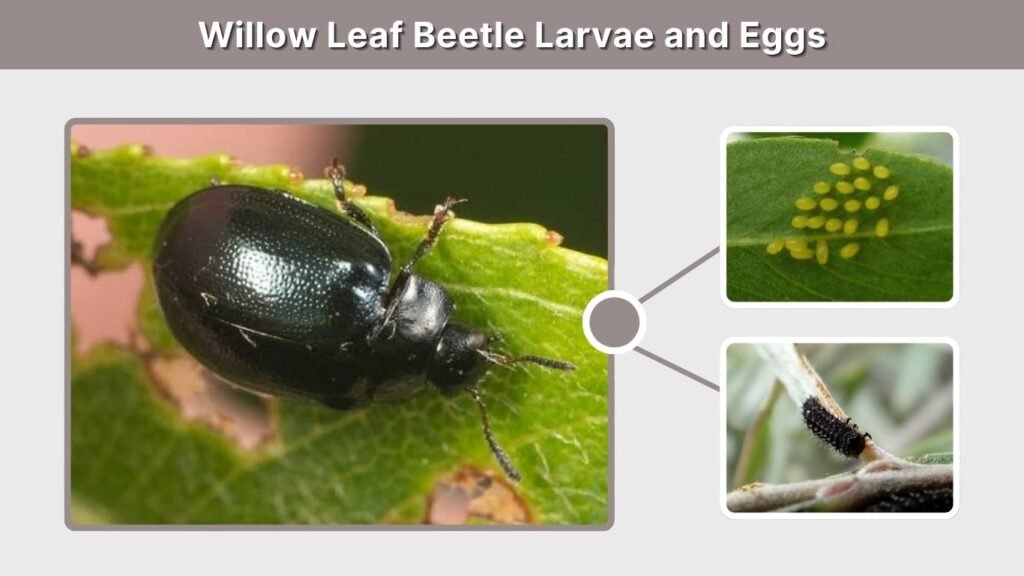
Willow leaf beetle larvae look different from adults. Depending on the species, they may be black, grayish, yellowish, or marked with small bumps.
The larvae of imported willow leaf beetles commonly have dark heads and segmented bodies with rows of raised markings.
Where Do Willow Leaf Beetles Lay Eggs?
Female beetles generally deposit eggs on suitable host plants, often beneath leaves. Their eggs may be yellow, orange, or pale-colored, depending on the species.
After hatching, young larvae begin feeding on leaf tissues. Some larvae produce defensive chemical secretions that discourage predators.
Larval feeding is particularly damaging because groups can remove large areas of soft leaf tissue within a relatively short period.
Willow Leaf Beetle Life Cycle
Willow leaf beetles undergo complete metamorphosis, developing through egg, larva, pupa, and adult stages.
Their seasonal development varies by species, geographic location, and temperature.
How Long Does Their Life Cycle Last?
Imported willow leaf beetles commonly overwinter as adults beneath loose bark, among fallen leaves, or in other protected outdoor locations.
During spring, adults return to host plants, feed, mate, and deposit eggs. Emerging larvae consume foliage before entering the pupal stage.
New adults emerge and continue feeding. Imported willow leaf beetles may produce several generations annually in suitable climates.
In contrast, the Sierra willow leaf beetle generally produces one generation annually in its mountain habitats.
What Damage Do Willow Leaf Beetles Cause?
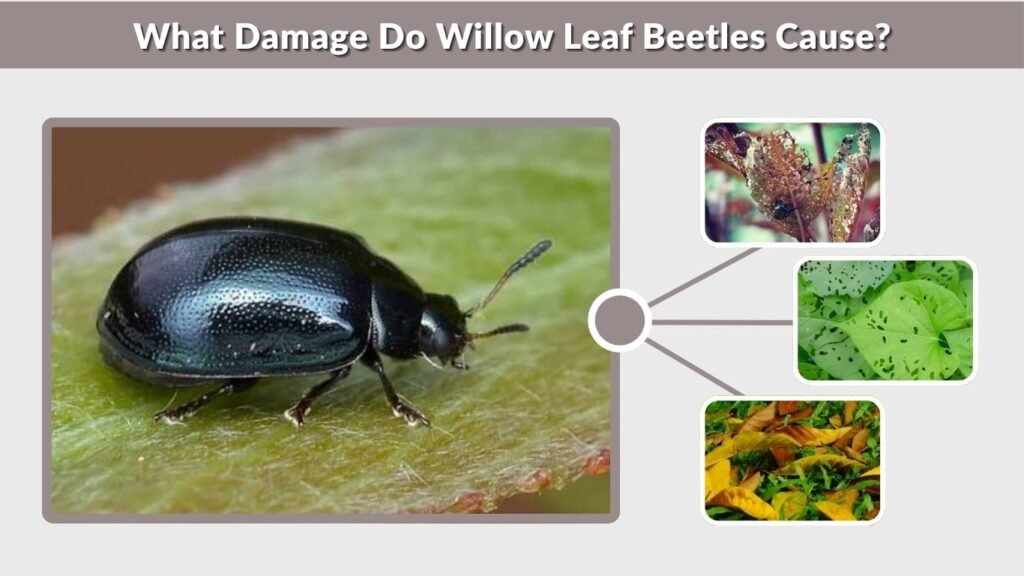
Willow leaf beetles damage trees primarily by feeding on foliage. Adults create holes and irregular leaf edges, while larvae remove soft tissues between veins.
Heavy feeding can weaken trees and reduce their ability to produce energy through photosynthesis.
Common Signs of Willow Leaf Beetle Damage
- Skeletonized leaves: Larvae remove soft tissues, leaving visible veins.
- Irregular holes: Adult beetles chew openings through foliage.
- Brown leaves: Damaged leaf surfaces dry and become discolored.
- Premature leaf drop: Heavily damaged leaves may fall early.
- Visible larvae: Groups of dark larvae gather on affected leaves.
- Reduced growth: Repeated defoliation can weaken young or stressed trees.
Healthy mature willows often tolerate moderate damage, but repeated severe infestations may cause significant decline.
Can Willow Leaf Beetles Kill Trees?
Willow leaf beetles can contribute to tree death when severe infestations occur repeatedly. However, occasional feeding rarely kills healthy, established trees.
Young willows and trees already weakened by drought, poor soil conditions, or other problems are more vulnerable.
Repeated defoliation reduces stored energy and may slow growth. Maintaining healthy roots, adequate moisture, and suitable growing conditions helps trees recover from feeding damage.
How to Get Rid of Willow Leaf Beetles Naturally
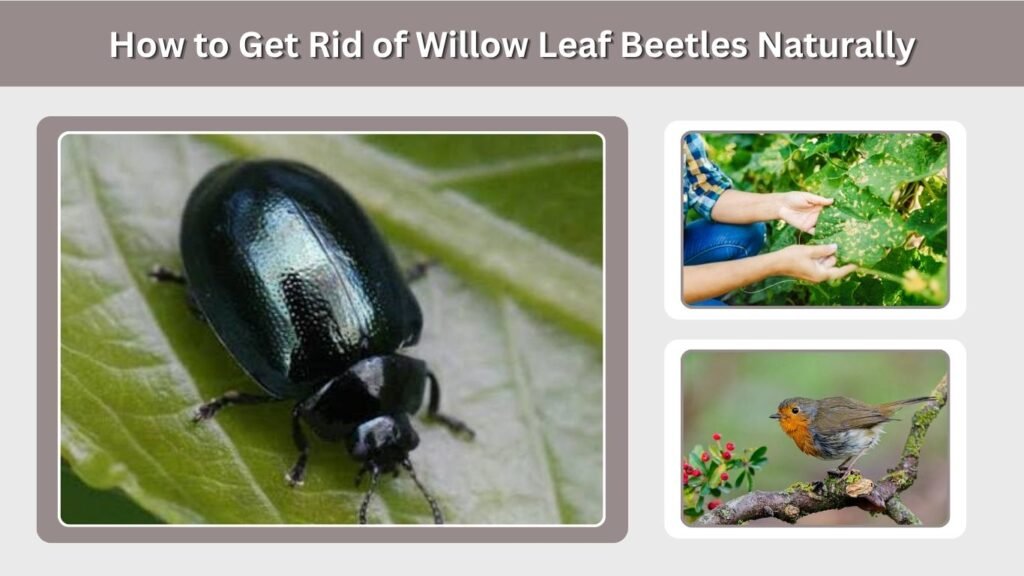
Natural willow leaf beetle control focuses on reducing damaging populations while protecting beneficial insects.
Minor infestations usually require little intervention. However, young trees experiencing repeated leaf loss may benefit from targeted management.
Natural Willow Leaf Beetle Control Methods
- Handpick beetles: Remove accessible adults and larvae from small trees.
- Inspect leaf undersides: Check for eggs and newly hatched larvae regularly.
- Remove egg clusters: Carefully remove accessible eggs when practical.
- Encourage natural predators: Protect lady beetles, predatory bugs, and other beneficial insects.
- Maintain tree health: Provide adequate water during dry weather.
- Monitor new growth: Inspect developing leaves for early feeding damage.
These methods are most practical for small ornamental willows and light infestations.
Willow Leaf Beetle Treatment and Management
Willow leaf beetle treatment depends on the species, infestation severity, and tree condition.
For imported willow leaf beetles, monitoring eggs and young larvae during spring can help identify the best treatment period.
Do Willow Leaf Beetle Sprays Work?
Appropriately labeled insecticides may reduce willow leaf beetle populations when applied at suitable growth stages. Products containing spinosad or other registered active ingredients may be options where permitted.
However, pesticide availability and effectiveness vary by location and species.
Applications should target affected foliage, particularly leaf undersides where young larvae feed.
Avoid spraying flowering plants when pollinators are active. Always follow product labels and consult local extension recommendations before treatment.
FAQs
1. Are Willow Leaf Beetles Harmful to Humans?
Willow leaf beetles are generally harmless to humans and household pets. They do not sting and are not aggressive. Their main concern is plant damage, particularly when adults and larvae feed extensively on willow leaves during large infestations.
2. What Do Willow Leaf Beetle Larvae Look Like?
Willow leaf beetle larvae are small, segmented insects that may appear black, gray, or yellowish with darker markings. Many species have raised bumps along their bodies. They commonly feed in groups on leaf surfaces, causing noticeable skeletonization.
3. How Do You Control Willow Leaf Beetles Naturally?
Natural control methods include handpicking beetles, removing accessible egg clusters, encouraging predators, and maintaining healthy trees. Inspecting leaves regularly helps identify larvae before extensive damage develops. Most established willow trees do not require treatment for minor infestations.
4. What Is the Best Treatment for Willow Leaf Beetles?
The best treatment depends on the beetle species and infestation severity. Small populations can often be managed without pesticides. Severe infestations may require appropriately labeled insecticides targeting young larvae, ideally following recommendations from a local agricultural extension service.
5. Do Willow Leaf Beetles Kill Willow Trees?
Willow leaf beetles rarely kill healthy mature trees after a single infestation. However, repeated severe defoliation can weaken trees, reduce growth, and contribute to decline. Young trees and drought-stressed willows are especially vulnerable to serious feeding damage.