
Scarab beetles eat a surprisingly wide range of foods. Some feed on animal dung, while others eat plant roots, leaves, flowers, fruit, fungi, or decaying wood. Their diet depends on the species and often changes as the beetle grows. A scarab grub underground may eat roots or decomposing material, while the adult beetle above ground may feed on foliage or nectar. This guide explains what scarab beetles eat as larvae and adults, which species have different diets, and how their feeding affects gardens and ecosystems.
What Do Scarab Beetles Eat?
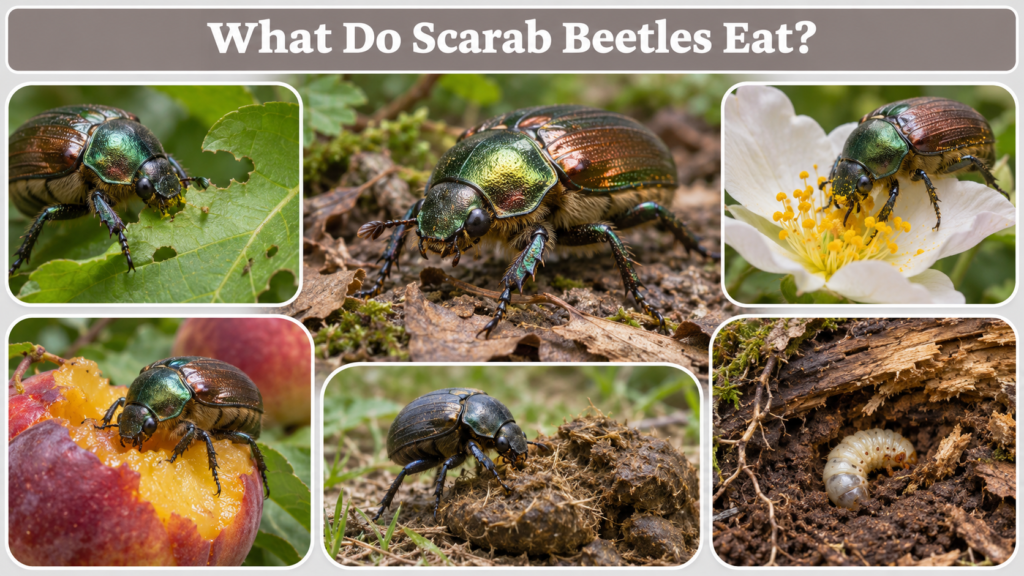
“Scarab beetle” refers to a large family of beetles, so there is no single food that all scarabs eat. Their diets include fresh plant material and decaying organic matter. Some species specialize in one food, while others eat several kinds over their lives.
Common foods include:
- Animal dung
- Plant roots and leaves
- Flowers, pollen, and nectar
- Ripe or rotting fruit
- Fungi
- Decaying wood and compost
- Carrion and other decomposing matter
This variety explains why one scarab may be helpful in a compost pile while another damages a lawn or garden plant. Identifying the species and life stage helps explain what it is eating.
What Do Scarab Beetle Grubs Eat?
Scarab larvae, often called grubs or white grubs, usually live in soil, compost, rotting wood, manure, or other protected places. Their food depends on the species: some eat living plant roots, while others feed on decaying material. Many are pale, curled into a C shape, and spend much of their development feeding underground.
Plant roots and underground plant parts
Some scarab grubs feed on the roots of grasses, garden plants, and crops. They chew roots below the soil surface, which can weaken a plant’s ability to take up water and nutrients. A damaged lawn may develop irregular brown patches or feel loose underfoot because the roots have been eaten.
Not every grub found in soil is a plant pest. The food source depends on the species and the spot where it is living. A grub among healthy grass roots may be feeding on living roots, while one in a compost heap may be consuming decomposing material.
Compost, leaf litter, and rotting wood
Other scarab larvae eat dead and decomposing plant matter. They may be found in compost, leaf litter, rotting logs, or old stumps, where they help break down organic material. Some species feed on decaying wood rather than living tree tissue. These grubs are part of the natural recycling process and generally do not harm healthy plants.
A grub’s location can provide a clue to its diet, but it may not be enough to identify the species. Different scarab grubs can look similar, so a photograph and details about where it was found can help with identification.
Dung and other decaying material
Dung beetle larvae develop on food that adults collect and bury. Depending on the beetle, this may be formed into a ball or stored in an underground chamber. The larvae feed on this supply as they grow. Some scarab larvae also eat carrion, rotting fruit, or other decomposing material.
What Do Adult Scarab Beetles Eat?
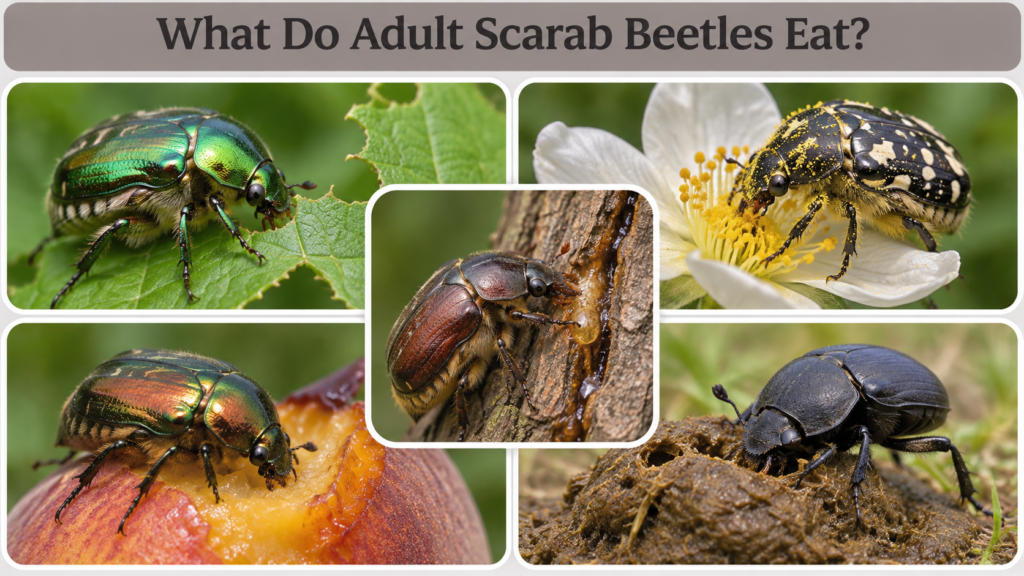
Adult scarab beetles also have varied diets. Many species eat plant material, but others specialize in dung or feed on fruit, fungi, tree sap, flowers, or nectar. Some adults feed on different foods from the grubs they were as larvae, so a beetle’s diet can change during its life cycle.
Leaves, flowers, and plant sap
Many adult chafers and leaf-feeding scarabs chew leaves or flowers. Japanese beetles, for example, feed on foliage, flowers, and fruit. Other species visit blossoms for pollen or nectar, while some feed on sap from trees.
The amount of plant damage varies. A few beetles feeding briefly may leave little noticeable harm, but large numbers can strip foliage or damage flowers. Some scarab adults are also pollinators when they visit flowers.
Fruit, fungi, and tree sap
Some scarabs eat ripe or fermenting fruit, mushrooms, and tree sap. These foods can attract beetles to orchards, woodland edges, or fruit that has fallen and begun to soften. A beetle feeding on fallen fruit is using a different food source from a species that chews living leaves.
Dung and carrion
Adult dung beetles feed mainly on animal dung. They locate it by smell and use it as food; many species also bury or roll portions to provide food for their developing young. Some other scarabs feed on carrion or related decaying materials. Dung beetles are specialized scarabs, but they do not represent the diet of the whole family.
How Scarab Diets Differ by Type
The scarab family includes many familiar beetles, and their diets vary. These examples show why the answer to “what do scarab beetles eat?” depends on the species and whether it is a larva or an adult.
| Scarab type | Typical larval food | Typical adult food |
|---|---|---|
| Dung beetles | Buried dung or dung brood balls | Animal dung |
| June beetles and chafers | Often plant roots or organic matter | Leaves, foliage, or sometimes no food |
| Japanese beetles | Plant roots as grubs | Leaves, flowers, and fruit |
| Flower chafers | Often decaying organic matter | Pollen, nectar, fruit, or flowers |
| Rhinoceros beetles | Often rotting wood or other decomposing matter | Tree sap, fruit, or other foods, depending on species |
These are broad patterns, not rules for every species. Within the scarab family, feeding habits can differ even among closely related beetles. For example, some grubs eat roots, while others develop in rotting wood or compost.
Do Scarab Beetles Eat Plants?
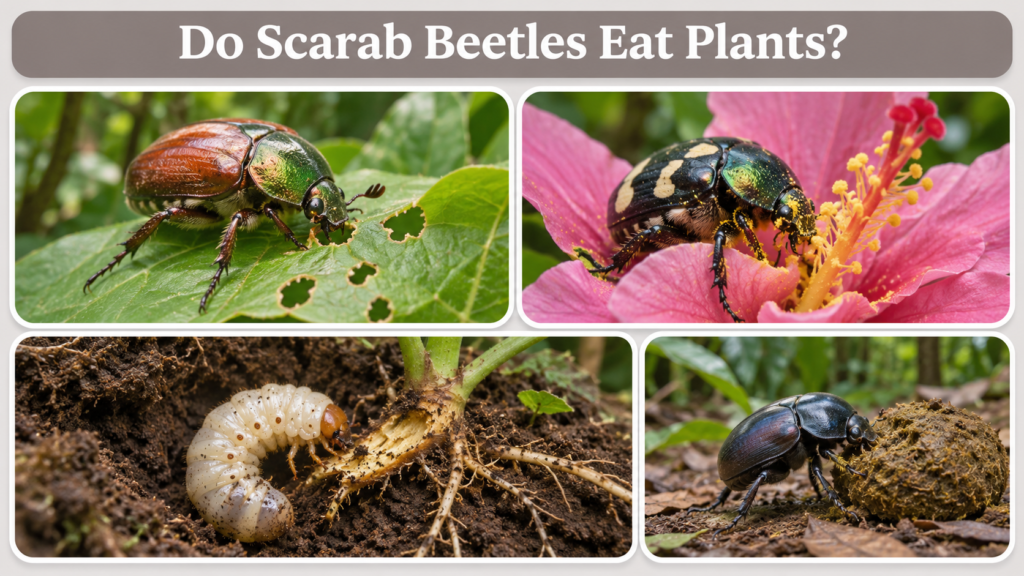
Some do, but not all. Plant-feeding scarabs may eat roots as grubs, chew foliage as adults, or feed on flowers and fruit. Other scarabs mostly consume dung, fungi, carrion, or decomposing plant material. Seeing a scarab on a plant does not necessarily mean it is eating it; the beetle could be resting or visiting a flower.
Signs of plant feeding depend on the life stage:
- Grubs may damage roots below ground, causing plants or grass to weaken.
- Adult leaf feeders may leave holes or partly eaten leaves.
- Flower feeders may chew petals or reproductive parts.
- Fruit-feeding adults may gather around ripe, damaged, or fallen fruit.
If you find grubs in a garden, consider where they were living and what nearby plants look like before deciding they are pests. Larvae in a compost pile or rotting log may be feeding on dead material rather than live roots.
Why Do Scarab Beetles Eat Dung and Decaying Matter?
Dung and decaying material provide food for many scarab species. Dung beetles feed on animal waste and move or bury portions of it. This can help break it down and return nutrients to the soil. Scarabs that feed on rotting wood, fruit, or plant debris also contribute to decomposition.
Their feeding habits can support ecosystems in several ways:
- Dung-feeding species help remove and bury animal waste.
- Wood- and compost-feeding grubs help process decomposing material.
- Flower-visiting adults may transfer pollen between blooms.
- Soil-dwelling beetles can move organic matter beneath the surface.
Some scarabs are also garden or agricultural pests, especially when root-feeding grubs become numerous. The family includes both helpful decomposers and plant-feeding species.
Frequently Asked Questions
Do all scarab beetles eat dung?
No. Dung beetles are one group within the scarab family. Other scarabs feed on plant roots, leaves, flowers, fruit, fungi, tree sap, carrion, or decaying wood. The term “scarab beetle” covers many species with different feeding habits.
What do scarab beetle larvae eat?
It depends on the species. Some scarab grubs eat grass or plant roots, while others feed on dung, compost, leaf litter, rotting wood, or carrion. Their location can offer a clue, but it does not identify their diet with certainty.
Do adult scarab beetles eat leaves?
Some adult scarabs chew leaves and other plant tissue. Others feed on flowers, fruit, nectar, sap, dung, or fungi. Adult Japanese beetles, for example, feed on leaves, flowers, and fruit, but that diet does not apply to every scarab.
Are scarab beetles harmful to gardens?
Some can be. Root-feeding grubs may weaken lawns and plants, and leaf-feeding adults can chew foliage or flowers. Other scarabs feed on compost, dung, or rotting wood and may be harmless or beneficial in those settings.
What should I feed a scarab beetle I found?
The right food depends on its species and life stage, so a general diet may not suit it. A wild beetle is usually best left where it was found. If you are caring for one, identify the species first and use care guidance specific to that beetle.