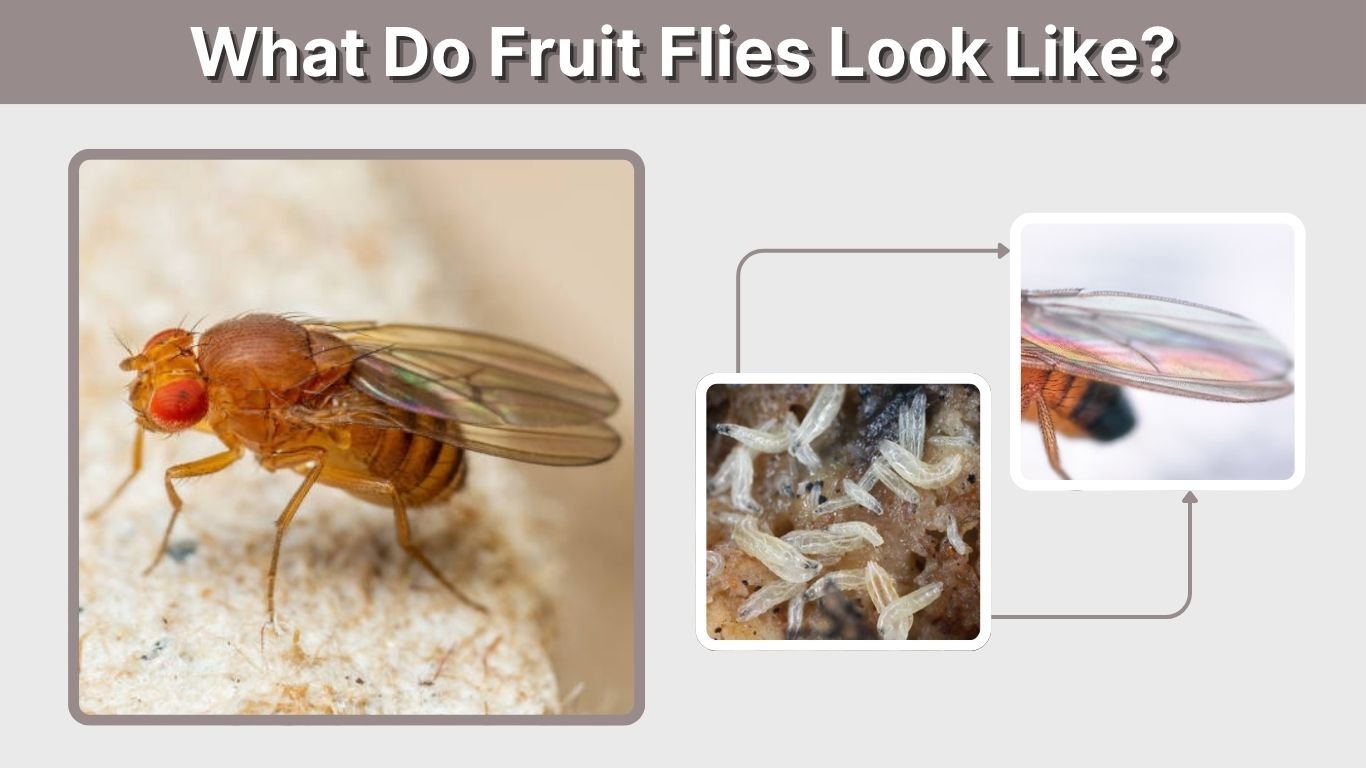
Fruit flies are tiny flying insects commonly seen hovering around ripe fruit, kitchen trash, drains, and fermented drinks. Adult fruit flies are usually tan or yellowish-brown, with rounded bodies, transparent wings, and noticeable red or dark eyes. Their small size often causes people to confuse them with fungus gnats, drain flies, or young house flies.
Correct identification is important because different small flies breed in different places. Fruit flies usually develop in fermenting food and organic residue, while similar insects may breed in soil, drains, or sewage.
What Does a Fruit Fly Look Like?
The common household fruit fly is a very small fly with a compact, oval-shaped body. Most adults measure approximately 1/8 inch long, or about 3–4 millimeters.
From a distance, fruit flies may look like tiny brown dots moving around food. When viewed closely, they have six legs, two transparent wings, short antennae, and large compound eyes.
Fruit Fly Identification Features
Look for the following characteristics:
- Approximately 1/8 inch long
- Tan, brown, yellowish, or light orange body
- Rounded or oval abdomen
- Large red, reddish-brown, or dark eyes
- One pair of clear wings
- Six thin legs
- Short antennae
- Slow, hovering flight around food
- Frequently found near fermenting organic material
The abdomen may have darker bands or markings, although these are difficult to see without magnification. Males are generally slightly smaller and may have a darker rear abdomen than females.
Fruit Fly Size
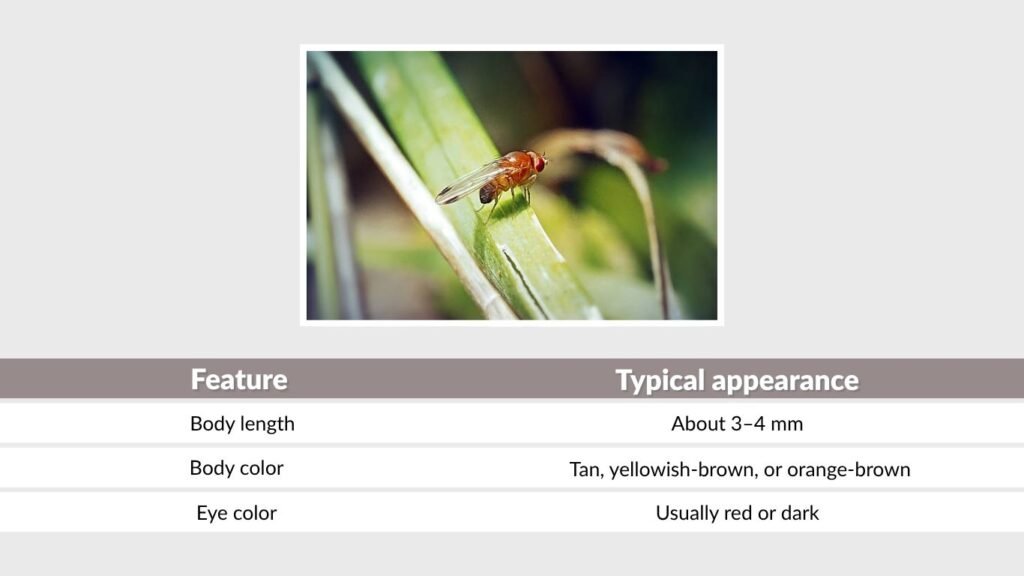
Adult fruit flies are much smaller than common house flies. Most are only 3–4 millimeters long, although their exact size varies by species, sex, nutrition, and developmental conditions.
| Feature | Typical appearance |
| Body length | About 3–4 mm |
| Body color | Tan, yellowish-brown, or orange-brown |
| Eye color | Usually red or dark |
| Wings | Clear and transparent |
| Body shape | Small, rounded, and compact |
| Flight pattern | Short, hovering movements |
Because of their tiny size, fruit flies can enter homes through window screens, small gaps, open doors, and cracks around plumbing or cabinets.
What Color Are Fruit Flies?
Most common kitchen fruit flies have light brown, tan, amber, or yellowish bodies. The abdomen often appears darker than the upper body and may contain faint horizontal bands.
Their eyes are commonly bright red, although some species and genetic varieties have dark brown or nearly black eyes. Lighting also changes their appearance. A tan fruit fly may look almost black when seen against a bright window or light-colored wall.
Fruit flies are not usually fuzzy. A visibly hairy, moth-like insect near a sink is more likely to be a drain fly.
What Do Fruit Fly Wings Look Like?
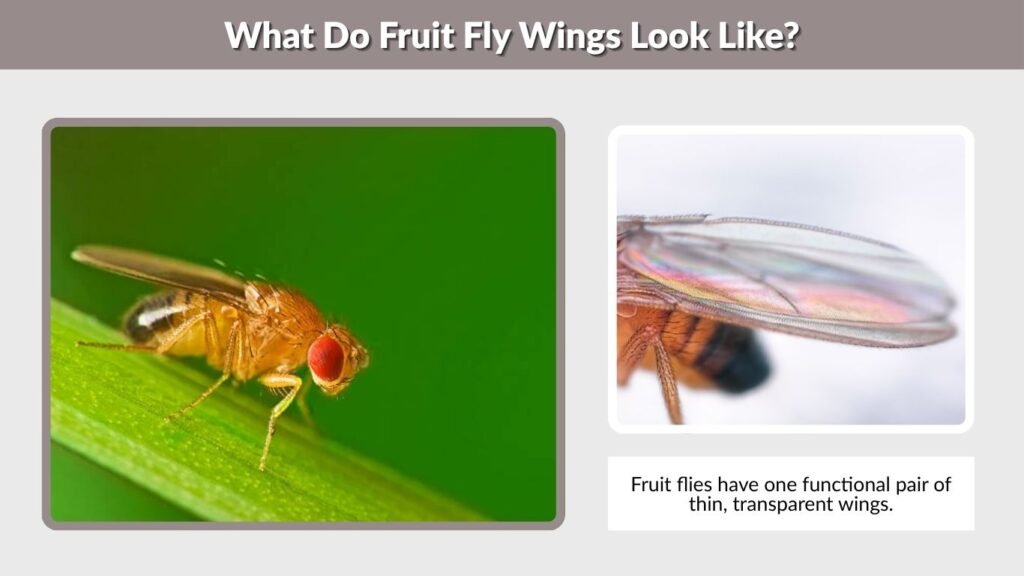
Fruit flies have one functional pair of thin, transparent wings. Their wings extend slightly beyond the abdomen when the insect is resting.
Unlike drain flies, fruit flies do not have broad, fuzzy wings. They also lack the long, narrow body and delicate appearance of fungus gnats.
Fruit flies can fly, but they are not especially strong fliers. They usually make short, irregular movements and remain close to their feeding or breeding source. They may hover around a fruit bowl before landing repeatedly on the same piece of produce.
What Do Fruit Fly Eggs Look Like?
Fruit fly eggs are extremely small and difficult to see without magnification. They are generally white or creamy and have an elongated, oval shape.
Females place their eggs on moist, fermenting organic material where newly hatched larvae can begin feeding immediately. Common egg-laying sites include:
- Damaged or overripe fruit
- Trash-can residue
- Compost
- Fermented drinks
- Dirty recycling containers
- Food buildup in drains
- Garbage disposals
- Wet cleaning cloths
- Spilled juice or soda
The eggs may look like tiny white grains, but they are much smaller than ordinary grains of rice.
What Do Fruit Fly Larvae Look Like?
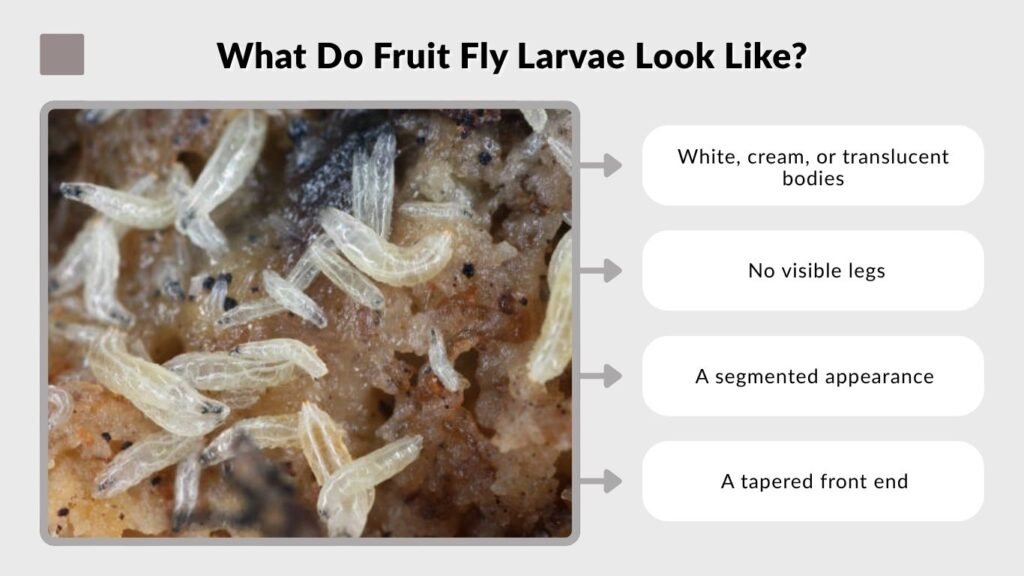
Fruit fly larvae are pale, legless maggots. Their bodies are soft, narrow, and slightly tapered at one end.
Mature larvae generally measure around 3–4 millimeters long. Newly hatched larvae are much smaller and may be nearly transparent.
Larval Identification
Fruit fly larvae commonly have:
- White, cream, or translucent bodies
- No visible legs
- A segmented appearance
- A tapered front end
- Slow wriggling movement
- Tiny dark mouth hooks
- A preference for wet, decaying material
Larvae may be found inside damaged fruit, beneath trash residue, around compost, or within fermenting liquid. They are not normally seen crawling across dry floors unless they are searching for a place to pupate.
What Do Fruit Fly Pupae Look Like?
After completing the larval stage, fruit flies form small pupal cases. Pupae are usually oval, firm, and brownish.
They may look like:
- Tiny brown seeds
- Small rice-shaped capsules
- Dark specks attached to containers
- Motionless insects stuck near food residue
Pupae often appear on relatively dry surfaces close to the larval food source. Check beneath trash-can rims, along container walls, under fruit bowls, and around the edges of spills.
Because pupae do not move, they can easily be mistaken for dirt or dried food particles.
Where Are Fruit Flies Usually Found?
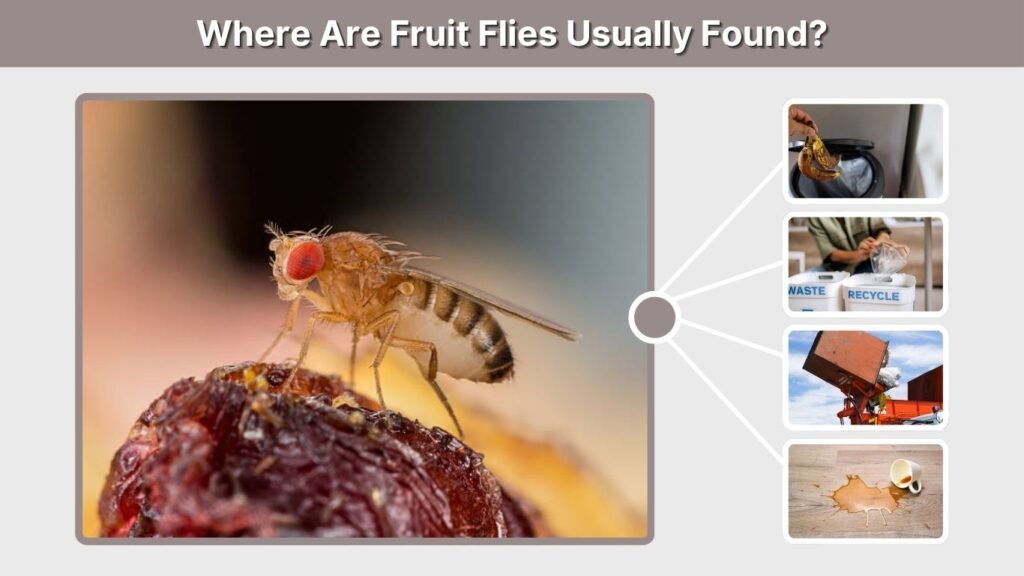
Fruit flies are strongly attracted to yeast and microorganisms growing on fermenting organic matter. They do not appear simply because fresh fruit is present. Fruit that is damaged, overripe, leaking, or beginning to ferment is much more attractive.
Common Indoor Locations
Fruit flies may gather around:
- Bananas and other ripe fruit
- Tomatoes, onions, or potatoes
- Trash cans
- Recycling bins
- Compost containers
- Sink drains
- Garbage disposals
- Beer, wine, and juice bottles
- Sourdough starter
- Kombucha
- Spilled sugary drinks
- Damp mops and cleaning cloths
Adults often rest on walls, cabinet doors, windows, and ceilings near the breeding source.
Fruit Flies vs. Fungus Gnats
Fruit flies and fungus gnats are both tiny indoor flies, but their appearance and breeding habits differ.
| Feature | Fruit fly | Fungus gnat |
| Body shape | Rounded and compact | Thin and mosquito-like |
| Color | Tan or brown | Gray or black |
| Eyes | Often red | Usually dark |
| Antennae | Short | Long |
| Legs | Relatively short | Long and delicate |
| Common location | Fruit and food waste | Moist plant soil |
Fungus gnats usually crawl or fly around houseplants. Fruit flies concentrate around food, trash, fermented drinks, and kitchen residue.
Fruit Flies vs. Drain Flies
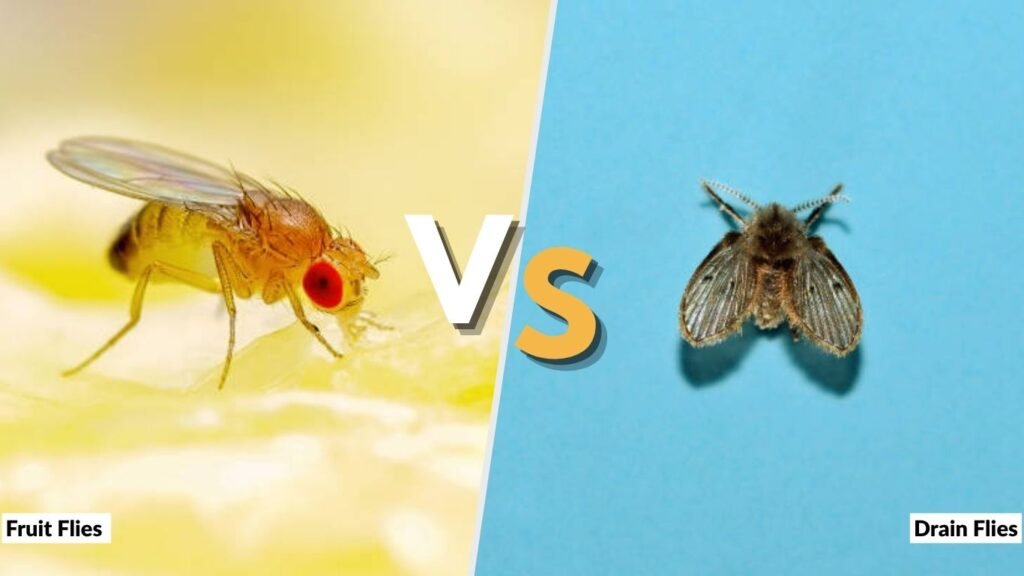
Drain flies have broader, fuzzy bodies and wings. Their wings often create a triangular or heart-shaped outline while resting.
Fruit flies have smooth bodies and clear, narrow wings. They are also stronger and more active fliers than drain flies.
Drain flies usually remain close to sinks, showers, floor drains, and sewage-related buildup. Fruit flies may visit drains, but they are also commonly found around produce, trash, and beverage residue.
Fruit Flies vs. House Flies
House flies are considerably larger than fruit flies. An adult house fly may be two or three times longer and has a gray body with dark stripes on its thorax.
Fruit flies are:
- Smaller and lighter in color
- More closely associated with produce
- Less noisy when flying
- More likely to hover in small groups
- Common around fermented liquids
A clearly visible gray fly buzzing rapidly around rooms is probably not a fruit fly.
Are Fruit Flies the Same as Gnats?
“Gnat” is an informal term used for many small flying insects. People often call fruit flies gnats because of their size, but true fungus gnats belong to different insect families.
The location of the insects provides an important identification clue. Flies around plant soil are usually fungus gnats, while flies around bananas, trash, wine, or compost are more likely to be fruit flies.
Signs of a Fruit Fly Infestation
The clearest sign is the repeated appearance of tiny tan or brown flies around food and waste. One or two flies may enter temporarily, but several adults appearing every day suggest an active breeding source.
Other signs include:
- Larvae inside damaged fruit
- Small pupal cases on container walls
- Flies emerging from trash or compost
- Adults gathering around empty bottles
- Flies returning after being trapped
- Activity near sticky food residue
Continuous activity means eggs, larvae, or pupae are probably hidden nearby.
How to Confirm Fruit Fly Identification
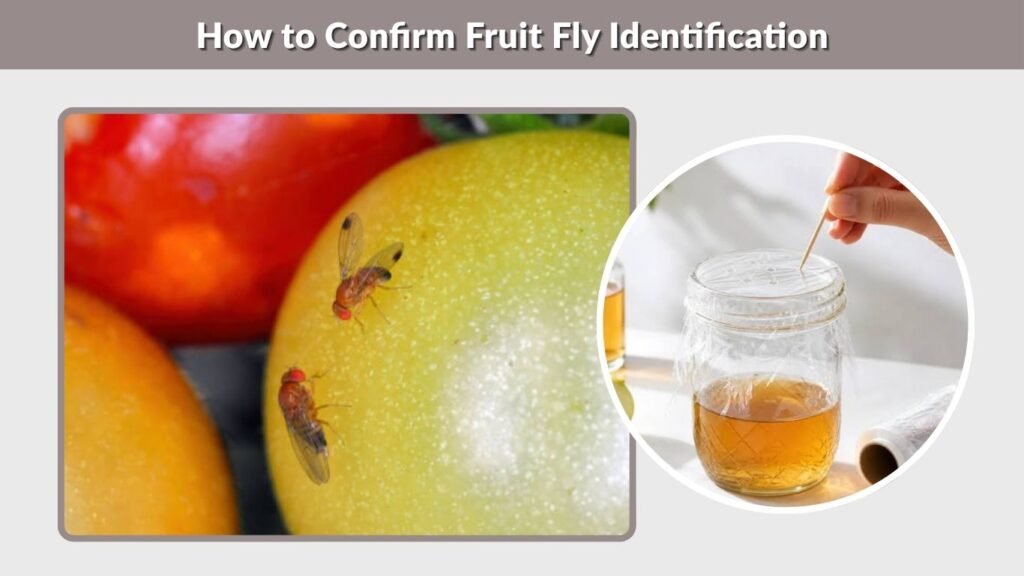
Place a small amount of apple cider vinegar or overripe fruit inside a clear container. Cover it with plastic wrap and make several tiny holes.
Fruit flies are strongly attracted to the fermenting odor. After capturing one, inspect it through the container with a flashlight or magnifying glass.
A fruit fly should have a compact tan body, short antennae, clear wings, and red or dark eyes. Long legs and antennae indicate fungus gnats, while fuzzy wings suggest drain flies.
FAQs
Can fruit flies be black?
Some fruit flies may appear dark brown or nearly black, especially in poor lighting. However, most common household species are tan or yellowish-brown. Small black flies around plant pots are more likely to be fungus gnats.
Can you see fruit flies without magnification?
Yes. Adult fruit flies are visible to the naked eye, although their smaller body features may require magnification. They usually look like tiny tan or brown dots flying around food, trash, or fermented drinks.
Do fruit flies have red eyes?
Many common fruit flies have noticeable red or reddish-brown eyes. However, eye color can vary among species and genetic varieties. Identification should also consider body shape, wings, antennae, behavior, and breeding location.
What do baby fruit flies look like?
Fruit flies do not have miniature winged babies. Newly hatched fruit flies are tiny white or translucent larvae. They feed and grow before becoming brown pupae and eventually emerging as winged adults.
Why are tiny fruit flies in my kitchen?
Tiny fruit flies usually indicate the presence of fermenting organic material. Inspect ripe produce, trash, recycling, drains, spilled drinks, compost, and hidden food beneath appliances. Removing the breeding source is more effective than killing only the visible adults.