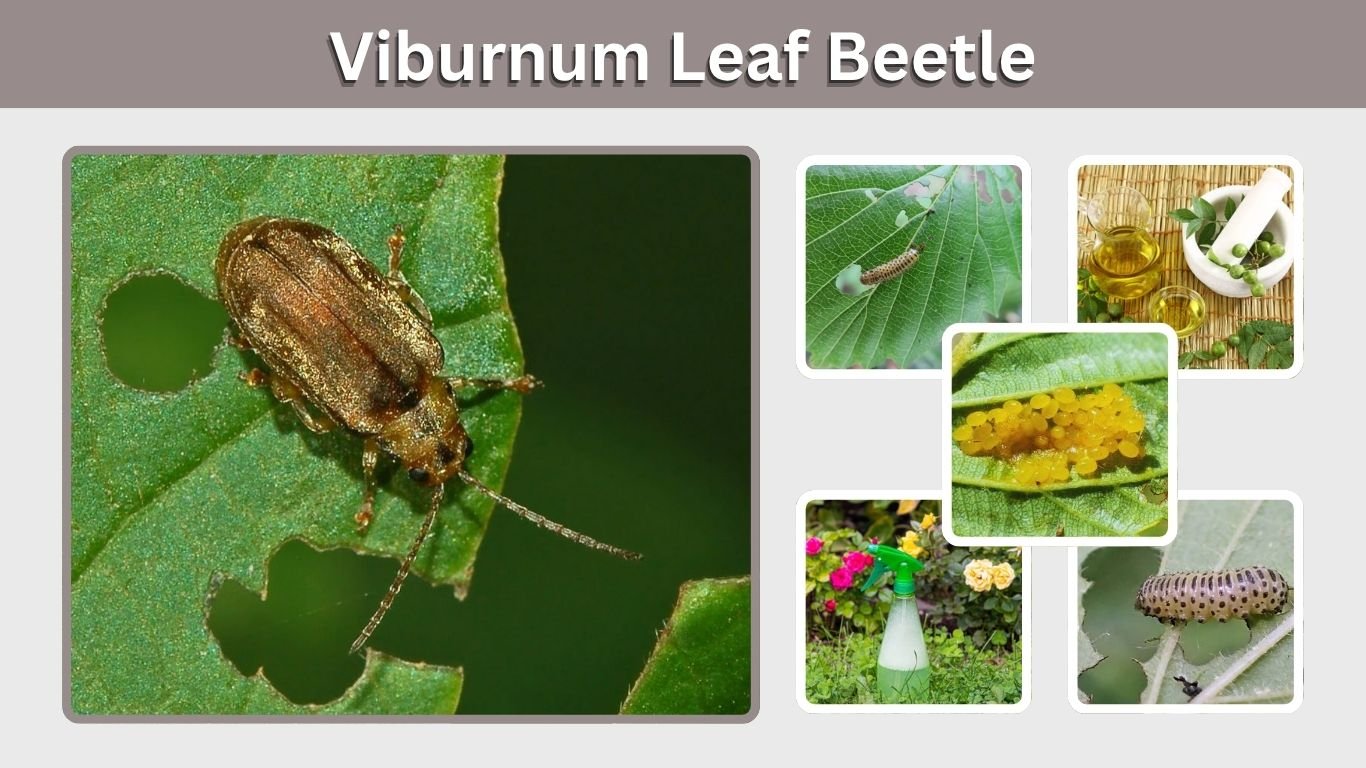
The viburnum leaf beetle is a destructive garden pest that attacks viburnum shrubs, damaging their leaves and weakening healthy plants. Both adult beetles and larvae feed on foliage, sometimes leaving entire shrubs nearly bare. Severe infestations can reduce plant growth, affect flowering, and eventually kill susceptible viburnum varieties. Fortunately, early identification and proper treatment can help prevent serious damage. This guide explains how to identify viburnum leaf beetles, recognize their eggs and larvae, understand their life cycle, and control infestations using natural methods and effective treatments.
What Is a Viburnum Leaf Beetle?
The viburnum leaf beetle (Pyrrhalta viburni) is a leaf-feeding insect belonging to the family Chrysomelidae. Originally native to Europe and Asia, this species has become an invasive pest in parts of North America.
These beetles feed exclusively on viburnum plants. Both adults and larvae damage foliage, making them particularly troublesome for gardeners growing ornamental shrubs.
What Do Viburnum Leaf Beetles Look Like?
Adult viburnum leaf beetles measure approximately 4.5–6.5 millimeters long. Their bodies are yellowish-brown to light brown, with darker markings.
Important identification features include:
- Body color: Yellowish-brown with darker patches.
- Body shape: Small, elongated, and slightly oval.
- Head: Brown with visible segmented antennae.
- Legs: Six relatively slender legs.
- Wing covers: Brownish with fine hairs and subtle markings.
Their coloration makes them difficult to notice among branches and foliage. Adults become particularly active during summer when they feed and reproduce.
Viburnum Leaf Beetle Larvae Identification
Viburnum leaf beetle larvae are soft-bodied insects with yellowish-green to light brown bodies. They have dark heads and distinctive rows of black spots.
Young larvae are relatively small and usually feed on leaf undersides. As they develop, they become more visible and consume larger portions of foliage.
Mature larvae reach approximately 10–11 millimeters before entering the soil to pupate.
Viburnum Leaf Beetle Eggs and Life Cycle
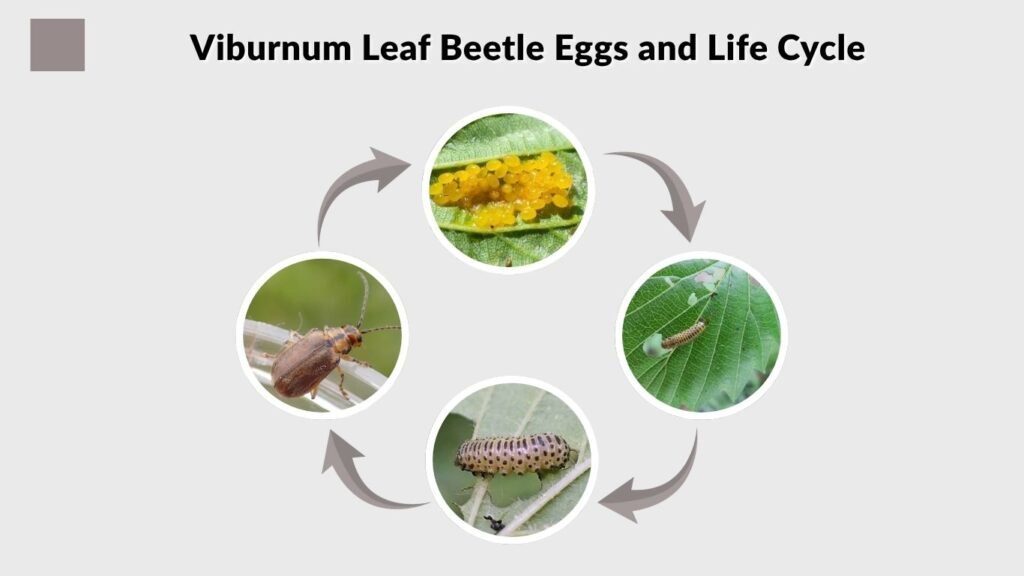
Understanding the viburnum leaf beetle life cycle helps gardeners identify the best time for treatment. Unlike many garden beetles, this species overwinters as eggs rather than adults.
It generally produces one generation annually, with different developmental stages appearing throughout spring, summer, and fall.
Viburnum Leaf Beetle Eggs
Female beetles deposit eggs inside small cavities they chew into young viburnum twigs. Each cavity typically contains several eggs protected by a covering of chewed wood.
These egg-laying sites appear as small, dark bumps arranged along twigs. They become particularly noticeable after shrubs lose their leaves in autumn.
The eggs remain inside branches throughout winter and hatch when temperatures rise during spring.
Viburnum Leaf Beetle Life Cycle Stages
Viburnum leaf beetles undergo complete metamorphosis, progressing through egg, larva, pupa, and adult stages.
Larvae generally emerge during spring and begin feeding on newly developing viburnum leaves.
After feeding for several weeks, mature larvae move into the soil, where they pupate.
Adult beetles typically emerge during early summer and continue feeding until autumn. Females then deposit eggs inside twigs, completing the annual cycle.
What Damage Do Viburnum Leaf Beetles Cause?
Viburnum leaf beetle damage can seriously affect ornamental shrubs, especially when infestations continue for several growing seasons.
Larvae initially consume the soft tissue between leaf veins, while adults create larger holes in foliage. Together, these feeding stages can cause extensive defoliation.
Common Signs of Viburnum Leaf Beetle Damage
Gardeners should watch for several recognizable symptoms:
- Skeletonized leaves: Larvae eat leaf tissue while leaving major veins intact.
- Irregular holes: Adult beetles chew elongated openings through foliage.
- Brown leaf edges: Damaged leaves may dry and turn brown.
- Premature leaf loss: Severe feeding causes extensive defoliation.
- Reduced growth: Repeated damage weakens shrubs and limits development.
- Twig egg scars: Small, dark cavities appear along young branches.
Can Viburnum Leaf Beetles Kill Shrubs?
Yes. Repeated severe infestations can eventually kill highly susceptible viburnum shrubs.
Plants sometimes produce replacement foliage after spring larval feeding. However, adult beetles may attack this new growth during summer.
When shrubs repeatedly lose their leaves, they cannot produce sufficient energy through photosynthesis. Several consecutive years of severe defoliation can significantly weaken or kill affected plants.
How to Get Rid of Viburnum Leaf Beetles
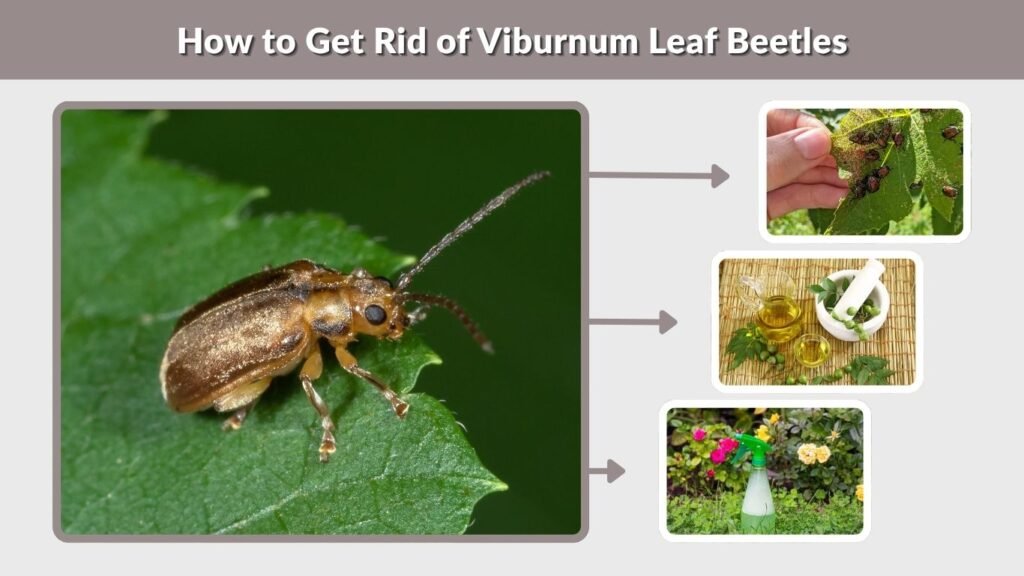
Effective viburnum leaf beetle control combines egg removal, early larval treatment, and preventive gardening practices.
The most successful approach targets beetles before severe foliage damage develops. Different control methods are appropriate depending on the infestation level and insect life stage.
1. Prune Egg-Infested Twigs
Pruning affected twigs is one of the most effective natural control methods.
Inspect young branches during fall and winter for small, dark egg-laying scars.
Remove infested twig tips before spring hatching begins. Destroy the removed material rather than leaving it near healthy shrubs.
This approach reduces the number of larvae that emerge during the following growing season.
2. Remove Larvae by Hand
Handpicking is practical for small shrubs with limited infestations.
Examine leaf undersides during spring when young larvae begin feeding.
Carefully remove visible larvae and place them in a container of soapy water.
Repeat inspections regularly because newly hatched larvae can quickly damage developing foliage.
3. Apply Horticultural Oil
Horticultural oils may help suppress overwintering eggs when applied before spring bud break.
Thorough coverage of infested twigs is important for effectiveness.
Choose a product labeled for the intended ornamental shrub and follow the manufacturer’s instructions.
Avoid applying oils during unsuitable temperatures or when plants may experience treatment-related damage.
4. Use Neem Oil or Insecticidal Soap
Neem-based insecticides and commercial insecticidal soaps can help control young viburnum leaf beetle larvae.
Apply treatments directly to affected foliage, including leaf undersides.
These products are generally more effective against small, exposed larvae than mature beetles.
Avoid homemade detergent mixtures because ordinary household soaps may damage sensitive plant tissues.
5. Apply Spinosad or Approved Insecticides
Spinosad is another treatment option for actively feeding viburnum leaf beetle larvae.
Some registered contact insecticides may also control larger infestations.
Treating larvae while they are young usually provides better results than waiting until extensive damage occurs.
Always follow product labels and local pesticide regulations. Avoid applications that expose bees and other pollinators to harmful residues.
How to Prevent Viburnum Leaf Beetle Infestations
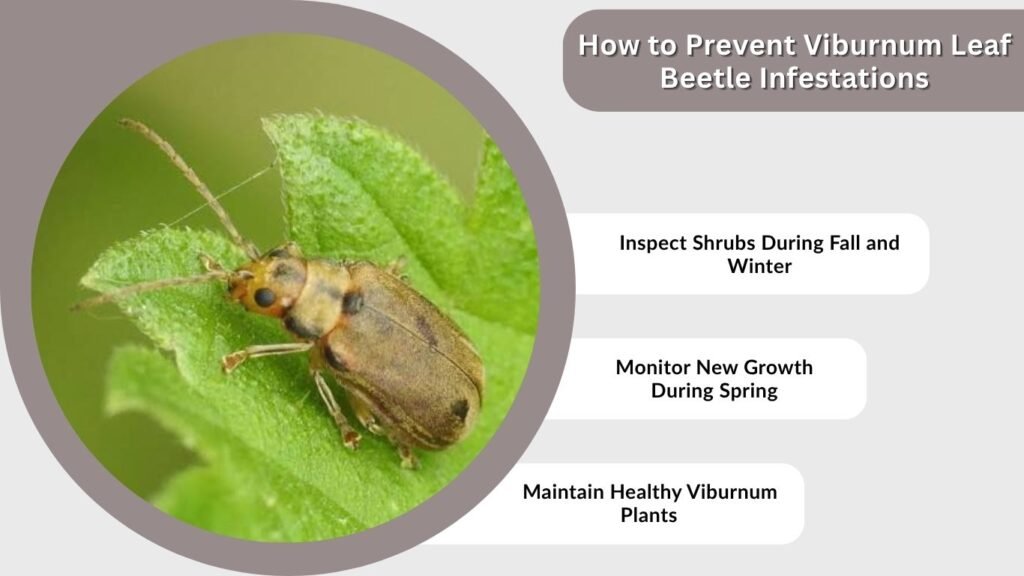
Preventing severe infestations requires regular inspections and appropriate shrub maintenance.
Because adult beetles can move between plants, complete prevention is difficult. However, consistent monitoring can significantly reduce the risk of serious damage.
Inspect Shrubs During Fall and Winter
Examine young viburnum branches after the leaves have fallen.
Look for rows of covered egg-laying cavities, particularly near the ends of branches.
Remove affected twigs before spring to prevent overwintering eggs from hatching.
Monitor New Growth During Spring
Begin inspecting shrubs as soon as new leaves emerge.
Young larvae often appear on leaf undersides and create small feeding holes.
Early detection allows gardeners to remove larvae or apply appropriate treatments before extensive foliage loss occurs.
Maintain Healthy Viburnum Plants
Healthy shrubs are generally better able to recover from limited feeding damage.
Provide appropriate watering, soil drainage, sunlight, and nutrients.
Avoid unnecessary pruning during periods of stress, and monitor previously damaged shrubs for recurring infestations.
Which Viburnum Varieties Resist Leaf Beetles?
Different viburnum species vary considerably in their susceptibility to leaf beetle damage.
Choosing resistant varieties is an important long-term management strategy, particularly where this invasive pest is already established.
Viburnum Varieties With Greater Resistance
Several ornamental viburnums generally experience less feeding damage:
- Koreanspice viburnum (Viburnum carlesii): Known for fragrant flowers and strong resistance.
- Doublefile viburnum (Viburnum plicatum): Generally experiences limited feeding damage.
- Judd viburnum (Viburnum × juddii): A flowering hybrid with good resistance.
- Leatherleaf viburnum (Viburnum rhytidophyllum): Has thick, textured leaves and relatively strong resistance.
Arrowwood viburnum and European cranberrybush viburnum are highly susceptible. These plants may require regular monitoring and repeated control measures.
FAQs
1. What Kills Viburnum Leaf Beetles?
Pruning twigs containing overwintering eggs, handpicking larvae, and using appropriately labeled insecticides can control viburnum leaf beetles. Young larvae are generally the easiest stage to treat. Inspect plants regularly and follow local pesticide guidance to protect pollinators and beneficial insects.
2. Does Neem Oil Kill Viburnum Leaf Beetles?
Neem-based products may suppress young viburnum leaf beetle larvae when applied directly and according to their labels. Results vary with formulation, timing, and coverage. Neem oil is not a guaranteed cure, and removing egg-infested twigs remains an important preventive measure.
3. When Should Viburnum Leaf Beetles Be Treated?
The best time depends on the insect’s life stage. Prune egg-infested twigs in fall or winter, before eggs hatch. In spring, inspect emerging leaves for young larvae and treat promptly, before they cause extensive damage to vulnerable ornamental viburnum shrubs.
4. Are Arrowwood Viburnums Susceptible?
Yes. Arrowwood viburnum (Viburnum dentatum) is among the more susceptible hosts. Its leaves may be skeletonized by larvae and chewed by adults. Check plants in spring, remove egg-infested twigs during dormancy, and intervene early if beetle populations begin increasing quickly.
5. Do Viburnum Leaf Beetles Have Natural Predators?
Yes. Lady beetles, lacewings, and predatory bugs may consume viburnum leaf beetle eggs or larvae. However, natural enemies rarely eliminate severe infestations on their own. Avoid unnecessary broad-spectrum spraying, and combine predator protection with pruning and early monitoring for control.