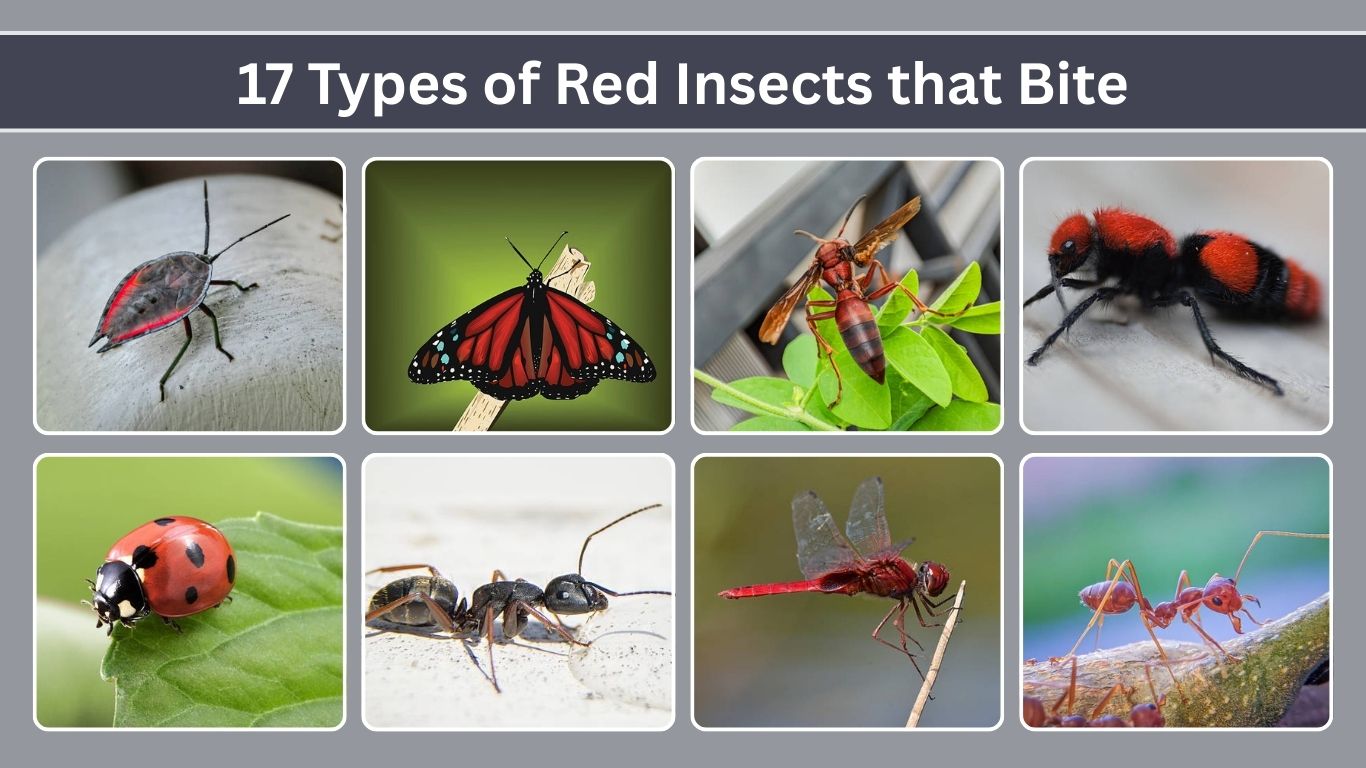
Red insects are not only visually striking but also intriguing for their behaviors and, at times, their ability to bite or sting. From aggressive ants to harmless ladybugs, many red-hued insects play crucial roles in ecosystems, whether as pests or predators. In this article, we’ll explore 17 different types of red insects that bite, outlining their identification, bite effects, and the risks they may pose to humans.
1. Red Fire Ant

Red Fire Ants are notorious for their painful stings and aggressive behavior, making them a common pest in many regions. These ants are often found in warm climates and are known for their reddish color and ability to form large colonies. They are not only a nuisance but can also pose a threat to both humans and animals due to their aggressive nature and venomous stings.
Identification
- Color: Reddish-brown to orange-red.
- Size: 1/8 inch to 1/4 inch (3–6 mm).
- Body Shape: Compact and oval with a smooth, shiny appearance.
- Antennae: 10-segmented, not bent.
- Stinger: Present at the end of the abdomen, capable of injecting venom.
- Mandibles: Used for gripping and attacking.
- Habitat: Often found in large mounds on lawns, pastures, and agricultural lands.
Bite and Effect
The bite of a Red Fire Ant is often described as sharp and immediately painful. When they bite, they use their mandibles to grip the skin, and then they sting multiple times, injecting venom. The sting causes an intense burning sensation followed by swelling, redness, and the development of pustules at the sting site. In some cases, individuals may experience an allergic reaction, including dizziness, difficulty breathing, and even anaphylaxis.
The venom from Red Fire Ants can cause irritation for several hours or even days, and in some individuals, it may lead to severe allergic reactions. While the bite itself may not be deadly, repeated stings can significantly affect individuals with heightened sensitivity to the venom. Proper care should be taken to clean the area to prevent infections.
Behavior and Habitat
Red Fire Ants are highly social insects, living in large colonies or nests that can number in the thousands. These ants are known for their aggressive behavior, especially when their nest is disturbed. They will swarm and sting anyone or anything that poses a threat to their colony. The sting of a Red Fire Ant can cause severe pain, itching, and even allergic reactions in some individuals. These ants are commonly found in warm, southern regions, particularly in the United States, but their range has been expanding.
Dangers and Risks
While Red Fire Ants are not typically deadly, their stings can be dangerous, especially for individuals with allergic reactions. Multiple stings can cause intense pain and swelling. In rare cases, stings can lead to severe allergic reactions or even anaphylaxis. The venom from these ants can also cause skin infections if the sting site is not properly cleaned and treated. Additionally, their aggressive nature and ability to sting multiple times make them a significant threat to both humans and animals in areas where they are prevalent.
2. Red Velvet Ant

Red Velvet Ants, also known as “cow killer ants,” are actually a species of wasp, despite their ant-like appearance. These solitary wasps are famous for their vibrant red color and painful sting, which has earned them their nickname. They are often found in dry, sandy areas and are active during the warmer months. Despite their fearsome reputation, Red Velvet Ants are not aggressive unless provoked.
Identification
- Color: Bright red or orange with a velvety texture.
- Size: Females can range from 1/2 inch to 1 inch (12–25 mm), while males are smaller.
- Body Shape: Robust, with a rounded, hairy body that gives them a velvet-like appearance.
- Antennae: Short and antennae are visible but not overly long.
- Stinger: Females possess a long, painful stinger capable of delivering a potent venom.
- Wings: Females are wingless, while males have wings.
- Habitat: Found in dry, sandy, or open areas like fields, gardens, or meadows.
Bite and Effect
Although Red Velvet Ants are not ants, they can deliver a powerful sting when threatened. The sting is incredibly painful and can cause intense burning, swelling, and redness. The venom from the sting can lead to sharp, localized pain that can last for several minutes to hours. While the sting from a Red Velvet Ant is not usually life-threatening, it is considered one of the most painful insect stings.
The pain is often compared to the sting of a hornet or wasp and may cause immediate discomfort. In rare cases, individuals with a sensitivity to insect stings may experience more severe reactions, including dizziness, nausea, and allergic reactions. However, most individuals experience temporary pain that subsides after a short period.
Behavior and Habitat
Red Velvet Ants are solitary insects, unlike many other ants or wasps. The female is the one to avoid due to her painful sting, while the male, which is smaller and has wings, is harmless. These wasps typically inhabit dry, open areas and are often seen in the summer and fall. They are known to be active during the hottest parts of the day when they search for food sources or to mate. Despite their appearance, they tend to avoid contact with humans and animals unless they feel threatened.
Dangers and Risks
Red Velvet Ants are not aggressive by nature but will defend themselves if disturbed. While their sting can cause excruciating pain, it is generally not life-threatening. However, the potential for allergic reactions does exist, especially in individuals who are sensitive to insect stings. The sting of a Red Velvet Ant is a warning to exercise caution around them, as it is among the most painful insect stings people can experience.
3. Boxelder Bug

Boxelder Bugs are a common insect found in North America, particularly during the fall months when they seek warmth in homes and buildings. Known for their black bodies with distinctive red and orange markings, Boxelder Bugs are typically harmless to humans but can be a nuisance due to their tendency to invade homes in large numbers.
Identification
- Color: Black with red or orange markings on the wings and thorax.
- Size: Approximately 1/2 inch (12 mm) in length.
- Body Shape: Flattened, oval-shaped body with long legs and antennae.
- Antennae: Long and slender, segmented.
- Wings: Wings are often held flat over the back when at rest.
- Habitat: Found on boxelder trees, maples, and ash trees, as well as in and around homes during colder months.
Bite and Effect
Boxelder Bugs are not aggressive and do not bite humans. Instead, they feed on the seeds and leaves of trees. They may occasionally emit a foul odor as a defense mechanism when threatened but are not known to cause harm through bites. While they can be a nuisance when they invade homes in large numbers, they do not pose any direct threat to human health.
The only potential discomfort humans might experience is allergic reactions in rare cases due to the bugs’ scent. However, the bite itself is not a concern with Boxelder Bugs.
Behavior and Habitat
Boxelder Bugs are typically found on boxelder trees, where they feed on seeds, leaves, and the sap of the tree. During the fall, as temperatures drop, they seek shelter in warm places, including homes and buildings. These bugs are not dangerous to trees but can be a nuisance when they gather in large numbers. Boxelder Bugs are not aggressive by nature and typically remain outdoors unless drawn inside by temperature changes.
Dangers and Risks
Boxelder Bugs are not harmful to humans in terms of stings or bites. The primary issue they pose is their tendency to invade homes, especially during the fall and winter months. While they don’t transmit diseases, their large numbers can be bothersome. Additionally, the unpleasant odor they release when disturbed may be off-putting.
4. Red Imported Fire Ant

The Red Imported Fire Ant (Solenopsis invicta) is an invasive species known for its aggressive nature and painful sting. Native to South America, it has spread throughout the United States and other regions, often causing significant problems in both residential and agricultural areas. These ants are notorious for their ability to swarm and sting multiple times, making them one of the most hazardous ant species.
Identification
- Color: Reddish-brown to dark reddish-orange.
- Size: 1/8 inch to 1/4 inch (3–6 mm).
- Body Shape: Compact, with a smooth body and a stinger.
- Antennae: 10-segmented and bent.
- Stinger: Present at the end of the abdomen, capable of injecting venom multiple times.
- Mandibles: Used for gripping and attacking.
- Habitat: Typically found in mounds in lawns, fields, or disturbed soils, especially in warm climates.
Bite and Effect
Red Imported Fire Ants are known for their painful stings, which can be a serious issue when disturbed. They will bite to grasp their target and then sting repeatedly, injecting venom. The sting causes intense burning pain, which can last for several minutes to hours. The venom can lead to swelling, redness, and the development of pustules at the sting site. In some individuals, the venom may cause an allergic reaction, including dizziness, difficulty breathing, or anaphylaxis.
The pain from a Red Imported Fire Ant sting is often described as sharp and intense, comparable to being burned by a hot wire. The venom also causes an inflammatory response, resulting in visible swelling and redness around the sting site.
Behavior and Habitat
These ants are extremely aggressive and will attack any perceived threat to their colony. They form large, dense colonies with multiple queens, which can contain tens of thousands of ants. Red Imported Fire Ants are particularly active in the warmer months and are commonly found in lawns, fields, and agricultural areas. They are attracted to areas with disturbed soil, such as recently mowed lawns or construction sites, where they build their mounds.
Dangers and Risks
The primary danger posed by Red Imported Fire Ants is their ability to swarm and sting in large numbers, leading to intense pain and possible allergic reactions. Although their stings are rarely fatal, multiple stings can cause serious health concerns. In rare cases, individuals may experience anaphylaxis, which requires immediate medical attention. Additionally, the venom from their stings can cause infections if not treated properly. These ants are a significant problem for agricultural areas, as they can damage crops and livestock, making them a major pest species in affected regions.
5. Blood-Sucking Bug (Triatomine)

Blood-sucking bugs, commonly known as Triatomine bugs or kissing bugs, are notorious for their ability to transmit Chagas disease, a potentially serious parasitic infection. These insects are nocturnal feeders that bite mammals, including humans, to obtain blood. While their bites themselves are not always dangerous, the diseases they can transmit make them a significant public health concern in certain regions.
Identification
- Color: Reddish-brown or black, with orange or red markings on the edges of their bodies.
- Size: 1/2 inch to 1 inch (12–25 mm) in length.
- Body Shape: Flattened, elongated, with long legs and antennae.
- Antennae: Long, with four segments.
- Wings: Winged but often appear in a triangular shape when folded.
- Mouthparts: Sharp, suited for piercing skin and feeding on blood.
- Habitat: Typically found in cracks, crevices, and near sleeping areas of homes, often in rural or poor sanitation areas.
Bite and Effect
When a Triatomine bug bites, it often does so during the night while the host is asleep. The bite itself is generally painless and may go unnoticed. However, the real danger lies in the fact that these insects can transmit the parasite Trypanosoma cruzi, which causes Chagas disease. The bite site may become red and swollen, and in some cases, the insect may defecate near the bite, introducing the parasite through the feces into the wound.
Chagas disease symptoms may not appear immediately, but if left untreated, it can lead to serious complications such as heart problems and digestive issues. Though bites alone typically don’t cause immediate harm, the risk of disease transmission makes these bugs a significant health concern in areas where Chagas disease is prevalent.
Behavior and Habitat
Blood-sucking bugs are primarily nocturnal and will bite mammals, including humans, to obtain blood for nourishment. They are attracted to warmth and carbon dioxide, which they detect from their hosts. These bugs tend to hide in cracks and crevices in homes during the day, coming out at night to feed. They prefer living in rural areas or places with poor sanitation, where they can often be found in or around dwellings. Triatomine bugs are associated with poor housing conditions in endemic regions of South and Central America, though their range has been expanding in recent years.
Dangers and Risks
The most significant risk from Triatomine bugs is the transmission of Chagas disease. While not every bug bite leads to infection, repeated exposure to these insects increases the likelihood of contracting the disease. Infected individuals may suffer from symptoms ranging from mild flu-like signs to more serious issues such as heart disease, digestive problems, or even death if the disease is left untreated. Prevention involves eliminating the bugs’ hiding places and ensuring proper sanitation in homes, particularly in endemic areas.
6. Red-Tipped Leafhopper

Red-Tipped Leafhoppers are small, vibrant insects that are known for their striking red coloration at the tips of their wings. These insects are primarily herbivores, feeding on plant sap, and are often seen on a variety of vegetation, including crops, ornamental plants, and trees. While not typically dangerous to humans, they can cause significant damage to plants by transmitting diseases and feeding on the plant tissues.
Identification
- Color: Greenish body with bright red or orange tips on the wings.
- Size: About 1/8 inch (3 mm) in length.
- Body Shape: Small, elongated, with slender legs and antennae.
- Antennae: Short and thin.
- Wings: Transparent with distinct red or orange tips, held at an angle above the body when at rest.
- Habitat: Found on various plants, including shrubs, trees, and agricultural crops.
Bite and Effect
Red-Tipped Leafhoppers do not bite humans. Instead, they feed on plant sap by piercing the plant tissues with their needle-like mouthparts. While they do not pose a direct threat to human health, they can damage plants by weakening them, making them more susceptible to diseases. Additionally, these leafhoppers are known vectors of plant pathogens, including bacteria and viruses, which they can transmit while feeding.
Although they don’t bite humans, their presence can be a significant agricultural concern, as they may contribute to the spread of plant diseases and reduce crop yields. Their feeding can also cause wilting, yellowing, and distortion of leaves, further stressing the plants.
Behavior and Habitat
Leafhoppers are herbivorous insects, feeding primarily on the sap of various plants. They are often found in gardens, agricultural fields, and on ornamental plants. They prefer warm, sunny areas and are commonly seen during the spring and summer months when plant growth is at its peak. These insects are known to be mobile, hopping from plant to plant in search of food, and can quickly spread between crops, which contributes to the spread of plant diseases.
Dangers and Risks
While Red-Tipped Leafhoppers do not directly harm humans, their role in transmitting plant pathogens poses a significant risk to agriculture. They can spread diseases like bacterial wilt, phytoplasma diseases, and viral infections that can damage crops and other plants. Farmers and gardeners must be cautious of leafhopper infestations, as controlling them early can help prevent the spread of plant diseases and reduce the risk of crop loss.
7. Red Wasp

Red Wasps are aggressive, territorial insects known for their ability to sting multiple times. They are part of the Vespidae family and are commonly found in both urban and rural environments. These wasps are often attracted to outdoor areas, such as gardens, patios, and yards, where they can build their nests. Though their sting can be painful, they are not typically dangerous unless provoked or in cases of allergic reactions.
Identification
- Color: Reddish-brown with yellow markings on the abdomen and thorax.
- Size: 1/2 inch to 3/4 inch (12–19 mm).
- Body Shape: Narrow, elongated body with a smooth, shiny appearance.
- Antennae: Long and segmented.
- Stinger: Present at the end of the abdomen; capable of stinging multiple times.
- Wings: Transparent wings that may appear reddish when sunlight passes through them.
- Habitat: Typically nests in eaves, trees, or shrubs, and occasionally in attics or other sheltered spaces.
Bite and Effect
Red Wasp stings can be extremely painful, often compared to a sharp pinprick. These wasps are known to be more aggressive than other species and will defend their nests fiercely. When a Red Wasp stings, it injects venom that causes immediate pain, swelling, and redness at the sting site. In some cases, the pain may last for several hours, and there may be the development of a small bump or welt.
While a single sting is typically not life-threatening, repeated stings or stings to individuals with allergies to insect venom can lead to severe reactions, including anaphylaxis. In addition to the immediate pain, the venom may also cause dizziness, nausea, and swelling in some people, especially those with heightened sensitivity to insect stings.
Behavior and Habitat
Red Wasps are social insects, living in large colonies that are typically built in sheltered areas such as under eaves, in trees, or in other hidden spots. These wasps are most active during the warmer months, particularly in late spring and summer. They are known for their aggressive defense of their nests and will often chase intruders, including humans, away from their territory. While Red Wasps are generally solitary outside of their colonies, they can become highly protective of their nests and will sting anyone they perceive as a threat.
Dangers and Risks
The primary danger posed by Red Wasps is their tendency to sting when provoked. The sting is painful and can lead to allergic reactions in sensitive individuals. Multiple stings or being stung in sensitive areas such as the face, throat, or eyes can cause more severe symptoms. In rare cases, people with severe allergies to insect venom can experience anaphylaxis, which requires immediate medical attention. Additionally, Red Wasps can be a nuisance in areas where they build nests close to human activity, such as around homes and gardens.
8. Red Flour Beetle

The Red Flour Beetle is a small, reddish-brown insect commonly found in pantries, grain storage areas, and food processing facilities. It is a type of pest that infests dry food products, particularly flour, cereal, and other grain-based items. Although it doesn’t bite or sting, the presence of Red Flour Beetles can be a nuisance and a source of contamination in stored food.
Identification
- Color: Reddish-brown to reddish-orange.
- Size: 1/8 inch to 1/4 inch (3–6 mm) in length.
- Body Shape: Oval-shaped, elongated body with a smooth, shiny surface.
- Antennae: Long and segmented.
- Wings: Winged, but often not active in flight; some individuals are flightless.
- Legs: Long, slender legs that allow them to move quickly.
- Habitat: Typically found in stored grains, flour, and food products in pantries and storage areas.
Bite and Effect
The Red Flour Beetle does not bite or sting humans. However, it can be a significant nuisance in homes and food storage areas, as it feeds on grains and dry food products. While the beetles themselves do not cause harm through bites, they can contaminate food with their presence and by leaving behind waste. Infestations of Red Flour Beetles can lead to the spoilage of food items, resulting in significant waste. In some cases, their larvae can cause additional damage to food products.
Though they are not harmful to humans in terms of direct physical bites, they can create a sanitary concern and disrupt food storage.
Behavior and Habitat
Red Flour Beetles are typically found in areas where dry food products are stored, such as pantries, warehouses, and kitchens. They thrive in warm, dry conditions and are known to infest grains, flour, and dried fruits. These beetles feed on food products, laying their eggs in the grains or flour, and the larvae hatch and continue to consume the food. In severe infestations, large numbers of beetles can quickly damage stored food.
Dangers and Risks
The main risk associated with Red Flour Beetles is the contamination of food products. While they are not harmful to humans through bites or stings, their presence in food can lead to contamination and spoilage. This contamination may cause discomfort or a potential allergic reaction in sensitive individuals. The best way to prevent an infestation is by keeping food storage areas sealed and by regularly inspecting dry food items for signs of pest activity. In the case of an infestation, proper cleaning and disposal of contaminated food is recommended.
9. Spotted Lanternfly

The Spotted Lanternfly is an invasive insect native to Asia that has caused significant damage to crops and plants in North America, particularly in the northeastern United States. Known for its vibrant and striking appearance, this insect feeds on the sap of various trees and plants, weakening them and potentially leading to plant death. It is considered a major agricultural pest.
Identification
- Color: Grayish with black spots on the forewings; hindwings are red with black spots.
- Size: 1 inch (2.5 cm) long and about 1.5 inches (4 cm) wide when wings are spread.
- Body Shape: Flat, elongated body with large wings.
- Antennae: Long and slender, with small black tips.
- Wings: Forewings are grayish with black spots, while the hindwings are red with black spots.
- Legs: Long and slender with a distinctive posture when feeding.
- Habitat: Found on a variety of host trees, particularly the Tree of Heaven, as well as crops like grapes, apples, and hops.
Bite and Effect
Spotted Lanternflies do not bite humans, but they can cause damage to plants and crops. Their feeding involves piercing plant tissues with their mouthparts to suck out sap. This feeding weakens plants and trees, causing stress, reduced growth, and even death in severe infestations. While they don’t directly harm humans through stings or bites, their presence in large numbers can create a sticky substance, called honeydew, which can attract mold and become a nuisance for property owners.
In rare cases, if a large number of Lanternflies are present, their feeding activity can lead to a decrease in the productivity of agricultural crops. They are particularly problematic in vineyards, orchards, and other areas of commercial agriculture.
Behavior and Habitat
The Spotted Lanternfly is an herbivorous insect, primarily feeding on the sap of various plants and trees. It is most commonly found on the Tree of Heaven (Ailanthus altissima), which serves as its primary host, but it also feeds on other plants like grapes, apples, hops, and stone fruits. These insects are most active during the warm months and are often seen in large numbers. Their feeding can lead to weakened plants, which are more susceptible to disease and environmental stress.
The Spotted Lanternfly is known for its ability to jump short distances and fly in a fluttering motion, making it easier for them to spread between plants and across regions.
Dangers and Risks
The primary danger posed by the Spotted Lanternfly is its impact on agriculture. They damage plants by feeding on them, leading to stress, reduced yields, and, in severe cases, plant death. Their ability to spread quickly has made them a significant pest in vineyards, orchards, and other agricultural areas, where they can cause economic losses. While they don’t bite or sting humans, their honeydew excretion can attract mold, which can be a nuisance for homeowners and businesses. The invasive nature of the Spotted Lanternfly makes it a major concern for plant health and agriculture.
10. Red-Legged Tick

The Red-Legged Tick, also known as the western black-legged tick, is a parasitic arachnid that can transmit diseases to both humans and animals. Found mainly in the western United States, it is most commonly associated with the transmission of Lyme disease and other tick-borne illnesses. These ticks are small, but their bite can pose serious health risks if not addressed promptly.
Identification
- Color: Brown to reddish-brown body with distinct red-colored legs.
- Size: Adults are about 1/8 inch (3 mm) in length, while nymphs are smaller.
- Body Shape: Oval-shaped, flat body that becomes engorged after feeding.
- Antennae: Absent, as ticks have simple eyes and sensory structures instead.
- Mouthparts: Visible and used to pierce skin and feed on blood.
- Habitat: Commonly found in wooded, grassy, or bushy areas, especially where mammals reside.
Bite and Effect
The bite of the Red-Legged Tick is usually painless, which means people may not immediately notice when they have been bitten. However, the bite site can become red, swollen, and irritated. The primary danger posed by the Red-Legged Tick is its ability to transmit Lyme disease and other diseases, such as anaplasmosis or babesiosis. These diseases are transmitted through the tick’s saliva during feeding.
Infected individuals may experience flu-like symptoms, such as fever, fatigue, and headaches. If left untreated, Lyme disease can lead to more serious complications, including joint pain, neurological problems, and even heart issues. Early treatment with antibiotics is crucial to preventing these long-term health effects.
Behavior and Habitat
Red-Legged Ticks are typically found in forested or grassy environments, especially in areas with dense underbrush or tall grass where they can easily latch onto passing mammals, including humans. They are commonly active in the spring and summer months when their hosts are most active. These ticks are opportunistic feeders, and they often latch onto hosts when they brush against vegetation.
Ticks are most likely to attach to exposed areas of the body, such as the neck, underarms, or groin. After attachment, they feed for several days, during which time they may transmit pathogens if they are carrying any diseases.
Dangers and Risks
The primary danger of the Red-Legged Tick is the transmission of Lyme disease and other tick-borne illnesses. While not all Red-Legged Ticks carry diseases, the risk of infection increases the longer the tick remains attached. It is essential to remove ticks promptly to reduce the risk of disease transmission. If bitten by a tick, it is advisable to seek medical attention if symptoms of Lyme disease or other illnesses appear. Preventive measures, such as wearing long clothing and using tick repellents when in tick-prone areas, can also help reduce the risk of bites.
11. Red Damsel Bug

The Red Damsel Bug is a type of predatory insect belonging to the true bug category, known for its vibrant red coloration. These insects are beneficial to gardens and crops as they prey on aphids and other pests. While they are not harmful to humans, they can sometimes become a nuisance when they invade homes or outdoor spaces in search of food.
Identification
- Color: Bright red to orange, with darker markings on the wings.
- Size: 1/2 inch (12 mm) in length.
- Body Shape: Slender, elongated body typical of the damsel bug family.
- Antennae: Long and thin.
- Wings: Transparent with red or orange edges.
- Habitat: Found on plants, particularly where aphids and other small pests are abundant.
Bite and Effect
The Red Damsel Bug is not known to bite humans. These insects are primarily predatory and feed on smaller insects, particularly aphids, which they capture with their sharp mouthparts. While they may occasionally try to bite in defense if handled, their bites are harmless to humans and do not cause any significant pain or discomfort. They are not venomous, and their primary function in nature is as pest controllers rather than as a threat to humans.
The most significant interaction humans may have with Red Damsel Bugs is their presence in gardens or homes where they hunt smaller pests. Though their feeding habits are beneficial to plants, the sight of these insects can be unsettling to some individuals.
Behavior and Habitat
Red Damsel Bugs are predatory and help control pest populations by feeding on aphids, mealybugs, and other small insect pests. They are often found in areas where these pests are abundant, such as in gardens, agricultural fields, or on ornamental plants. These insects are active hunters, using their long legs and sharp mouthparts to capture prey. They are typically seen in the warmer months and may be found resting on plants or actively hunting for food.
Though not harmful to humans, Red Damsel Bugs can become a nuisance when they invade homes or other structures in search of food or shelter.
Dangers and Risks
Red Damsel Bugs are not considered a direct threat to humans. Their primary risk comes from their potential to invade homes or outdoor spaces where they may be unwanted. However, these insects are beneficial in controlling pest populations, making them a valuable addition to gardens and farms. There are no significant health risks associated with Red Damsel Bugs, and their presence in gardens is usually an indication of a healthy, balanced ecosystem.
12. Crimson Darner Dragonfly

The Crimson Darner Dragonfly is a striking insect known for its vibrant red coloration, particularly on its thorax and abdomen. These dragonflies are commonly found near water bodies like ponds, lakes, and rivers, where they prey on smaller insects. Despite their intimidating appearance, they are harmless to humans and are known for their graceful flight.
Identification
- Color: Bright red on the thorax and abdomen, with greenish or yellowish markings.
- Size: 2.5 to 3 inches (6–7.5 cm) in length.
- Body Shape: Long, slender body typical of dragonflies.
- Antennae: Short and tiny.
- Wings: Transparent with slight darkened veins, and are held horizontally when at rest.
- Habitat: Found near freshwater habitats, such as ponds, lakes, rivers, or marshes.
Bite and Effect
The Crimson Darner Dragonfly does not bite humans. While they have powerful jaws that allow them to capture and eat smaller insects, they are not capable of stinging or biting humans. Dragonflies, including the Crimson Darner, are harmless and are beneficial to humans because they prey on mosquitoes, flies, and other pest insects. Their large size and bright coloration may make them seem intimidating, but they pose no physical threat.
They are often seen darting gracefully over water or resting on vegetation near water bodies.
Behavior and Habitat
Crimson Darner Dragonflies are predatory insects, using their speed and agility to hunt flying insects, such as mosquitoes, gnats, and other small flying pests. They are commonly seen flying over bodies of water, where they mate, lay eggs, and hunt. These dragonflies are highly skilled at maneuvering and can hover in place, fly backward, and make sharp turns in pursuit of prey.
Their larvae, which live underwater, are also predatory and hunt other aquatic organisms. Crimson Darners typically thrive in the warmer months and are most active during the summer and early fall.
Dangers and Risks
There are no significant dangers associated with Crimson Darner Dragonflies. These insects do not sting, bite, or pose a direct threat to humans. Their primary role in nature is to help control populations of smaller insects, including mosquitoes, making them beneficial in reducing pest populations around homes, gardens, and recreational areas. Though they may startle people with their sudden movements, they do not present a risk to human health.
13. Red-Headed Paper Wasp

The Red-Headed Paper Wasp is a distinctive species of wasp known for its reddish-orange head and body with contrasting black wings. These wasps are often found building their nests in sheltered outdoor areas, such as under eaves or in trees. While they can be aggressive if threatened, their stings are generally not life-threatening unless a person is allergic.
Identification
- Color: Reddish-orange head and thorax, with black or dark brown wings.
- Size: 1/2 inch to 3/4 inch (12–19 mm) in length.
- Body Shape: Slim, elongated body typical of paper wasps.
- Antennae: Long and segmented.
- Wings: Dark-colored wings, often translucent with a slight sheen.
- Habitat: Typically builds nests in sheltered areas like under eaves, branches, or fences.
Bite and Effect
The Red-Headed Paper Wasp is capable of stinging when threatened or when its nest is disturbed. The sting is sharp and can cause immediate pain, swelling, and redness at the sting site. While their venom is not typically fatal, it can cause intense pain and discomfort. For most people, the sting will subside after a few hours with typical swelling and itching.
However, individuals who are allergic to insect venom may experience more severe reactions, including difficulty breathing, dizziness, or anaphylaxis. It is crucial for individuals who have known allergies to insect stings to take extra precautions when around these wasps.
Behavior and Habitat
Red-Headed Paper Wasps are social insects that live in colonies, often building their nests in protected areas. Their nests are typically made of paper-like material that they create by chewing wood fibers and mixing them with saliva. These nests are usually found hanging from structures such as tree branches, roofs, or other sheltered spots. Paper wasps are less aggressive than some other wasp species, but they will defend their nests fiercely if disturbed.
During the warmer months, Red-Headed Paper Wasps are active hunters, feeding on nectar and other small insects. They are also important for pollination, contributing to the health of various plants and crops.
Dangers and Risks
The main risk from Red-Headed Paper Wasps comes from their ability to sting when provoked. While not usually dangerous, their stings can cause significant pain and swelling. In rare cases, the sting can lead to an allergic reaction, which may require medical treatment. These wasps are generally not aggressive unless their nest is disturbed, and with proper care, the risk of being stung can be minimized. They are also beneficial to the ecosystem due to their role in controlling pest insect populations.
14. Red Carpenter Ant

The Red Carpenter Ant is one of the largest ant species in North America, easily recognizable by its reddish coloration and robust body. These ants are primarily wood-destroying insects, making them a potential threat to the structural integrity of buildings and trees. While they are not aggressive towards humans, their nests can cause significant damage to wooden structures.
Identification
- Color: Reddish to black, with a shiny, smooth body.
- Size: 1/4 inch to 1/2 inch (6–12 mm) in length.
- Body Shape: Large and robust, with a segmented body and smooth surface.
- Antennae: Long, elbowed antennae.
- Stinger: Carpenter ants do not have a stinger, but they can bite and spray a defensive acid.
- Habitat: Found in wood, both inside buildings and in trees.
Bite and Effect
Red Carpenter Ants do not sting, but they are capable of biting when threatened. Their bite is typically not harmful, but it can cause mild irritation or a slight burning sensation. In addition to their bite, carpenter ants can spray a formic acid when disturbed, which is used as a defense mechanism. The acid spray may cause irritation to the skin or eyes if it comes into contact.
While these ants are not poisonous and their bite is rarely severe, the real concern lies in the damage they can cause to wood. They create nests in hollowed-out wood and can weaken structural elements of buildings, fences, or trees.
Behavior and Habitat
Carpenter ants are social insects that live in colonies, with a clear division of labor among workers, queens, and males. These ants are known for excavating wood to create their nests, which can be found in both dead trees and wooden structures like homes. Unlike termites, carpenter ants do not consume wood for nourishment but rather hollow it out to create galleries where they live and breed.
Carpenter ants are typically nocturnal, foraging at night for food, such as sugary substances, protein from insects, and other organic matter. They are highly skilled at navigating their environment and can be found both outdoors and indoors, particularly in damp or decaying wood.
Dangers and Risks
The primary risk from Red Carpenter Ants is the potential for property damage. Over time, a large infestation of carpenter ants can weaken the structural integrity of wooden buildings, causing costly damage. While their bites are not particularly dangerous, their presence in homes should be addressed to avoid long-term structural issues. Proper pest control measures, such as locating and eliminating nests, can help mitigate damage and prevent further infestations.
15. Scarlet Ladybug

The Scarlet Ladybug is a striking insect that stands out due to its vibrant red body and black spots. These ladybugs are beneficial insects, as they primarily feed on aphids and other pests that can damage crops and plants. Known for their distinctive appearance, they are often welcomed in gardens and agricultural fields for their natural pest control abilities.
Identification
- Color: Bright red or orange with black spots on the elytra (wing covers).
- Size: 1/4 inch (6 mm) in length.
- Body Shape: Oval and slightly domed, typical of ladybugs.
- Antennae: Short, clubbed antennae.
- Wings: Transparent wings, typically covered by the red, spotted elytra.
- Habitat: Found on plants, particularly those infested with aphids, scale insects, and other pests.
Bite and Effect
The Scarlet Ladybug is harmless to humans and does not bite or sting. These beneficial insects feed on aphids and other small pests, making them an important part of the natural pest control ecosystem. While they do not bite, ladybugs may sometimes secrete a yellow fluid from their legs when threatened, which has a slightly unpleasant odor. This secretion is a defense mechanism designed to deter predators, but it does not pose any harm to humans.
In rare cases, some people may experience mild allergic reactions to the fluid if they come into contact with it, but such reactions are uncommon.
Behavior and Habitat
Scarlet Ladybugs are primarily beneficial insects, as they prey on pests such as aphids, mites, and scale insects. These ladybugs are commonly found in gardens, fields, and forests, where they actively hunt and consume these harmful pests. They are most active during the warmer months and are often seen crawling on leaves, flowers, and plants where aphids are abundant.
Ladybugs tend to hibernate during the winter, often gathering in large clusters in protected areas like under tree bark, inside buildings, or among piles of leaves. Their bright red color and distinctive black spots make them easy to identify, and they are often regarded as a symbol of good luck in various cultures.
Dangers and Risks
The Scarlet Ladybug is not dangerous to humans, and its presence is typically a sign of a healthy garden or ecosystem. These insects play an important role in natural pest control by reducing populations of harmful insects like aphids. While the ladybug’s defensive fluid may cause mild irritation in some individuals, it is generally harmless. There are no significant health risks associated with the Scarlet Ladybug, making it a welcome addition to gardens and agricultural areas.
16. Red-Bellied Stink Bug

The Red-Bellied Stink Bug is a distinctive, shield-shaped insect known for its reddish-brown coloration and the potent odor it emits when disturbed. These insects are often found in agricultural fields, gardens, and homes, where they can become a nuisance. While they do not bite or sting, their strong odor can be unpleasant, especially when they are crushed or feel threatened.
Identification
- Color: Reddish-brown or dark brown with a reddish or orange-colored underside.
- Size: 1/2 inch (12 mm) in length.
- Body Shape: Shield-shaped body with a broad, flattened appearance.
- Antennae: Long, segmented antennae.
- Wings: Four wings with a distinctive pattern, typically held flat over the body.
- Habitat: Found in gardens, fields, and homes, particularly during the colder months.
Bite and Effect
The Red-Bellied Stink Bug does not bite or sting humans. Instead, its primary defense mechanism is the secretion of a foul-smelling odor when threatened or disturbed. This odor is produced by glands located on the sides of the thorax and is meant to deter predators. The smell can be unpleasant and linger for a while, but it is not harmful to humans.
While their odor may be offensive, these stink bugs do not pose a direct health risk. However, if crushed or disturbed in large numbers, the smell can become overwhelming. They can also invade homes in large groups during the fall and winter months, which is when they seek warmth.
Behavior and Habitat
Red-Bellied Stink Bugs are primarily herbivorous, feeding on a variety of plants, including fruits, vegetables, and ornamental plants. They are most commonly found in gardens, agricultural fields, and wooded areas. During the colder months, they tend to seek shelter in homes and buildings, where they can become a nuisance. These insects are often attracted to light and may enter homes through cracks and gaps in windows and doors.
Though they are not particularly aggressive, Red-Bellied Stink Bugs are known to gather in large numbers, which can create problems in indoor environments. They do not reproduce indoors, but their presence can be irritating for homeowners.
Dangers and Risks
While the Red-Bellied Stink Bug does not pose a direct physical threat to humans, its strong odor can be bothersome. This scent can linger in homes, creating an unpleasant atmosphere. Additionally, they can cause damage to crops and ornamental plants by feeding on them, leading to reduced yields and plant stress. The most significant risk associated with these insects is the discomfort caused by their odor and the potential for plant damage in gardens and agricultural areas.
17. Red Butterfly (Certain Species)

The Red Butterfly refers to various species of butterflies that feature red hues in their wings. These butterflies are often admired for their vibrant colors and graceful flight. While they can be found in a variety of environments, including gardens, meadows, and forests, they are generally not harmful to humans and are more often seen as a symbol of beauty and nature.
Identification
- Color: Typically red or orange, often with black or white markings depending on the species.
- Size: Varies by species, but typically between 1 inch and 3 inches (2.5–7.5 cm) in wingspan.
- Body Shape: Slender body with large, colorful wings.
- Antennae: Long, thin antennae that are typically dark or black.
- Wings: Broad, with intricate patterns of red, black, and sometimes white or yellow.
- Habitat: Found in a variety of environments, including forests, meadows, and gardens, depending on the species.
Bite and Effect
Red Butterflies do not bite or sting humans. They are primarily herbivorous in their caterpillar stage, feeding on leaves, and their adult form primarily feeds on nectar from flowers. Butterflies are gentle creatures, and despite their striking appearance, they pose no direct threat to humans.
The only interaction that might occur is through accidental handling, in which case the butterfly may fly away or simply flutter its wings. In rare cases, some individuals may have mild allergic reactions to the scales on the butterfly’s wings, though this is quite uncommon.
Behavior and Habitat
Red Butterflies are typically solitary creatures, spending their days feeding on nectar, laying eggs on specific host plants, and migrating (in some species) during certain seasons. They are most active during the warmer months and are frequently seen fluttering from flower to flower in gardens or natural habitats. Their vibrant red wings serve as a signal to predators that they may be toxic or unpalatable, offering them protection from being eaten.
Many red butterfly species are migratory, and they may travel long distances in search of food, mating opportunities, or suitable habitats. Their larvae (caterpillars) are specific about the plants they feed on, and their presence often indicates the health of local ecosystems.
Dangers and Risks
Red Butterflies are not dangerous to humans in any way. They do not bite, sting, or carry any harmful pathogens. The primary risk they pose is the potential for mild allergic reactions to their wing scales in very sensitive individuals. However, these butterflies are generally beneficial to the environment, helping with pollination and serving as a food source for various predators in the food chain.
In short, red butterflies are admired for their beauty and ecological contributions rather than posing any risks to humans.