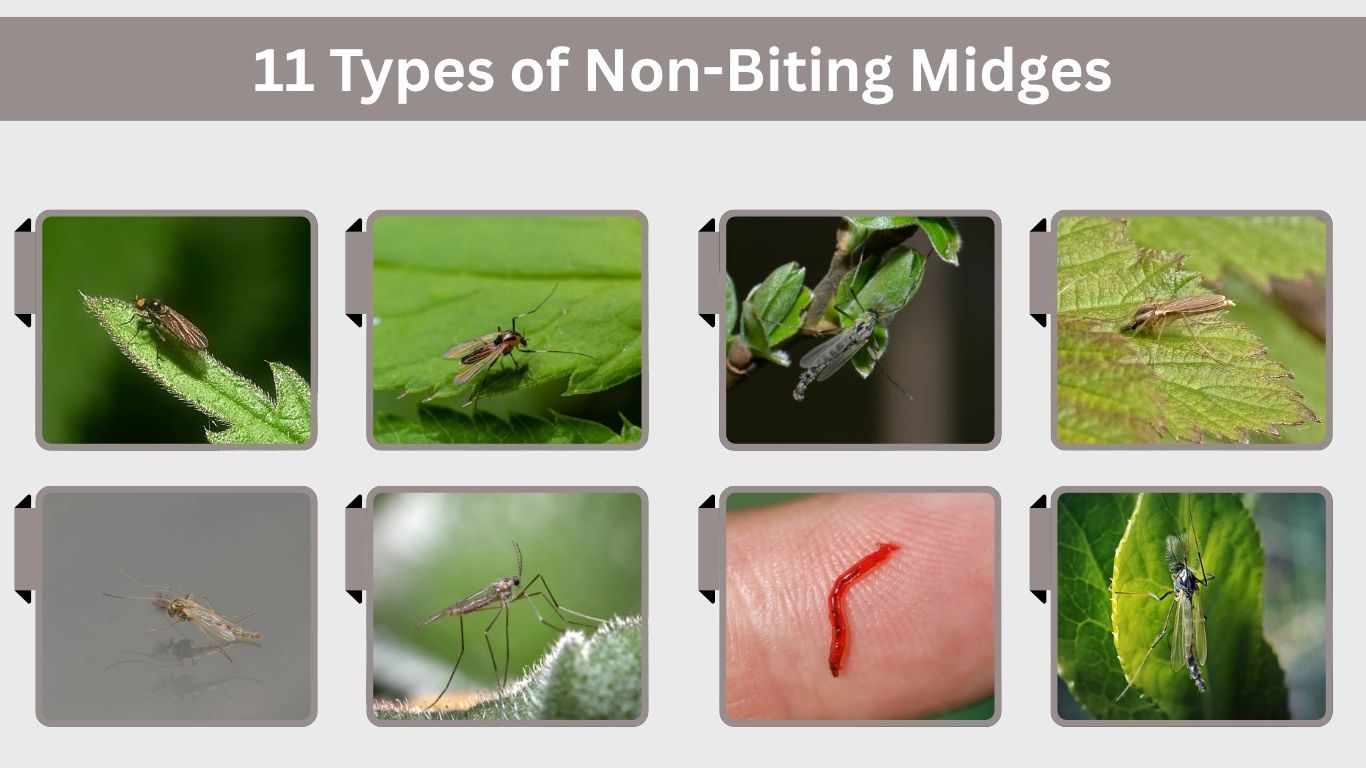
Non-biting midges are small, mosquito-like insects commonly found near freshwater environments around the world. Unlike mosquitoes, they do not bite or transmit diseases, making them harmless to humans. These insects often appear in large swarms, especially during warm seasons, and play an essential role in aquatic ecosystems.
They are important for nutrient recycling, as their larvae break down organic matter in water and sediment. In addition, non-biting midges serve as a key food source for fish, birds, and other wildlife. Despite sometimes being seen as a nuisance due to their swarming behavior, they are beneficial insects that help maintain ecological balance.
1. Lake Midge

Lake midge is one of the most common types of non-biting midges found around freshwater environments. These insects are often seen in large swarms near lakes, ponds, and slow-moving rivers. Although they resemble mosquitoes, they do not bite and are harmless to humans. Their presence usually indicates a healthy aquatic ecosystem.
Identification
- Slender, mosquito-like body with long legs
- Typically gray or light brown in color
- Feather-like antennae, especially in males
- Wings held flat over the body when at rest
Habitat and Distribution
Lake midges are widely distributed across temperate and tropical regions. They are especially abundant near still or slow-moving freshwater bodies such as lakes, ponds, and marshes. Their larvae develop in the sediment at the bottom, feeding on organic matter and contributing to nutrient recycling in aquatic systems.
Life Cycle
The life cycle of the lake midge includes four stages: egg, larva, pupa, and adult. Eggs are laid on the water surface, and larvae live in the mud, often referred to as bloodworms due to their reddish color. After pupation, adults emerge in large numbers, often forming noticeable swarms during mating periods.
Importance
Lake midges play an important ecological role. Their larvae help break down organic material, improving water quality. They also serve as a vital food source for fish, birds, and other wildlife. Despite occasional nuisance swarms, they are considered beneficial insects in freshwater ecosystems.
2. Bloodworm Midge

The bloodworm midge is a well-known non-biting midge, especially recognized for its bright red larvae. These insects are commonly found in freshwater habitats and are often associated with nutrient-rich or low-oxygen environments. Despite their striking appearance in the larval stage, adult bloodworm midges are harmless and do not bite.
Identification
- Adult resembles a small, delicate mosquito
- Generally grayish or dull-colored body
- Males have feathery antennae
- Larvae are bright red due to hemoglobin content
Habitat and Distribution
Bloodworm midges are widely distributed across the world, particularly in lakes, ponds, and slow-moving waters. They thrive in muddy or organic-rich sediments where oxygen levels may be low. Their ability to survive in such conditions makes them common in both clean and polluted water bodies.
Life Cycle
The life cycle includes egg, larva, pupa, and adult stages. Eggs are laid in gelatinous masses on the water surface. The larvae, known as bloodworms, live in the sediment and feed on organic debris. After pupation, adults emerge and form swarms for reproduction, usually near water sources.
Importance
Bloodworm midges are ecologically significant. Their larvae help decompose organic material and recycle nutrients in aquatic systems. They are also an essential food source for fish and other aquatic organisms. Additionally, their presence is often used by scientists as an indicator of environmental conditions in water bodies.
3. Green Midge

The green midge is a common non-biting midge known for its subtle greenish coloration, especially in the larval stage. These insects are typically found around freshwater habitats and often go unnoticed due to their small size. Like other non-biting midges, they do not pose any threat to humans and play a helpful role in aquatic ecosystems.
Identification
- Small, slender body similar to a mosquito
- Light green or pale-colored larvae
- Adults are usually grayish with a slight green tint
- Long legs and delicate transparent wings
Habitat and Distribution
Green midges are widely found in freshwater environments such as ponds, lakes, and slow-flowing streams. They prefer areas with vegetation and organic matter, which provide both food and shelter. These midges are common in many regions across the world, particularly in temperate climates.
Life Cycle
The life cycle of the green midge follows the typical four stages: egg, larva, pupa, and adult. Eggs are laid on the water surface, and larvae live among aquatic plants or sediment. They feed on algae and organic debris. After pupation, adults emerge and gather in swarms for mating, usually near water bodies.
Importance
Green midges contribute significantly to aquatic ecosystems. Their larvae help break down organic materials and support nutrient cycling. They also serve as an important food source for fish, amphibians, and birds. Although adults may form swarms, they are harmless and beneficial overall.
4. Rice Midge

The rice midge is a non-biting midge commonly associated with rice fields and other shallow freshwater habitats. It is especially noticeable in agricultural areas where standing water is present. Although it may appear in large numbers, this insect does not bite and is harmless to humans, playing a role in the ecosystem of wetland environments.
Identification
- Small, mosquito-like appearance
- Light brown or pale yellow body
- Slender legs and narrow wings
- Males possess feathery antennae
Habitat and Distribution
Rice midges are primarily found in rice paddies, wetlands, and shallow stagnant water bodies. They thrive in warm, humid regions where rice cultivation is common. Their presence is widespread in tropical and subtropical areas, especially across Asia, where rice farming provides ideal breeding conditions.
Life Cycle
The life cycle consists of four stages: egg, larva, pupa, and adult. Eggs are laid on the water surface in clusters. The larvae live in the muddy bottom of rice fields, feeding on algae and organic matter. After developing into pupae, adults emerge and form swarms, usually during early morning or evening hours.
Importance
Rice midges are important for nutrient recycling in aquatic agricultural systems. Their larvae help decompose organic materials in the soil and water. They also serve as a food source for fish and other aquatic organisms found in rice fields. Despite their abundance, they are considered beneficial insects.
5. Small Lake Midge

The small lake midge is a tiny, non-biting insect commonly found around freshwater bodies. It is often seen in large swarms near lakes, especially during warmer months. Despite their abundance, these midges are harmless to humans and are an important part of the aquatic food chain.
Identification
- Very small, slender body
- Pale gray or light brown coloration
- Long, delicate legs
- Transparent wings held flat over the body
Habitat and Distribution
Small lake midges are widely distributed in freshwater environments such as lakes, ponds, and slow-moving streams. They prefer calm waters with plenty of organic material. These midges are commonly found in both temperate and tropical regions, often appearing in large numbers near shorelines.
Life Cycle
Their life cycle includes egg, larva, pupa, and adult stages. Eggs are deposited on the water surface, and larvae develop in the sediment, feeding on organic debris. After pupation, adults emerge and quickly form swarms for mating, usually close to their breeding sites.
Importance
Small lake midges play a vital ecological role. Their larvae help break down organic matter, improving water quality. They also serve as an essential food source for fish, birds, and other aquatic animals. Although swarms can be a nuisance, they are beneficial to the ecosystem.
6. Brown Midge

The brown midge is a common non-biting midge frequently seen around freshwater habitats. It gets its name from its brownish body color, which helps it blend into its surroundings. These insects often appear in swarms, especially during warmer seasons, but they are completely harmless and do not bite.
Identification
- Small, slender body with a brown coloration
- Long legs and narrow, прозрачные wings
- Resembles a mosquito but lacks a biting mouthpart
- Males have feathery antennae
Habitat and Distribution
Brown midges are widely distributed in lakes, ponds, rivers, and wetlands. They prefer areas with still or slow-moving water and abundant organic material. These midges are found in many parts of the world, particularly in regions with moderate to warm climates.
Life Cycle
The life cycle of the brown midge includes egg, larva, pupa, and adult stages. Eggs are laid on water surfaces, and larvae develop in the sediment, feeding on decaying organic matter. After pupation, adults emerge and gather in swarms for reproduction, often near their breeding sites.
Importance
Brown midges play an essential role in aquatic ecosystems. Their larvae help decompose organic debris and recycle nutrients. They are also a key food source for fish and other wildlife. Even though adult swarms may be bothersome, they contribute positively to environmental balance.
7. Cold-water Midge

The cold-water midge is a non-biting midge adapted to cooler aquatic environments. It is commonly found in streams, lakes, and rivers where temperatures remain low throughout the year. These midges are active even in colder seasons, making them an important part of ecosystems where many other insects are less active.
Identification
- Small, slender body similar to a mosquito
- Dark gray or black coloration
- Long legs and narrow wings
- Males have feathery antennae
Habitat and Distribution
Cold-water midges are typically found in high-altitude or cooler regions, including mountain streams and cold lakes. They prefer clean, oxygen-rich water and are often used as indicators of good water quality. These midges are distributed across temperate regions worldwide.
Life Cycle
Like other midges, their life cycle includes egg, larva, pupa, and adult stages. Eggs are laid in water, and larvae develop in cold sediments or among aquatic vegetation. Development may take longer due to lower temperatures. Adults emerge and form swarms for mating near water bodies.
Importance
Cold-water midges play a crucial ecological role. Their larvae help break down organic material and maintain nutrient cycles in cold aquatic systems. They are also a vital food source for fish, especially in streams where food options are limited during colder periods.
8. Phantom Midge

The phantom midge is a unique non-biting midge known for its almost transparent body, especially during the larval stage. This transparency helps it avoid predators in aquatic environments. Although they resemble typical midges as adults, their larvae are quite distinct and are often found floating in open water.
Identification
- Slender, mosquito-like adult form
- Larvae are nearly transparent (“phantom-like”)
- Long legs and delicate wings
- Large head and visible internal organs in larvae
Habitat and Distribution
Phantom midges are commonly found in lakes, ponds, and reservoirs. Unlike many other midges, their larvae often live freely in open water rather than staying in sediment. They are widely distributed across temperate regions and are especially common in still or slow-moving freshwater bodies.
Life Cycle
The life cycle includes egg, larva, pupa, and adult stages. Eggs are laid in water, and larvae float or swim in the water column, feeding on small microorganisms. After developing into pupae, adults emerge and gather in swarms near water for reproduction.
Importance
Phantom midges play an important role in aquatic food webs. Their larvae are active predators of tiny aquatic organisms and also serve as food for fish. They help maintain ecological balance in freshwater systems, making them beneficial despite their unusual appearance.
9. Slender Midge

The slender midge is a delicate, non-biting insect recognized for its thin body and graceful appearance. It is commonly seen near freshwater habitats, often forming light swarms during calm weather. Like other non-biting midges, it poses no threat to humans and contributes positively to aquatic ecosystems.
Identification
- Very thin, elongated body
- Light gray or pale brown coloration
- Long legs giving a delicate appearance
- Narrow, transparent wings
Habitat and Distribution
Slender midges are widely distributed in areas with freshwater such as ponds, lakes, and slow-moving streams. They prefer calm environments with vegetation and organic matter. These midges are commonly found in both temperate and tropical regions.
Life Cycle
Their life cycle includes egg, larva, pupa, and adult stages. Eggs are laid on water surfaces, and larvae develop in sediment or among aquatic plants. They feed on organic debris and microorganisms. After pupation, adults emerge and gather in swarms for mating, usually near water.
Importance
Slender midges are important for maintaining ecological balance. Their larvae help decompose organic matter and recycle nutrients. They also serve as a food source for fish, birds, and other aquatic animals. Although small and often unnoticed, they play a vital role in freshwater ecosystems.
10. Mountain Midge

The mountain midge is a non-biting midge commonly found in high-altitude and cooler environments. It is well adapted to life in mountainous regions where temperatures are lower and water is often fast-flowing and clean. These midges are harmless and play an important role in sustaining aquatic life in such habitats.
Identification
- Small, slender body with a dark gray or brown color
- Long legs and narrow wings
- Mosquito-like appearance but non-biting
- Males have feathery antennae
Habitat and Distribution
Mountain midges are typically found in mountain streams, cold lakes, and highland wetlands. They prefer clear, oxygen-rich water and are often present in areas with minimal pollution. These midges are distributed across mountainous regions in temperate parts of the world.
Life Cycle
Their life cycle follows four stages: egg, larva, pupa, and adult. Eggs are laid in cold water, and larvae develop in streambeds or among submerged rocks. Due to cooler temperatures, development may be slower. Adults emerge and form small swarms near water for mating.
Importance
Mountain midges are vital for high-altitude ecosystems. Their larvae contribute to breaking down organic material and maintaining nutrient cycles. They are also an important food source for fish and other aquatic organisms, supporting biodiversity in mountain environments.
11. Biting Midge-like (Non-biting Midge)

The biting midge-like type refers to non-biting midges that closely resemble biting midges in appearance but do not feed on blood. This similarity often causes confusion, but these insects are completely harmless. They are commonly found near water and may appear in swarms, especially during warm and humid conditions.
Identification
- Small, delicate body similar to biting midges
- Gray or brown coloration
- Long legs and narrow wings
- Lacks piercing mouthparts for biting
Habitat and Distribution
These midges are found in a variety of freshwater environments such as ponds, marshes, and wetlands. They prefer areas with standing or slow-moving water. They are widely distributed across tropical and temperate regions, often appearing in large numbers in suitable conditions.
Life Cycle
Their life cycle includes egg, larva, pupa, and adult stages. Eggs are laid on water surfaces, and larvae develop in moist soil or aquatic sediments. They feed on organic matter and microorganisms. After pupation, adults emerge and form swarms for reproduction near water bodies.
Importance
These midges play a beneficial role in ecosystems. Their larvae help decompose organic material and recycle nutrients. They also serve as a food source for fish, birds, and other insects. Despite their resemblance to biting species, they are harmless and contribute positively to the environment.
FAQs
What are non-biting midges?
Non-biting midges are small flying insects that resemble mosquitoes but do not bite or feed on blood. They belong to the Chironomidae family and are commonly found near freshwater habitats. These insects are harmless to humans and are mainly known for forming large swarms.
Are non-biting midges harmful to humans?
No, non-biting midges are completely harmless. They do not bite, sting, or transmit diseases. Although their swarms can sometimes be annoying, they pose no direct health risk to people or animals.
Why do non-biting midges form swarms?
Non-biting midges form swarms mainly for mating purposes. Male midges gather in large groups, and females enter these swarms to reproduce. This behavior is most common during warm weather and often occurs near water bodies.
Where are non-biting midges commonly found?
They are commonly found near lakes, ponds, rivers, and wetlands. Their larvae develop in water or moist soil, which is why adult midges are usually seen close to freshwater environments.
What is the ecological importance of non-biting midges?
Non-biting midges play a vital role in ecosystems. Their larvae help decompose organic matter and recycle nutrients in aquatic systems. They also serve as an important food source for fish, birds, and other wildlife, supporting the food chain.