

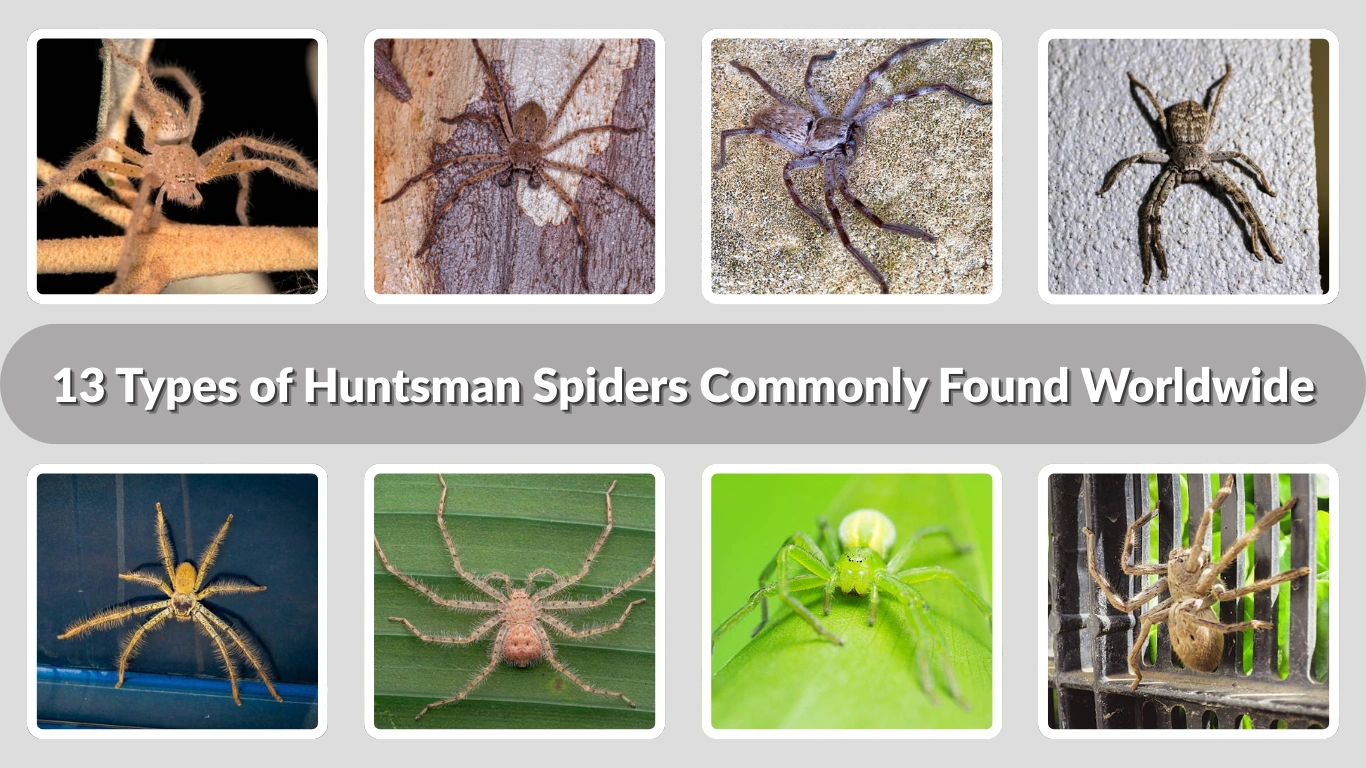
Huntsman spiders are a diverse group of fast-moving, flat-bodied spiders known for their large leg span and crab-like appearance. Found mainly in warm and tropical regions, they often live on walls, tree bark, rocks, and foliage. Although their size can be intimidating, most huntsman spiders are harmless to humans and play an important role in controlling insect populations.
1. Giant Huntsman Spider (Heteropoda venatoria)

The Giant Huntsman Spider is the most well-known and widely encountered huntsman species in the world. Famous for its large size and crab-like legs, it is often found in homes, gardens, and warehouses in warm regions. Despite its intimidating appearance, it is generally harmless to humans and helps control insect populations.
Identification
- Large, flat body with very long legs
- Brown to gray coloration with darker markings
- Legs spread sideways (laterigrade posture)
- Can reach up to 12–15 cm (5–6 inches) leg span
Size and Appearance
This species is considered one of the largest huntsman spiders. Its flattened body allows it to hide easily behind bark, furniture, or wall cracks. The legs are built for speed rather than jumping, giving it a fast, skittering movement that often startles people.
Habitat and Range
The Giant Huntsman is found across Asia, Australia, Africa, and tropical parts of the Americas. It prefers warm climates and commonly lives in houses, sheds, tree bark, banana plantations, and under loose debris.
Behavior and Venom
Giant Huntsman spiders are non-aggressive and usually flee when disturbed. Bites are rare and typically occur only if the spider is handled. The venom is mild, causing temporary pain or redness similar to a bee sting in most cases.
2. Social Huntsman Spider (Delena cancerides)

The Social Huntsman Spider is unique among huntsman spiders because it is one of the few spider species known to live communally. Instead of being solitary, individuals often share shelters and tolerate each other. It is native to Australia and is rarely found inside homes compared to other huntsman spiders.
Identification
- Flattened brown body with subtle markings
- Long legs held sideways like other huntsman spiders
- Females larger than males
- Often seen in groups under bark
Size and Appearance
This species is medium to large in size, though smaller than the Giant Huntsman. Its body is relatively flat, helping it squeeze into narrow spaces beneath tree bark. The coloration blends well with wood, providing excellent camouflage.
Habitat and Range
Social Huntsman spiders are found mainly in Australia, especially in forests and woodlands. They live under loose tree bark, fallen logs, and occasionally rock crevices, where entire colonies may share the same shelter.
Behavior and Venom
Unlike most spiders, this species shows social tolerance, especially between females and juveniles. It is shy and avoids confrontation. The venom is mild, and bites are extremely rare, posing little risk to humans.
3. Rain Spider (Palystes species)

The Rain Spider is a large and fast-moving huntsman spider best known from southern Africa. It often appears inside homes during rainy or humid weather, which is how it earned its common name. Its size and speed make it intimidating, but it is not considered dangerous to humans.
Identification
- Large, flattened body with long legs
- Brown to reddish-brown coloration
- Dark bands or markings on the legs
- Pale underside often visible when moving
Size and Appearance
Rain Spiders are among the larger huntsman species, with a wide leg span that gives them a crab-like look. Their strong legs allow them to move quickly across walls and ceilings, and their body shape helps them hide in narrow spaces.
Habitat and Range
This spider is commonly found in southern Africa, especially in South Africa, Namibia, and surrounding regions. It lives in trees, shrubs, and sometimes inside houses, particularly during rainy seasons.
Behavior and Venom
Rain Spiders are non-aggressive and prefer to escape rather than bite. When threatened, they may raise their front legs as a warning display. Their venom is mild, usually causing short-term pain and swelling if a bite occurs.
4. Pantropical Huntsman Spider (Olios species)

The Pantropical Huntsman Spider is a slender and fast-running huntsman commonly found in warm regions around the world. It is less bulky than some other huntsman spiders but makes up for it with speed and excellent climbing ability. This species is often seen on walls, tree trunks, and outdoor structures.
Identification
- Slim, flattened body shape
- Long, narrow legs held sideways
- Light brown to yellowish coloration
- Subtle markings along the legs
Size and Appearance
Pantropical Huntsman spiders are medium to large in size, though generally smaller and lighter than Giant Huntsman spiders. Their streamlined bodies allow quick movement across smooth surfaces, making them efficient hunters of insects.
Habitat and Range
These spiders are found across tropical and subtropical regions worldwide, including Asia, Africa, Australia, and the Americas. They prefer warm environments and are usually seen outdoors on trees, walls, and fences, though they may occasionally enter homes.
Behavior and Venom
Pantropical Huntsman spiders are shy and nocturnal, becoming active at night to hunt prey. They rarely bite humans, and their venom is mild, typically causing minor pain or irritation if contact occurs.
5. Green Huntsman Spider (Micrommata virescens)

The Green Huntsman Spider is a distinctive huntsman species known for its bright green coloration. Unlike many other huntsman spiders, it is smaller and more delicate in appearance. This spider is often found outdoors and is rarely seen inside homes.
Identification
- Bright green body and legs
- Slender, elongated body shape
- Long legs held sideways
- Females usually more vividly colored
Size and Appearance
This species is medium-sized compared to other huntsman spiders. Its green color provides excellent camouflage among leaves and grass. The body is smooth and less hairy, giving it a cleaner, more elegant look than larger huntsman species.
Habitat and Range
The Green Huntsman Spider is found mainly in Europe and parts of Central Asia. It prefers grasslands, shrubs, hedgerows, and low vegetation, where it blends easily with surrounding foliage.
Behavior and Venom
Green Huntsman spiders are calm and non-aggressive. They rely on camouflage rather than speed to avoid predators. Bites are extremely rare, and the venom is mild, posing no serious threat to humans.
6. Golden Huntsman Spider (Beregama species)

The Golden Huntsman Spider is a lesser-known but striking huntsman species recognized for its warm golden-brown coloration. It is mainly found in Australia and tends to stay well hidden, which is why it is not as commonly seen as some other huntsman spiders.
Identification
- Golden to yellow-brown body color
- Flattened body with long, sideways-oriented legs
- Subtle darker markings on the carapace
- Smooth, slightly glossy appearance
Size and Appearance
This huntsman is medium to large in size, with a flattened body that allows it to hide under bark and rocks. Its golden tone helps it blend into dry woodland environments and tree surfaces.
Habitat and Range
Golden Huntsman spiders are native to Australia, where they inhabit forests, woodlands, and rocky areas. They are usually found under loose bark, stones, and fallen logs rather than inside buildings.
Behavior and Venom
The Golden Huntsman is shy and reclusive, preferring to remain still when disturbed. It is not aggressive, and bites are very rare. The venom is mild, causing only minor discomfort if a bite occurs.
7. Badge Huntsman Spider (Neosparassus species)

The Badge Huntsman Spider is named for the distinctive dark, badge-like marking on its back. It is a well-known huntsman species in Australia and is often spotted on walls and ceilings at night. Its appearance is striking, but its behavior is typically calm.
Identification
- Prominent dark badge-shaped marking on the body
- Pale gray to brown overall coloration
- Long, laterally spread legs
- Flattened body adapted for climbing
Size and Appearance
This species is medium to large in size, with a broad body and long legs that give it a wide stance. The contrast between the pale body and dark marking makes it easier to identify than many other huntsman spiders.
Habitat and Range
Badge Huntsman spiders are found primarily in Australia, especially in urban areas, forests, and woodlands. They often live under bark or rocks and may enter houses, particularly during warmer months.
Behavior and Venom
Badge Huntsman spiders are non-aggressive and slow to bite. When threatened, they usually retreat rather than defend themselves. Their venom is mild and not medically significant to humans.
8. Stone Huntsman Spider (Eusparassus species)

The Stone Huntsman Spider is a robust huntsman adapted to rocky and arid environments. It is less commonly seen by people because it prefers to hide under stones and in crevices. This species is known for its strong build and excellent camouflage.
Identification
- Stocky, flattened body
- Brown to sandy coloration matching rocks
- Thick legs with subtle banding
- Rough, matte body texture
Size and Appearance
Stone Huntsman spiders are medium to large in size, with a solid body and powerful legs. Their coloration allows them to blend seamlessly into rocky terrain, making them difficult to spot unless disturbed.
Habitat and Range
These spiders are found in dry and semi-arid regions, including parts of Europe, Africa, and Asia. They live under stones, in rock cracks, and sometimes in dry soil burrows.
Behavior and Venom
Stone Huntsman spiders are secretive and mostly nocturnal. They rely on hiding rather than speed when threatened. Bites are uncommon, and the venom is mild, causing minimal symptoms in humans.
9. Bark Huntsman Spider (Holconia species)

The Bark Huntsman Spider is a large, tree-dwelling huntsman well adapted to life on trunks and under loose bark. It is known for its excellent camouflage and powerful legs, making it an efficient nocturnal hunter.
Identification
- Large, flattened body shape
- Brown to dark brown coloration
- Strong, long legs with slight banding
- Body pattern resembling tree bark
Size and Appearance
This species is among the larger huntsman spiders, with a broad body and long legs that allow it to cling tightly to tree surfaces. Its bark-like pattern helps it remain hidden during the day.
Habitat and Range
Bark Huntsman spiders are found mainly in Australia, especially in forests and wooded areas. They live under loose bark, on tree trunks, and occasionally on wooden structures near homes.
Behavior and Venom
Bark Huntsman spiders are fast and alert, quickly retreating into bark crevices when disturbed. They are not aggressive toward humans. The venom is mild, and bites are rare and generally harmless.
10. Bush Huntsman Spider (Heteropoda species)

The Bush Huntsman Spider is a forest- and shrub-dwelling huntsman commonly found in natural vegetation. It is well adapted for life among leaves and branches and is less frequently encountered indoors compared to house-dwelling huntsman species.
Identification
- Medium to large flattened body
- Brown or tan coloration with faint markings
- Long legs spread sideways
- Well-camouflaged against foliage
Size and Appearance
Bush Huntsman spiders are similar in build to other Heteropoda species but are often slightly slimmer. Their earthy coloration allows them to blend into bushes and low vegetation, making them difficult to notice during the day.
Habitat and Range
These spiders are found in tropical and subtropical regions, particularly in Asia and Australia. They live in bushes, shrubs, forest edges, and gardens, where they hunt insects at night.
Behavior and Venom
Bush Huntsman spiders are nocturnal and shy. They avoid human contact and prefer to flee when disturbed. Their venom is mild, and bites are uncommon, causing only minor, short-lived discomfort.
11. Jungle Huntsman Spider (Heteropoda species)

The Jungle Huntsman Spider is a fast-moving huntsman adapted to dense tropical forests. It thrives in humid environments and is rarely seen in open or urban areas. This species is an efficient predator that helps control insect populations in jungle ecosystems.
Identification
- Broad, flattened body
- Brown to dark brown coloration
- Long legs held in a sideways position
- Subtle darker patterns on the body
Size and Appearance
Jungle Huntsman spiders are medium to large in size, with strong legs designed for rapid movement across leaves and tree trunks. Their darker coloration provides camouflage in shaded forest environments.
Habitat and Range
This spider is commonly found in tropical rainforests of Asia and Southeast Asia. It lives on tree trunks, large leaves, and forest floors, usually remaining hidden during the day.
Behavior and Venom
Jungle Huntsman spiders are nocturnal and elusive. They prefer to escape rather than confront threats. Bites are very rare, and the venom is mild, causing only temporary pain or irritation in humans.
12. Flat Huntsman Spider (Sparassus species)

The Flat Huntsman Spider is known for its extremely flattened body, which allows it to squeeze into very narrow spaces. This adaptation makes it an excellent ambush hunter and a master of concealment in natural environments.
Identification
- Very flat, wide body
- Light brown to gray coloration
- Legs spread widely and sideways
- Thin profile when viewed from the side
Size and Appearance
Flat Huntsman spiders are medium-sized but appear larger due to their wide leg span. Their flattened shape helps them hide under bark, stones, and within cracks where predators cannot easily reach them.
Habitat and Range
These spiders are found in parts of Europe, Africa, and Asia. They prefer dry forests, rocky areas, and places with plenty of hiding spots such as loose bark and stone piles.
Behavior and Venom
Flat Huntsman spiders are quiet and secretive. They rely on stealth rather than speed to avoid danger. Bites are uncommon, and the venom is mild, posing little risk to humans.
13. Spotted Huntsman Spider (Heteropoda species)

The Spotted Huntsman Spider is named for the distinct dark spots and mottled patterns on its body and legs. These markings provide excellent camouflage, helping the spider blend into bark, walls, and rocky surfaces. It is a fast and alert hunter.
Identification
- Mottled body with visible dark spots
- Brown to gray base coloration
- Long legs with spotted or banded patterns
- Flattened body with wide stance
Size and Appearance
This species is medium to large in size, with a broad leg span and a flattened body typical of huntsman spiders. The spotted pattern breaks up its outline, making it difficult to see against textured backgrounds.
Habitat and Range
Spotted Huntsman spiders are found in tropical and subtropical regions, especially in Asia and Australia. They live on tree trunks, walls, rocky surfaces, and occasionally inside buildings.
Behavior and Venom
Spotted Huntsman spiders are quick-moving but non-aggressive. They usually flee when disturbed. Bites are rare, and the venom is mild, causing only minor, short-lived discomfort in humans.
