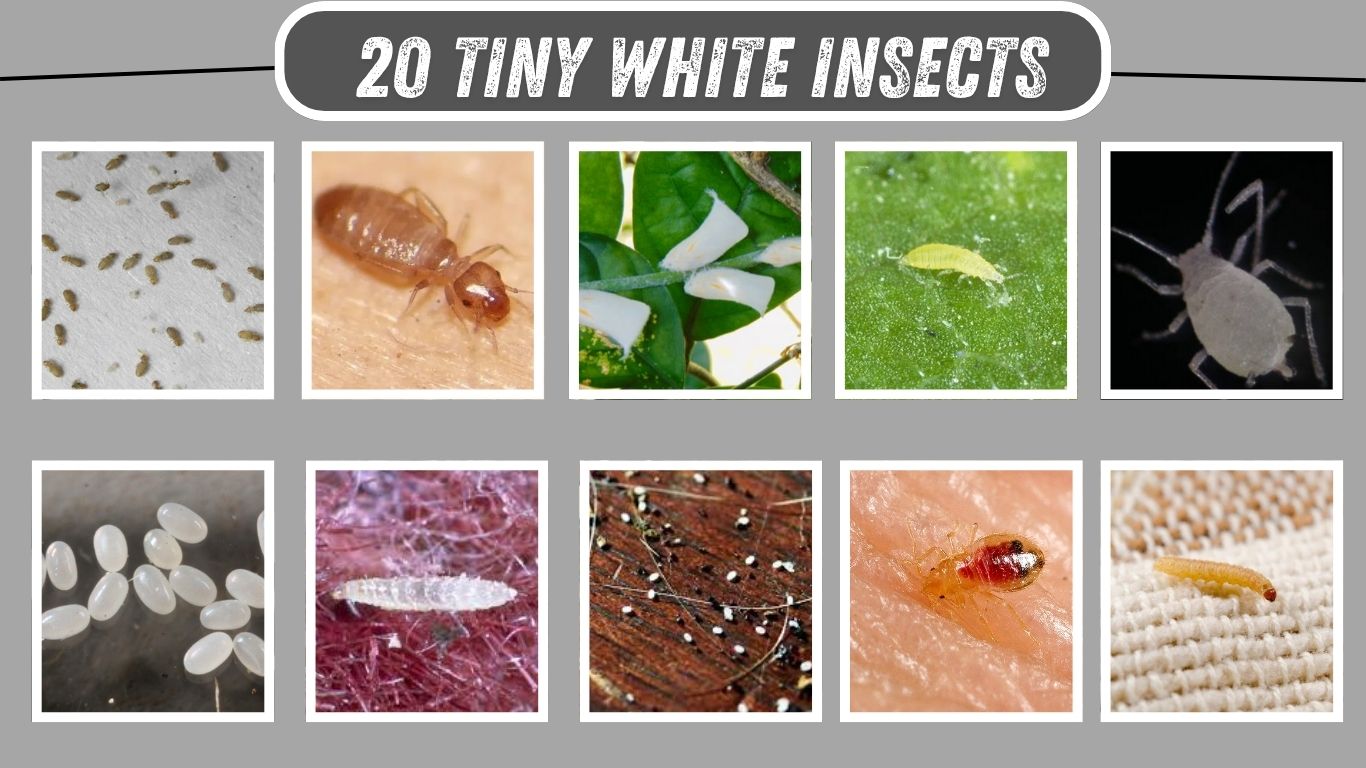
Tiny white insects on your plants can be hard to spot but may cause serious damage if left unchecked. From sap-sucking pests like whiteflies and mealybugs to root-feeding aphids and springtails, these bugs often hide under leaves or in the soil. This guide covers 20 common white insects, helping you identify them quickly based on appearance and behavior so you can protect your plants before infestations grow.
1. Whiteflies

Whiteflies are among the most widespread tiny white insects that infest both indoor and outdoor plants. They are particularly common in greenhouses and tropical regions, where warm, humid conditions help them thrive. Though they resemble miniature white moths, whiteflies are more closely related to aphids and scales. Their soft bodies and powdery wings make them easy to spot when disturbed, as they fly up in visible clusters from beneath the leaves.
Identification
- Tiny, moth-like white insects
- Powdery wings held flat over pale yellow bodies
- Around 1/16 inch (1.5 mm) in size
- Nymphs resemble small white or translucent oval scales
- Commonly found on the underside of leaves in groups
Where They Are Found
Whiteflies are typically found in warm, enclosed, or sheltered environments. They commonly infest greenhouse crops, houseplants, and tender outdoor plants like tomatoes, peppers, and ornamental foliage. Their preferred hiding spot is the underside of leaves, especially on soft new growth.
Damage to Plants
Whiteflies feed on plant sap, weakening the plant and leading to symptoms such as leaf yellowing, wilting, and overall stunted growth. Additionally, they excrete honeydew, a sugary liquid that coats the leaves and encourages the growth of sooty mold, reducing the plant’s ability to photosynthesize. Heavy infestations can severely damage or kill younger or weaker plants.
2. Mealybugs

Mealybugs are tiny, white, soft-bodied insects that often appear as fuzzy patches on plant stems, leaf joints, and undersides. Covered in a white, waxy coating, these pests look almost like cotton clumps stuck to the plant. They feed by sucking sap, which weakens the plant and leads to distorted growth and yellowing leaves. Mealybugs are common in houseplants, succulents, and greenhouse environments.
Identification
- Small, oval-shaped insects with a white, cottony wax coating
- Often found in clusters on stems, leaf joints, and roots
- Approximately 1/8 inch in size
- Some species have tail-like filaments extending from their bodies
- Nymphs are pale and mobile before forming their wax layer
Where They Are Found
Mealybugs prefer warm, humid environments and often hide in crevices of indoor plants, succulents, and tropical ornamentals. They are especially common on stressed plants or those kept in greenhouses and poorly ventilated spaces.
Damage to Plants
Mealybugs feed on plant sap, causing yellowing, wilting, and leaf drop. Their honeydew secretions attract ants and foster sooty mold, further weakening the plant and making it look dirty and unhealthy. Root mealybugs can infest the soil, attacking the plant from below and reducing nutrient uptake.
3. Woolly Aphids

Woolly aphids are small sap-feeding insects that disguise themselves with white, fluffy wax. They often look like tufts of cotton or mold growing on bark, twigs, or the undersides of leaves. While they don’t move much, they can multiply quickly and attract attention due to their fuzzy appearance. Woolly aphids are typically found on trees like beech, elm, and apple.
Identification
- Small aphids covered with white, wool-like wax filaments
- Found in colonies on branches, twigs, or leaf undersides
- Adults may be winged or wingless
- Nymphs are soft-bodied and produce visible waxy strands
- Often mistaken for mildew or mold at first glance
Where They Are Found
They are mostly seen on deciduous trees such as elm, apple, beech, and hawthorn. Woolly aphids gather on the bark, leaf stems, and sometimes roots. Their colonies are often visible in late summer and fall, especially in humid conditions.
Damage to Plants
Woolly aphids damage plants by injecting saliva while feeding, which causes leaf curling, galls, and dieback. Like other sap-suckers, they produce honeydew, which attracts ants and promotes sooty mold on the plant’s surface. Over time, this weakens the tree and reduces its aesthetic value.
4. Cottony Cushion Scale

Cottony cushion scales are distinctive white pests known for the cottony egg sac carried by the adult females. These insects infest a variety of woody plants, especially citrus, and can quickly overwhelm branches and stems if left untreated. Although they appear soft and fluffy, their wax-covered bodies protect them from many natural threats, making them persistent in warm climates.
Identification
- Adult females have reddish-orange bodies with a large white, cottony egg sac
- Egg sac is ribbed and extends from the rear of the insect
- Nymphs are small, flat, and pale before developing wax
- Commonly found on stems, twigs, and leaf undersides
- Egg sacs may reach up to 1 cm in length
Where They Are Found
They commonly infest citrus trees, camellias, pittosporum, and acacia, especially in warm outdoor settings or indoor greenhouses. Infestations are usually visible along branches and twigs, where females cluster in groups to lay eggs.
Damage to Plants
Cottony cushion scales feed on plant sap, leading to leaf yellowing, stunted growth, and branch dieback. Their honeydew secretion encourages sooty mold, reducing photosynthesis and making plants appear black and dirty. Heavy infestations can significantly weaken or even kill small or stressed plants.
5. Greenhouse Whitefly

The greenhouse whitefly is a tiny, pale-winged insect often seen fluttering around indoor plants and greenhouse crops. Though similar to other whitefly species, the greenhouse whitefly (Trialeurodes vaporariorum) thrives in controlled environments where warmth and humidity are consistent. They are persistent pests with rapid reproduction cycles that make them especially difficult to eliminate in enclosed growing areas.
Identification
- Small (around 1/16 inch), white, moth-like insects
- Wings are held flat over a pale yellow body
- Nymphs are scale-like, flattened, and translucent
- Often seen in clouds when leaves are disturbed
- Clusters are most visible on the undersides of leaves
Where They Are Found
Common in greenhouses, indoor gardens, and potted plants, especially vegetables like tomatoes, cucumbers, and peppers. They gather on the underside of leaves, particularly new or tender growth.
Damage to Plants
Greenhouse whiteflies feed on plant sap, weakening the plant and causing leaf wilting, yellowing, and stunted growth. Like other sap-suckers, they excrete honeydew, which fosters sooty mold, making leaves sticky, blackened, and less efficient at photosynthesis. Chronic infestations can reduce fruit and flower production significantly.
6. Woolly Beech Aphid

Woolly beech aphids are soft-bodied, white-colored insects that infest beech trees, forming large, cottony colonies on leaves and twigs. Their white, wool-like coating gives them a distinctive appearance that’s often mistaken for mildew or fungus. While not as aggressive as other aphid species, large infestations can still affect the overall health of the tree and encourage the growth of sooty mold.
Identification
- Tiny, soft-bodied aphids covered in white, woolly wax
- Often form dense colonies on the undersides of beech leaves and twigs
- Appear as white cottony patches from a distance
- Nymphs and adults blend into the waxy mass
- May be accompanied by ants feeding on their honeydew
Where They Are Found
Exclusively found on beech trees, especially during late summer and fall. They are most common in wooded areas, city parks, or landscaped environments where beech trees are grown.
Damage to Plants
Woolly beech aphids feed on plant sap, which can lead to leaf distortion, premature drop, and twig dieback. Their honeydew deposits promote sooty mold, which may cover leaf surfaces and hinder photosynthesis. Though rarely fatal, heavy infestations reduce the tree’s aesthetic and structural quality.
7. Planthopper Nymphs (White Species)

Some planthopper species have juvenile stages (nymphs) that are white and covered in fuzzy wax filaments. These tiny, jumping insects are often seen as little tufts of fluff moving across leaves or stems. While they typically don’t cause severe plant damage, their presence can still weaken plants when populations are large.
Identification
- Small, wedge-shaped nymphs with white waxy filaments
- Appear as moving specks or cottony tufts on stems and leaf undersides
- Adults are green or brown, but nymphs are often pure white
- Strong jumpers when disturbed
- Can be mistaken for fungus or lint due to their fluffy look
Where They Are Found
Planthopper nymphs are commonly found on grasses, shrubs, and perennials in gardens and wild landscapes. They prefer humid, shaded spots and are especially noticeable on dense foliage.
Damage to Plants
Planthoppers feed by piercing plant tissues and extracting sap, leading to leaf curling, mild discoloration, or reduced vigor if populations are high. Their honeydew secretion can also encourage sooty mold, although this is less common than with aphids or whiteflies.
8. Spider Mites (White Phase)

Spider mites are not true insects but arachnids, and some species or life stages can appear white or translucent. These tiny pests are barely visible to the naked eye and often go unnoticed until the plant shows signs of damage. In their white phase, spider mites can resemble grains of dust moving slowly on the undersides of leaves, especially in dry, warm conditions.
Identification
- Very tiny (less than 1 mm), often white or translucent in early stages
- Oval-shaped bodies; require close inspection to see
- Found in colonies on the underside of leaves
- Fine silken webbing often visible around infested areas
- Move slowly or remain stationary when undisturbed
Where They Are Found
Spider mites are common in houseplants, greenhouses, and outdoor gardens, especially on plants like tomatoes, beans, and ornamentals. They prefer hot, dry conditions, which accelerate their reproduction cycle.
Damage to Plants
They feed by puncturing leaf cells and sucking out the contents, causing speckled yellow or silver spots, eventually leading to bronzed, curled, or dried leaves. In severe infestations, webbing can cover entire plant sections, and plants may become stunted or die back.
9. Psyllids (White Species)

Psyllids, also known as jumping plant lice, are small sap-sucking insects, and some species—especially in their nymph stage—appear white and waxy. These immature psyllids excrete a cottony or sugary substance that gives them a fluffy look. Though small, they can cause noticeable damage to their host plants, particularly on fruit trees and ornamentals.
Identification
- Tiny (1–3 mm), with white or pale nymphs
- Nymphs covered in waxy, cottony secretions
- Adults may be green, brown, or yellow, with clear wings
- Strong jumpers and fliers
- Often surrounded by white fluff or sugary deposits
Where They Are Found
Psyllids are typically found on fruit trees (citrus, pear, guava), eucalyptus, and ornamental shrubs. They gather on young shoots, buds, and leaf undersides, particularly in warm, dry climates.
Damage to Plants
Psyllids inject toxins into the plant while feeding, leading to leaf curling, distorted shoots, and stunted growth. Heavy infestations produce copious honeydew, encouraging sooty mold and attracting ants. Certain species may also spread plant diseases.
10. White Springtails

White springtails are tiny, soft-bodied insects commonly found in damp environments. While springtails come in various colors, some species are bright white or translucent, especially those living in high-moisture conditions like overwatered pots, greenhouses, or bathrooms. These insects are known for their ability to jump when disturbed, thanks to a spring-like appendage under their abdomen.
Identification
- Very small (1–2 mm), white or translucent body
- Cylindrical or slightly rounded shape
- Can jump suddenly when touched or threatened
- Often seen in large numbers on soil, mulch, or around drains
- May appear to “float” on water due to waxy body surface
Where They Are Found
White springtails are found in moist potting soil, mulch, leaf litter, or around household drains and sinks. They thrive in humid, organic-rich areas and often indicate overwatering or poor drainage.
Damage to Plants
Springtails do not damage healthy plants. They feed on decaying organic matter, fungi, and algae. However, in very high populations, they may disturb delicate seedlings or indicate overly moist conditions that can lead to root rot and fungal issues in plants.
11. White Root Mealybugs

White root mealybugs are a soil-dwelling species of mealybug that infest the roots of plants. Unlike their above-ground relatives, these pests are hidden from view, making them harder to detect until the plant shows signs of stress. They are covered in a white waxy coating and often resemble fungus or mold when clustered.
Identification
- Tiny (2–4 mm), soft-bodied, white insects
- Found on or around plant roots, often in clusters
- Covered in powdery or cotton-like wax
- Leave behind fluffy white residue in the soil or root zone
- Often mistaken for root fungus or perlite particles
Where They Are Found
Most commonly found in potted plants, especially in overwatered or poorly drained soil. They can also occur in greenhouses, where warm, moist conditions allow them to thrive.
Damage to Plants
Root mealybugs feed by sucking sap from roots, causing wilting, yellowing, poor growth, and eventually plant collapse. Infested plants may fail to respond to watering or fertilization due to root damage. Left unchecked, they can spread between containers via contaminated soil or tools.
12. White Scale Insects (Early Nymphs)

White scale insects, especially in their early (crawler) stages, are extremely small and appear as tiny white or pale flat discs attached to plant surfaces. While mature scale insects can turn brown or gray, many species begin as white, wax-coated juveniles. These immobile pests often go unnoticed until they form dense colonies, weakening the plant over time.
Identification
- Tiny, flat, white or off-white insects (1–2 mm)
- Appear as raised dots or patches on stems, leaves, and fruit
- Often immobile once they settle and attach
- May be surrounded by wax filaments or residue
- Nymphs (crawlers) are more mobile and spread infestation
Where They Are Found
Commonly found on ornamentals, citrus, houseplants, and fruit trees, especially on leaf undersides, stems, and branches. They prefer warm, dry environments and sheltered parts of the plant.
Damage to Plants
Scale insects suck sap from plant tissues, leading to leaf yellowing, wilting, branch dieback, and reduced flowering or fruiting. Like other sap-feeders, they secrete honeydew, encouraging sooty mold growth and ant activity.
13. Mold Mites (White Species)

Mold mites are tiny, white or off-white mites that thrive in damp, moldy environments. Though not technically insects, they’re frequently found in households, especially around decaying organic matter, stored food, or in potting soil with fungal growth. While they don’t bite or feed on plants, their presence indicates excessive moisture or mold.
Identification
- Extremely small (0.2–0.5 mm), white or cream-colored
- Oval-shaped body with eight legs (microscopic but sometimes visible as dust-like movement)
- Often seen as clusters of moving white specks on moldy surfaces
- May give off a faint “greasy” or musty smell in large numbers
Where They Are Found
Commonly found in moldy food, damp potting soil, refrigerator seals, kitchen cabinets, and around leaking plumbing. They thrive in humid indoor conditions.
Damage to Plants
Mold mites do not feed on plants, but their presence signals poor ventilation, overwatering, or fungal problems. They may aggravate indoor allergies and should be managed by addressing moisture sources and improving airflow.
14. Bed Bug Nymphs (First Instar – White Stage)

While bed bugs are typically reddish-brown, their youngest nymph stage (first instar) is nearly transparent to white before feeding. These newly hatched bed bugs are tiny—barely larger than a pinhead—and often go unnoticed. They become darker in color after their first blood meal. Because of their size and color, people often mistake them for other tiny white insects when first seen on bedding or fabric.
Identification
- Extremely small (around 1 mm), white to translucent body
- Oval shape with six legs and visible antennae
- Found along mattress seams, headboards, or near cracks and crevices
- Turn reddish after feeding on blood
- Difficult to spot without close inspection
Where They Are Found
Found in beds, mattresses, furniture seams, and carpet edges. They prefer warm environments near human hosts and come out at night to feed.
Damage to Humans
Though not plant pests, bed bug nymphs bite humans, leading to itchy welts, allergic reactions, and sleeplessness. Their presence can quickly escalate into an infestation if not treated early.
15. Clothes Moth Larvae (White Stage)

Clothes moth larvae are the destructive stage of the moth life cycle and are typically white or creamy in color with a darker head. These larvae feed on natural fibers, such as wool, silk, and feathers, causing damage to garments, upholstery, and rugs. Unlike adult moths, the larvae remain hidden in dark, undisturbed places.
Identification
- Small (5–10 mm long), white or cream-colored caterpillars
- Dark brown head, no legs in the rear portion of the body
- Sometimes found within silky cases or webbing on fabric
- May leave behind tiny holes or frass (insect droppings) on infested materials
- Move slowly and are sensitive to light
Where They Are Found
Found in closets, dresser drawers, wool blankets, carpet edges, and stored clothing. They prefer dark, undisturbed areas with natural fibers.
Damage to Materials
They feed on keratin-rich fibers, causing holes in clothes, bald patches on rugs, or frayed edges on upholstery. Infestations can go unnoticed for months, especially if the items are stored away.
16. White Thrips Nymphs

Thrips are tiny, slender insects that feed on plant sap by puncturing and sucking from individual cells. While adult thrips are usually dark in color, the early nymph stages of some species appear white or pale yellow, especially just after hatching. These nymphs are extremely small and difficult to spot without magnification but can cause visible damage to plants even at low numbers.
Identification
- Very small (less than 1 mm), white or pale yellow nymphs
- Elongated, narrow body with short antennae
- No wings in nymph stage
- Often found in leaf buds, flower petals, or under leaves
- May move quickly when disturbed
Where They Are Found
Found on ornamental flowers, vegetables, and indoor houseplants, especially in buds, blooms, and young leaves. Thrive in warm, dry conditions or greenhouses.
Damage to Plants
Thrips nymphs feed by scraping plant tissues, resulting in silvering of leaves, distorted flowers, or stippling on foliage. Over time, plants may become stunted or fail to bloom. They can also spread plant viruses, making early detection critical.
17. White Flea Larvae

Flea larvae are the immature, worm-like stage of the flea life cycle. Though not true insects in their larval form, they are tiny, white or translucent, and can be found in areas where pets rest or sleep. While they don’t feed on blood directly, they survive on organic matter like dried blood and skin flakes in carpets or bedding.
Identification
- Small (2–5 mm), white, legless larvae
- Elongated, worm-like body with a soft, segmented appearance
- Slightly hairy and mobile
- Avoid light and burrow deep into carpets, pet bedding, or floor cracks
Where They Are Found
Common in pet beds, carpets, upholstery, and cracks in flooring. They thrive in humid, shaded areas, particularly in homes with pets like dogs or cats.
Damage to Homes and Pets
Though flea larvae do not bite, they are a clear sign of flea infestation. If not addressed, they will mature into blood-feeding adult fleas. Their presence can lead to repeated flea problems, especially in homes with pets, and may require environmental treatments to eliminate them completely.
18. Winged Mealybugs

While most mealybugs are wingless, some species or adult males can develop wings and appear as tiny white flying insects. These winged forms are short-lived and do not feed, but their presence often indicates an active and established mealybug colony nearby. They are much smaller than females and are usually seen hovering near infested plants or resting on nearby surfaces.
Identification
- Very small (1–2 mm), white, gnat-like insects with wings
- Body covered in fine, powdery wax
- Short antennae and two long waxy filaments at the rear
- Typically seen flying near heavily infested plants
- Males do not feed and live only a few days
Where They Are Found
Seen in indoor houseplants, greenhouses, and succulent collections where female mealybugs are established. Often attracted to light or new plant growth.
Damage to Plants
Though winged males do not damage plants directly, their presence indicates a reproducing population. Female mealybugs feed on sap, causing leaf yellowing, wilting, and stunted growth. Their honeydew promotes sooty mold, which further damages the plant’s appearance and health.
19. Psocids (White-Winged Booklice)

Psocids, commonly known as booklice, are tiny, soft-bodied insects that may appear white or translucent depending on the species and environment. Some species have wings and can fly short distances, especially in warm, moist conditions. Though harmless to humans, they can become a nuisance when found in large numbers in damp indoor spaces.
Identification
- Very small (0.5–2 mm), white to pale beige insects
- Oval-shaped body with or without wings
- Long antennae and soft, flexible body
- Fast-moving when disturbed, sometimes with a leaping motion
- Often found in groups on moist surfaces
Where They Are Found
Psocids thrive in bathrooms, kitchens, under sinks, behind wallpaper, and in books or stored paper. They prefer high humidity and warm temperatures and are often associated with moldy or decaying organic matter.
Damage to Homes
Psocids do not bite or damage property, but their presence signals excessive moisture or mold problems. In libraries or storage areas, they may feed on glue, paper starch, or mildew. Reducing humidity is key to long-term control.
20. White Root Aphids

White root aphids are tiny, pale-colored insects that infest the root zones of various plants. Unlike typical green or black aphids that feed above ground, these aphids live in the soil and feed directly on plant roots. They are often white or translucent, with a waxy coating that makes them resemble mealybugs. Because they remain hidden underground, infestations are difficult to detect until the plant shows signs of decline.
Identification
- Small (1–2 mm), white or translucent aphids
- Pear-shaped body, sometimes with waxy coating
- Winged forms may emerge in later stages
- Found attached to roots or just beneath soil surface
- Often mistaken for soil fungus or perlite
Where They Are Found
They infest indoor and outdoor potted plants, greenhouse crops, and hydroponic systems. White root aphids prefer moist, organic-rich soil and are common in plants like lettuce, cannabis, peppers, and ornamentals.
Damage to Plants
Feeding causes stunted growth, yellowing leaves, poor flowering, and even plant death. Root aphids impair nutrient and water uptake, making the plant appear underfed despite good care. Over time, they can spread between pots via contaminated soil or water runoff.