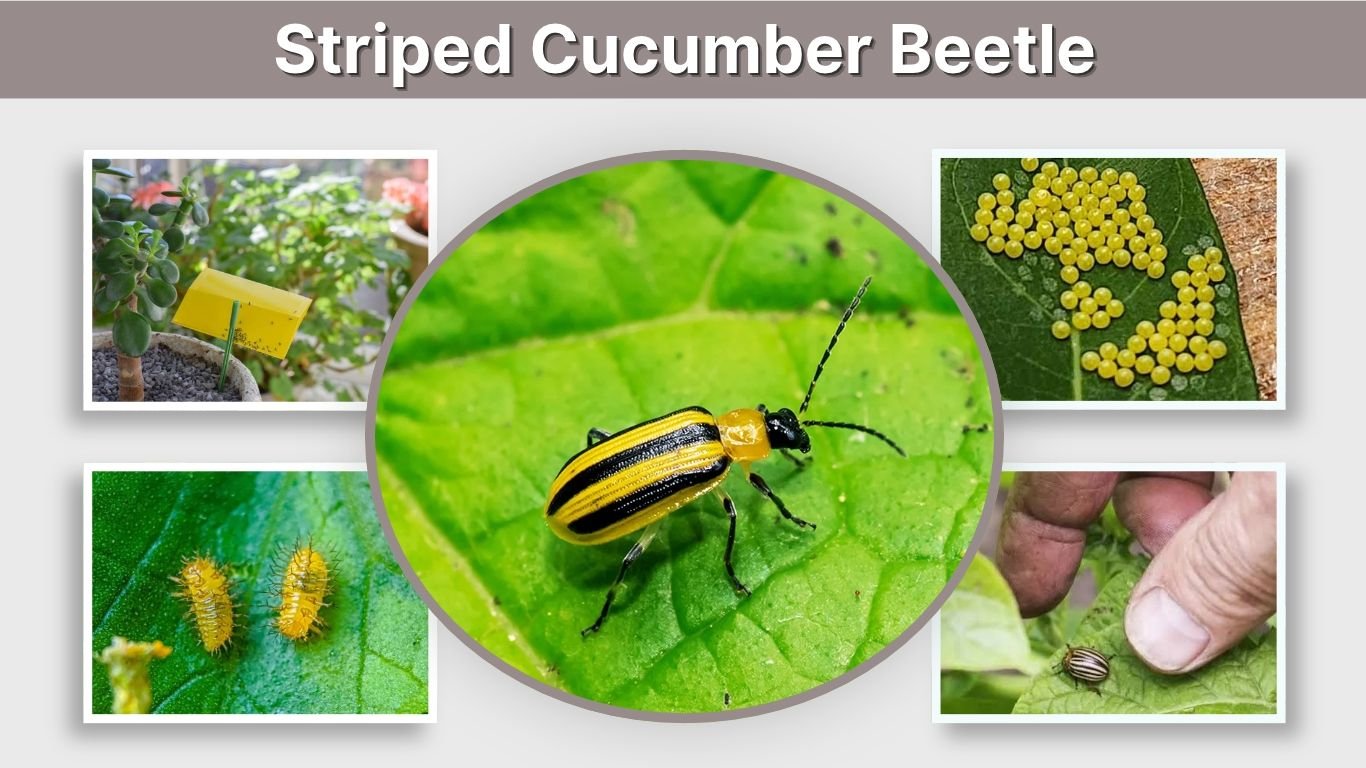
The striped cucumber beetle is a common agricultural pest known for its yellow body and three distinctive black stripes. Scientifically called Acalymma vittatum, this small insect primarily attacks cucumbers, squash, pumpkins, and melons. Although its colorful appearance seems harmless, it can cause serious plant damage by feeding on leaves, flowers, and roots. Striped cucumber beetles also spread bacterial wilt, a disease that can destroy susceptible crops. Understanding their appearance, life cycle, feeding habits, and effective control methods helps gardeners prevent infestations and protect healthy vegetable plants.
What Is a Striped Cucumber Beetle?
The striped cucumber beetle (Acalymma vittatum) is a small leaf beetle belonging to the family Chrysomelidae. It is native to North America and commonly occurs in vegetable gardens, agricultural fields, and areas growing cucurbit crops.
Unlike beneficial insects that consume garden pests, striped cucumber beetles primarily feed on plants. Both adults and larvae cause damage, although they attack different plant parts.
Their ability to transmit bacterial wilt makes them particularly troublesome for cucumber and muskmelon growers.
Striped Cucumber Beetle Identification
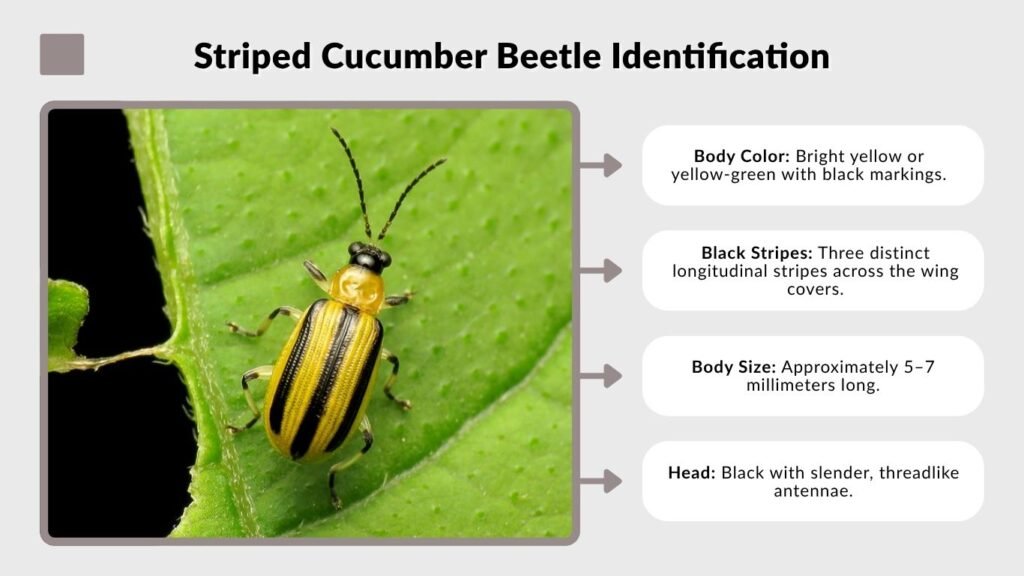
Striped cucumber beetles are easily recognized by their bright yellow wing covers marked with three black stripes running lengthwise down their backs.
Adult beetles typically measure approximately 5–7 millimeters long. They have black heads, slender antennae, and yellowish thoraxes.
Key Identification Features
- Body Color: Bright yellow or yellow-green with black markings.
- Black Stripes: Three distinct longitudinal stripes across the wing covers.
- Body Size: Approximately 5–7 millimeters long.
- Head: Black with slender, threadlike antennae.
- Thorax: Yellow or yellow-orange, usually without dark spots.
- Larvae: Cream-colored, wormlike bodies with brown heads.
- Wings: Hardened outer wing covers protecting functional flying wings.
The three black stripes are their most distinctive characteristic, making them relatively easy to identify on cucumber leaves.
Where Do Striped Cucumber Beetles Live?
Striped cucumber beetles occur throughout eastern and central North America, particularly east of the Rocky Mountains.
They commonly inhabit vegetable gardens, agricultural fields, backyard growing areas, and places containing wild cucurbit plants.
Adults spend winter beneath fallen leaves, crop debris, and vegetation along field edges.
As temperatures increase during spring, overwintered beetles emerge and search for suitable host plants.
The western striped cucumber beetle (Acalymma trivittatum) is a closely related species found in western North America, including California.
What Do Striped Cucumber Beetles Eat?
Striped cucumber beetles mainly feed on plants belonging to the Cucurbitaceae family, commonly called cucurbits.
Their preferred hosts include cucumbers, pumpkins, squash, zucchini, cantaloupes, and other melons.
Adult beetles chew leaves, consume flower tissues, and occasionally damage developing fruits. They may also feed on pollen from other flowering plants when cucurbits are unavailable.
Underground larvae primarily feed on the roots of cucurbit plants.
This feeding behavior can weaken seedlings and reduce plant growth, especially when beetle populations become excessive.
Striped Cucumber Beetle Life Cycle
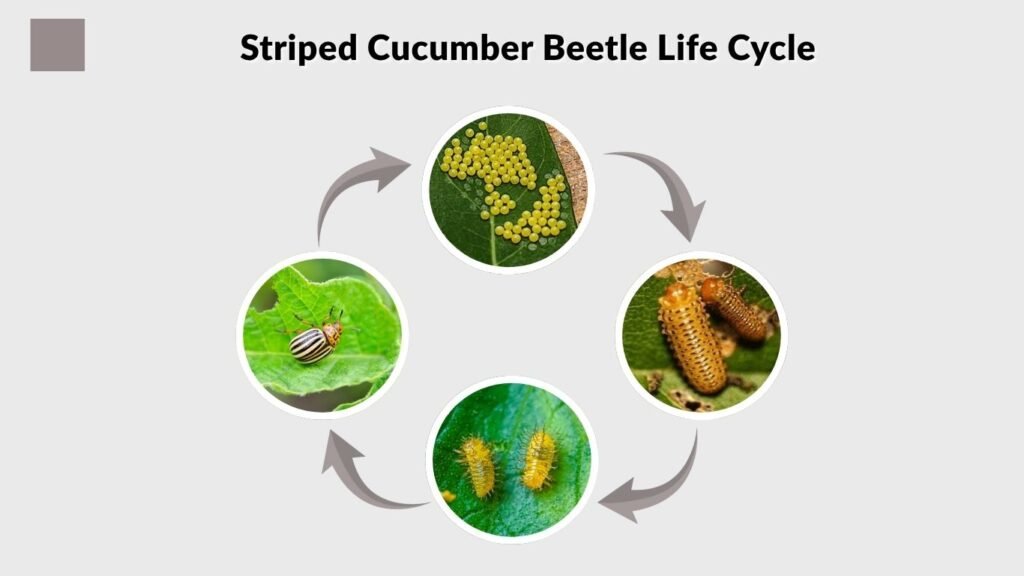
The striped cucumber beetle undergoes complete metamorphosis, developing through four stages: egg, larva, pupa, and adult.
Its development depends on temperature, available food, and local growing conditions. One or more generations may occur annually, depending on the region.
1. Egg Stage
Female beetles deposit small, yellow-orange eggs in the soil near the bases of cucurbit plants.
The eggs typically hatch within approximately one to two weeks under favorable conditions. Newly hatched larvae immediately begin searching for suitable roots.
2. Larval Stage
Striped cucumber beetle larvae are slender, creamy-white grubs with darker heads.
They live underground and feed on cucurbit roots for approximately two to four weeks. Heavy feeding can interfere with water and nutrient absorption.
3. Pupal Stage
Mature larvae form pupae within underground chambers.
During this stage, their bodies transform into adult beetles. Pupation generally takes several days to approximately two weeks, depending on environmental conditions.
4. Adult Stage
Adult beetles emerge from the soil and begin feeding on leaves and flowers.
They reproduce throughout the growing season, while later generations eventually seek protected overwintering locations.
Striped Cucumber Beetle Damage to Plants
Striped cucumber beetles damage plants through feeding and disease transmission.
Young seedlings are especially vulnerable because their limited foliage cannot tolerate heavy feeding. Older plants generally withstand moderate damage more effectively.
Common Signs of Striped Cucumber Beetle Damage
- Leaf Holes: Adults chew irregular openings and create lace-like damage.
- Damaged Flowers: Feeding destroys petals and reproductive tissues.
- Weak Seedlings: Heavy infestations may stunt or kill young plants.
- Root Injury: Underground larvae damage roots and interfere with plant growth.
- Fruit Scarring: Adult feeding sometimes produces superficial fruit damage.
- Sudden Wilting: Plants may develop bacterial wilt after infection.
Striped Cucumber Beetles and Bacterial Wilt
Bacterial wilt is one of the most serious problems associated with striped cucumber beetles.
The disease is caused by Erwinia tracheiphila, a bacterium transmitted primarily through infected cucumber beetles.
Once inside a susceptible plant, the bacteria multiply within its water-conducting tissues, eventually causing leaves and stems to wilt.
Cucumbers and muskmelons are particularly vulnerable. There is no effective cure for infected plants, making beetle prevention essential.
How to Get Rid of Striped Cucumber Beetles
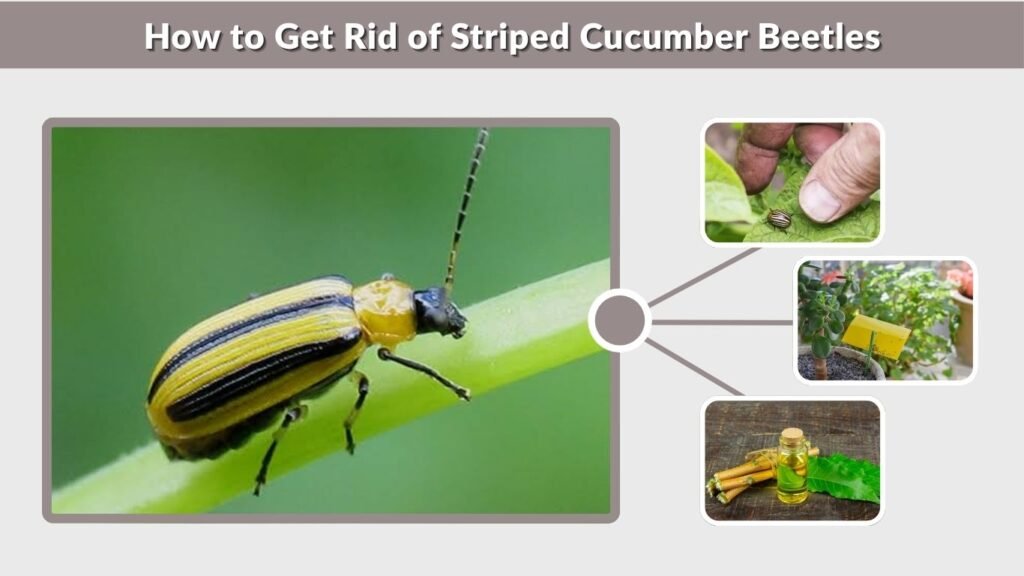
Effective striped cucumber beetle control requires early monitoring, preventive protection, and appropriate treatment.
Because beetles can quickly spread between plants, management should begin before large populations become established.
Organic Striped Cucumber Beetle Control Methods
- Floating Row Covers: Cover young plants with lightweight insect netting to prevent adult beetles from reaching them.
- Hand Removal: Collect beetles early in the morning and drop them into soapy water.
- Kaolin Clay: Apply a labeled kaolin clay product to create a protective coating that discourages beetle feeding.
- Sticky Traps: Use cucumber beetle-specific attractant traps to monitor or help reduce adult populations.
- Crop Rotation: Avoid planting cucurbits in the same location every season when practical.
- Garden Sanitation: Remove unnecessary crop debris and manage weeds around growing areas.
Remove row covers when insect-pollinated flowers open unless another reliable pollination method is provided.
Does Neem Oil Kill Striped Cucumber Beetles?
Neem-based products may provide limited suppression of striped cucumber beetles, but they are not consistently effective against established adult populations.
Applications must follow product labels, including crop restrictions and pollinator precautions.
For reliable protection, physical barriers and regular beetle monitoring are generally more effective than depending entirely on neem oil.
Chemical Control for Striped Cucumber Beetles
When beetle populations exceed recommended treatment thresholds, insecticides labeled for cucumber beetles may be necessary.
Treatment decisions should consider the crop, plant growth stage, beetle numbers, and bacterial wilt risk.
Avoid spraying blooming plants when bees are visiting. Follow pesticide instructions, application limits, and preharvest intervals to protect pollinators and food safety.
Striped vs. Spotted Cucumber Beetles
Striped and spotted cucumber beetles are closely related garden pests, but their appearance and feeding habits differ.
The striped cucumber beetle has three black longitudinal stripes on its yellow wing covers.
The spotted cucumber beetle (Diabrotica undecimpunctata) has twelve black spots across its yellow-green back.
Striped cucumber beetles primarily attack cucurbit plants, while spotted cucumber beetles feed on a broader variety of crops.
Both can damage gardens, although striped cucumber beetles are generally more important vectors of bacterial wilt in susceptible cucurbits.
Are Striped Cucumber Beetles Dangerous or Poisonous?
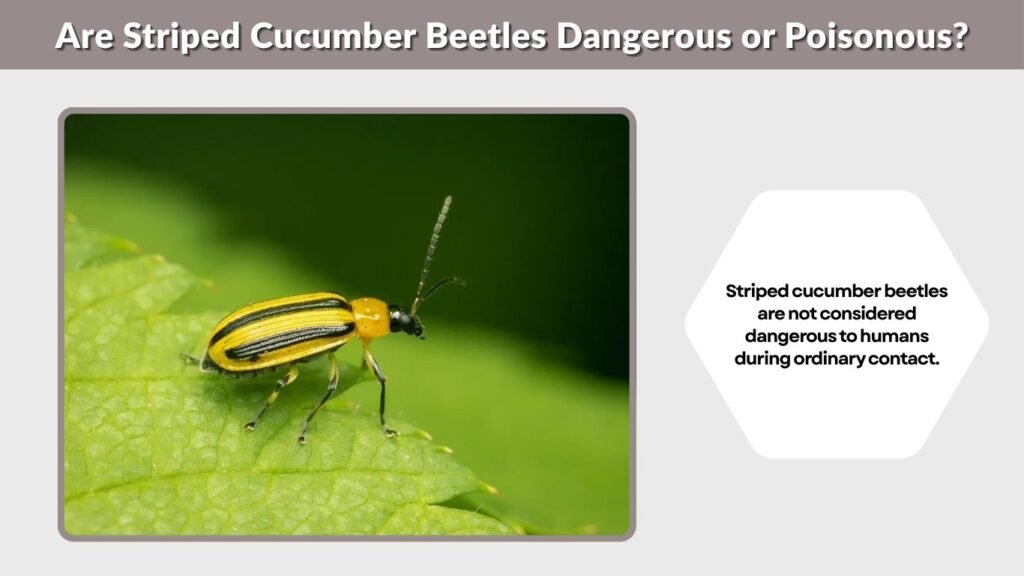
Striped cucumber beetles are not considered dangerous to humans during ordinary contact.
They do not possess stingers and are not known to cause poisoning through normal handling.
Their chewing mouthparts are adapted for feeding on plants rather than attacking people.
Although an individual beetle might occasionally pinch when handled, human bites are unusual and generally insignificant.
Their primary danger involves crop damage and the spread of plant diseases rather than human health.
FAQs
1. Are Striped Cucumber Beetles Bad for Gardens?
Yes, striped cucumber beetles can damage vegetable gardens by feeding on cucumber leaves, flowers, and roots. Their greatest threat is spreading bacterial wilt, which can destroy susceptible crops. Early monitoring and preventive measures help reduce serious infestations and plant losses.
2. What Kills Striped Cucumber Beetles Naturally?
Handpicking beetles into soapy water can reduce small populations naturally. Floating row covers prevent infestations, while kaolin clay discourages feeding. Beneficial nematodes may suppress underground larvae, although results vary. Combining several methods generally provides better protection than individual treatments.
3. Do Striped Cucumber Beetles Bite Humans?
Striped cucumber beetles do not normally bite humans because their mouthparts are adapted for chewing plant material. They are not aggressive or venomous. Although accidental pinching may occur during handling, these insects are primarily harmful to plants rather than people.
4. How Many Generations Do Striped Cucumber Beetles Have?
Striped cucumber beetles commonly produce one or two generations annually, depending on geographic location and environmental conditions. Warmer climates and longer growing seasons may support additional development. Adults overwinter in protected locations before becoming active again during the following spring.
5. Do Sticky Traps Work for Striped Cucumber Beetles?
Sticky traps can capture adult striped cucumber beetles and help monitor their activity. Traps using cucumber beetle attractants may improve capture rates. However, sticky traps alone rarely eliminate infestations, so they should accompany physical barriers, regular inspections, and other management practices.