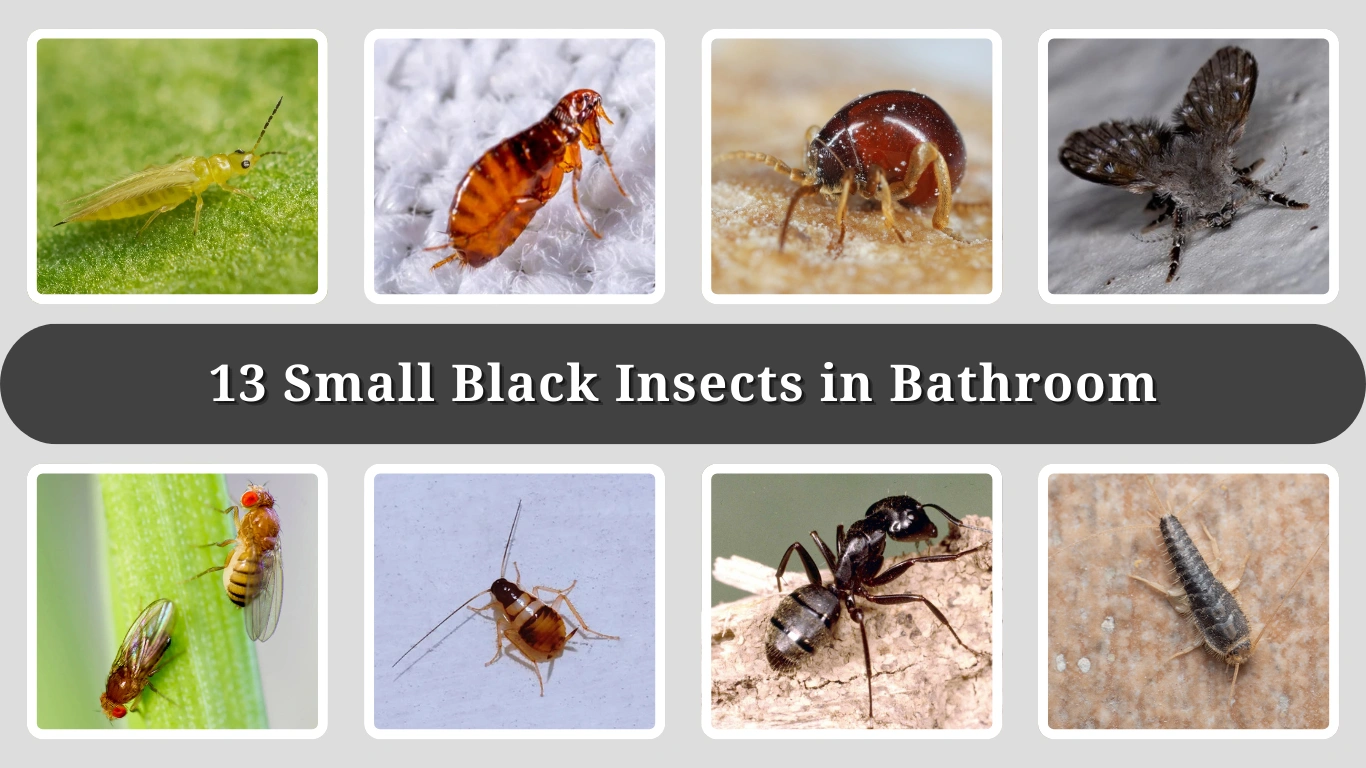
Bathrooms often attract a range of tiny insects due to their constant moisture, warmth, and organic residues. These environments provide the perfect breeding grounds for pests that thrive in damp conditions. While most of these insects are harmless, some can cause damage to fabrics, plants, or hygiene if left unchecked. Understanding their identification, habitat, behavior, diet, and control methods is essential for effective management and prevention.
1. Drain Flies (Moth Flies)

Drain flies, also known as moth flies, are small fuzzy insects often found around sinks, showers, and drains. They thrive in moist environments where organic matter accumulates, making bathrooms an ideal habitat. Though generally harmless, they can become a nuisance if left uncontrolled.
Identification
- Tiny, about 1.5–5 mm long
- Fuzzy or hairy body and wings, giving them a “moth-like” look
- Gray to black color
- Slow, irregular flight near drains, sinks, and bathrooms
Habitat
Drain flies typically live and breed in areas with standing water and decaying organic matter. In bathrooms, they are commonly found inside sink or shower drains, around leaking pipes, or on damp bathroom walls.
Behavior
They are weak fliers and usually stay close to their breeding site. Most activity occurs during the evening or night. Adult drain flies do not bite, but their presence often indicates buildup of organic sludge in drains.
Diet
Adult drain flies feed on organic material and bacteria found in decaying matter. Their larvae survive within the gelatinous slime inside drains, where they consume microscopic organisms.
Control
To eliminate drain flies, the key is removing their breeding sites. Cleaning drains thoroughly with a stiff brush and hot water, followed by enzyme-based drain cleaners, helps destroy organic buildup. Fixing leaks, reducing standing water, and maintaining dry surfaces are also effective. In severe cases, insect growth regulators or professional pest control may be required.
2. Booklice (Psocids)

Booklice, also called psocids, are tiny insects that thrive in warm, damp, and humid environments. They are not true lice and are harmless to humans, but their presence in bathrooms often indicates high moisture levels and mold growth.
Identification
- Very small, about 1–2 mm long
- Soft-bodied with pale gray, white, or light brown color
- Some species wingless, others with small, membranous wings
- Often seen crawling slowly on walls, tiles, or near damp areas
Habitat
Booklice prefer moist, humid environments where fungi and mold can grow. Bathrooms, especially those with poor ventilation, provide an ideal setting. They may be found on damp walls, behind wallpaper, in shower areas, or near windows with condensation.
Behavior
These insects are weak movers, typically crawling rather than flying. They are often found in clusters and tend to avoid light, hiding in cracks, crevices, and moldy spots during the day.
Diet
Booklice feed primarily on mold, fungi, and starchy organic materials. In bathrooms, they sustain themselves on mold spores that develop on damp surfaces, soap residue, or organic buildup.
Control
The most effective control method is reducing humidity. Using a dehumidifier, improving ventilation, and fixing leaks will remove their primary food source (mold). Cleaning affected areas with antifungal solutions and keeping surfaces dry also helps. Severe infestations may require insecticidal sprays, but usually, controlling moisture alone is enough.
3. Springtails

Springtails are tiny, moisture-loving insects that often appear in bathrooms, basements, and other damp areas. They are named for their unique forked tail-like structure (furcula), which allows them to “spring” into the air when disturbed. Though harmless to humans, their sudden movements and large numbers can make them alarming.
Identification
- Extremely small, usually 1–2 mm long
- Colors range from white and gray to dark brown or black
- Wingless, soft-bodied insects
- Possess a furcula (spring-like tail) that propels them when threatened
- Often seen in clusters on damp bathroom floors, tiles, or near drains
Habitat
Springtails thrive in areas with constant moisture and organic material. Bathrooms, especially with poor ventilation, provide ideal conditions. They can be found around sinks, bathtubs, shower stalls, and even inside potted plants kept in bathrooms.
Behavior
Springtails are highly active and move in groups. When disturbed, they use their furcula to leap away quickly, which can make them seem like tiny jumping fleas. However, they do not bite, sting, or damage property.
Diet
These insects feed mainly on decaying organic matter, fungi, algae, and mold. In bathrooms, they consume mold and mildew on damp surfaces, soap scum, and organic debris in drains.
Control
Reducing moisture is the most effective way to control springtails. Improving bathroom ventilation with exhaust fans, repairing leaks, and keeping surfaces dry will discourage infestations. Removing mold and mildew with cleaning solutions eliminates their food source. In severe cases, desiccants or insecticides may be used, but moisture management usually solves the issue.
4. Fungus Gnats

Fungus gnats are tiny dark-colored flies that often appear in damp indoor spaces, including bathrooms. While more common in potted plants, they may also be found near drains, sinks, or other areas with excess moisture. They are harmless to humans but can be annoying when present in large numbers.
Identification
- Small, about 2–4 mm long
- Slender bodies with long legs and antennae
- Dark gray to black in color, resembling tiny mosquitoes
- Weak fliers, often seen resting on walls, mirrors, or hovering near drains
Habitat
Fungus gnats thrive in moist, organic-rich environments. In bathrooms, they may breed in sink or shower drains, damp walls, or moist areas where mold and algae grow. If houseplants are kept in the bathroom, the soil is often the main breeding site.
Behavior
Adults are weak fliers and tend to hover in clusters near breeding areas. They are attracted to light and may be seen around windows or mirrors. While adults are mostly a nuisance, their larvae can cause damage to plant roots if houseplants are present.
Diet
Adult fungus gnats feed on organic material and fungi. The larvae consume fungi, algae, and decaying organic matter in soil or drain slime. In bathrooms, they survive mainly on moisture and microbial growth.
Control
Controlling moisture is key. Allowing plant soil to dry between waterings, removing decaying organic matter, and cleaning drains with enzyme-based cleaners can help. Sticky traps can capture adults, while treating plant soil with biological controls like Bacillus thuringiensis israelensis (BTI) targets larvae. In bathrooms without plants, drying surfaces and improving ventilation usually solves the issue.
5. Carpet Beetles

Carpet beetles are small, oval-shaped insects that can sometimes be found in bathrooms, though they are more common in carpets, clothing, and stored fabrics. In bathrooms, they may wander in while searching for food sources or light. While adult beetles are mostly harmless, their larvae can cause damage to natural fibers.
Identification
- Adults measure 2–4 mm long
- Oval-shaped, dome-like body
- Color varies: black, mottled white, brown, or yellow scales
- Larvae are fuzzy, brownish, and carrot-shaped with bristle-like hairs
Habitat
Carpet beetles typically live in places where they can find natural fibers and organic matter—such as carpets, clothing, or stored fabrics. In bathrooms, they may appear on window sills, around light sources, or near lint, hair, and dead insects.
Behavior
Adults are attracted to light and may fly into bathrooms through windows. They are often spotted on walls or near windowsills. Larvae, however, prefer dark, undisturbed places and feed on natural fibers, dander, and debris.
Diet
- Adults feed on pollen and nectar outdoors.
- Larvae feed on natural materials like wool, silk, leather, feathers, lint, and dead insects. In bathrooms, they may survive on hair, lint, or organic debris.
Control
Regular cleaning is essential. Vacuuming thoroughly, especially around corners, vents, and windows, helps remove beetles and larvae. Sealing cracks and windows prevents entry. Washing infested fabrics in hot water kills larvae. For larger infestations, insecticides or professional pest control may be required.
6. Silverfish

Silverfish are ancient, wingless insects often found in damp, dark places—including bathrooms. Their distinctive body shape and fast movements make them easy to recognize. While they do not bite or spread disease, they can damage paper, fabrics, and other starchy materials.
Identification
- About 10–15 mm long
- Silvery-gray, metallic, and shiny appearance
- Long, carrot-shaped body with tapering end
- Three long bristles at the tail end
- Very fast runners, often darting into cracks or crevices when disturbed
Habitat
Silverfish thrive in dark, damp, and humid areas. Bathrooms provide ideal conditions due to moisture from showers and sinks. They hide in cracks, under tiles, behind baseboards, or inside cupboards.
Behavior
Silverfish are nocturnal and highly secretive. They avoid light and quickly scuttle away when exposed. They can live for months without food but require moisture to survive.
Diet
Silverfish feed on starchy materials such as paper, glue, wallpaper paste, cotton, linen, and even dead insects. In bathrooms, they may consume mold, soap residue, or tissues left behind.
Control
Reducing humidity is the most effective control. Using dehumidifiers or exhaust fans helps create an unfavorable environment. Sealing cracks and gaps removes hiding spots. Regular cleaning and removing paper or fabrics from damp areas can prevent infestations. In severe cases, insecticidal dusts or baits may be used.
7. Ants

Ants are one of the most common household insects and can easily make their way into bathrooms while foraging for water, food, or nesting sites. They are social insects, living in large colonies, and their appearance indoors usually signals a trail from an outside nest.
Identification
- Size varies by species, usually 2–6 mm long
- Colors range from black, brown, to reddish
- Segmented bodies with a narrow “waist” between thorax and abdomen
- Seen moving in lines or trails, especially near water sources
Habitat
Ants typically nest outdoors in soil, under stones, or in decaying wood. However, bathrooms provide attractive conditions due to constant moisture. They may nest behind tiles, in wall voids, or under floors if dampness persists.
Behavior
Ants are highly social and work in organized colonies. Indoors, they often form foraging trails leading to food or water. They are most active during warmer months but can appear year-round in humid bathrooms.
Diet
Most ants are omnivores, feeding on sugars, proteins, and fats. In bathrooms, they are mainly attracted to standing water, soap residue, toothpaste, and even dead insects.
Control
The first step is eliminating access by sealing entry points around windows, doors, and plumbing. Keeping surfaces clean and dry removes attractants. Using ant baits near trails is often effective, as workers carry the poison back to the colony. For persistent infestations, professional treatment may be necessary to target hidden nests.
8. Cockroach Nymphs

Cockroach nymphs are the immature stages of cockroaches, commonly found in kitchens and bathrooms. They resemble adult cockroaches but are smaller, wingless, and often lighter in color. Their presence in a bathroom typically indicates a breeding site nearby and requires prompt action, as cockroaches multiply rapidly.
Identification
- Small, usually 2–5 mm long depending on age
- Wingless, oval body shape
- Light brown to dark brown in color
- Fast runners, often hiding in cracks or behind bathroom fixtures
- Look like miniature versions of adult cockroaches
Habitat
Cockroach nymphs thrive in dark, damp, and warm environments. Bathrooms provide ideal conditions due to consistent moisture, warmth, and hiding places such as behind toilets, under sinks, inside drains, or within wall cracks.
Behavior
They are nocturnal, avoiding light and hiding during the day. Nymphs molt several times before reaching adulthood, and during this process, they leave behind shed skins. They can squeeze into tiny crevices and often spread quickly from bathrooms to kitchens and other areas.
Diet
Cockroach nymphs feed on almost anything organic. In bathrooms, they consume soap residue, toothpaste, hair, paper products, and even dead insects. This wide diet makes them highly adaptable and difficult to eliminate without thorough cleaning.
Control
Maintaining strict hygiene is crucial. Regularly cleaning drains, sealing cracks, and reducing moisture are key preventive steps. Baits and traps can help eliminate colonies, as nymphs and adults share food sources. For persistent infestations, insecticidal sprays or professional pest control may be necessary to eradicate hidden nests.
9. Fruit Flies

Fruit flies are tiny flies that often appear indoors, including in bathrooms, especially where there is decaying organic matter or moisture. While they are more commonly associated with kitchens, they may also breed in bathroom drains, trash bins, or damp mop heads.
Identification
- Very small, about 2–4 mm long
- Tan to brown body with distinctive red or dark eyes
- Transparent wings, usually held flat over the back
- Often seen flying slowly in clusters near drains, trash, or mirrors
Habitat
Fruit flies prefer moist environments rich in organic material. In bathrooms, they are often found around sink and shower drains, garbage bins, wet mops, or any place where organic residue can collect.
Behavior
These flies are weak fliers and usually hover near breeding sites. They are highly attracted to moisture and decaying organic matter. They reproduce quickly, with females laying hundreds of eggs in a short time, leading to sudden infestations.
Diet
Adults feed on fermenting liquids, decaying organic matter, and sugary residues. Larvae thrive in moist environments, feeding on microbial growth in drains, trash, or other organic deposits.
Control
The most effective method is eliminating breeding sites. Cleaning and flushing drains with boiling water or enzyme-based cleaners, emptying trash regularly, and drying damp items like mops can help. Fruit fly traps (vinegar or sticky traps) can capture adults, but removing their food source is critical for long-term control.
10. Sewer Flies

Sewer flies, also known as filter flies, are very similar to drain flies but are often associated with sewage systems and heavily contaminated drains. Their presence in bathrooms usually points to deeper plumbing issues or stagnant, organic-rich water in hidden areas.
Identification
- Small, usually 2–5 mm long
- Fuzzy body and wings, resembling drain flies
- Dark gray to black in color
- Found near drains, toilets, or floor traps connected to sewage lines
Habitat
Sewer flies thrive in highly organic environments, particularly sewage systems, septic tanks, and neglected drains. In bathrooms, they often emerge from floor drains, toilets, or sewer-connected plumbing when organic sludge builds up.
Behavior
They are weak fliers and tend to hover around breeding sites. Adults rest on walls, tiles, or near drains. Their presence in bathrooms often indicates clogged, dirty, or leaking pipes that require maintenance.
Diet
Adults feed on organic matter and sewage residues, while larvae live in the gelatinous film inside sewage pipes, consuming bacteria and decaying material.
Control
Eliminating sewer flies requires targeting their breeding sites. Cleaning and treating drains with enzyme cleaners, fixing leaks, and flushing floor traps with hot water are effective. If the infestation originates from broken pipes or sewage backflow, professional plumbing repair may be necessary.
11. Spider Beetles

Spider beetles are small insects that sometimes appear in bathrooms, although they are more often associated with stored food products. Their rounded bodies and long legs give them a spider-like appearance, which can make them confusing to identify at first glance.
Identification
- Very small, about 1.5–4 mm long
- Rounded, shiny body resembling a spider’s abdomen
- Long, thin legs and antennae
- Reddish-brown to black in color
- Often mistaken for tiny spiders when seen crawling
Habitat
Spider beetles prefer dark, undisturbed areas with access to organic material. In bathrooms, they may wander in while searching for food or shelter. They can be found in cracks, behind cabinets, or near damp organic debris, although they are more common in kitchens or pantries.
Behavior
They are nocturnal, becoming active at night and hiding during the day. Their spider-like appearance is due to their posture and body shape, but they are harmless and do not bite. They are often solitary but may appear in small groups if food sources are available.
Diet
Spider beetles are scavengers, feeding on a wide range of organic materials such as food crumbs, hair, lint, dead insects, and moldy items. In bathrooms, they may survive on hair and organic buildup in corners or drains.
Control
The best control method is regular cleaning and removal of potential food sources. Vacuuming corners, wiping down surfaces, and sealing cracks will reduce their presence. Since they are often linked to stored product infestations, checking nearby food sources may also be necessary. In persistent cases, insecticidal treatments can be used.
12. Fleas

Fleas are tiny, blood-sucking parasites most commonly associated with pets, but they can also appear in bathrooms where pets rest, or where humidity provides a suitable environment. Even without pets, fleas may enter from wildlife or previous infestations.
Identification
- Very small, about 1–3 mm long
- Reddish-brown, laterally flattened body
- Wingless, but strong jumping ability
- Hard-bodied, making them difficult to crush
- Often seen jumping on floors, tiles, or even onto humans and pets
Habitat
Fleas typically live on animal hosts such as cats and dogs, but they can survive temporarily in carpets, bedding, cracks, and damp areas like bathrooms. They are attracted to warmth and vibration, which signal a potential host.
Behavior
Fleas are highly active jumpers and can leap many times their body length. Adults seek hosts to feed on blood, while larvae hide in dark, humid areas feeding on organic debris. They reproduce quickly, with females laying dozens of eggs daily, often in areas where pets sleep.
Diet
- Adults: feed exclusively on the blood of mammals or birds
- Larvae: consume organic matter, flea dirt (digested blood), and debris in the environment
Control
Effective control requires a combination of steps: treating pets with veterinarian-approved flea treatments, vacuuming floors and fabrics thoroughly, washing bedding in hot water, and using flea sprays or powders in affected areas. Dehumidifying the bathroom and sealing entry points can also help. Severe infestations may require professional pest control.
13. Thrips

Thrips are tiny, slender insects that occasionally show up in bathrooms, though they are more commonly plant pests. They are drawn indoors by light and moisture, and while they are not dangerous to humans, they can be a nuisance when present in large numbers.
Identification
- Very small, about 1–2 mm long
- Slender, elongated body shape
- Colors range from pale yellow to dark brown or black
- Narrow fringed wings (if winged)
- Often seen crawling slowly on bathroom mirrors, sinks, or tiles
Habitat
Thrips typically live on plants, feeding on leaves, flowers, and stems. In bathrooms, they may wander in through windows or vents, attracted by light and humidity. They may be found on windowsills, around potted plants kept in bathrooms, or near damp surfaces.
Behavior
Thrips are weak fliers but move quickly when disturbed. They often congregate near light sources, which is why they can be spotted around mirrors or windows. Outdoors, they are plant feeders, but indoors they usually don’t reproduce significantly unless plants are present.
Diet
- Outdoors: feed on plant sap by piercing and sucking from leaves, flowers, and stems
- Indoors: may feed on fungi, mold, or small organic residues in damp areas
- In bathrooms without plants, their food sources are usually limited, so infestations remain temporary
Control
Control measures focus on exclusion and removal. Sealing windows and vents helps keep them out, while improving bathroom ventilation discourages them. For bathrooms with plants, inspecting and treating the plants is key. Insecticidal soaps or neem oil can be applied to infested plants. Vacuuming and wiping down surfaces also help reduce their numbers indoors.