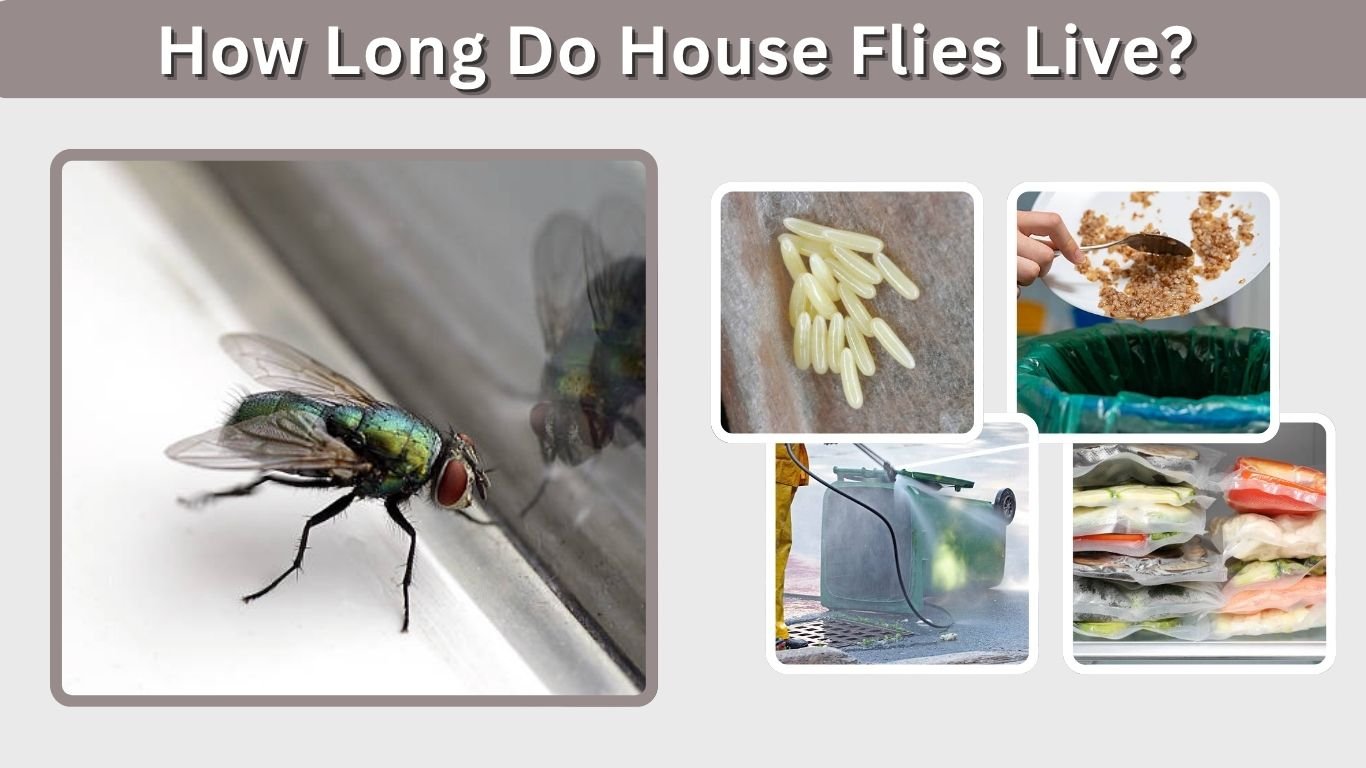
The common house fly may seem to disappear after a few days, but its actual lifespan is longer than many people expect. An adult house fly normally lives for about 15 to 30 days, depending on temperature, moisture, food availability, predators, and other environmental conditions. During that short period, a female can lay hundreds of eggs, allowing a small indoor fly problem to develop into an infestation surprisingly quickly.
How Long Do House Flies Live?
House flies generally spend two to four weeks in the adult stage. Some die within several days because of dehydration, low temperatures, pesticides, predators, or a lack of food. Others may survive for a month or longer under favorable indoor conditions.
Average Adult House Fly Lifespan
The typical adult house fly lives for approximately 15 to 30 days. Warm conditions with access to water and suitable food allow adults to remain active, mate, and reproduce. Temperatures that are excessively hot or cold may shorten their active lifespan.
A house fly does not necessarily spend its entire life in one building. It may repeatedly move between kitchens, garbage areas, animal facilities, yards, and nearby buildings while searching for food and breeding materials.
Do Female House Flies Live Longer?
Female house flies sometimes survive longer than males, although individual lifespan varies considerably. Their longer survival gives them more opportunities to lay eggs.
A female may deposit clusters containing approximately 75 to 150 eggs. Over her lifetime, she can potentially produce several hundred eggs. This high reproductive capacity is why controlling the breeding source is more effective than killing individual adult flies.
How Long Do Flies Live Inside a House?
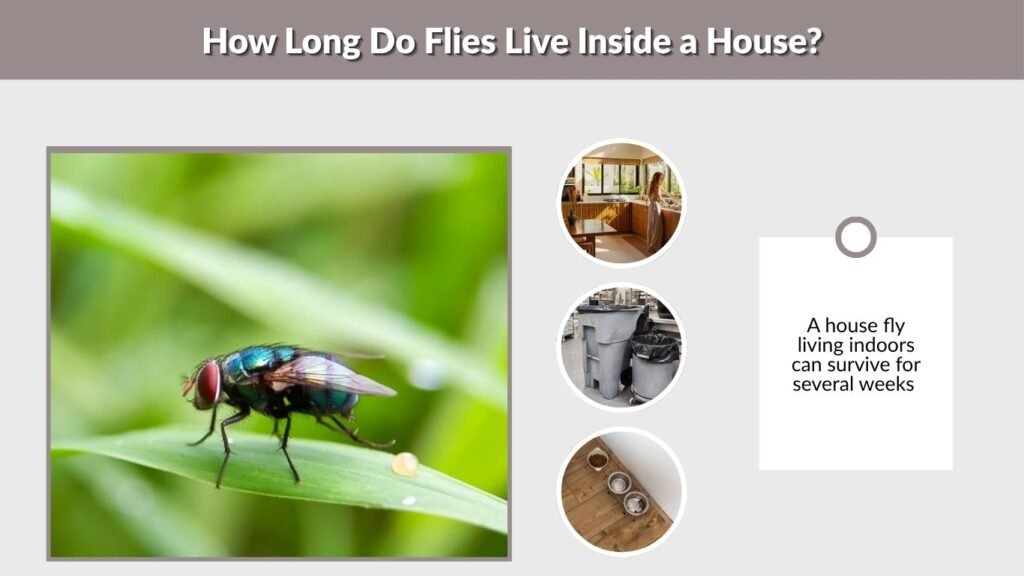
A house fly living indoors can survive for several weeks when it has access to warmth, moisture, and food. Kitchens, garbage cans, pet-feeding areas, and drains may provide enough resources to support adult flies.
Indoor Versus Outdoor Lifespan
Living inside does not automatically extend a fly’s lifespan. Indoor flies avoid some outdoor threats, such as rain, strong wind, birds, and sudden temperature changes. However, they face other dangers, including fly swatters, traps, cleaning products, dehydration, and limited food.
A heated house can help some adult flies remain active during cold weather. The University of New Hampshire Extension notes that although house flies commonly overwinter outdoors as pupae, some adults can survive winter inside heated buildings.
Why Does the Same Fly Keep Appearing?
It may seem that one fly has been living in a room for months, but several generations may be emerging from a hidden breeding site. New adults can look almost identical to those that were present earlier.
Common indoor breeding sources include:
- Garbage containing food scraps
- Animal manure or pet waste
- Decaying organic material
- Rotting vegetables
- Dirty garbage containers
- Dead animals in walls or attics
- Moist waste around outdoor bins
House fly larvae usually develop in dung, garbage, and other decomposing organic materials rather than in clean household spaces.
The Complete House Fly Life Cycle
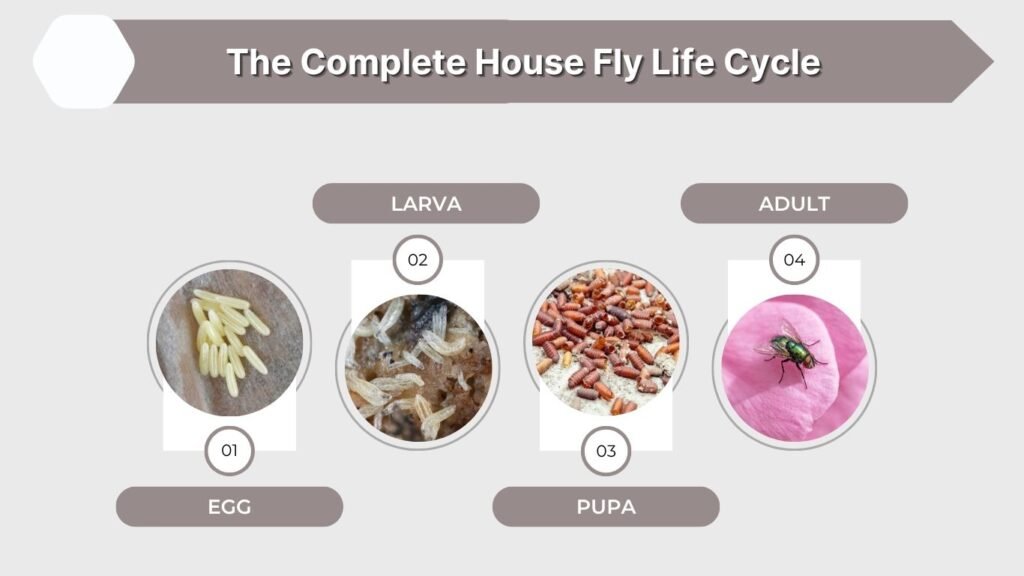
The lifespan of an adult fly should not be confused with the complete life cycle. House flies pass through four developmental stages: egg, larva, pupa, and adult.
| Life stage | Approximate duration |
| Egg | 8–24 hours |
| Larva or maggot | 3–7 days in favorable conditions |
| Pupa | About 3 days to several weeks |
| Adult | Approximately 15–30 days |
Development speeds vary with temperature, humidity, food quality, and other environmental conditions. Warm weather can allow the complete cycle to occur much faster than cool weather.
Egg Stage
Female house flies lay their eggs in moist organic material that provides immediate food for the emerging larvae. A cluster may contain up to about 100–150 eggs.
The eggs can hatch in less than a day under favorable conditions. Because they are small and placed inside waste or other moist material, homeowners rarely notice them before maggots appear.
Larval Stage
The larvae are creamy-white, legless maggots. They feed on decomposing organic material and usually pass through three developmental stages.
Under warm, suitable conditions, larval development can take approximately three to seven days. Mature maggots then move away from the wet feeding material and search for a drier location in which to pupate.
Pupal Stage
The pupa is enclosed inside a tough, brown, capsule-like case. During this stage, the maggot transforms into an adult fly.
An adult may emerge after only a few days in warm conditions, but pupal development can take several weeks when temperatures are cooler. House flies can also survive unfavorable seasonal conditions in the pupal stage.
Adult Stage
After emerging, the adult begins searching for moisture, food, and a mate. Females may begin laying eggs within several days, starting another generation before older adults die.
House flies can produce multiple generations within a single year. Their rapid development means an untreated breeding source can continuously release new adults into a home.
How Long Do House Flies Live Without Food?
House flies require regular access to moisture. They consume liquid foods directly and soften solid materials with saliva before feeding.
Survival Without Water
Water is especially important to house flies. Without access to water or moisture, an adult may survive for only about 48 hours. The exact period depends on temperature, humidity, age, and the fly’s previous condition.
A room that appears to contain no water may still offer moisture from sinks, condensation, wet sponges, fruit, spills, plant soil, or pet bowls.
Survival Without Food
A fly deprived of obvious food may still find tiny amounts of sugar, grease, food residue, garbage, or organic material. Therefore, a fly trapped inside a house may survive longer than expected.
Removing food alone may not eliminate an infestation if eggs, larvae, or pupae are already developing. Cleaning the breeding material is necessary to break the life cycle.
How Long Do House Flies Live in Winter?
Cold weather slows house fly activity and development. In regions with freezing winters, many house flies survive the season as pupae in manure, organic debris, or other protected breeding materials.
Adult flies may remain alive inside heated houses, barns, restaurants, and animal facilities. However, a large group of slow-moving flies at sunny windows during winter may be cluster flies rather than common house flies.
House Fly vs. Other Indoor Flies
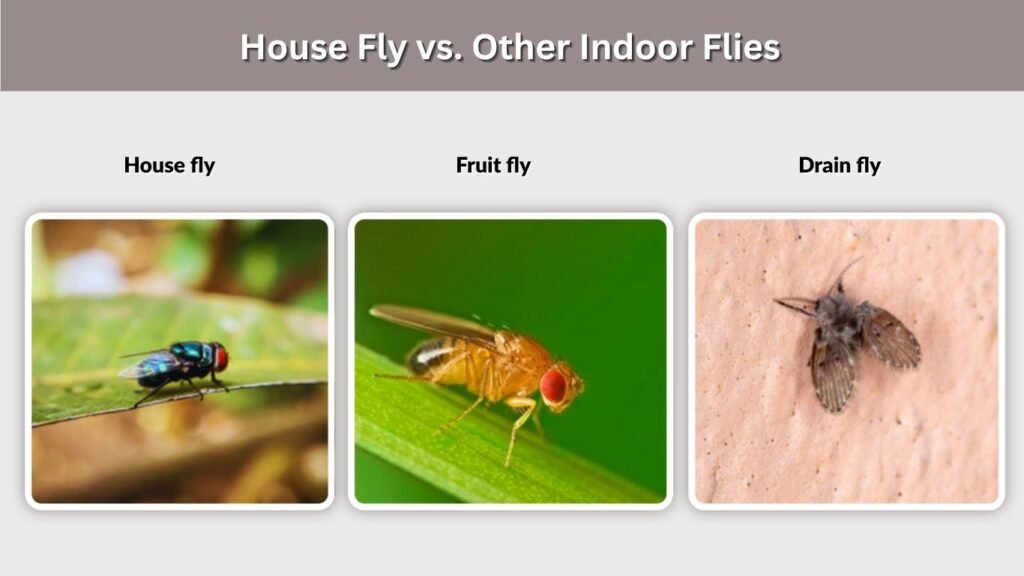
Not every fly found indoors has the same lifespan. Identifying the species is important because different flies have different breeding sources and control methods.
| Fly type | Common indoor location | Main breeding source |
| House fly | Kitchens and garbage areas | Waste and decaying material |
| Fruit fly | Near fruit and drinks | Fermenting produce |
| Drain fly | Sinks and bathrooms | Organic film in drains |
| Fungus gnat | Around houseplants | Damp potting soil |
| Cluster fly | Windows and attics | Develops outdoors |
| Crane fly | Near lights and windows | Usually enters accidentally |
Fruit flies, cluster flies, and crane flies should not be treated as ordinary house flies simply because they are found inside a house.
How to Shorten a House Fly Infestation
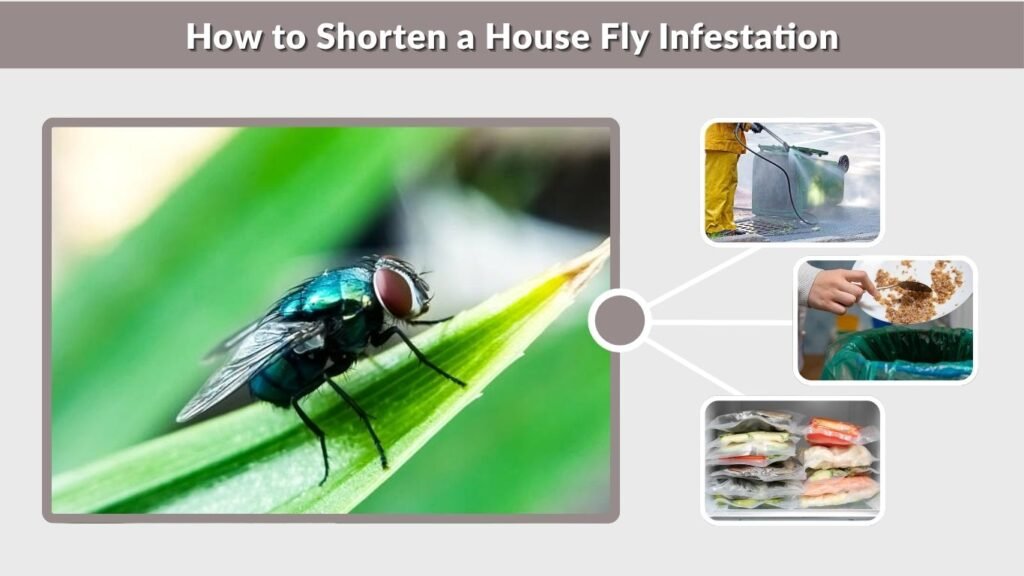
Waiting for adult flies to die naturally is not an effective control method. A female may lay hundreds of eggs before reaching the end of her lifespan.
Remove the Breeding Source
Effective control begins with sanitation:
- Empty garbage frequently.
- Clean garbage and recycling bins.
- Remove spoiled food.
- Clean beneath kitchen appliances.
- Pick up animal waste.
- Keep food in sealed containers.
- Dispose of dead animals safely.
- Repair leaking pipes and reduce moisture.
Virginia Tech recommends timely removal of garbage and animal waste, tightly sealed garbage containers, and properly fitted window and door screens.
Stop New Flies From Entering
Repair torn screens, install door sweeps, and seal gaps around windows, pipes, vents, and utility openings. Use a fly swatter, vacuum, or suitable indoor trap to remove remaining adults.
Avoid spraying pesticides near exposed food, utensils, children, or pets. Always follow the product label when using any insect-control product.
FAQs
Can a house fly live for 24 hours only?
House flies normally live much longer than 24 hours. An adult commonly survives for 15 to 30 days, although dehydration, injury, pesticides, or unsuitable temperatures can cause it to die much sooner.
Can a house fly live for several months?
Several months would be unusually long for an adult house fly. When flies seem to remain in a home for months, new adults are probably emerging from an unnoticed breeding source.
How long does a fly live after entering a house?
It may live for a few days to several weeks. Its survival depends on age, temperature, humidity, and whether it can find water and food inside the building.
How long do house fly eggs survive?
House fly eggs usually hatch rapidly rather than remaining dormant for long periods. Under favorable conditions, maggots may emerge within approximately 8 to 24 hours.
Will house flies eventually disappear on their own?
Individual adults eventually die, but an infestation may continue when eggs, maggots, and pupae remain. Removing garbage, manure, decaying material, and other breeding sources is necessary to stop new flies from emerging.