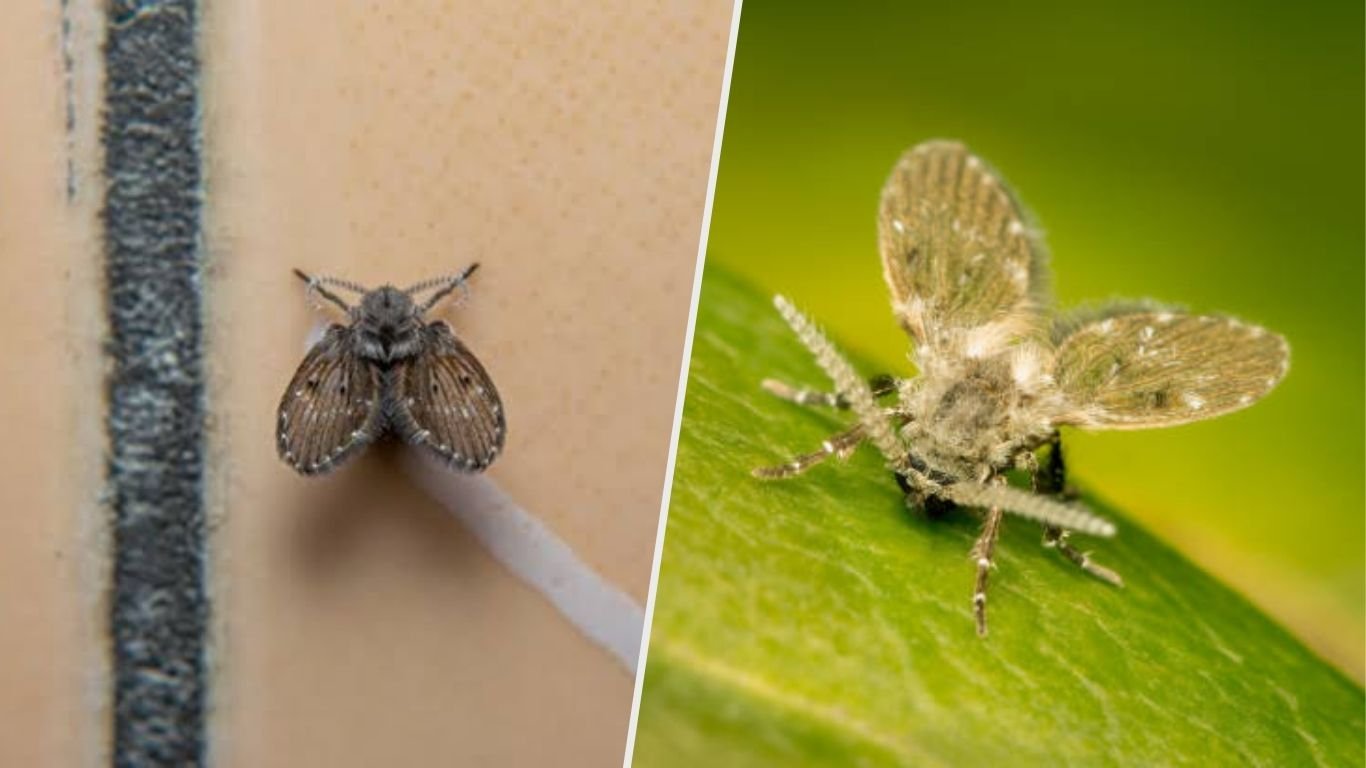
Sewer flies and drain flies are two common names for the same group of small, fuzzy insects. They are also called moth flies, sewage flies, filter flies, and sink flies. These insects usually appear around bathroom drains, kitchen sinks, showers, floor drains, basements, and sewage systems. Although they do not normally bite, their presence often indicates moist organic buildup or an unresolved plumbing problem. Eliminating the visible adults provides only temporary relief. Successful control requires finding and removing the slimy material where their eggs and larvae develop.
Are Sewer Flies and Drain Flies the Same?
Yes. Sewer fly and drain fly generally refer to moth flies in the family Psychodidae. The name used often depends on where the insects are found.
“Drain fly” is more common when they develop inside household sinks, tubs, showers, and floor drains. “Sewer fly” or “sewage fly” may be used when they are associated with septic tanks, wastewater systems, sewage treatment facilities, or broken sewer lines. Penn State Extension lists drain fly, filter fly, and sewage fly as common names for moth flies.
| Common name | Why the name is used |
| Drain fly | Commonly emerges from household drains |
| Sewer fly | Associated with sewage or sewer lines |
| Moth fly | Has a fuzzy, mothlike appearance |
| Filter fly | Develops around sewage filters and treatment systems |
| Sink fly | Frequently noticed around sinks |
| Sewage fly | Breeds in wet material associated with sewage |
These names do not necessarily describe different species. Several moth-fly species can inhabit drains and sewage systems, so exact species identification may require microscopic examination.
How to Identify Sewer or Drain Flies
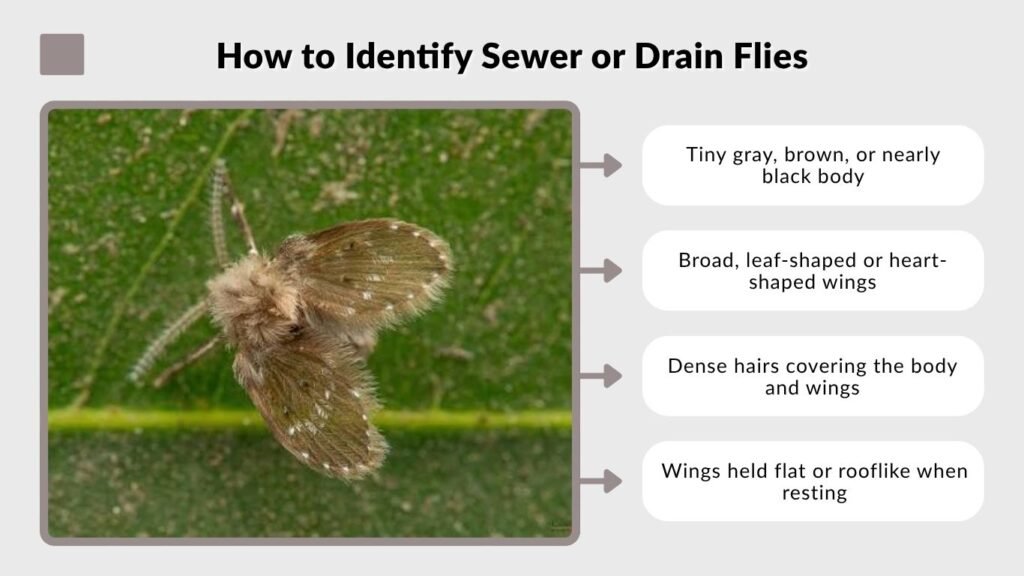
Adult drain flies are very small, usually around 1/12 to 1/8 inch long. Their bodies and wings are covered with fine hairs, giving them a fuzzy appearance. The broad wings are often held rooflike over the body while the insect rests.
Identification Features
- Tiny gray, brown, or nearly black body
- Broad, leaf-shaped or heart-shaped wings
- Dense hairs covering the body and wings
- Wings held flat or rooflike when resting
- Moderate-length, segmented antennae
- Weak, short, irregular flight
- Frequently rests on walls near plumbing
- May appear to hop when disturbed
Drain flies are weak fliers and commonly remain close to their breeding sites. Large numbers on a bathroom wall usually indicate a nearby sink, shower, floor drain, toilet seal, or hidden moisture source.
Where Do Sewer Flies Come From?
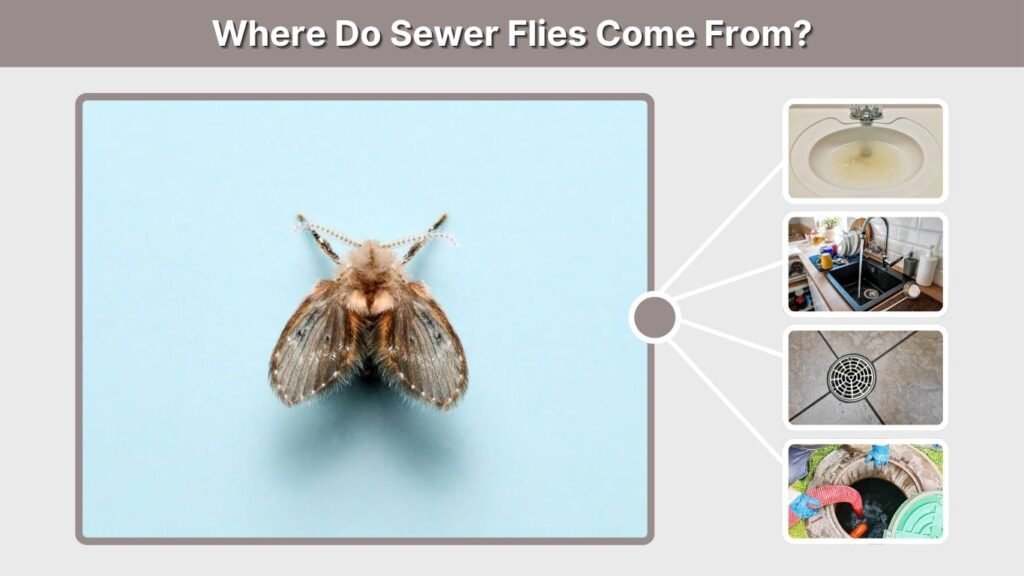
Drain fly larvae develop in wet, decaying organic matter. Inside a pipe, this material forms a gelatinous film containing bacteria, fungi, algae, soap residue, grease, hair, food particles, and other debris.
Common breeding locations include:
- Bathroom sink drains
- Shower and bathtub drains
- Kitchen sinks
- Garbage disposals
- Sink overflow channels
- Floor and laundry drains
- Sump pits
- Septic tanks
- Sewage treatment systems
- Wet mop buckets
- Appliance drainage pans
- Areas around leaking pipes
Drain flies may also be connected to a broken sewer pipe beneath a floor or concrete slab. University of Minnesota Extension notes that moth flies are common around drains but can also be associated with sewer-line breaks.
Does Seeing Sewer Flies Mean You Have a Sewer Problem?
Not always. A few flies around one sink are more likely to be breeding in organic buildup inside that drain than in the main sewer line.
A more serious plumbing problem becomes possible when flies:
- Appear from several drains simultaneously
- Gather around a toilet base
- Emerge from cracks in a floor or wall
- Continue after every accessible drain is cleaned
- Accompany persistent sewage odors
- Appear with slow drains or wastewater backups
- Concentrate over a particular section of flooring
In these cases, a damaged toilet seal, leaking wastewater pipe, dry plumbing trap, or broken sewer line may provide the breeding material. Professional plumbing inspection may be necessary when the source cannot be reached through normal drain cleaning.
Sewer Fly Life Cycle
Sewer flies undergo four developmental stages: egg, larva, pupa, and adult. The first three stages normally remain within wet organic film.
Females lay eggs in moist, polluted material. The eggs may hatch in about two days. Larvae feed on microorganisms and decaying matter for approximately 9–15 days before becoming pupae. The pupal stage may last around 20–40 hours under favorable conditions.
Because eggs, larvae, pupae, and adults can be present at the same time, killing visible flies does not stop the infestation. New adults continue emerging until the breeding material is removed.
Are Sewer Flies Dangerous?
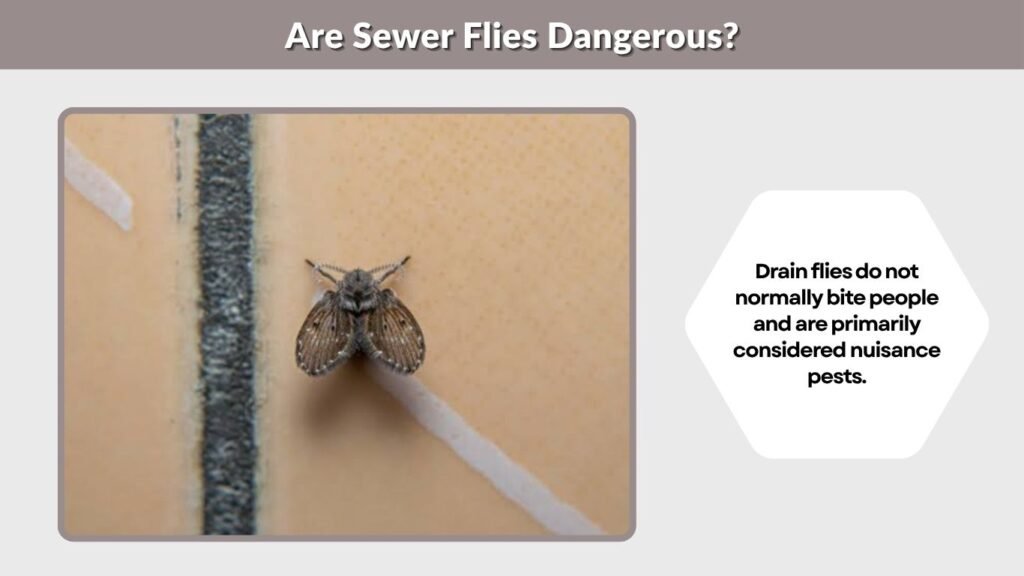
Drain flies do not normally bite people and are primarily considered nuisance pests. However, because they breed in drains, sewage, and decomposing material, they may potentially transfer bacteria mechanically after contacting contaminated surfaces.
A few flies do not usually create an immediate health emergency. Nevertheless, a large or persistent population should not be ignored because it may indicate unsanitary buildup, contaminated standing water, or damaged plumbing.
Sewer Flies vs Fruit Flies and Fungus Gnats
Small household flies are frequently misidentified. Their appearance and breeding locations help separate them.
| Feature | Sewer or drain fly | Fruit fly | Fungus gnat |
| Body shape | Broad and fuzzy | Rounded and compact | Slender and mosquito-like |
| Wings | Hairy and leaf-shaped | Smooth and clear | Narrow and delicate |
| Common color | Gray or dark brown | Tan or yellow-brown | Dark gray or black |
| Main source | Drain slime or sewage | Fermenting food | Moist plant soil |
| Typical location | Sinks and bathrooms | Kitchens and trash areas | Houseplants |
| Flight | Short and weak | Quick and active | Slow hovering |
A fuzzy fly resting near a drain is probably a drain fly. A tan fly around overripe fruit is more likely a fruit fly, while a long-legged insect crawling over potting soil is usually a fungus gnat.
How to Confirm the Breeding Drain
Place a strip of clear tape loosely across part of a suspected drain with the sticky side facing downward. Do not seal the entire opening.
Leave the tape overnight and inspect it the next morning. Adults trapped beneath the tape probably emerged from that drain. Test every sink, shower, tub, and floor drain because more than one breeding location may be present. This tape test is recommended as a simple way to confirm drain-fly activity.
How to Get Rid of Sewer or Drain Flies
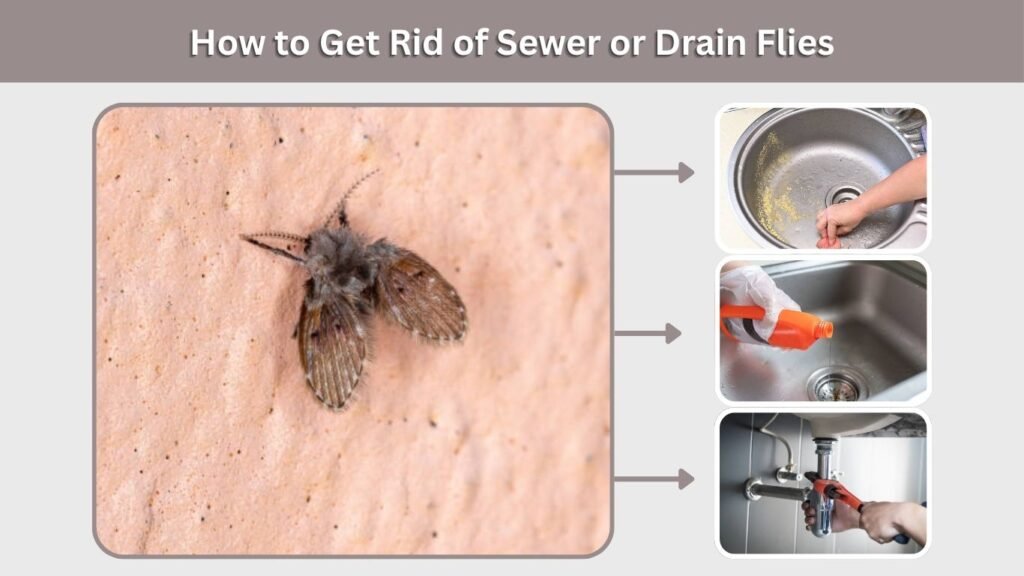
The most effective approach is to remove the organic film supporting the immature flies.
Scrub the Drain Thoroughly
Remove the stopper, grate, or drain cover. Pull out visible hair and debris while wearing gloves. Use a stiff, long-handled brush to scrub the entire inside surface of the pipe.
Cleaning only the center of the drain is insufficient because larvae live within the film attached to its walls. University of Minnesota Extension recommends physically removing this gelatinous buildup with a stiff-bristled brush.
Clean Hidden Areas
Scrub the underside of the stopper, the sink overflow passage, garbage-disposal guards, shower channels, and removable drain parts. These areas can remain wet and support larvae even when the main drain appears clean.
Apply a Biological Drain Cleaner
After brushing, a biological or enzyme-based drain product can help break down remaining organic matter. Follow the label instructions and check that the treatment is suitable for your plumbing or septic system.
Remove Adult Flies
Vacuum adults from walls and ceilings or use sticky traps to monitor their numbers. This offers immediate relief but does not replace drain cleaning.
Correct Plumbing and Moisture Problems
Repair leaks, clear slow drains, refill dry plumbing traps, and investigate sewage odors. Contact a plumber when flies appear around a toilet base, emerge through flooring, or continue after all accessible drains have been cleaned.
Why Bleach or Boiling Water May Not Work
Bleach, boiling water, and ordinary chemical drain openers may pass through the middle of the pipe without removing the organic film attached to its sides. Extension guidance therefore emphasizes physical scrubbing and source removal rather than relying on these liquids alone.
Never mix bleach with vinegar, ammonia, acids, or commercial drain-opening products. Mixing household chemicals can create dangerous gases or violent reactions.
How Long Does It Take to Eliminate Them?
Adult numbers should begin declining after the breeding source is removed, but some flies may continue emerging for several days from pupae already present.
Continue cleaning and monitoring for one to two weeks. Ongoing activity generally means that part of the drain was missed or another source exists, such as an overflow channel, floor drain, sump pit, toilet seal, sewage leak, or hidden wet area.
FAQs
Are sewer flies different from drain flies?
No. The names sewer fly, drain fly, sewage fly, filter fly, and moth fly commonly describe the same group of fuzzy flies in the family Psychodidae. The name usually reflects where the insects are found rather than a meaningful biological difference.
Do sewer flies come through the toilet?
They can appear near toilets, but they do not always emerge through the bowl. A leaking toilet seal, nearby floor drain, dry plumbing trap, or contaminated moisture beneath the fixture may be the actual source.
Can sewer flies bite humans?
No. Household drain flies do not normally bite people. They are mainly nuisance pests, although their association with drains and sewage means they may potentially carry contaminants mechanically.
Will drain flies disappear without treatment?
They may disappear if their breeding material dries out completely, but infestations usually continue while wet organic film remains. Adults can reproduce before dying, allowing successive generations to develop in the same drain.
When should you call a plumber?
Call a plumber when flies persist after thorough cleaning, multiple drains are affected, sewage odors are present, wastewater backs up, flooring remains damp, or flies appear to emerge from walls, floors, or the base of a toilet.