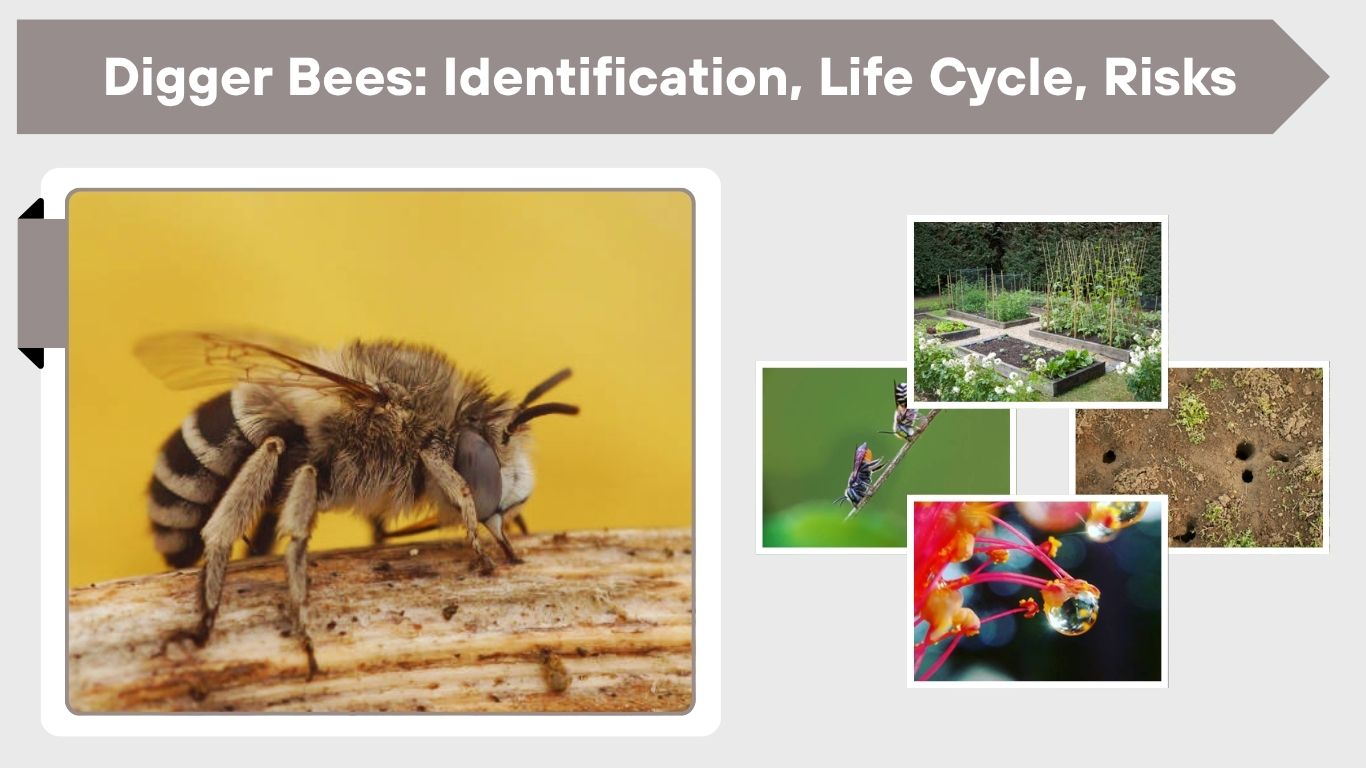
Digger bees are a common sight in yards, gardens, and open landscapes, especially during the warmer months. Many homeowners first notice them when small holes and loose soil mounds suddenly appear across the lawn. While their activity can be surprising—and sometimes concerning—these bees are very different from aggressive insects like wasps or hornets.
Unlike social bees that live in hives, digger bees are solitary ground nesters. Each female builds her own nest underground and quietly goes about her life without forming colonies or defending territory. This behavior makes them far less threatening than most people assume. In fact, they rarely sting and are generally harmless to humans.
Beyond their unusual nesting habits, digger bees also play an important role in the environment. They are effective pollinators and contribute to healthy plant growth, making them beneficial in many ecosystems. However, their presence in lawns can still be frustrating for homeowners who want a smooth, undisturbed yard.
What Are Digger Bees?
Digger bees are a group of solitary, ground-nesting bees that live independently rather than in colonies. Unlike honeybees or bumblebees, they do not build hives or produce honey. Each female creates her own nest underground, where she lays eggs and provides food for her offspring.
These bees belong to several genera within the bee family, commonly associated with species like Anthophora and Amegilla. Their name comes from their unique behavior of digging tunnels in soil to create nesting chambers.
One important distinction is their lifestyle. Since they are solitary, they do not defend a colony. This means they are far less likely to sting compared to social bees or wasps. Most interactions with humans are harmless, even when they are active in large numbers.
What Do Digger Bees Look Like?
Digger bees can vary widely in appearance, which sometimes makes them difficult to identify. However, there are several common characteristics that can help you recognize them.
Most digger bees are small to medium-sized, usually ranging from about ½ inch to 1 inch in length. They tend to have hairy bodies, which helps them collect pollen efficiently.
Color varies depending on the species. Some are:
- Black or dark brown
- Metallic green or blue
- Silver or grayish
- Marked with bands, such as blue or white
Certain species even resemble bumblebees, which can cause confusion. For example, the blue-banded digger bee has striking blue stripes across its abdomen, while others may mimic the fuzzy look of larger bees.
There are also differences between males and females. Males are often seen hovering low over the ground, especially near nesting sites. While this behavior may seem aggressive, male digger bees cannot sting. Females are slightly larger and are responsible for digging nests and collecting food.
Types of Digger Bees

There are many species of digger bees found across different regions, each with its own unique features. While they share similar behaviors, their size, color, and habitat can vary.
Common Species
Some well-known types of digger bees include:
- California digger bee, commonly found in western regions
- Blue-banded digger bee, known for its bright blue markings
- White-banded digger bee, with lighter stripes across the body
- Abrupt and urbane digger bees, often seen in urban and suburban areas
These species differ slightly in appearance and nesting habits, but all are ground-nesting and solitary.
Regional Presence
Digger bees are widely distributed and can be found in many parts of the world. In the United States, they are common in states such as California, Arizona, Florida, and Georgia. They are also present in the UK and other regions with suitable climates.
They prefer warm, dry environments and are especially attracted to areas with loose or sandy soil. This is why they are frequently seen in lawns, gardens, and open landscapes.
Digger Bee Holes, Nests & Mounds

One of the most noticeable signs of digger bees is the appearance of small holes in the ground, often surrounded by loose soil. These are the entrances to their nests.
Each female bee digs a tunnel that leads to several underground chambers. Inside these chambers, she lays eggs and stores a mixture of nectar and pollen as food for the developing larvae.
The small piles of dirt around the hole are called mounds, created as the bee excavates soil. These mounds can sometimes resemble those made by ants, but they are usually slightly larger and more scattered.
Digger bees prefer:
- Dry, well-drained soil
- Sandy or loose ground
- Areas with minimal vegetation
Their activity is often seasonal. Most species become active in spring or early summer, when they dig nests, lay eggs, and complete their life cycle. By late season, their activity usually declines, and the nests are abandoned.
Are Digger Bees Dangerous?
Despite their alarming appearance and ground activity, digger bees are generally not dangerous to humans. They are considered one of the least aggressive types of bees.
Do Digger Bees Sting?
Yes, digger bees can sting—but only females have the ability to do so. Even then, stings are extremely rare. A female will typically only sting if she is directly handled or feels seriously threatened.
Are They Aggressive?
Digger bees are non-aggressive by nature. Males may hover around nesting areas, which can make them seem defensive, but this behavior is harmless. Male bees do not have stingers and cannot cause harm.
Risk Level to Humans
For most people, digger bees pose very little risk. They do not swarm, attack, or defend nests like social insects. In comparison to wasps or hornets, they are far less likely to sting or cause problems.
Digger Bee Life Cycle
The life cycle of a digger bee is simple but fascinating. It follows a typical bee development pattern, but with a solitary twist.
A female begins by digging a tunnel in the soil and creating small chambers. In each chamber, she lays a single egg and provides a supply of nectar and pollen. This food source sustains the larva once it hatches.
The stages include:
- Egg
- Larva
- Pupa
- Adult
After hatching, the larva feeds on the stored food, then develops into a pupa before emerging as an adult bee. Most of this development occurs underground, out of sight.
Adult digger bees usually live for a short period, just long enough to reproduce and continue the cycle. Their activity is often limited to a specific season, depending on the species and climate.
What Do Digger Bees Eat?

Digger bees primarily feed on nectar and pollen, which they collect from flowering plants. Nectar provides them with energy, while pollen supplies essential proteins needed for growth and reproduction.
Unlike honeybees, digger bees do not store excess food or produce honey. Instead, the female gathers pollen and mixes it with nectar to create a food source for her larvae. This mixture is placed inside the nesting chambers before the egg is laid.
Because of their feeding habits, digger bees play an important role as pollinators. As they move from flower to flower, they help transfer pollen, supporting plant reproduction and contributing to healthy ecosystems and crop production.
Are Digger Bees Good or Bad?
Digger bees are generally considered beneficial insects, even though they can sometimes be a nuisance in lawns or gardens.
On the positive side, they:
- Help pollinate flowers, fruits, and crops
- Improve soil health by aerating the ground through digging
- Support biodiversity in natural environments
However, there are a few downsides:
- Their digging can create visible holes in lawns
- Soil mounds may affect the appearance of landscaped areas
- Large numbers can be unsettling to homeowners
In most cases, the benefits of digger bees outweigh the drawbacks. They rarely cause real damage and do not pose a serious threat to people or pets.
Where Are Digger Bees Found?

Digger bees are found in many parts of the world, particularly in regions with warm, dry climates. They thrive in environments where the soil is easy to dig and well-drained.
Common places you might find them include:
- Lawns with thin or patchy grass
- Gardens and flower beds
- Sandy or dry open areas
- Paths, driveways, or edges of yards
In the United States, they are frequently seen in states like California, Arizona, Florida, and Georgia. They are also present in other countries, including the UK, where suitable soil conditions exist.
Their presence is often temporary, as they tend to nest during specific seasons and then disappear once their life cycle is complete.
How to Get Rid of Digger Bees
If digger bees are causing problems in your yard, there are several effective ways to manage or discourage them. In many cases, simple changes to your lawn can make the area less attractive for nesting.
Natural Methods
Natural approaches are often the safest and most effective first step:
- Water the soil regularly to keep it moist, as digger bees prefer dry ground
- Add mulch or ground cover to reduce exposed soil
- Encourage thick grass growth to eliminate bare patches
These methods do not harm the bees but encourage them to relocate elsewhere.
Prevention Tips
Preventing digger bees from settling in your yard is easier than removing them later:
- Maintain a healthy, dense lawn
- Avoid leaving dry, sandy areas exposed
- Compact loose soil where necessary
- Regularly monitor and repair bare spots
Consistent lawn care can significantly reduce the chances of infestation.
Chemical Treatments (If Necessary)
If the problem becomes severe, chemical solutions may be considered as a last resort:
- Use insecticides specifically labeled for ground-nesting bees
- Apply treatments in the evening when bees are less active
- Always follow safety instructions carefully
Keep in mind that chemical treatments can also affect beneficial insects, so they should be used cautiously.
When to Leave Digger Bees Alone
In many situations, it’s best to leave digger bees undisturbed. They are not aggressive, and their presence is usually temporary.
You may not need to take action if:
- The number of bees is small
- They are not causing significant lawn damage
- No one in the household is allergic to bee stings
Allowing them to remain can benefit your garden through pollination and soil improvement. Often, they will leave on their own after the nesting season ends.
FAQs
Do digger bees sting humans?
Digger bees can sting, but it is very uncommon. Only females have stingers, and they usually sting only if handled or threatened. Most people can safely coexist with them without any risk.
Are digger bees aggressive?
No, digger bees are not aggressive. They are solitary and do not defend colonies. Even when males hover around, they are harmless and cannot sting.
Why are digger bees in my lawn?
They are attracted to dry, loose soil with little vegetation. Lawns with bare patches or sandy areas provide ideal nesting conditions for them.
Do digger bees make honey?
No, digger bees do not produce honey. They collect nectar and pollen only to feed their young inside underground nests.
What is the best way to get rid of them?
The most effective solution is prevention. Keeping your soil moist, maintaining thick grass, and covering bare areas will discourage them from nesting in your yard.