Potter wasps are solitary insects known for building unique mud nests that resemble tiny clay pots or vases. These fascinating structures are commonly found on walls, porch screens, antennas, sheds, and garden surfaces. Unlike aggressive social wasps, potter wasps are usually calm and rarely sting unless directly threatened. Many homeowners notice their unusual nests and wonder whether they are harmful, beneficial, or should be removed from the property.
This guide explains how to identify potter wasp nests, understand how they are built, learn what is inside them, and compare them with mud dauber nests. You will also discover common nesting locations, different types of potter wasps, and safe methods for removing nests when necessary.
What Is a Potter Wasp Nest?
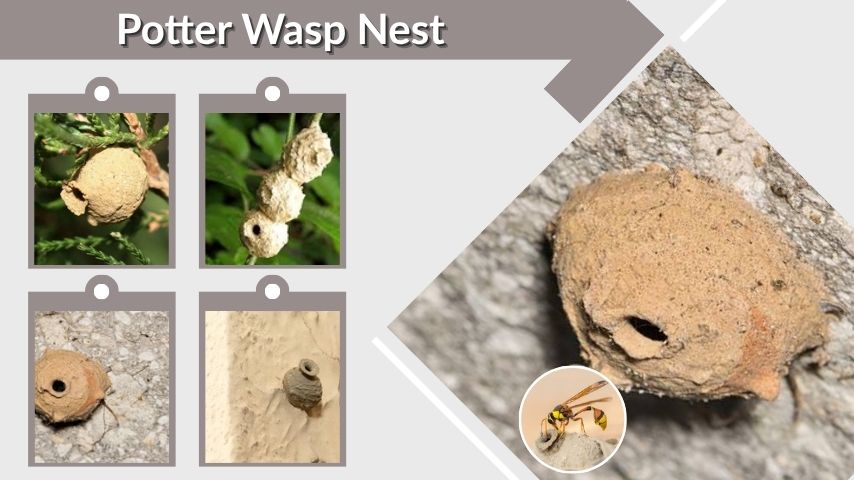
Potter wasps create small mud nests that look like miniature clay pots attached to surfaces. These nests protect developing larvae and stored prey from weather and predators. Most nests are built by solitary female wasps rather than large colonies, which makes potter wasps much less aggressive than yellow jackets or paper wasps.
What Potter Wasp Nests Look Like
Potter wasp nests are easy to recognize because of their unusual vase-like shape. They often appear smooth, rounded, and carefully constructed from mud or clay.
Common nest features include:
- Pot or jar-shaped appearance
- Small round entrance hole
- Smooth mud texture
- Brown, gray, or reddish color
- Single-cell construction
- Small size compared to paper wasp nests
Some nests resemble tiny ceramic pots attached to walls or branches. Their artistic appearance is one reason potter wasps are considered unique among insects.
Potter Wasp Nest Size
Most potter wasp nests are relatively small. A single mud pot may only measure one to two inches across, depending on the species. Some wasps build only one chamber, while others create clusters of connected pots.
Larger nests may contain multiple sealed chambers where developing larvae remain protected until adulthood. Despite their small size, these nests are strong and durable because of the hardened mud construction.
Materials Used in Nest Construction
Female potter wasps collect wet mud or clay and shape it carefully into rounded chambers. Some species also use resin or plant fibers to strengthen the nest walls.
Common building materials include:
- Mud
- Clay
- Resin
- Plant fragments
- Moist soil
The wasp repeatedly gathers tiny mud pellets and molds them into shape using its jaws and legs.
How Potter Wasps Build Their Nests
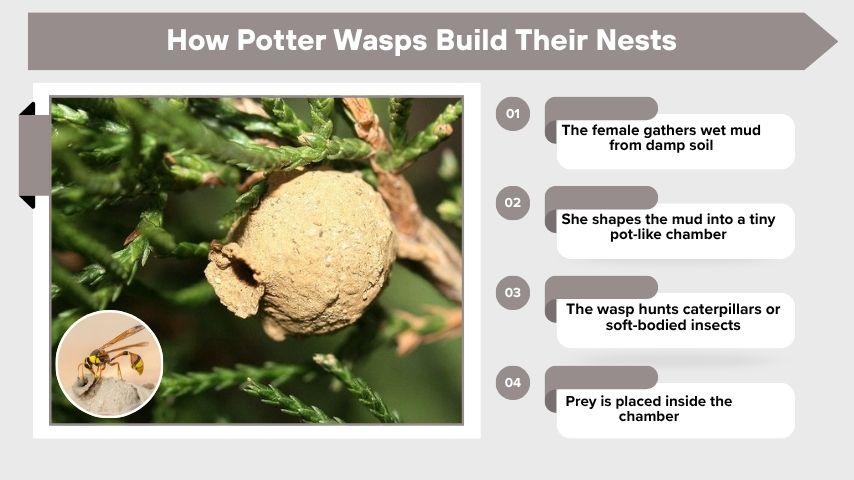
Potter wasps are skilled builders that carefully construct nests one chamber at a time. Their nesting process involves gathering mud, shaping the structure, hunting prey, and sealing the chamber to protect developing offspring.
Step-by-Step Nest Construction
The nest-building process follows several important stages.
- The female gathers wet mud from damp soil
- She shapes the mud into a tiny pot-like chamber
- The wasp hunts caterpillars or soft-bodied insects
- Prey is placed inside the chamber
- An egg is laid on the stored prey
- The nest opening is sealed with mud
Once sealed, the larva develops safely inside while feeding on the stored insects.
Why Potter Wasps Use Mud
Mud provides excellent protection against weather, predators, and temperature changes. Hardened mud chambers create strong walls that help keep the developing larvae safe until they mature into adults.
Unlike paper wasps that use chewed wood fibers, potter wasps rely on mud because it creates durable enclosed chambers. These nests can remain attached to surfaces for long periods after the adult wasps emerge.
How Long Nest Construction Takes
Nest construction time depends on weather conditions, mud availability, and species behavior. Some small nests may be completed within a few hours, while larger multi-cell nests can take several days.
Rainfall often helps potter wasps because wet soil provides easier access to workable mud. During dry conditions, wasps may travel farther to collect suitable building material.
Inside a Potter Wasp Nest
The inside of a potter wasp nest contains developing larvae and carefully stored prey. Female wasps create sealed chambers that function like protective nurseries for their offspring.
What Is Inside the Nest?
Each chamber usually contains one egg along with several paralyzed caterpillars or insects. These prey items serve as food for the developing larva after it hatches.
Common contents include:
- Potter wasp eggs
- Caterpillars
- Small worms
- Larvae
- Pupae
- Paralyzed insects
The prey remains alive but immobilized, which keeps the food fresh for the growing larva.
Why Caterpillars Are Stored Inside
Potter wasps are natural hunters that specialize in capturing soft-bodied insects. Instead of killing prey immediately, the wasp stings and paralyzes the caterpillar before placing it inside the mud chamber.
This hunting behavior benefits gardens because potter wasps help control caterpillar populations that damage plants and crops.
Potter Wasp Life Cycle Inside the Nest
After the egg hatches, the larva begins feeding on the stored prey. Over time, it grows larger and enters the pupal stage before emerging as an adult wasp.
The adult eventually chews through the sealed mud wall and exits the nest. Empty nests often remain attached to surfaces long after emergence.
Potter Wasp Nest vs Mud Dauber Nest
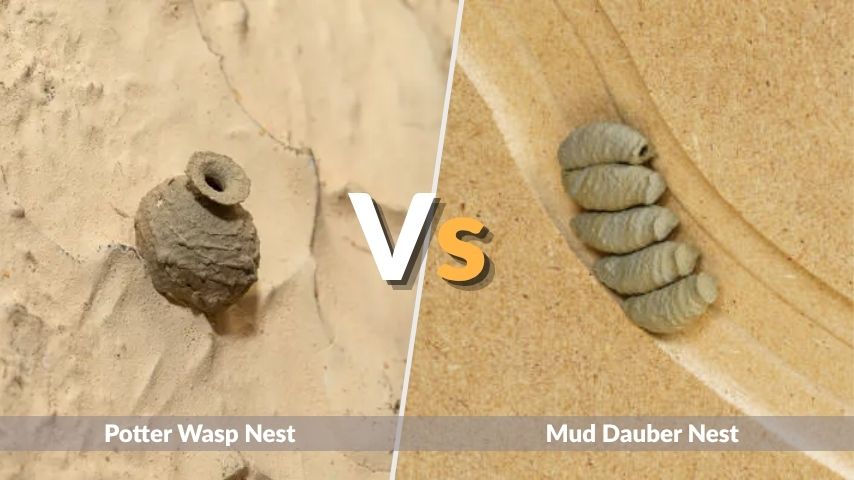
Potter wasp nests are commonly confused with mud dauber nests because both insects use mud for construction. However, their shapes and nesting styles are very different.
Structural Differences
| Feature | Potter Wasp Nest | Mud Dauber Nest |
| Shape | Pot or vase shaped | Tube-shaped |
| Surface Texture | Smooth | Rough |
| Nest Design | Rounded chambers | Long mud tunnels |
| Construction Style | Artistic single pots | Grouped mud tubes |
Potter wasp nests usually appear more rounded and decorative, while mud dauber nests look like clusters of mud pipes attached together.
Common Types of Potter Wasp Nests
Different potter wasp species create nests with varying shapes, colors, and materials. Some species build rounded mud pots, while others create elongated chambers or use resin mixed with mud. Climate and habitat also influence nest appearance, making certain nest styles more common in specific regions around the world.
Black Potter Wasp Nests
Black potter wasps are known for building dark-colored mud nests attached to walls, rocks, and wooden structures. These nests are usually compact and rounded with a narrow entrance opening.
Black species often prefer quiet sheltered areas such as:
- Porch ceilings
- Window frames
- Sheds
- Fence posts
- Garage walls
Their nests blend easily with darker surfaces, making them difficult to notice at first.
Orange Potter Wasp Nests
Orange potter wasps are more common in tropical and subtropical climates. Their nests often appear lighter in color because of the clay and soil available in those regions.
These brightly colored wasps usually build nests in warm outdoor areas protected from heavy rainfall. Some orange species also create slightly elongated mud chambers instead of perfectly rounded pots.
Resin Potter Wasp Nests
Certain potter wasps combine plant resin with mud to strengthen their nests. Resin helps waterproof the chambers and increases durability during humid weather conditions.
These nests are commonly found on:
- Tree branches
- Leaves
- Garden structures
- Wooden surfaces
The added resin may give the nest a shiny or darker appearance compared to regular mud nests.
Where Potter Wasps Build Nests
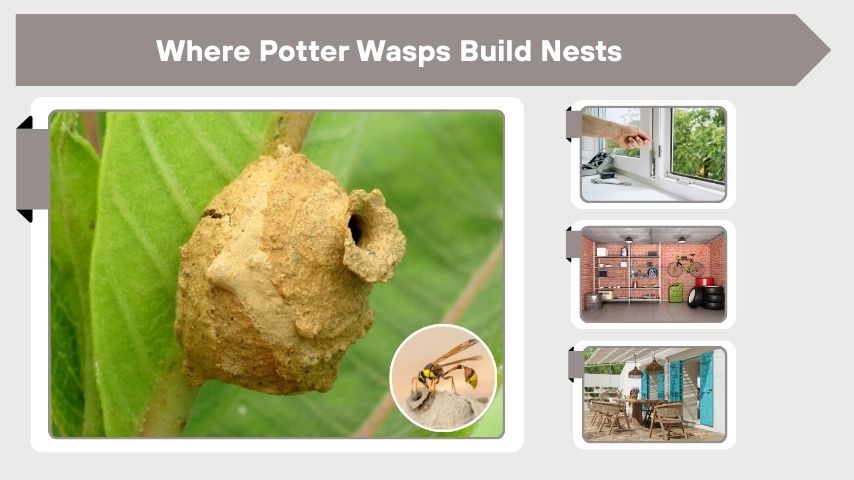
Potter wasps choose protected locations that offer shelter from rain, predators, and strong sunlight. Because they are solitary insects, their nests are usually scattered rather than clustered into large colonies.
Potter Wasp Nests on Houses
Homes provide stable surfaces that support mud nest construction. Potter wasps commonly attach nests to quiet exterior areas where human activity is limited.
Popular nesting locations include:
- Porch screens
- Window corners
- Roof overhangs
- Garage walls
- Outdoor furniture
- Brick surfaces
Small nests on homes are generally harmless unless they interfere with doors, windows, or outdoor living spaces.
Potter Wasp Nests on Antennas
Antennas and metal poles create elevated protected surfaces that potter wasps often prefer. The narrow sheltered spaces around antennas help protect nests from rain and predators.
Although these nests are usually harmless, large mud accumulations may occasionally interfere with sensitive equipment or outdoor electronics.
Garden and Outdoor Nesting Sites
Gardens attract potter wasps because they provide mud, prey insects, and protected nesting areas. Female wasps hunt caterpillars among plants while gathering material for nest construction.
Common outdoor nesting sites include rocks, fences, tree branches, flower pots, and shed walls. Areas with moist soil are especially attractive because they provide easy access to mud.
Are Potter Wasps Dangerous?
Potter wasps are considered one of the least aggressive types of wasps. Unlike yellow jackets and paper wasps, they live alone rather than defending large colonies. Most people can safely observe these insects without being stung.
Do Potter Wasps Sting?
Potter wasps can sting, but they rarely do unless directly handled or trapped. Their primary focus is nest building and hunting caterpillars rather than defending territory aggressively.
Most encounters with humans are harmless because solitary wasps do not swarm or attack in groups. Their calm behavior makes them far less dangerous than social wasps commonly found around homes.
Are Potter Wasps Helpful?
Potter wasps provide natural pest control by hunting caterpillars and other soft-bodied insects. Many of these prey species damage garden plants, vegetables, and ornamental flowers.
Benefits of potter wasps include:
- Caterpillar population control
- Reduced garden pests
- Natural insect balance
- Limited pollination support
Because of these benefits, some gardeners intentionally leave potter wasp nests undisturbed.
Should You Leave a Potter Wasp Nest Alone?
In most situations, potter wasp nests can safely remain in place. These insects rarely bother people and often disappear naturally after the adult emerges.
However, removal may be necessary if nests appear near entryways, porch furniture, windows, or high-traffic outdoor spaces. Removing inactive nests also prevents mud buildup on walls and screens.
How to Get Rid of a Potter Wasp Nest
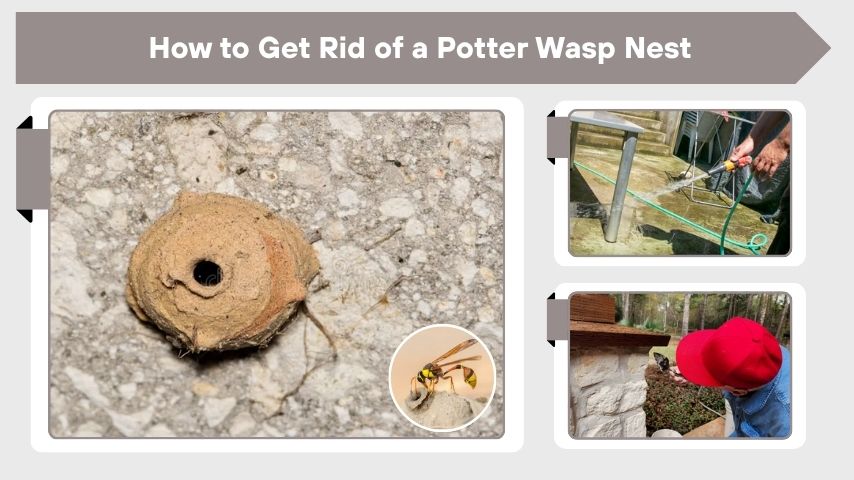
Potter wasp nests are generally easy to remove because they contain only a single wasp or small developing larva. Unlike social wasps, there is little risk of triggering a swarm during removal.
Safe Potter Wasp Nest Removal Steps
Follow these steps for safe removal:
- Wait until evening or cooler temperatures
- Wear gloves for protection
- Use a scraper or putty knife
- Gently detach the mud nest
- Dispose of the nest outdoors
Most nests can be removed without pesticides because the wasps are solitary and non-aggressive.
Cleaning the Surface After Removal
After removing the nest, leftover mud residue may remain attached to the surface. Cleaning the area helps prevent future nesting attempts.
Soap and warm water are often enough to remove dried mud. Vinegar solutions may also help loosen stubborn residue from brick, metal, or painted surfaces.
Preventing Potter Wasps From Returning
Regular inspections and reducing mud sources can discourage future nesting.
Helpful prevention methods include:
- Repair damaged screens
- Seal small sheltered gaps
- Remove old nests quickly
- Reduce standing mud or wet soil
- Wash outdoor surfaces regularly
Early prevention is easier than dealing with repeated nest construction throughout the warmer months.
FAQs
What is inside a potter wasp nest?
A potter wasp nest usually contains a single egg along with several paralyzed caterpillars or soft-bodied insects. The stored prey acts as food for the developing larva after it hatches. Once the larva matures into an adult wasp, it chews its way out of the sealed mud chamber.
Are potter wasps dangerous to humans?
Potter wasps are generally not dangerous because they are solitary and non-aggressive. Unlike yellow jackets or paper wasps, they do not defend large colonies. They may sting if directly handled or trapped, but most people can safely observe them from a short distance without problems.
How do I remove a potter wasp nest safely?
You can usually remove a potter wasp nest using a scraper or putty knife during cooler morning or evening hours. Wearing gloves is recommended for protection. After removing the nest, clean the surface with soap and water to remove leftover mud residue and discourage rebuilding.
Do potter wasps reuse old nests?
Most potter wasps do not reuse old nests. Female wasps usually build fresh mud chambers each season for their offspring. However, abandoned nests may sometimes attract other insects or remain attached to surfaces long after the adult wasp has emerged.
Are potter wasps beneficial for gardens?
Yes. Potter wasps help control caterpillar populations by hunting and paralyzing soft-bodied insects that damage plants and crops. Because they naturally reduce garden pests and are rarely aggressive, many gardeners consider them beneficial insects around yards and flower beds.