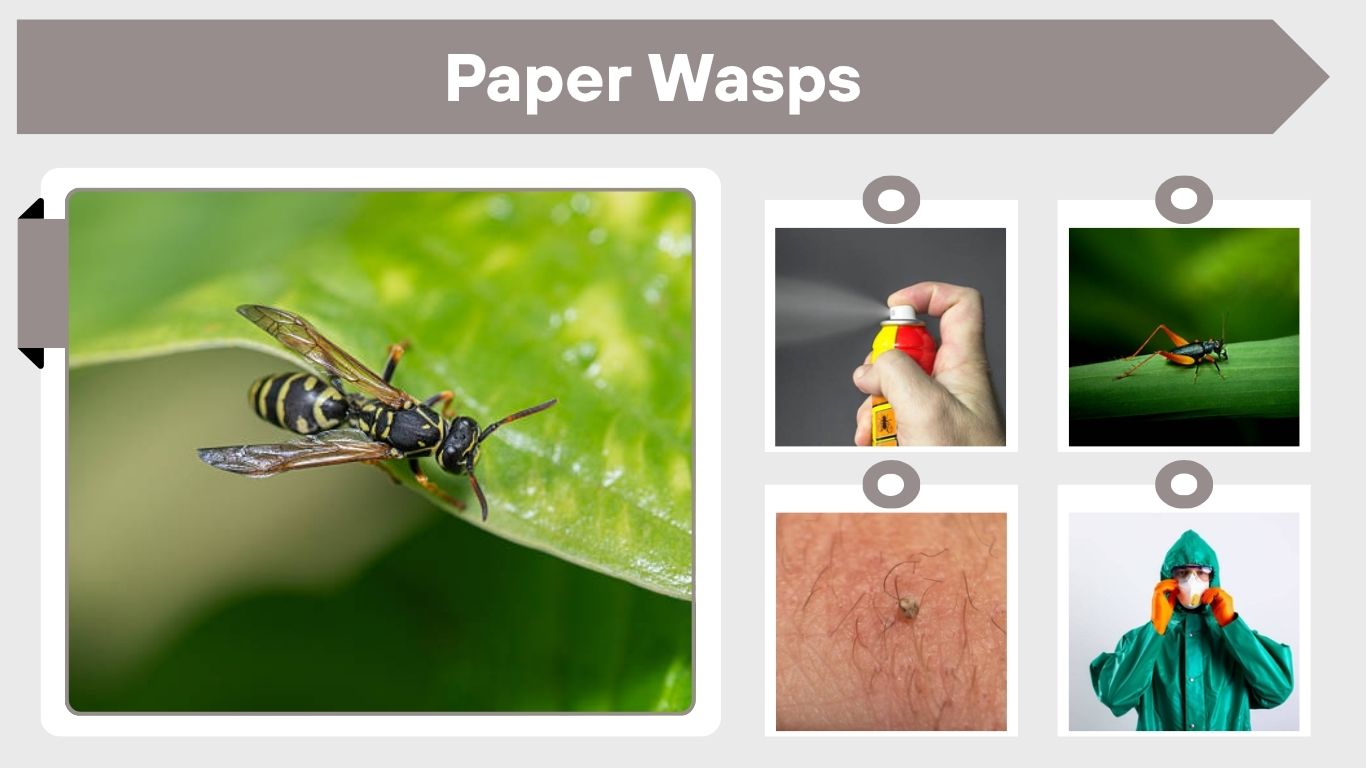
Paper wasps are commonly seen around homes, gardens, and outdoor structures, often building small umbrella-shaped nests under eaves or roofs. While they can look intimidating, they are generally less aggressive than other stinging insects like yellow jackets. Understanding how to identify paper wasps, recognize their nests, and respond safely to their presence can help reduce fear and prevent unwanted encounters. This guide covers their appearance, behavior, and key differences from similar species.
What Is a Paper Wasp?
Paper wasps are social insects belonging to the Polistes genus, known for building nests made from chewed wood fibers mixed with saliva. These nests resemble paper, which gives them their name. They play a beneficial role in ecosystems by controlling pest insects and occasionally pollinating plants. Despite their helpful nature, they often become a concern when nesting close to human living spaces.
Key Characteristics
- Slender bodies with long legs that hang while flying
- Typically found in small colonies
- Build open, visible nests without outer coverings
What Do Paper Wasps Look Like?
Paper wasps are easy to distinguish from other wasps once you know what to look for. Their bodies are more elongated and less compact compared to yellow jackets. They often appear less “stocky,” and their legs dangle noticeably during flight, which is a clear visual clue. Their color can vary widely depending on the species and region.
Common Appearance Traits
- Colors range from red and brown to black and yellow
- Length usually between 0.5 to 1 inch
- Wings are folded lengthwise when at rest
Types of Paper Wasps

There are many species of paper wasps, and their appearance and behavior can vary slightly depending on the region. Some are more common in warmer climates, while others are found in cooler areas. Knowing the type can help you understand their behavior and potential risk level.
Common Species
- Red paper wasp: Known for its reddish color and relatively painful sting
- European paper wasp: Often mistaken for yellow jackets due to similar coloring
- Northern paper wasp: Typically found in cooler climates and slightly less aggressive
Paper Wasp Nest Identification
Paper wasp nests are one of their most recognizable features. These nests are usually small and exposed, making them easier to spot compared to hidden nests of other species. They are often built in quiet, sheltered areas where there is minimal disturbance.
What Does a Paper Wasp Nest Look Like?
A paper wasp nest has a gray, papery appearance and is shaped like an upside-down umbrella. The hexagonal cells are clearly visible because the nest lacks an outer covering. These nests are commonly attached to surfaces such as roof edges, branches, or beams.
Paper Wasp vs Yellow Jacket vs Hornet

Many people confuse paper wasps with yellow jackets or hornets, but there are important differences. Paper wasps are generally less aggressive and build open nests, while yellow jackets tend to be more defensive and build enclosed nests, often underground. Hornets are larger and construct fully enclosed paper nests, usually in trees or high structures.
Key Differences
- Paper wasps: open nests, calmer behavior
- Yellow jackets: enclosed nests, more aggressive
- Hornets: larger size, fully covered nests
Are Paper Wasps Aggressive or Dangerous?
Paper wasps are not typically aggressive insects, but they will defend their nests if they feel threatened. Most stings occur when a person gets too close or accidentally disturbs the nest. Compared to yellow jackets, their behavior is calmer, and they are less likely to attack without provocation.
When They Become Aggressive
- When their nest is disturbed
- During late summer when colonies grow
- If they feel trapped or threatened
Do Paper Wasps Sting?

Yes, paper wasps can sting, and they are capable of stinging more than once because their stinger does not detach. However, they usually sting only in defense. Unlike bees, they do not die after stinging, which allows them to react multiple times if necessary.
Paper Wasp Sting Pain and Symptoms
A paper wasp sting typically causes a sharp, burning pain followed by redness and swelling. For most people, the discomfort fades within a few hours, though mild swelling may last longer. Individuals with allergies may experience more severe reactions and should seek medical attention immediately.
What Do Paper Wasps Eat?

Paper wasps feed on a mix of sugary substances and protein sources. They often hunt small insects, which helps control pest populations in gardens. They also consume nectar, making them occasional pollinators that contribute to plant reproduction.
Are Paper Wasps Beneficial?
Yes, paper wasps are considered beneficial insects. They help reduce harmful insect populations and play a minor role in pollination. Their presence in small numbers can actually support a healthy garden ecosystem.
Why Paper Wasps Build Nests Near Homes
Paper wasps often choose human structures because they provide shelter, stability, and protection from predators. Roof edges, balconies, and window frames mimic natural overhangs like tree branches. These locations also offer warmth and easy access to food sources such as insects and nectar, making them ideal nesting spots throughout the warmer months.
Common Nesting Locations
- Under roof eaves and gutters
- Porch ceilings and beams
- Window frames and wall corners
How to Get Rid of Paper Wasps Safely

Removing paper wasps requires caution, as disturbing their nest can trigger defensive behavior. The safest approach is to act during times when wasps are less active, such as at night or early morning. Using proper tools and maintaining distance significantly reduces the risk of stings.
Safe Removal Steps
- Use a long-range insecticide spray designed for wasps
- Apply treatment at night when wasps are inactive
- Wear protective clothing to avoid stings
Paper Wasp Nest Removal
Once the wasps are eliminated or inactive, the nest itself can be removed. This step is important to prevent future infestations, as old nesting spots can attract new colonies. Always ensure there is no activity before attempting removal to avoid unnecessary risk.
Removal Tips
- Wait until no wasp activity is visible
- Use a stick or tool to detach the nest
- Dispose of the nest in a sealed bag
Paper Wasp Traps and Deterrents
Traps and deterrents can help manage wasp populations and prevent new nests from forming. These methods are especially useful in outdoor spaces where wasps frequently appear. While traps reduce numbers, deterrents help keep them from returning.
Effective Options
- Commercial wasp traps placed away from living areas
- DIY traps using sugar water or fruit bait
- Natural repellents like peppermint oil sprays
Paper Wasp Control and Prevention
Long-term control focuses on making your home less attractive to paper wasps. By eliminating shelter opportunities and reducing food sources, you can discourage them from nesting nearby. Regular inspection is key to catching early nest formation before it becomes a larger issue.
Prevention Strategies
- Seal cracks and gaps in walls and roofs
- Keep outdoor areas clean and free of food waste
- Inspect eaves and corners regularly for early nests
Common Myths About Paper Wasps
There are many misconceptions about paper wasps that can lead to unnecessary fear or ineffective control methods. Some people believe all wasps are highly aggressive, but paper wasps are generally calm unless provoked. Another common myth is that household solutions like bleach or water sprays are enough to eliminate them, which is often unreliable and unsafe. Understanding the facts helps you respond more effectively and safely.
Why Myths Can Be Misleading
Misconceptions often lead to poor decisions, such as attempting removal during the day or using ineffective DIY methods. This increases the risk of stings and may fail to solve the problem. Accurate knowledge ensures better outcomes and safer interactions with these insects.
FAQs
Are paper wasps dangerous?
Paper wasps are not usually dangerous unless their nest is disturbed. They can sting, which causes pain and swelling, but serious reactions are rare. Most risks are associated with allergic individuals who may require medical attention.
How do I get rid of paper wasps permanently?
To reduce the chances of return, remove nests early, seal entry points, and eliminate food sources. Using deterrents like natural repellents and keeping outdoor areas clean can help prevent future infestations effectively.
What is the difference between paper wasps and yellow jackets?
Paper wasps are less aggressive and build open nests, while yellow jackets are more aggressive and build enclosed nests, often underground or hidden. Their behavior and nesting styles are the easiest ways to tell them apart.
Do paper wasps sting more than once?
Yes, paper wasps can sting multiple times because their stinger is smooth and does not detach. However, they typically sting only when they feel threatened or when their nest is disturbed.
What attracts paper wasps to my house?
They are attracted to sheltered areas, easy nesting spots, and food sources like nectar or insects. Roof edges, eaves, and quiet corners provide ideal conditions for building nests.