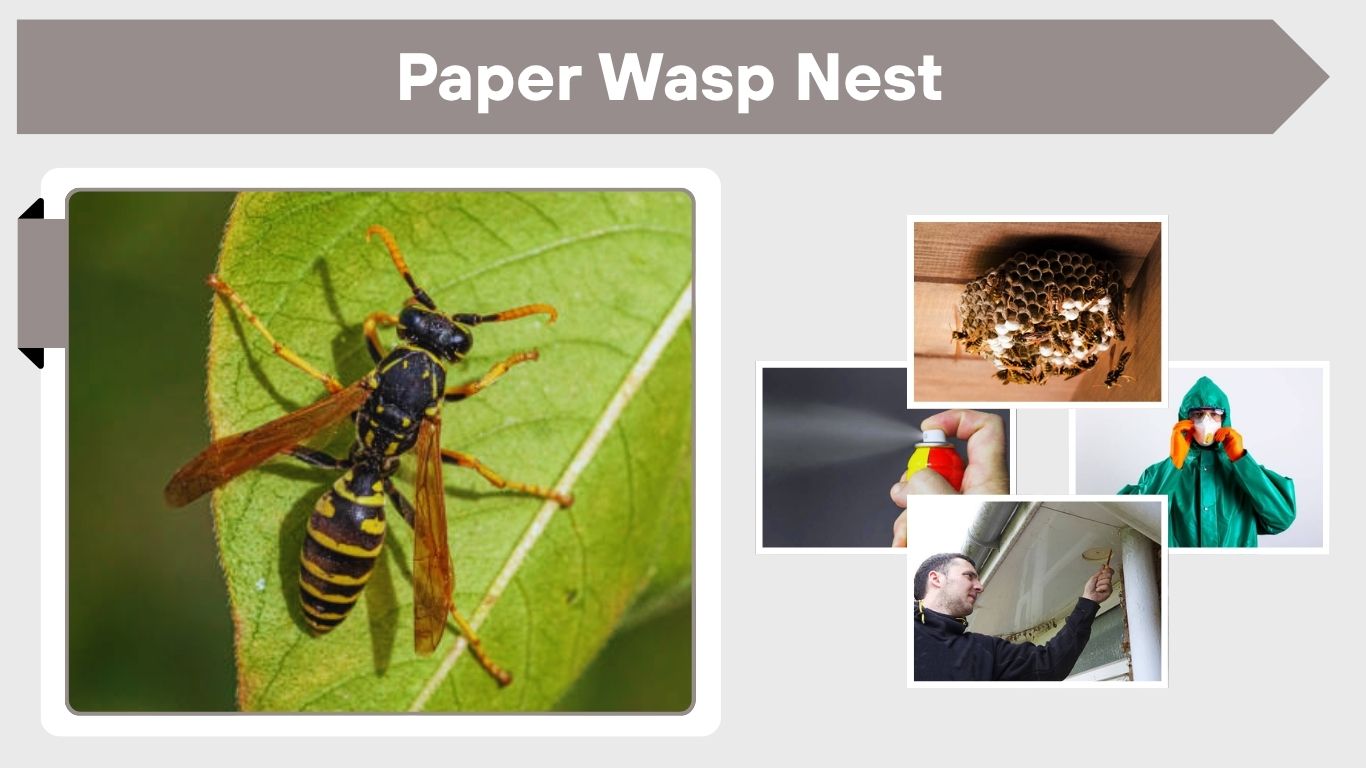
Paper wasp nests are a common sight around homes, especially under eaves, roofs, and tree branches. While these structures may look harmless, they often raise concerns due to the presence of stinging insects. Understanding how to identify a paper wasp nest, where they are commonly found, and how they differ from other nests can help you respond safely. This guide explains their structure, appearance, and behavior to help you recognize and manage them effectively.
What Is a Paper Wasp Nest?
A paper wasp nest is a small, open structure built by social wasps using chewed wood fibers mixed with saliva. This creates a paper-like material that is both lightweight and durable. These nests serve as a place for raising young and sheltering the colony. Unlike other wasp nests, they are usually visible and not enclosed, making them easier to identify.
Key Characteristics
- Made from wood pulp and saliva
- Open comb structure with visible cells
- Attached by a single stalk
What Does a Paper Wasp Nest Look Like?

Paper wasp nests are distinctive in appearance and can often be identified at a glance. They are usually gray or brown and have a rough, papery texture. The shape is often compared to an upside-down umbrella, with hexagonal cells clearly visible because there is no outer covering.
Visual Features
- Umbrella-shaped design
- Exposed hexagonal cells
- Small to medium size depending on age
Where Do Paper Wasps Build Nests?
Paper wasps prefer quiet, sheltered locations that protect them from weather and predators. These areas are often close to human activity, which is why nests are frequently found around homes and outdoor structures. Their choice of location allows easy access to food and safety for their colony.
Common Nesting Spots
- Under roof eaves and gutters
- Tree branches and shrubs
- Wall corners, sheds, and ceilings
Paper Wasp Nest Identification

Correctly identifying a paper wasp nest is important because it helps distinguish it from more aggressive species. Paper wasp nests are open and clearly visible, unlike enclosed nests built by other insects. Observing the structure and location is usually enough to confirm identification.
How to Identify a Nest
- Open structure without outer shell
- Hanging from a single attachment point
- Visible larvae cells inside
Paper Wasp Nest vs Yellow Jacket Nest

Many people confuse paper wasp nests with yellow jacket nests, but they are very different. Paper wasps build open nests that hang in visible locations, while yellow jackets create enclosed nests that are often hidden underground or inside walls. This difference makes paper wasp nests easier to spot and avoid.
Key Differences
- Paper wasps: open and exposed nests
- Yellow jackets: enclosed and hidden nests
- Paper wasps: above ground locations
Paper Wasp Nest vs Hornet Nest

Hornet nests are often mistaken for paper wasp nests due to their similar material, but their structure is quite different. Hornets build large, fully enclosed nests that look like a football or balloon. In contrast, paper wasp nests remain open and much smaller in size.
Structural Differences
- Paper wasp nests: open comb design
- Hornet nests: enclosed outer layer
- Hornet nests: larger and more rounded
How Do Paper Wasps Build Their Nests?
Paper wasps begin building their nests in spring, usually led by a single queen. She chews wood fibers and mixes them with saliva to create a pulp, which is then shaped into small hexagonal cells. As the colony grows, worker wasps expand the nest by adding more cells. This process continues throughout the warm months, gradually increasing the nest size.
Nest Building Process
- Queen starts the nest alone
- Wood fibers are chewed into pulp
- Cells are added as the colony grows
How Big Do Paper Wasp Nests Get?
The size of a paper wasp nest depends on the age of the colony and environmental conditions. Early in the season, nests are small with only a few cells. By late summer, they can grow significantly, though they usually remain smaller than hornet nests. Even at their largest, they are typically compact and manageable compared to other wasp species.
Typical Size Range
- Small nests: a few inches wide
- Medium nests: several dozen cells
- Large nests: up to 6–8 inches across
How to Get Rid of a Paper Wasp Nest

Removing a paper wasp nest should be done carefully to avoid provoking the wasps. The best time for removal is at night when most of the colony is inactive. Using proper tools and maintaining a safe distance reduces the risk of stings. Small nests are easier to handle, while larger nests may require more caution or professional help.
Safe Removal Methods
- Use a long-range wasp spray designed for nests
- Apply treatment during nighttime or early morning
- Wear protective clothing like gloves and long sleeves
Paper Wasp Nest Removal (DIY vs Professional)
Choosing between DIY removal and professional help depends on the nest size, location, and risk level. While small, easily accessible nests can often be handled safely at home, larger or hidden nests may require expert intervention to ensure safety and effectiveness.
DIY vs Professional Options
- DIY: suitable for small, visible nests
- Professional: safer for large or hard-to-reach nests
- Experts use specialized tools and protective gear
How to Prevent Paper Wasps from Building Nests

Prevention is the most effective way to avoid dealing with paper wasps repeatedly. By making your home less attractive for nesting, you can reduce the chances of new colonies forming. Regular maintenance and inspection play a key role in keeping these insects away.
Prevention Tips
- Seal cracks and gaps around your home
- Remove food sources like exposed garbage
- Regularly inspect eaves, ceilings, and corners
Do Paper Wasps Reuse Their Nests?
Paper wasps do not reuse old nests once the season ends. Each spring, a new queen starts building a fresh nest from scratch. Old nests are typically abandoned during colder months and may remain attached to surfaces. While they are not reused by paper wasps, other insects may sometimes occupy them, which is why removal can still be beneficial.
Seasonal Behavior
The colony grows throughout spring and summer, reaching its peak in late summer. As temperatures drop, the colony declines, and the nest is eventually abandoned. Only fertilized queens survive the winter, hiding in protected areas until the next season begins.
When Should You Remove a Paper Wasp Nest?
Deciding when to remove a nest depends on its location and the level of risk it poses. Nests in low-traffic areas may not require immediate action, while those near doors, windows, or walkways can become a safety concern. Early removal is often easier and safer than dealing with a fully developed colony.
Best Time to Remove
- Early stage nests are easier to eliminate
- Nighttime is safest due to low activity
- Late summer nests may require extra caution
FAQs
What does a paper wasp nest look like?
A paper wasp nest looks like a small, umbrella-shaped structure made of gray, papery material. It has open hexagonal cells that are visible from below and is usually attached to surfaces like roofs, branches, or ceilings.
How do you remove a paper wasp nest safely?
The safest way is to use a long-range insecticide spray at night when wasps are inactive. After ensuring no activity remains, the nest can be carefully removed using a tool while wearing protective clothing.
Do paper wasps reuse their nests?
No, paper wasps do not reuse their nests. Each year, a new queen builds a fresh nest. Old nests are abandoned and may remain in place unless removed manually.
How big can a paper wasp nest get?
Paper wasp nests are usually small to medium in size, typically growing up to 6–8 inches across. The size depends on the colony’s growth and environmental conditions during the season.
How can I prevent paper wasps from nesting?
You can prevent nesting by sealing entry points, removing food sources, and regularly checking areas like roof edges and corners. Early detection of small nests helps stop larger infestations from developing.