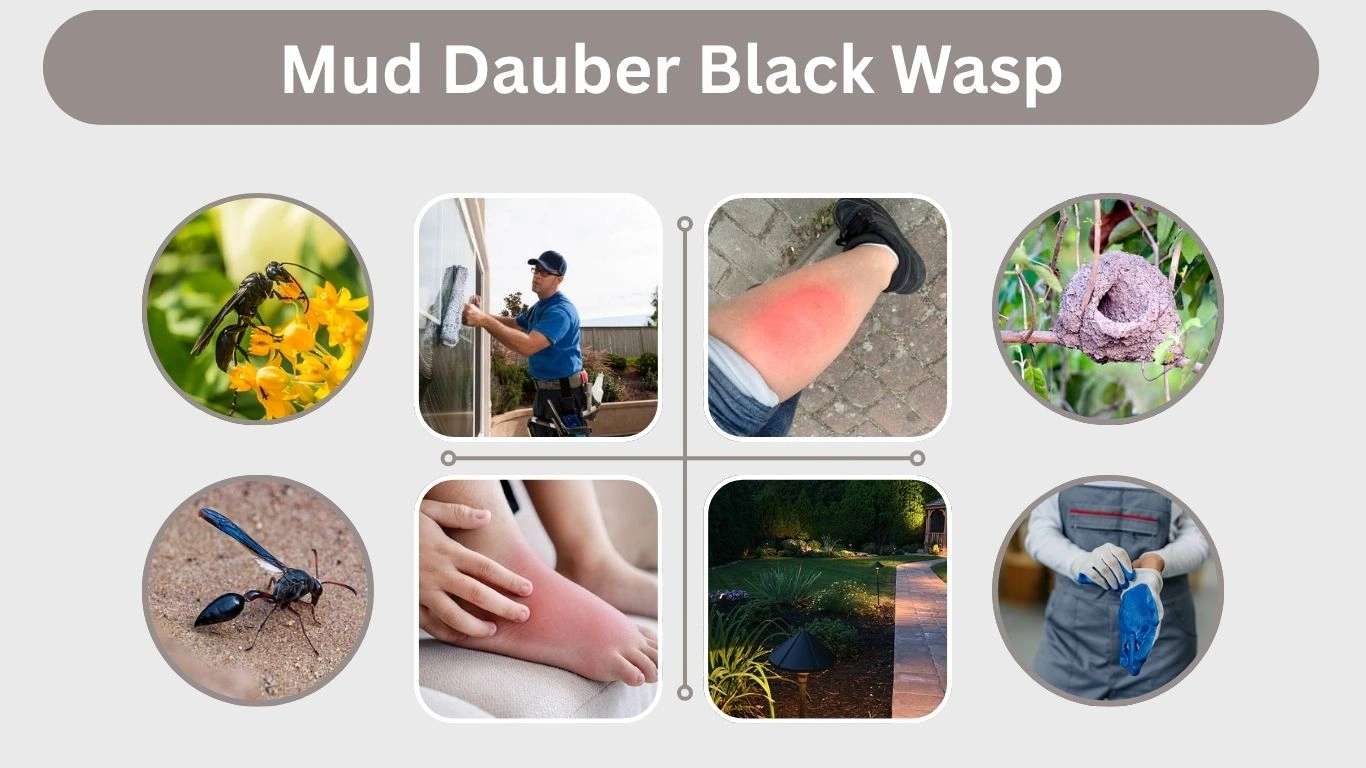
Mud dauber black wasps are among the most misunderstood insects around homes and gardens. Their dark appearance, long bodies, and wasp-like shape often make people assume they are aggressive or dangerous. In reality, most mud dauber species are solitary, calm, and beneficial because they help control spider populations.
Whether you have spotted a black mud dauber wasp near your garage or discovered a black and yellow mud dauber wasp nest under your roof, understanding these insects can help reduce fear and prevent unnecessary extermination. This guide explains how to identify mud daubers, how dangerous they are, what their nests look like, and how they compare to hornets, great black wasps, and even black widow spiders.
What Is a Mud Dauber Black Wasp?
A mud dauber black wasp is a type of solitary wasp known for building nests out of mud. Unlike social wasps such as yellow jackets or hornets, mud daubers live alone and rarely become aggressive toward humans.
These wasps belong to several species groups, but the most common include:
- Black mud dauber wasp
- Black and yellow mud dauber wasp
- Blue mud dauber
Mud daubers are famous for their unusual nesting habits. Female wasps collect mud and shape it into tube-like chambers that hold their eggs and food supply. The nests are commonly attached to walls, ceilings, barns, garages, attics, and porch overhangs.
One reason many homeowners notice them is their slow, hovering flight pattern. They often fly around buildings while searching for spiders or suitable nesting spots.
How to Identify a Black Mud Dauber Wasp

Identifying a black mud dauber wasp is usually easier once you know its distinctive body shape. These wasps have a very thin “thread waist” connecting the thorax and abdomen, giving them a stretched appearance.
Physical Characteristics
Most mud dauber wasps share these features:
- Long, narrow body
- Extremely thin waist
- Long dangling legs during flight
- Smooth and shiny body surface
- Slow and non-aggressive movement
Unlike fuzzy bees, mud daubers have sleek bodies with little visible hair.
Size and Color
A typical black mud dauber wasp ranges from about 1 to 1.5 inches long. The coloration depends on the species.
Some are completely black with a glossy finish, while others display yellow markings on the legs or thorax.
Mud Dauber Wasp All Black Appearance
The all-black mud dauber species is especially common in many parts of North America. These wasps appear shiny dark blue or black in sunlight and are often confused with larger aggressive wasps.
However, their slim waist and calm behavior quickly separate them from hornets and yellow jackets.
Yellow and Black Mud Dauber Wasp Features
The black and yellow mud dauber wasp has brighter markings, including:
- Yellow legs
- Yellow thorax patterns
- Black abdomen
- Smoky wings
This species is one of the most recognizable mud daubers because of its contrasting colors.
Black and Yellow Mud Dauber Wasp vs Black Mud Dauber

Although both species belong to the mud dauber family, they have noticeable differences in appearance and behavior.
Appearance Differences
The black mud dauber wasp is usually darker overall with a glossy black or blue-black body. In contrast, the black and yellow mud dauber wasp has more vivid coloration with visible yellow markings.
The yellow and black species may also appear slightly thinner and longer in flight.
Nesting Behavior
Both species create mud nests, but their nesting styles can vary slightly depending on habitat and climate conditions.
Black mud daubers often reuse abandoned nests made by other mud dauber species. Meanwhile, black and yellow mud daubers usually build fresh mud tubes from scratch.
Spider Hunting Preferences
Mud daubers are spider hunters, but different species may target different spider types. Some prefer orb weavers, while others actively hunt dangerous spiders such as black widows.
This behavior makes mud daubers surprisingly useful around homes.
Great Black Wasp vs Mud Dauber
Many people confuse mud daubers with great black wasps because both insects are large and dark-colored. However, they are very different species.
Key Differences
The great black wasp has:
- A thicker body
- Wider abdomen
- Stronger-looking wings
- Less pronounced waist
Mud daubers look more delicate because of their thread-like waist and narrow body shape.
Aggression Comparison
Great black wasps can appear intimidating due to their size, but they are generally not aggressive unless threatened.
Mud daubers are even calmer and rarely sting humans. Most prefer escaping rather than defending themselves.
Nesting Differences
One of the easiest ways to separate these insects is by their nests.
Mud daubers build visible mud nests attached to structures. Great black wasps usually nest underground instead of creating mud tubes.
Mud Dauber Black Wasp Sting

One of the most common concerns people have about mud daubers is whether they sting. Because these insects resemble aggressive wasps, many homeowners assume they are dangerous.
In most cases, a mud dauber black wasp sting is rare and mild.
Do Black Mud Dauber Wasps Sting?
Yes, black mud dauber wasps can sting, but they almost never attack humans unless directly handled or trapped.
Unlike yellow jackets or hornets, mud daubers are solitary wasps. They do not defend large colonies, which makes them far less aggressive.
Female mud daubers use their sting mainly for hunting spiders rather than attacking people.
What Does the Sting Feel Like?
If a sting does occur, symptoms are usually minor and temporary, including:
- Mild burning pain
- Small swelling
- Redness around the sting site
- Minor itching
Most people recover quickly without medical treatment.
Black Mud Dauber Wasp Sting Symptoms
Normal reactions usually disappear within a few hours or days. However, allergic individuals may experience stronger symptoms.
Watch for:
- Severe swelling
- Trouble breathing
- Dizziness
- Facial swelling
- Rapid heartbeat
These signs may indicate an allergic reaction and require immediate medical attention.
Are Mud Dauber Wasps Dangerous?
Despite their intimidating appearance, mud daubers are considered one of the least aggressive wasp species.
Why They Are Beneficial
Mud daubers help control spider populations by hunting and paralyzing spiders for their larvae.
Some species even target black widow spiders, which makes them useful around homes, sheds, and garages.
Aggression Level
Mud daubers generally:
- Avoid human contact
- Rarely defend nests
- Prefer flying away instead of attacking
This calm behavior is very different from social wasps like hornets and yellow jackets.
Hornet Mud Dauber Black Wasp Confusion
People often mistake mud daubers for hornets because of their size and dark coloration.
However, hornets are:
- Thicker-bodied
- More aggressive
- Colony-forming insects
Mud daubers are slimmer, solitary, and much less defensive.
Mud Dauber Wasp vs Black Widow
A fascinating feature of mud daubers is their relationship with spiders.
Why Mud Daubers Hunt Black Widows
Female mud daubers sting and paralyze spiders before placing them inside mud nest chambers as food for developing larvae.
Black widows are among the spiders commonly captured by some mud dauber species.
How They Help Around Homes
Because they reduce spider populations, mud daubers can actually provide natural pest control benefits.
Many homeowners tolerate mud daubers because they help limit dangerous spider activity near buildings.
Should You Leave Them Alone?
If nests are not located in high-traffic areas, many experts recommend leaving mud daubers alone due to their beneficial role and low aggression.
However, nests near doorways or frequently used spaces may still need removal.
Black Mud Dauber Wasp Nest

The nest is often the easiest way to identify a mud dauber species.
What Does a Mud Dauber Nest Look Like?
A black mud dauber wasp nest usually appears as:
- Small mud tubes
- Cylindrical chambers
- Clusters of hardened mud
- Brown or gray structures attached to surfaces
The nests may resemble dried clay pipes stuck against walls or ceilings.
Black and Yellow Mud Dauber Wasp Nest Locations
Common nesting spots include:
- Garage ceilings
- Porch roofs
- Barn walls
- Attics
- Sheds
- Under eaves
Mud daubers prefer protected locations sheltered from rain and wind.
Old vs Active Nests
An active nest may have adult wasps flying nearby. Old nests often contain small exit holes where mature wasps already emerged.
Inactive nests can sometimes be reused by other mud dauber species.
How to Remove a Mud Dauber Black Wasp Nest Safely

Although mud daubers are not highly dangerous, some homeowners prefer removing nests for cosmetic or safety reasons.
Best Time for Removal
The safest time to remove a nest is:
- At night
- Early morning
- During cooler temperatures
Wasps are less active during these periods.
Safe Removal Methods
For small nests:
- Wear gloves and protective clothing
- Use a scraper or putty knife
- Dispose of the nest in a sealed bag
- Wash the area afterward
Because mud daubers are solitary, removing one nest is usually much easier than dealing with social wasps.
Preventing Future Nests
To discourage nesting:
- Seal cracks and openings
- Clean old nests quickly
- Reduce standing mud sources
- Keep garages and sheds closed when possible
FAQs
Do black mud dauber wasps sting humans?
Yes, black mud dauber wasps can sting, but they rarely attack people unless directly threatened or handled. Their sting is usually mild and causes temporary pain, redness, or swelling.
Are black mud dauber wasps dangerous?
Mud dauber wasps are generally not dangerous. They are solitary insects with low aggression levels and are actually beneficial because they help control spider populations around homes and gardens.
What does a black mud dauber wasp nest look like?
A black mud dauber wasp nest looks like small tube-shaped mud structures attached to walls, ceilings, garages, sheds, or under roof eaves. The nests are made from hardened mud and often appear gray or brown.
What is the difference between a great black wasp and a mud dauber?
Great black wasps have thicker bodies and usually nest underground, while mud daubers have a very thin waist and build mud nests on structures. Mud daubers are also less aggressive than many large black wasps.
Do mud dauber wasps kill black widows?
Yes, some mud dauber species hunt and paralyze black widow spiders to feed their larvae. This makes them useful natural predators that help reduce dangerous spider populations near homes.