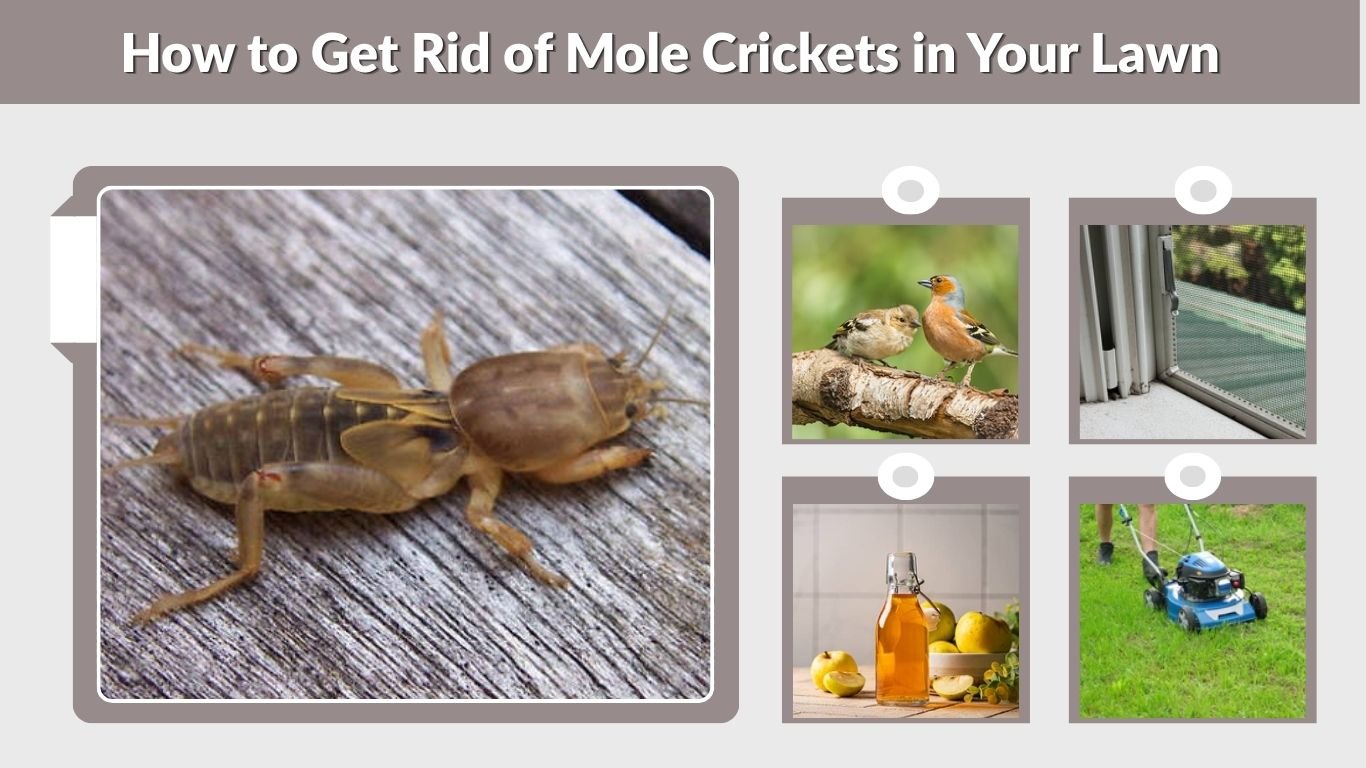
Mole crickets can quickly become a frustrating lawn and garden pest because they spend much of their lives tunneling underground. Their digging can loosen soil, damage grass roots, and create thinning or brown patches across turf. Fortunately, you can control them with a combination of proper lawn care, natural treatments, trapping techniques, and targeted insecticides when necessary. The best results come from identifying an infestation early and treating young mole crickets before they mature and spread throughout your yard.
How to Tell If You Have Mole Crickets
Mole crickets are underground insects with large, shovel-shaped front legs designed for digging. Because they spend most of their time beneath the soil, homeowners often notice the damage before seeing the insects themselves. Checking your lawn carefully helps determine whether mole crickets are actually responsible.
Common Signs of a Mole Cricket Infestation
Look for these typical warning signs:
- Small holes or openings in the soil
- Raised tunnels running across the lawn
- Loose or unusually soft turf
- Brown or thinning patches of grass
- Grass that pulls away from the soil easily
- Damaged or weakened grass roots
- Mole crickets appearing after rain or watering
- Birds repeatedly digging or feeding in one area
Severe infestations may leave sections of turf looking dry even when the lawn receives sufficient water.
Test Your Lawn Before Treatment
A simple soap-water flush can help reveal mole crickets hiding near the surface.
Mix a small amount of mild dish soap into a bucket of water and slowly pour it over a small section of affected lawn. If mole crickets are present near the surface, they may emerge within several minutes.
Use this mainly as a detection method rather than a complete treatment. Once you confirm their presence, you can decide which control option is appropriate.
How to Get Rid of Mole Crickets in the Lawn
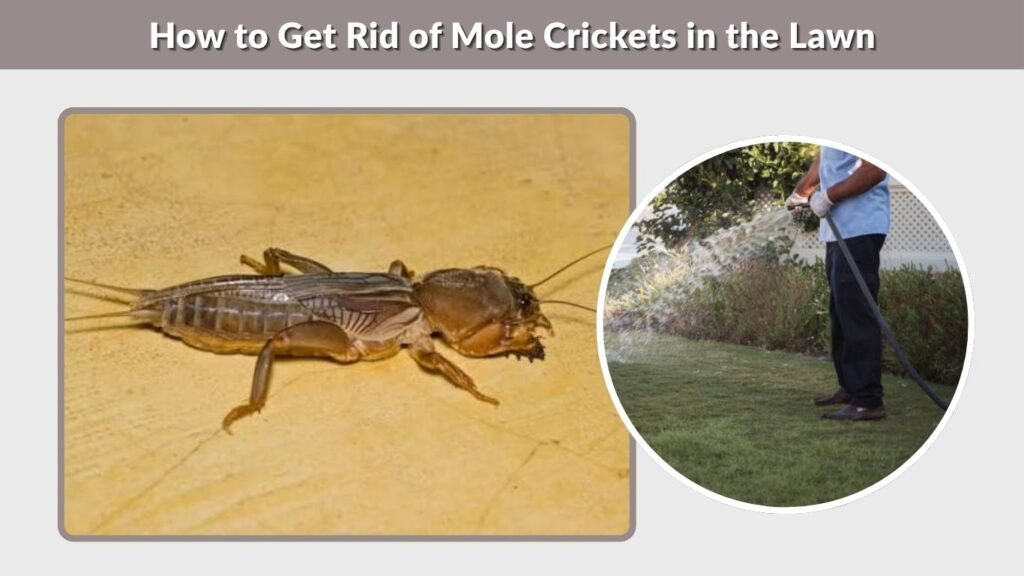
Getting rid of mole crickets usually requires treating both the insects and the lawn conditions that allow large populations to develop. Small infestations may respond to cultural or biological controls, while serious lawn damage may require a labeled insecticide.
Reduce Excessive Lawn Moisture
Mole crickets prefer soil that is moist enough for easy digging. Constantly saturated lawns can create favorable conditions for them.
Water deeply but less frequently rather than keeping the surface continuously wet. Allow the upper soil layer to dry moderately between irrigation sessions whenever your grass species allows it.
Improving drainage can also make heavily infested areas less attractive.
Treat Young Mole Crickets Early
Timing is one of the most important parts of mole cricket control.
Young mole crickets, called nymphs, are smaller and generally easier to control than mature adults. Once adults become large and develop extensive tunnel systems, treatment may become more difficult.
If your lawn has a history of recurring infestations, inspect it during periods when young nymphs are likely to be active rather than waiting for extensive brown patches to appear.
Use Mole Cricket Bait or Insecticide
For significant infestations, products specifically labeled for mole cricket control can provide faster results.
Depending on the product, treatments may include:
- Granular lawn insecticides
- Liquid insecticide treatments
- Mole cricket baits
- Professional turf treatments
Apply only products labeled for the intended lawn or garden area. Follow all directions regarding application rate, watering, protective equipment, pets, children, and re-entry periods.
More pesticide is not necessarily more effective. Correct application and timing are more important than excessive treatment.
How to Get Rid of Mole Crickets Naturally
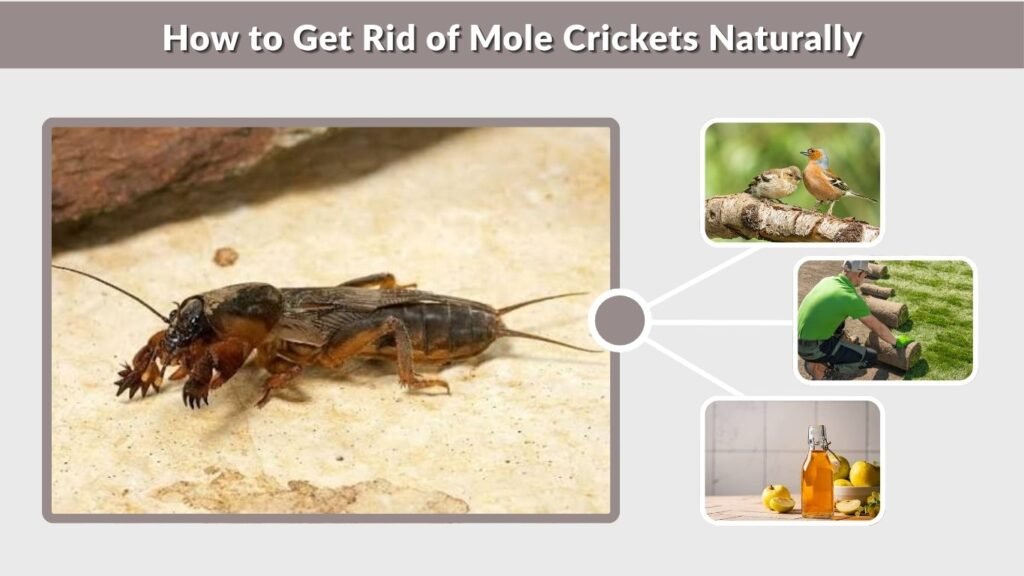
Homeowners who want to reduce chemical pesticide use have several options. Natural control is generally most successful when populations are still relatively small and the lawn is maintained properly.
Use Beneficial Nematodes
Beneficial nematodes are microscopic organisms that attack certain soil-dwelling insects. Some species are used specifically as biological controls for mole crickets.
They are applied to soil with water and need suitable moisture and temperature conditions to work effectively.
Choose a nematode product labeled for mole cricket control and follow its storage and application directions carefully. Because nematodes are living organisms, improper storage or applying them under unfavorable conditions can significantly reduce effectiveness.
Encourage Natural Predators
Mole crickets have several natural predators, including birds and other insect-eating animals.
Maintaining a diverse yard rather than routinely applying broad-spectrum pesticides can help preserve beneficial predators that naturally reduce pest populations.
Natural predators alone may not eliminate a heavy infestation, but they can contribute to long-term control.
Improve Lawn Health
Healthy grass is better able to tolerate limited mole cricket activity and recover from root disturbance.
Maintain appropriate mowing height, fertilize according to the needs of your grass species, reduce soil compaction, and avoid excessive watering.
Thick turf also makes damaged areas less vulnerable to additional stress.
Should You Use Vinegar?
Vinegar is sometimes suggested as a home remedy for mole crickets, but applying strong vinegar solutions directly to a lawn is risky.
Vinegar can damage or kill grass and other desirable plants because it affects plant tissue as well as insects. For lawn infestations, biological controls and properly labeled pest-control products are generally better choices.
How to Get Rid of Mole Crickets in the Yard and Garden
Mole crickets can also appear around flower beds, vegetable gardens, landscaped areas, and other locations with loose soil.
Protect Garden Plants
Regularly inspect the soil around seedlings and young plants for tunneling or disturbed roots.
Good garden management can reduce problems by:
- Removing unnecessary plant debris
- Avoiding excessive irrigation
- Maintaining good soil drainage
- Inspecting young plants for root damage
- Removing individual mole crickets when found
- Using suitable biological control when necessary
Be especially cautious when using insecticides around edible plants. A product used on turf may not automatically be suitable for a vegetable garden.
Avoid Unnecessary Treatment
Seeing one mole cricket does not necessarily mean you have an infestation.
Some species cause relatively little plant damage, while others are important turf pests. Treatment is most justified when you find repeated signs of tunneling, root damage, dying grass, or multiple insects during inspection.
How to Get Rid of Mole Crickets in the House
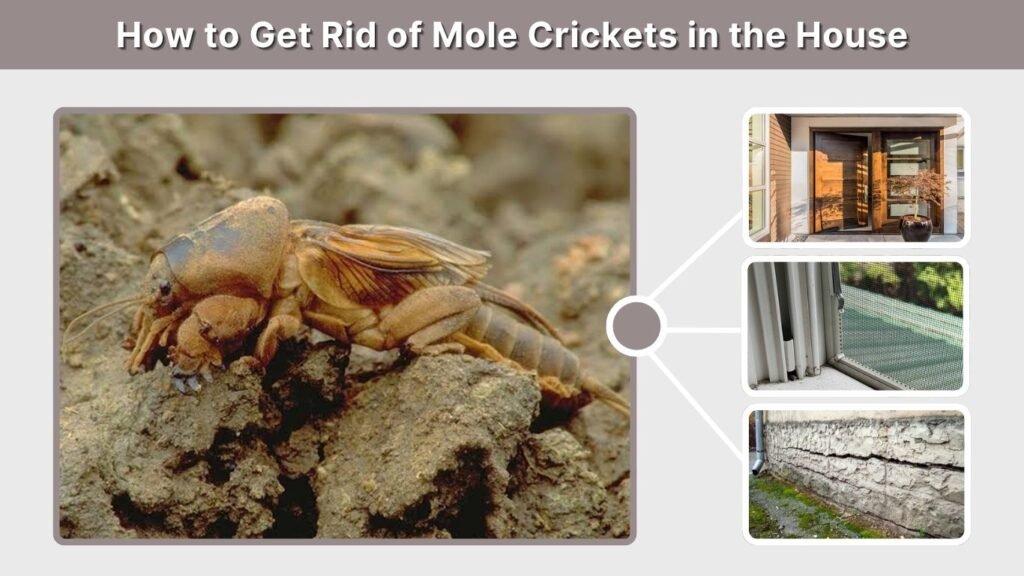
Mole crickets normally live outdoors and do not establish typical indoor infestations. Occasionally, adults may enter houses, garages, or basements accidentally, particularly after heavy rain or while attracted to lights.
Remove Indoor Mole Crickets
For occasional indoor insects, simply capture or vacuum them and remove them from the house.
Then check possible entry points around:
- Exterior doors
- Window screens
- Foundation gaps
- Garage doors
- Utility openings
- Basement windows
Sealing openings and reducing unnecessary outdoor lighting near entrances can help prevent repeated encounters.
Indoor pesticide treatment is usually unnecessary when only an occasional mole cricket has wandered inside.
What Is the Fastest Way to Get Rid of Mole Crickets?
For a heavy infestation, the fastest practical approach is usually to first confirm mole cricket activity and then apply an appropriately labeled treatment while the insects are still young.
Do not treat blindly. Brown grass can also result from drought, disease, grubs, poor soil, or other lawn pests.
After treatment, continue monitoring the area. A severely damaged lawn may require reseeding, plugging, or other turf repair even after the insects have been controlled.
How to Prevent Mole Crickets From Coming Back
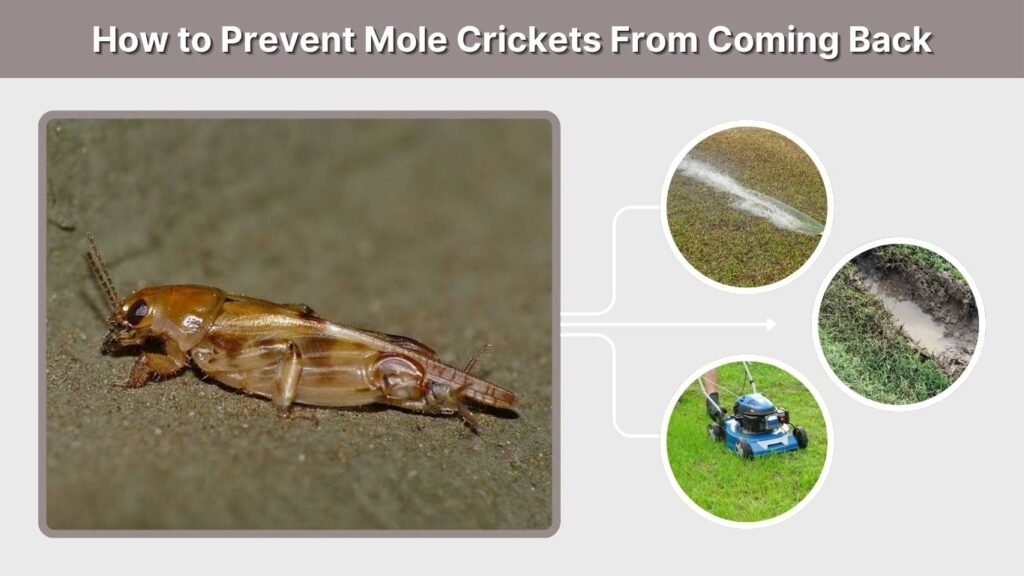
Prevention focuses on keeping your lawn healthy while making the soil less favorable for excessive mole cricket activity.
Maintain Your Lawn Properly
A few preventive practices can make a significant difference:
- Avoid overwatering the lawn
- Correct poor drainage
- Maintain appropriate mowing height
- Fertilize according to turf requirements
- Repair thin or damaged grass
- Monitor areas damaged in previous years
- Check suspicious tunnels early
- Treat young nymphs before populations increase
Regular inspection is particularly important if mole crickets have caused damage in your yard before.
FAQs
What is the best way to get rid of mole crickets?
The best method depends on the size of the infestation. Improving lawn conditions and using biological controls may handle smaller populations. Serious infestations may require a properly labeled mole cricket bait or insecticide, ideally applied while the insects are still young.
How do I get rid of mole crickets naturally?
Beneficial nematodes are one of the most useful biological options. You can also reduce excessive soil moisture, improve drainage, maintain healthy turf, and encourage natural predators. Natural approaches generally work best when an infestation is detected early.
How do I get rid of mole crickets in my lawn?
Confirm their presence first by examining tunnels or performing a soap-water flush. Reduce excessive watering and improve turf health. When populations are high, use a lawn treatment specifically labeled for mole crickets and apply it according to the manufacturer’s directions.
Can mole crickets damage a vegetable garden?
Yes. Some mole cricket species can disturb roots and feed on young plants while tunneling through garden soil. Seedlings may be particularly vulnerable. Carefully inspect damaged areas and use only treatments specifically approved for use around edible crops.
Why do I keep getting mole crickets in my yard?
Moist, loose soil, healthy grass roots, suitable temperatures, and previous mole cricket populations can make a yard attractive to them. Poor drainage and frequent shallow watering may also favor their activity. Improving lawn conditions and monitoring recurring problem areas can help reduce future infestations.