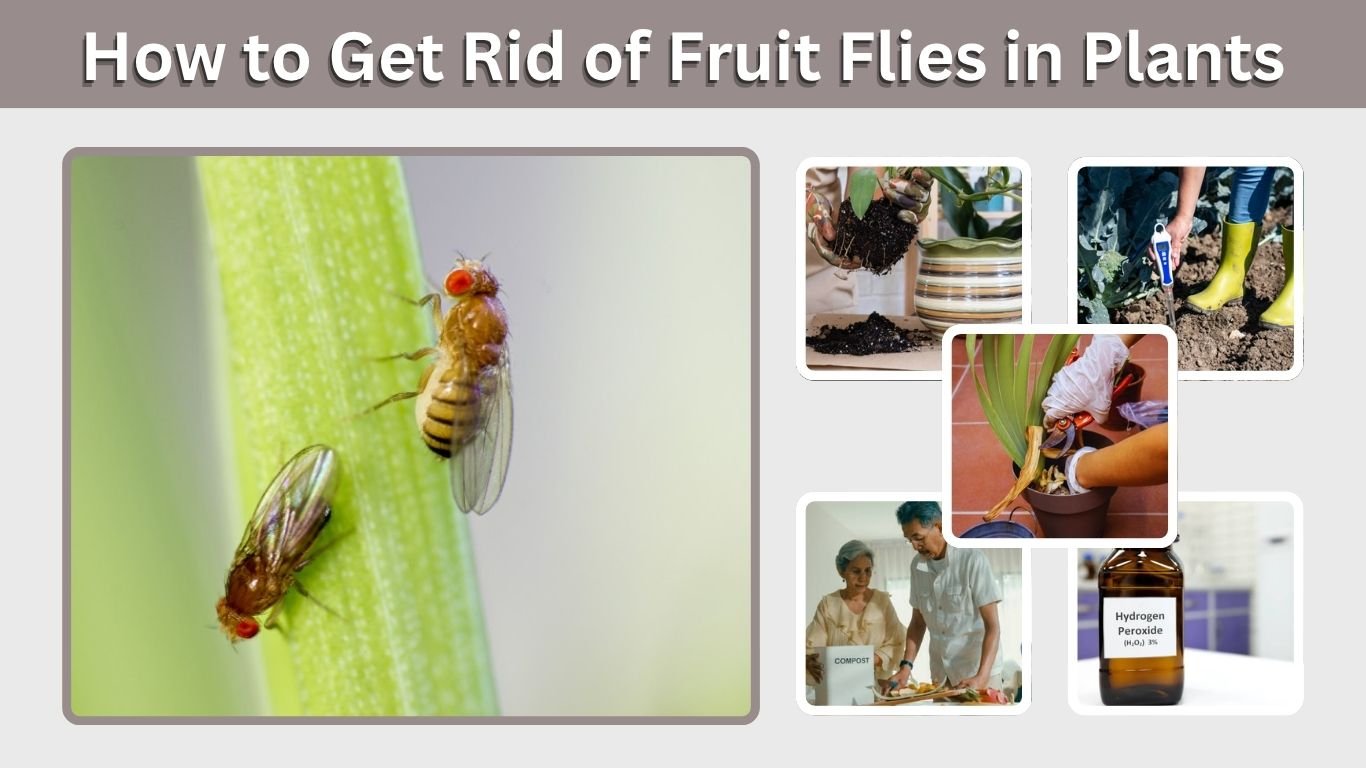
Tiny flies hovering around indoor plants are often called fruit flies, but most insects breeding in potting soil are actually fungus gnats. True fruit flies prefer fermenting fruit, sugary liquids, compost, and decaying food, while fungus gnats reproduce in consistently damp, organic-rich soil.
Correct identification is important because a vinegar trap may catch true fruit flies but will not eliminate fungus gnat larvae living around plant roots. The following steps target both problems without unnecessarily damaging your plants.
Are They Fruit Flies or Fungus Gnats?
Before treating the plant, observe the insects’ appearance and where they spend most of their time. Flies rising from the soil when you water or move a pot are usually fungus gnats. Flies gathering around ripe produce, compost, or fallen fruit are more likely fruit flies.
| Feature | Fungus gnat | Fruit fly |
| Appearance | Thin, dark, and mosquito-like | Tan or brown with a rounded body |
| Eyes | Usually dark | Often red |
| Legs | Long and slender | Shorter |
| Main location | Damp plant soil | Fruit, trash, and sugary residue |
| Breeding material | Fungi and decaying matter in soil | Fermenting organic material |
| Flight | Erratic around plants and windows | Hovering around food |
Fungus gnats belong to several small-fly groups, including species of Bradysia. Adults are mainly a nuisance, but their larvae feed on fungi, algae, decomposing roots, and sometimes healthy fine roots. Heavy populations can injure seedlings, cuttings, and sensitive houseplants.
1. Isolate the Affected Plant
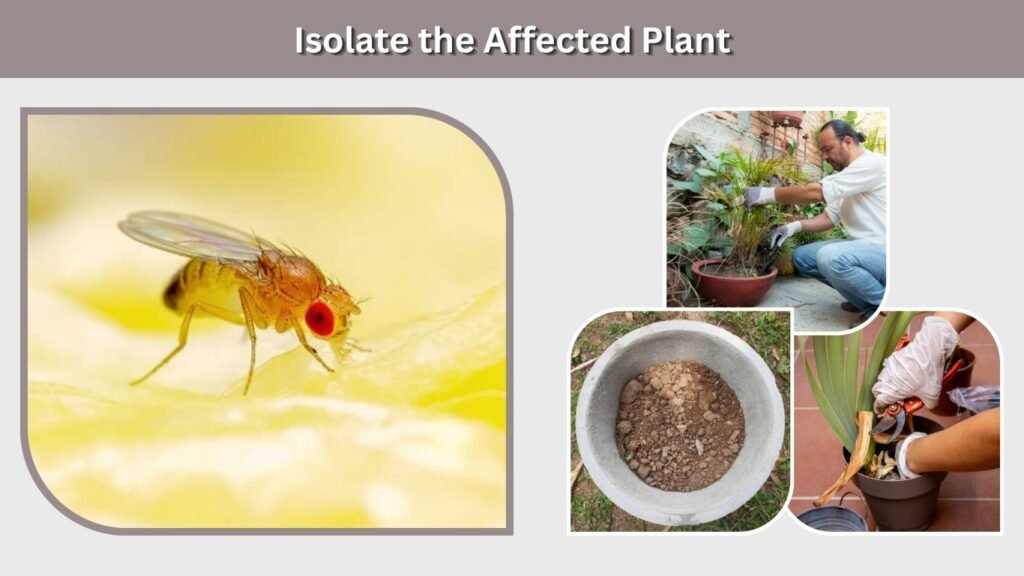
Move the affected plant away from your other houseplants. This will not instantly eliminate the flies, but it can reduce the chance of adults moving into neighboring pots and laying eggs.
Check every nearby plant by gently moving the leaves or tapping the pot. Watch for small dark flies rising from the soil. Examine newly purchased plants particularly carefully, since fungus gnats can arrive inside moist commercial potting mix.
Keep the isolated plant in suitable light and temperature conditions. Do not place a shade-loving houseplant in intense direct sunlight simply to dry its soil faster.
2. Allow the Soil Surface to Dry
Constantly damp potting soil creates favorable conditions for fungus gnat eggs and larvae. Allowing the upper layer of soil to dry between waterings is one of the most important control methods. Reducing excessive moisture also limits the fungi and decomposing material on which the larvae feed.
How to Water Correctly
Before watering, press a finger approximately one inch into the soil. Water only when the upper layer feels dry, unless the plant species requires consistently moist conditions.
When you water:
- Water thoroughly rather than adding small amounts every day.
- Allow excess water to drain completely.
- Empty water collected in the saucer.
- Never leave the pot standing in water.
- Adjust the schedule according to the plant, pot size, light, and season.
Do not allow moisture-sensitive plants to become severely wilted. The goal is to eliminate unnecessarily wet soil, not to dehydrate the plant.
Bottom watering may help keep the surface drier, but the pot should be removed from the water once it has absorbed enough moisture.
3. Place Yellow Sticky Traps Near the Soil
Yellow sticky cards catch adult fungus gnats before some of them can return to the soil and lay eggs. They also help you monitor whether the population is increasing or decreasing.
Insert a small trap into the pot so it sits just above the soil surface. For a larger plant, use two or more cards around the pot.
Replace a trap when it becomes covered with insects, dust, or soil. Continue using the cards for several weeks because they only catch adults; they do not kill larvae already developing in the pot.
Sticky traps can become attached to leaves, hair, or pet fur. Position them where children and animals cannot easily touch them.
4. Remove Decaying Material From the Pot
Dead leaves, fallen flowers, rotting roots, algae, and old organic mulch can provide food and shelter for fungus gnat larvae. Remove loose plant debris from the surface and clean the area around the pot.
Trim dead or rotting plant tissue with clean tools. Empty dirty saucers and wash them before returning them beneath the pots.
Also remove decorative materials that hold moisture, including:
- Damp moss
- Decomposing bark
- Used tea leaves
- Coffee grounds
- Food-based homemade fertilizers
- Thick organic mulch
Do not place fruit peels, kitchen scraps, or unfinished compost directly into indoor pots. These materials may attract true fruit flies as well as other small flies.
5. Treat the Soil With BTI
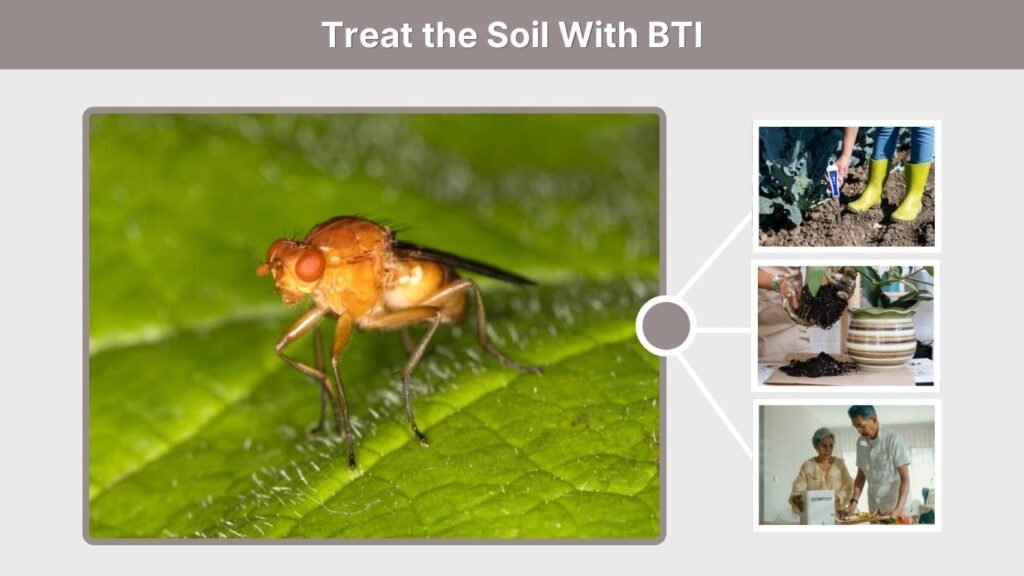
For persistent fungus gnats, use a product containing Bacillus thuringiensis subspecies israelensis, commonly abbreviated as BTI. It is a biological control that targets certain fly larvae, including fungus gnat larvae, when applied correctly to the growing medium.
Choose a product whose label specifically permits use against fungus gnats in houseplant soil. Mix and apply it exactly as directed. Repeated treatment may be necessary because eggs and pupae are not equally affected at every stage.
Do not assume that every product containing BTI is automatically suitable for every plant or indoor use. The product label determines where and how it can legally and safely be applied.
Beneficial nematodes, especially Steinernema feltiae, are another biological option for treating larvae in growing media. They are more commonly used for valuable plant collections, greenhouses, and persistent infestations.
6. Repot the Plant When the Infestation Is Severe
Repotting is not always necessary, but it can help when the soil remains waterlogged, smells sour, drains poorly, or contains a large larval population.
How to Report Safely
Remove the plant from its container and gently discard as much old soil as possible without seriously damaging the roots. Examine the root system and trim away soft, black, or badly decayed roots with sterilized scissors.
Wash the container before reusing it, or choose a clean pot with adequate drainage holes. Replant using fresh, unopened potting mix appropriate for the plant.
Do not use ordinary garden soil indoors. It may drain poorly inside a pot and can contain insects, weed seeds, or disease organisms.
After repotting, avoid immediately returning to an excessive watering schedule. Fresh soil can become reinfested when it remains continuously wet.
7. Remove True Fruit Fly Sources Near the Plant
When the flies are tan, rounded, and gathering around fruit rather than emerging from the soil, inspect the room for fermenting material.
Plants may appear to be the source when the actual breeding site is nearby. Check for:
- Overripe fruit
- Fallen berries or tomatoes
- Rotting fruit on indoor edible plants
- Open compost containers
- Spilled juice or soda
- Empty wine or beer bottles
- Dirty recycling
- Fruit peels used as fertilizer
- Food residue beneath the pot
Remove damaged fruit and seal it in a bag before placing it in an outdoor trash container. Wash sticky surfaces and clean any saucers containing sugary or organic residue.
An apple cider vinegar trap can help catch adult fruit flies. Pour a small amount of apple cider vinegar into a jar, add one or two drops of dish soap, and place the trap near the suspected food source. Keep the liquid away from the plant’s soil and leaves.
Vinegar traps are not a reliable treatment for fungus gnat larvae because the larvae remain inside the potting medium.
8. Improve Drainage and Growing Conditions
Repeated infestations often indicate that the soil stays wet for too long. Correcting the growing conditions provides better long-term control than continuously trapping adults.
Make sure the container has open drainage holes. Replace compacted or unsuitable potting mix with a more appropriate medium. Increase air circulation around crowded plants and provide the correct amount of light, since soil in dark, poorly ventilated areas often dries slowly.
A pot that is much larger than the root system may retain excessive moisture. When repotting, use a container only slightly larger than the plant’s root ball unless the species requires a different setup.
Avoid following a fixed watering schedule without checking the soil. Two plants in the same room may require different watering intervals.
Natural Methods to Avoid
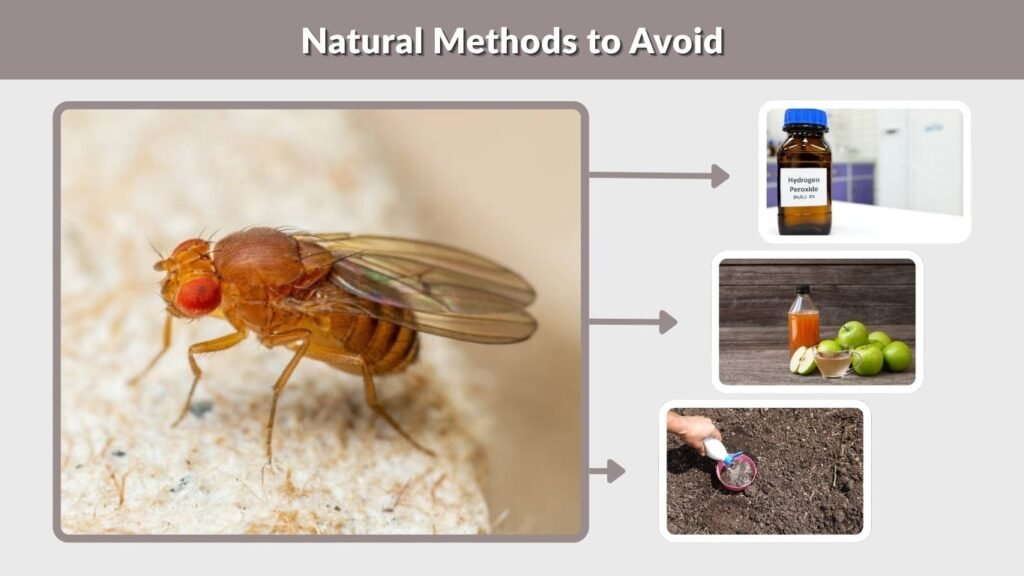
Many homemade treatments are promoted for flies in plant soil, but “natural” does not always mean harmless or effective.
Hydrogen Peroxide
Hydrogen peroxide soil drenches are frequently recommended online, but concentration errors or repeated use may injure roots and disrupt organisms in the growing medium. Drying the soil appropriately, trapping adults, and using a labeled BTI product provide more predictable control.
Vinegar in Plant Soil
Do not pour vinegar into the pot. Vinegar is acidic and can damage roots or change the soil’s pH. Use vinegar only as bait inside a separate fruit fly trap.
Dish Soap Soil Drenches
Dishwashing detergent is not formulated for plants. Strong mixtures may damage root tissue or affect water movement through the growing medium. Use products specifically labeled for plant pest control.
Cinnamon and Coffee Grounds
Cinnamon sprinkled over soil is unlikely to eliminate an established population. Coffee grounds can retain moisture and add organic material, potentially making conditions more attractive to small flies.
How Long Does Treatment Take?
Adult fungus gnats may continue appearing after treatment because eggs, larvae, and pupae are present in the soil at different stages. Sticky traps may reduce visible adults quickly, but complete control usually requires continued moisture management and repeated monitoring.
Check traps and soil conditions for several weeks. A steady reduction in captured adults indicates that the treatment is working. If numbers remain unchanged, examine other pots, stored potting mix, propagation containers, and damp organic material nearby.
How to Prevent Flies in Potted Plants
Quarantine new plants before placing them with an established collection. Examine the soil, drainage holes, and saucer for adult gnats or larvae.
Store unused potting mix in a closed, dry container. Remove dead leaves promptly and avoid overwatering. Yellow sticky cards can be placed near valuable or sensitive plants to detect adult insects before the population becomes large.
FAQs
Can fruit flies live in plant soil?
True fruit flies usually breed in fermenting fruit and food residue rather than ordinary potting soil. Tiny flies repeatedly emerging from moist plant soil are more likely to be fungus gnats.
What kills flies in plant soil?
Allowing the surface to dry reduces larval habitat. For persistent fungus gnats, apply a BTI product labeled for use in houseplants. Yellow sticky traps catch adults but do not kill larvae inside the soil.
Will apple cider vinegar remove flies from plants?
Apple cider vinegar can attract true fruit flies, but it usually has limited value against fungus gnats. It does not reach the eggs and larvae developing inside potting soil.
Should I throw away an infested plant?
Usually not. Most infestations can be controlled by isolating the plant, correcting overwatering, trapping adults, removing decaying matter, and treating the soil. Discarding the plant may be reasonable when severe root rot has already destroyed it.
Are fungus gnats harmful to plants?
Small populations mainly create a nuisance. Heavy larval populations may feed on fine roots and can harm seedlings, cuttings, young plants, or plants already weakened by poor growing conditions.