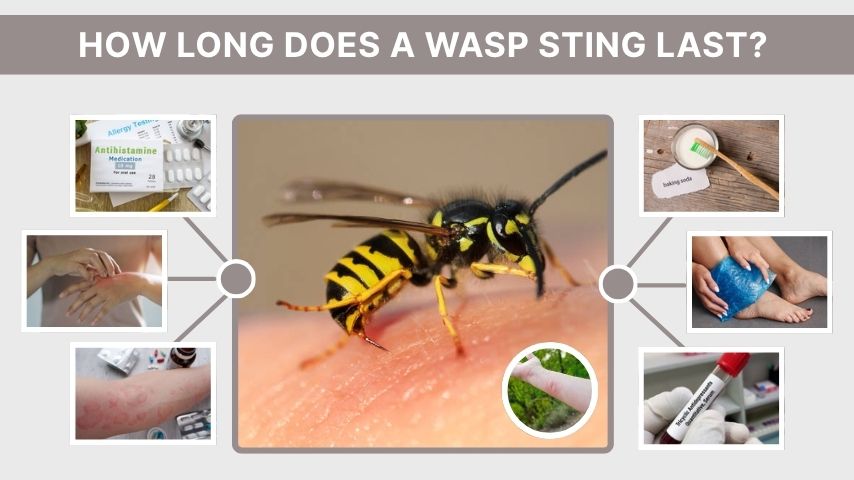
Wasp stings can cause sudden pain, swelling, redness, and itching that may last from a few hours to several days. Most mild stings improve quickly with basic care, but some reactions take longer depending on the person, the type of wasp, and the location of the sting. Understanding the normal healing timeline helps you know what to expect and when symptoms may need medical attention.
This guide explains how long wasp sting pain, swelling, itching, and redness usually last. It also covers severe reactions, different wasp species, and ways to help the sting heal faster.
Understanding a Wasp Sting
A wasp sting happens when venom enters the skin through the wasp’s stinger. The venom triggers the body’s immune response, which causes pain, swelling, and irritation. Some people recover quickly, while others may experience symptoms for several days due to skin sensitivity or allergies.
What Happens When a Wasp Stings You
The sting injects venom into the skin, causing immediate burning pain and inflammation. Blood vessels widen around the area, leading to redness and swelling.
Why Wasp Stings Cause Swelling
The body reacts to the venom by releasing chemicals such as histamine. This natural immune response causes puffiness, warmth, and tenderness around the sting site.
Difference Between Mild and Severe Reactions
Most people experience mild symptoms that improve within a few days. Severe reactions may include extensive swelling, hives, breathing difficulty, or dizziness and require urgent medical care.
How Long Does a Wasp Sting Last Overall?
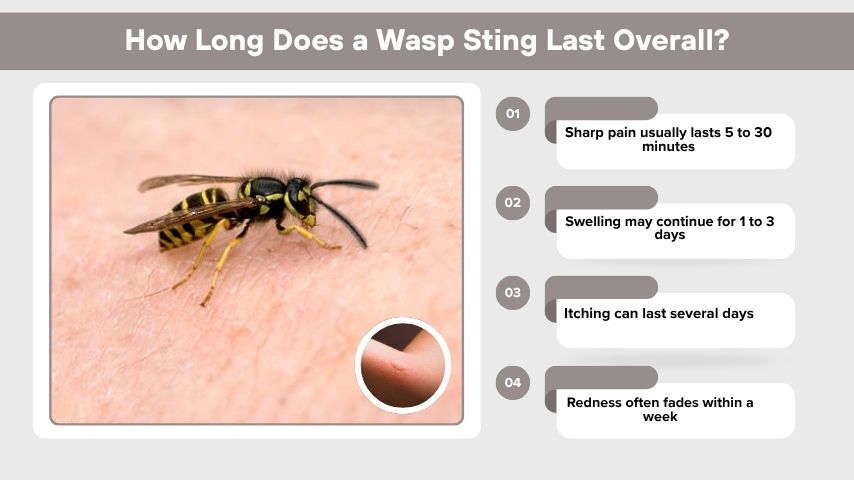
Most wasp stings heal within a few days, although mild itching or skin discoloration may last longer. The overall recovery time depends on the severity of the sting and the body’s response to the venom.
Typical Duration of a Mild Wasp Sting
- Sharp pain usually lasts 5 to 30 minutes
- Swelling may continue for 1 to 3 days
- Itching can last several days
- Redness often fades within a week
How Long Severe Reactions Last
Large local reactions may continue for up to 7 to 10 days. In some cases, swelling spreads beyond the sting area before slowly improving.
Factors That Affect Healing Time
- Number of stings
- Type of wasp
- Sting location
- Allergies or skin sensitivity
- Age and overall health
How Long Does Wasp Sting Pain Last?
Pain is usually the first symptom people notice after being stung. The burning sensation often improves quickly, but soreness can continue longer depending on the severity of the sting.
Immediate Burning Pain Timeline
The intense burning pain usually peaks within the first few minutes after the sting. Most people notice significant improvement within one hour.
How Long Soreness Lasts
Tenderness around the sting area may continue for one to three days, especially if the sting is on sensitive skin or near a joint.
Pain From Red Wasp and Yellow Jacket Stings
Red wasps and yellow jackets are known for causing more painful stings. Their venom may lead to stronger burning sensations and longer-lasting soreness.
When Sting Pain Becomes Abnormal
Pain that worsens after several days instead of improving may signal infection or a severe inflammatory reaction.
How Long Does Wasp Sting Swelling Last?
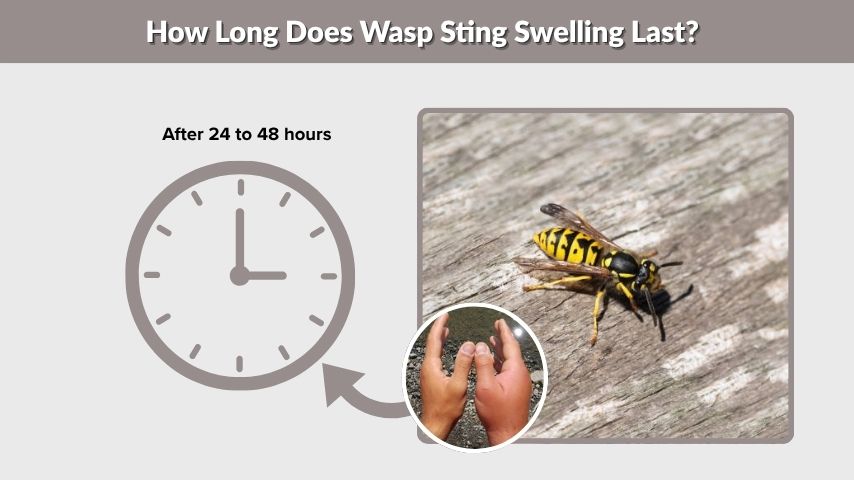
Swelling is one of the most common and longest-lasting symptoms of a wasp sting. Mild swelling often improves quickly, but larger reactions can take several days to disappear completely.
Normal Swelling Timeline
- Mild swelling begins within minutes
- Swelling usually peaks after 24 to 48 hours
- Puffiness gradually decreases after two days
- Most swelling fades within one week
Why Some Wasp Stings Swell More
Stings on the face, hands, or feet often swell more because these areas contain loose tissue that reacts strongly to inflammation.
Large Local Reactions Explained
Some people experience swelling that spreads far beyond the sting site. For example, a sting on the finger may cause swelling throughout the entire hand or arm.
Swelling That Needs Medical Attention
Rapid swelling near the throat, mouth, or eyes should always be treated as a medical emergency because it may affect breathing or vision.
How Long Does Wasp Sting Itching Last?
Itching often develops after the initial pain fades. This symptom may become annoying but is usually part of the normal healing process. Avoid scratching because damaged skin may heal more slowly and become infected.
Why Wasp Stings Become Itchy
Histamine released by the immune system irritates the skin and causes itching as the sting heals.
Average Itching Duration
- Mild itching may last 1 to 3 days
- Moderate itching can continue up to a week
- Repeated scratching may prolong irritation
Itching With Rash or Welts
Some people develop raised welts or itchy rashes around the sting. These reactions may last several days before fading completely.
How to Reduce Itching Faster
Cold compresses, calamine lotion, and antihistamines may help calm irritated skin and reduce the urge to scratch.
How Long Does Redness or a Wasp Sting Mark Last?
Redness around a wasp sting is a normal part of inflammation. In most cases, the red area slowly fades as the skin heals. Some people may notice temporary marks or discoloration that remain visible longer than the pain or swelling.
Redness Around the Sting Area
The skin often becomes red within minutes after the sting. Mild redness usually improves within a few days as swelling decreases.
Wasp Sting Rash Timeline
A mild rash or irritated patch may appear around the sting and last for several days. Larger rashes may continue for up to one week before fading completely.
How Long a Wasp Sting Mark Lasts
- Small marks may disappear within days
- Darker skin tones may show marks longer
- Scratching can slow healing
- Some discoloration may last several weeks
Skin Discoloration After a Sting
Temporary brown or pink marks may remain after inflammation fades. These marks usually improve gradually without treatment.
How Long Different Types of Wasp Stings Last
Different wasp species inject different amounts of venom, which can affect how long symptoms continue. Some species cause sharper pain, while others create stronger swelling or irritation.
How Long a Red Wasp Sting Lasts
Red wasp stings often cause strong burning pain and swelling that may continue for several days. Mild symptoms usually improve within one week.
How Long a Paper Wasp Sting Lasts
Paper wasp stings typically heal within a few days, although itching and redness may continue slightly longer in sensitive skin.
How Long a Yellow Jacket Sting Lasts
Yellow jacket stings are often more painful and may create larger swelling reactions. Symptoms may continue for up to seven days in some people.
How Long a Black Wasp Sting Lasts
Black wasp stings are usually mild for most people and commonly improve within several days with proper care.
How Long a European Wasp Sting Lasts
European wasp stings may cause swelling and irritation for several days, especially if multiple stings occur at once.
How Long Allergic Reactions to Wasp Stings Last
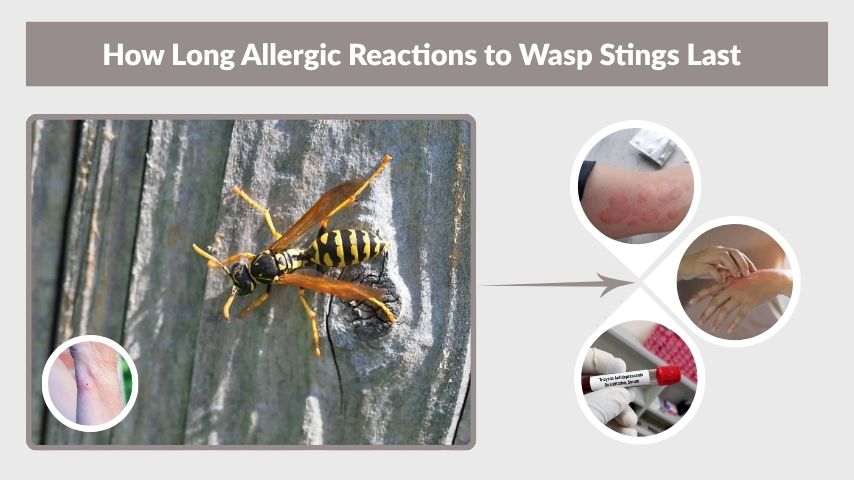
Allergic reactions can last longer than normal sting symptoms and may become dangerous quickly. The severity of the reaction determines how long recovery may take.
Mild Allergic Reactions
Mild allergic swelling or hives may improve within a few days after treatment with antihistamines or cold compresses.
Large Swelling Reactions
Large local reactions sometimes continue for seven to ten days before fully disappearing.
Serum Sickness–Type Reactions
Rare delayed immune reactions may appear several days after the sting and can include fever, rash, and joint discomfort.
Anaphylaxis and Emergency Symptoms
Breathing problems, throat swelling, dizziness, or fainting require emergency medical treatment immediately because these symptoms can become life-threatening.
What Affects How Long a Wasp Sting Lasts?
Healing time depends on several factors, including the person’s immune system and how the sting is treated after it happens. Some stings heal quickly, while others remain irritated much longer.
Sting Location on the Body
Stings near the eyes, lips, hands, or feet often swell more and may take longer to heal.
Multiple Wasp Stings
Several stings at once increase venom exposure and usually cause stronger reactions that last longer.
Immune System Response
People with allergies or sensitive skin may experience longer-lasting redness, swelling, and itching.
Scratching and Skin Irritation
- Scratching damages healing skin
- Irritated skin swells more
- Open skin may become infected
- Healing time may increase
Delayed Treatment
Cleaning and cooling the sting quickly may help reduce inflammation and shorten recovery time.
How to Make a Wasp Sting Heal Faster
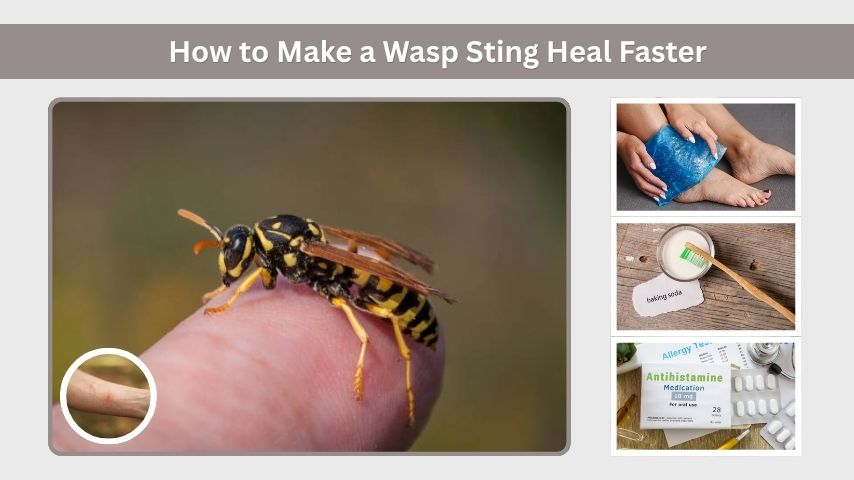
Proper home care can help reduce pain and irritation while supporting faster healing. Simple treatments often work well for mild wasp stings.
Ice and Cold Compresses
Cold packs help reduce swelling and numb the sting area. Apply for 10 to 15 minutes at a time throughout the first day.
Antihistamines for Swelling and Itching
Over-the-counter antihistamines may reduce itching, redness, and puffiness caused by the body’s immune response.
Baking Soda and Natural Remedies
Baking soda paste, aloe vera, and calamine lotion are common remedies used to soothe irritated skin after a sting.
Keeping the Area Clean
Wash the sting gently with soap and water to help prevent infection and irritation.
Avoiding Scratching
Keeping hands away from the sting area helps the skin recover faster and lowers the risk of infection.
FAQs
Can a wasp sting last longer than a week?
Yes. Mild symptoms usually improve within a week, but large swelling reactions, itching, or skin discoloration may continue for 7 to 10 days in some people.
Why is my wasp sting still swollen after several days?
Swelling can remain for several days because the body is reacting to the venom. Large local reactions often take longer to heal, especially on the hands, feet, or face.
Is it normal for a wasp sting to itch days later?
Yes. Itching commonly appears after the initial pain fades and may continue for several days as the skin heals.
Can a wasp sting leave a permanent mark?
Most wasp sting marks fade completely over time. However, scratching or skin irritation may cause temporary discoloration that lasts longer.
How can I make a wasp sting heal faster?
Cleaning the sting, applying ice, avoiding scratching, and using antihistamines or soothing creams may help reduce symptoms and support faster healing.