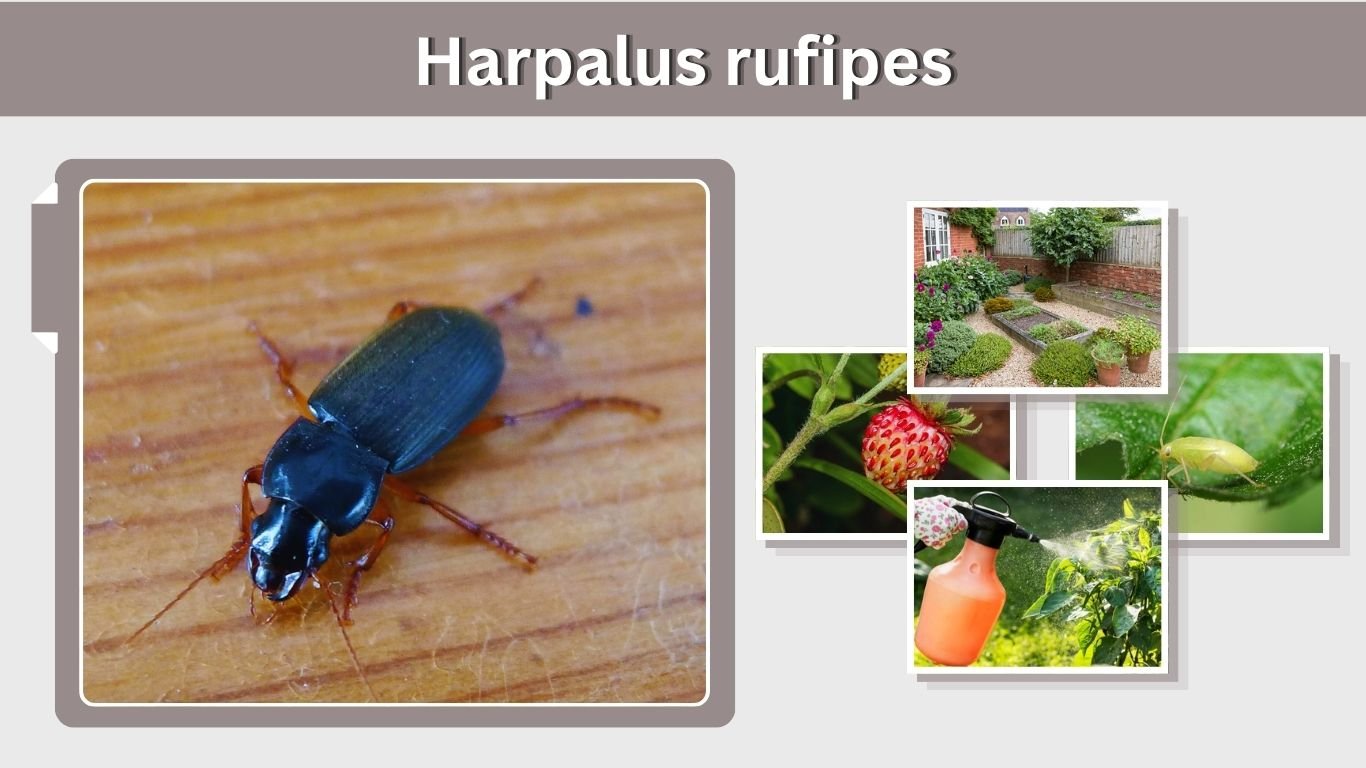
Harpalus rufipes, commonly known as the strawberry seed beetle, is a ground beetle found in gardens, agricultural fields, grasslands, and occasionally inside homes. This dark-colored insect is recognized by its reddish-brown legs, oval body, and active nighttime behavior. Although its appearance may concern homeowners, Harpalus rufipes is generally harmless to humans and often benefits agricultural ecosystems by consuming weed seeds and small invertebrates. Understanding its identification, diet, habitat, life cycle, and behavior can help distinguish it from household pests and determine whether control is necessary.
What Is Harpalus rufipes?
Harpalus rufipes is a species of ground beetle belonging to the family Carabidae. It is widely distributed throughout Europe and parts of Asia and has also become established in North America.
This beetle is commonly called the strawberry seed beetle because it occasionally feeds on the small seed-like structures found on strawberries.
Unlike many insects considered agricultural pests, Harpalus rufipes also provides important ecological benefits by consuming weed seeds and certain small invertebrates.
Harpalus rufipes Scientific Classification
- Scientific Name: Harpalus rufipes
- Common Name: Strawberry Seed Beetle
- Alternative Name: Strawberry Ground Beetle
- Family: Carabidae
- Order: Coleoptera
- Class: Insecta
- Genus: Harpalus
The species is also classified as Harpalus (Pseudoophonus) rufipes, with Pseudoophonus rufipes appearing in some taxonomic references.
What Do Harpalus rufipes Look Like?
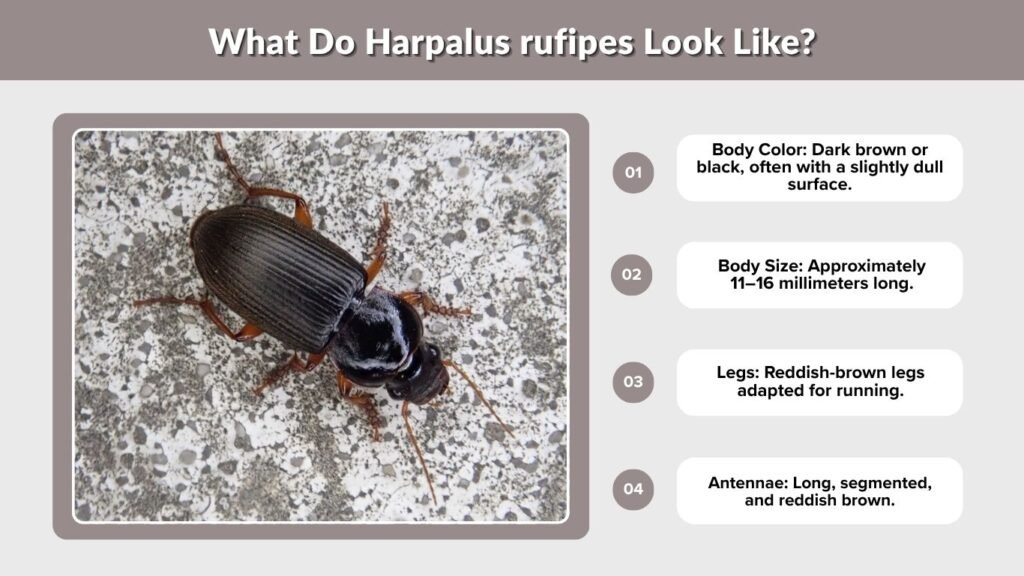
Harpalus rufipes has a relatively elongated, oval body with a dark brown or black outer covering. Its reddish legs and antennae provide a noticeable contrast against the darker body.
Adults generally measure between 11 and 16 millimeters long, making them moderately sized ground beetles.
Their hard wing covers have fine longitudinal grooves and short yellowish hairs that create a slightly dull appearance.
Harpalus rufipes Identification
Common identifying characteristics include:
- Body Color: Dark brown or black, often with a slightly dull surface.
- Body Size: Approximately 11–16 millimeters long.
- Legs: Reddish-brown legs adapted for running.
- Antennae: Long, segmented, and reddish brown.
- Wing Covers: Hard, grooved coverings with fine golden hairs.
- Body Shape: Elongated and oval with a clearly defined head and thorax.
These features help distinguish Harpalus rufipes from other common ground beetles. However, closely related species may require detailed examination for accurate identification.
Where Do Harpalus rufipes Live?
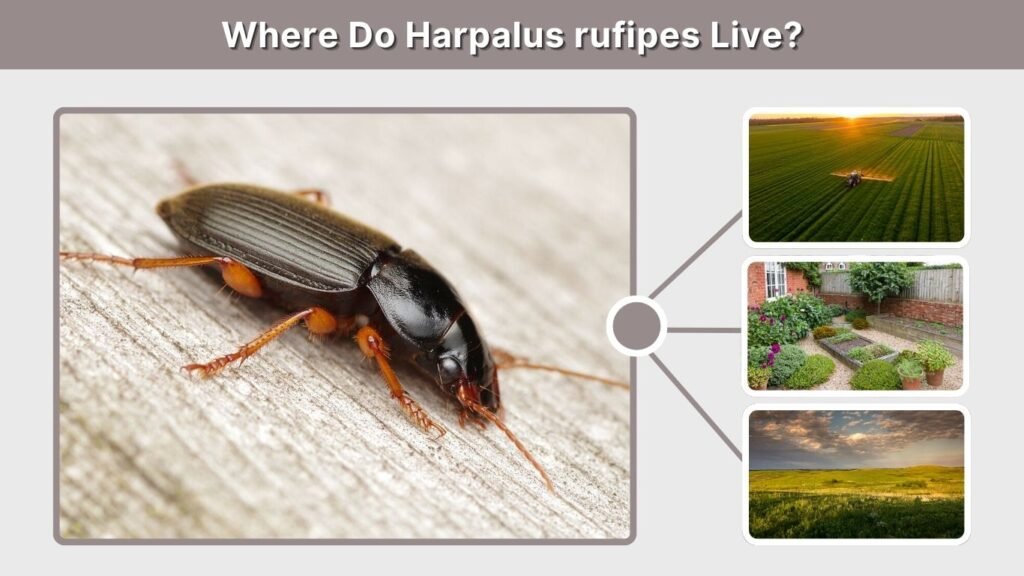
Harpalus rufipes inhabit various terrestrial environments, especially open landscapes with suitable vegetation and soil conditions.
It is commonly found in agricultural fields, gardens, grasslands, roadsides, and field margins.
During daylight hours, these beetles usually remain beneath stones, logs, plant debris, or other protective materials.
Their preference for sheltered ground-level environments helps protect them from predators and unfavorable weather.
Harpalus rufipes Habitat and Distribution
The species is native across much of the Palearctic region, including Europe and parts of Asia and North Africa.
It has also been introduced into North America, where it occurs in agricultural and other open habitats, particularly in eastern regions.
Adults are primarily active at night and may fly toward artificial lighting during warm weather.
What Do Harpalus rufipes Eat?
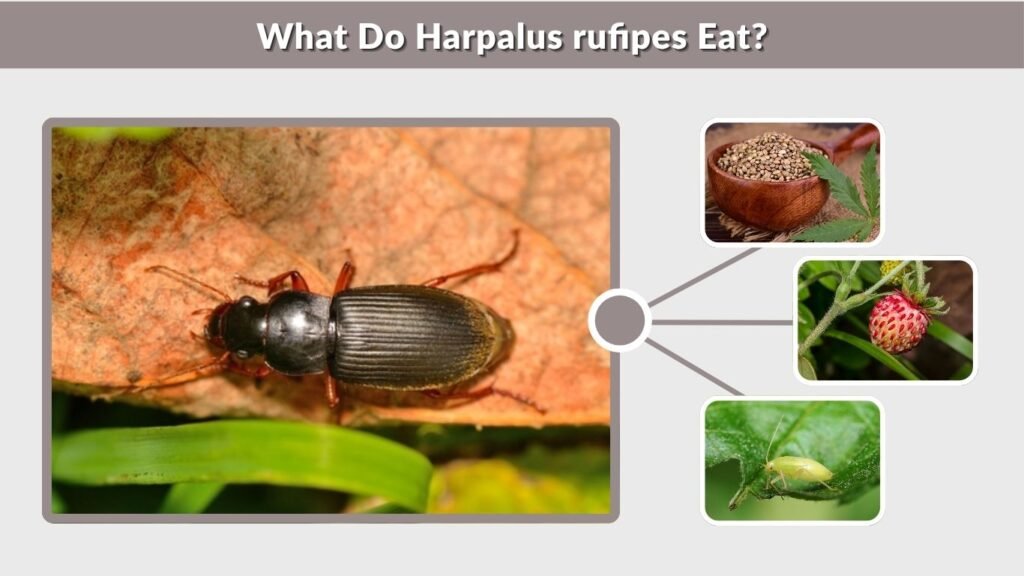
The Harpalus rufipes diet consists primarily of seeds and various small invertebrates. Unlike strictly predatory ground beetles, this species is omnivorous, with an especially strong preference for many kinds of weed seeds.
Its feeding habits make it an important component of agricultural ecosystems.
Common Foods of Harpalus rufipes
- Weed Seeds: Seeds from various unwanted plants, including grasses and broadleaf weeds.
- Strawberry Achenes: Small seed-like fruits located on the surface of strawberries.
- Aphids: Small, soft-bodied insects occasionally consumed by these beetles.
- Slugs: Certain small slugs may be attacked and eaten.
- Other Invertebrates: Suitable small animal prey encountered while foraging.
By consuming weed seeds, Harpalus rufipes can help reduce the number of seeds available for germination in cultivated fields.
However, its occasional feeding on strawberries means it may also cause localized fruit damage.
Harpalus rufipes Life Cycle
The Harpalus rufipes life cycle includes four developmental stages: egg, larva, pupa, and adult.
Like other beetles, it undergoes complete metamorphosis, with distinct changes in body structure during development.
Reproduction and development are influenced by seasonal conditions and local climate.
Egg Stage
Female Harpalus rufipes beetles lay eggs in soil during the reproductive season.
In studied temperate populations, egg-laying often occurs during late summer. Suitable soil conditions help protect developing eggs.
After hatching, the larvae begin feeding and growing.
Larval Stage
Harpalus rufipes larvae live primarily in the soil and have elongated bodies adapted to their underground environment.
Young larvae may collect seeds from the soil surface and store them inside burrows.
As they develop, they continue feeding on stored plant seeds and other suitable food sources.
Some larvae survive winter underground before completing their development.
Pupal and Adult Stages
After reaching maturity, larvae enter the pupal stage, when their bodies transform into adult beetles.
New adults eventually emerge with fully developed legs, antennae, and wing covers.
Both larvae and adults may overwinter, depending on local conditions and developmental timing.
Adults become active during warmer months, when they feed, disperse, and reproduce.
Are Harpalus rufipes Dangerous to Humans?
Harpalus rufipes is not considered dangerous to humans. It does not have a venomous sting and does not normally behave aggressively toward people.
These beetles usually attempt to escape when disturbed rather than defend themselves through direct contact.
Their main activities involve searching for food, finding shelter, and reproducing.
Although their dark appearance may resemble that of certain household pests, they are not associated with structural damage or infestations of stored food.
Do Harpalus rufipes Bite?
Harpalus rufipes has chewing mouthparts, but biting humans is not a normal behavior.
Like some other ground beetles, an individual may occasionally pinch the skin if handled roughly or trapped against the body.
Such incidents are uncommon and generally do not cause serious injury.
Avoid squeezing the beetle with bare hands. Instead, use a container to move it outdoors safely.
Why Are Harpalus rufipes Found in Houses?
Finding Harpalus rufipes inside a house usually indicates accidental entry rather than an established indoor infestation.
These beetles naturally live outdoors but may enter through open doors, windows, cracks, and small gaps around building foundations.
Because adults can fly and are attracted to artificial lights, illuminated houses may attract them during warm evenings.
Once indoors, they often seek dark, sheltered locations near walls, furniture, or basement areas.
Harpalus rufipes generally does not reproduce inside ordinary homes, where suitable soil conditions and natural food sources are absent.
How to Get Rid of Harpalus rufipes in Your House
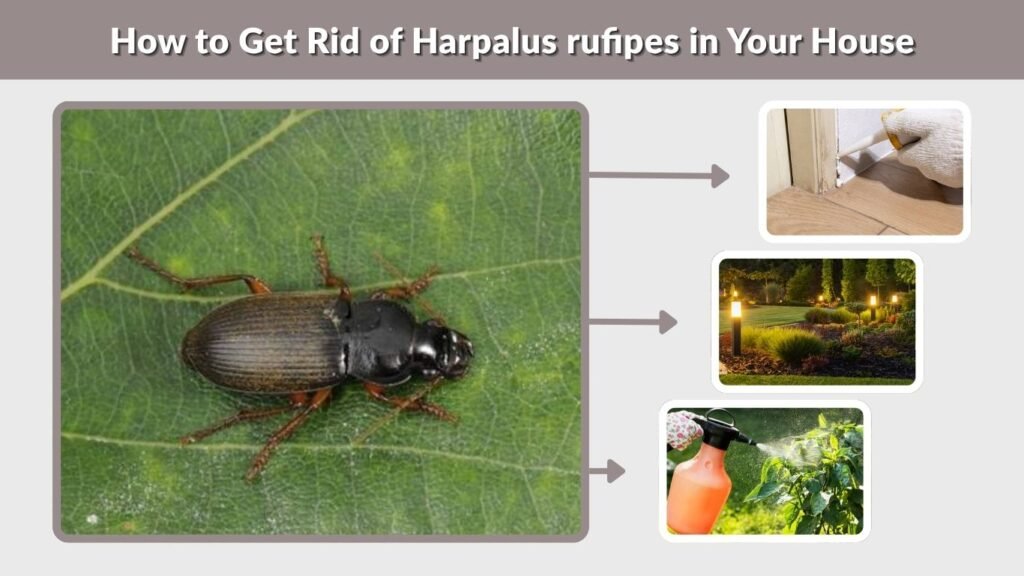
Removing Harpalus rufipes from indoor spaces is usually straightforward. Since these beetles are generally harmless and ecologically useful, nonchemical control methods are preferable.
Preventing entry is more effective than repeatedly removing individual beetles.
1. Remove Beetles Safely
Capture individual beetles using a glass or small container and a piece of paper.
Release them outdoors in a sheltered area away from entrances.
For multiple beetles, vacuuming can provide quick removal.
2. Seal Cracks and Entry Points
Inspect doors, windows, foundation walls, and utility openings for gaps.
Use suitable sealants to close cracks and install properly fitting door sweeps.
Repair damaged window screens to prevent beetles from entering during nighttime activity.
3. Reduce Outdoor Lighting
Harpalus rufipes can be attracted to artificial lights, particularly during warm summer nights.
Turn off unnecessary exterior lighting or use less attractive yellow-toned lights near entrances.
This can reduce the number of beetles gathering around the house.
4. Remove Nearby Hiding Places
Reduce excessive leaf litter, overgrown vegetation, and piles of debris immediately beside the building.
Keep firewood and stored materials away from exterior walls.
These steps can reduce sheltered locations where beetles accumulate near potential entry points.
5. Use Pest Control Only When Necessary
Chemical treatment is rarely required for Harpalus rufipes.
If large numbers enter repeatedly, identify and correct entry points first.
When additional treatment is necessary, consult a qualified pest-control professional about appropriately labeled exterior treatments.
Is Harpalus rufipes Beneficial or Harmful?
Harpalus rufipes is generally considered beneficial in agricultural ecosystems because it consumes weed seeds and certain invertebrates.
Research has demonstrated its importance as a seed predator in cultivated fields, where its feeding activity may contribute to natural weed management.
However, the species can occasionally damage strawberries by feeding on the small achenes covering their surfaces.
Therefore, its agricultural importance depends on the surrounding environment and crop conditions.
For most homeowners, Harpalus rufipes is simply a harmless outdoor beetle that occasionally wanders indoors.
FAQs
1. What Is the Common Name of Harpalus rufipes?
Harpalus rufipes is commonly called the strawberry seed beetle or strawberry ground beetle. The name refers to its occasional feeding on the achenes of strawberries.
2. Can Harpalus rufipes Fly?
Yes, Harpalus rufipes can fly. Adults have functional wings and may fly toward artificial lights during warm nights, sometimes appearing in large numbers.
3. Is Harpalus rufipes Poisonous?
Harpalus rufipes is not considered poisonous or medically dangerous to humans. It has no venomous sting, although ground beetles may produce defensive secretions when disturbed.
4. Does Harpalus rufipes Damage Plants?
Harpalus rufipes occasionally damages strawberries by eating their surface achenes. However, it also consumes weed seeds and can provide useful biological weed control.
5. How Long Does Harpalus rufipes Live?
Harpalus rufipes commonly has an annual, seasonally structured life cycle in temperate environments. Some adults survive winter and may remain alive into another breeding season, depending on environmental conditions.