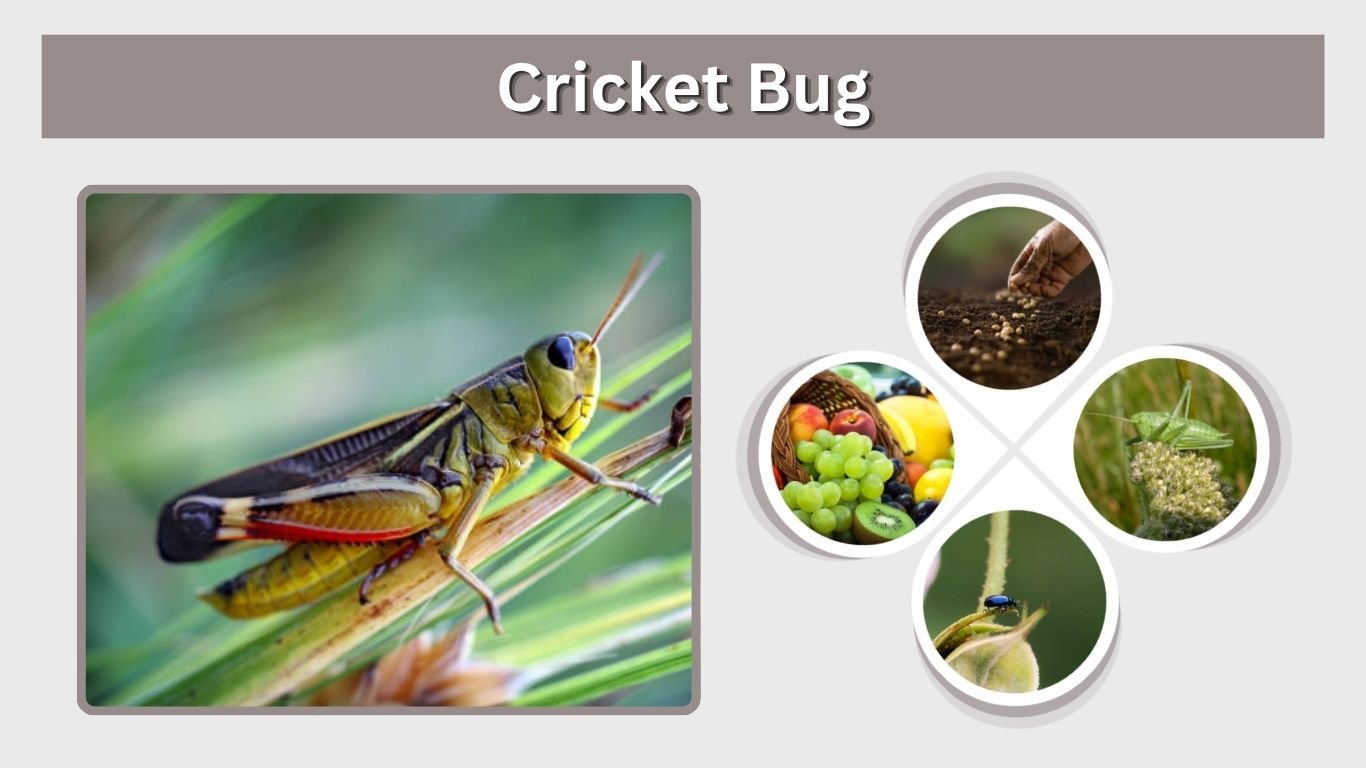
A cricket bug is a familiar jumping insect known for its long antennae, powerful hind legs, and, in many species, distinctive chirping sound. Crickets occur in gardens, grasslands, forests, basements, garages, and even inside homes. Their appearance varies from black and brown to bright green, which sometimes makes identification difficult. Several unrelated insects, including camel crickets and Jerusalem crickets, are also commonly described as cricket-like bugs. Learning their appearance, behavior, diet, and habitat makes it much easier to determine what kind of insect you have found.
What Is a Cricket Bug?
Crickets are insects belonging mainly to the family Gryllidae within the order Orthoptera. They are related to grasshoppers and katydids but have several characteristics that make them relatively easy to recognize.
Most are nocturnal and spend daylight hours hiding beneath vegetation, stones, logs, or other protected areas.
Cricket Bug Identification
Look for these common characteristics:
- Long, thread-like antennae
- Large hind legs designed for jumping
- Six legs
- Rounded or somewhat flattened body
- Brown, black, tan, or green coloration
- Wings in many adult species
- Two small appendages called cerci at the rear
- Chirping males in many species
Crickets vary greatly in size, so identification should rely on several characteristics rather than body size alone.
How Big Are Cricket Bugs?
Many common crickets are roughly 1/2 to 1 inch long, although some species can grow noticeably larger.
A “giant cricket bug” seen around a home may actually be a camel cricket, Jerusalem cricket, katydid, or another large orthopteran rather than a typical field or house cricket.
Large hind legs can also make an insect appear bigger than its actual body length.
Common Types of Cricket Bugs
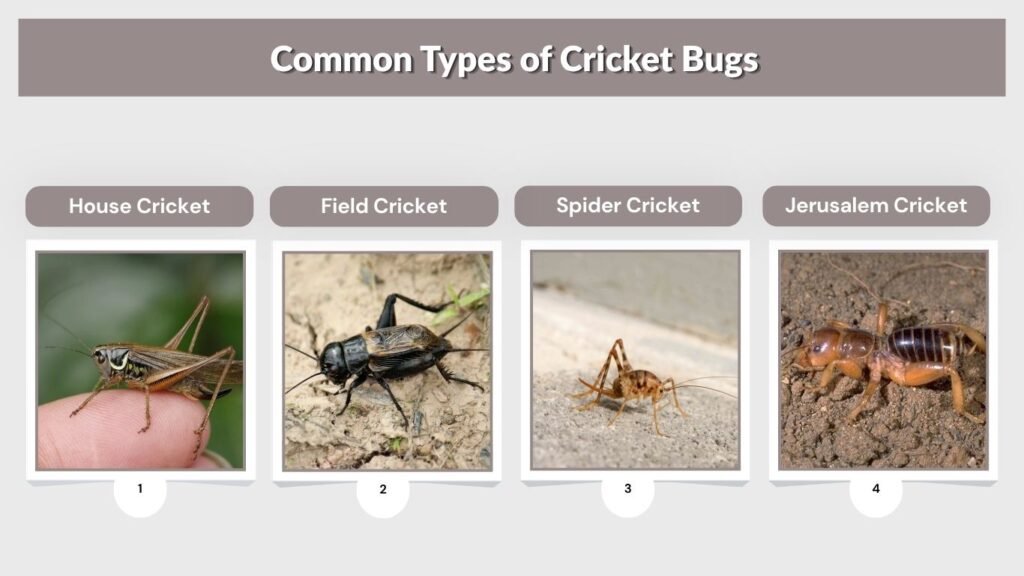
Several insects are commonly described as crickets, although they do not all belong to exactly the same family.
Understanding the major types can help narrow down identification.
House Cricket
House crickets are generally light brown or tan and have long antennae and prominent hind legs.
They commonly occur around buildings and may enter homes seeking warmth, moisture, shelter, or food. Indoor populations are particularly noticeable because males can produce repeated chirping sounds at night.
Field Cricket
Field crickets are generally darker than house crickets and are often black or dark brown.
They commonly live outdoors in grassy areas, gardens, fields, and around buildings. Some occasionally enter homes, especially when environmental conditions change.
Their strong hind legs allow them to jump quickly when disturbed.
Camel or Spider Cricket
The camel cricket bug, also frequently called a spider cricket, has a hump-backed body and extremely long legs.
Its spider-like appearance causes many homeowners to mistake it for an unusual spider.
Camel crickets often live in:
- Basements
- Crawl spaces
- Caves
- Garages
- Sheds
- Damp areas
- Spaces beneath logs or stones
Unlike many true crickets, camel crickets do not have the same familiar chirping behavior.
Jerusalem Cricket
The Jerusalem cricket is a large, heavy-bodied insect with a rounded head and striped abdomen.
It is sometimes called a potato bug, which explains searches for the “Jerusalem cricket potato bug.”
Despite its intimidating appearance, it is not a typical household cricket. Jerusalem crickets spend much of their time on or below the ground and are most associated with western parts of North America.
Bugs That Look Like Crickets
Several insects can be confused with crickets because they share long legs, jumping behavior, or similar body shapes.
Common Cricket-Looking Bugs
Possible lookalikes include:
- Camel crickets
- Katydids
- Grasshoppers
- Cockroaches
- Jerusalem crickets
- Mole crickets
- Some long-legged beetles
Looking at antenna length, hind legs, wing structure, and body shape can usually help separate these insects.
Bug That Looks Like a Cricket and Spider
An insect that appears to be a combination of a cricket and spider is most likely a camel cricket.
Its extremely long legs and arched body create a spider-like profile. It does not have eight legs like a true spider; it has six.
Camel crickets may also jump directly toward perceived threats, which can be startling even though they are generally not aggressive toward people.
Bug That Looks Like a Cricket and Roach
Cockroaches and crickets can sometimes be confused, particularly when seen briefly at night.
Cockroaches typically have flatter bodies and are fast runners. Crickets have much larger hind legs adapted for jumping.
Both can have long antennae, so antenna length alone is not enough for identification.
Black, Brown, and Green Cricket Bugs
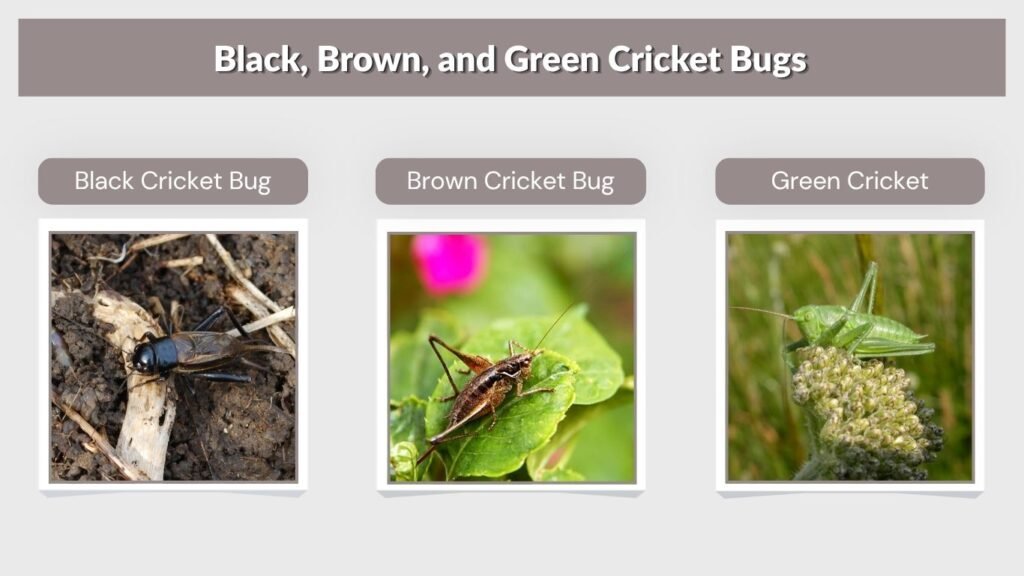
Color can provide a useful clue, but multiple cricket species can share similar coloration.
Black Cricket Bug
A black cricket found outdoors is often a type of field cricket.
Field crickets generally have dark brown to black bodies, strong hind legs, and long antennae. They may occasionally wander indoors through doors, cracks, and other openings.
Brown Cricket Bug
Brown or tan crickets may include house crickets and several outdoor species.
A light brown cricket repeatedly found indoors is more likely to be associated with buildings than many dark field species.
Green Cricket-Looking Bug
A bright green cricket-looking bug is often a katydid rather than a true cricket.
Katydids commonly have:
- Bright green bodies
- Extremely long antennae
- Leaf-like wings
- Long hind legs
- Excellent camouflage
Their green coloration allows them to blend into foliage, where many species spend much of their lives.
Cricket Bug in the House
Finding one cricket indoors does not necessarily mean there is a serious infestation.
Crickets can accidentally enter through doors, windows, foundation gaps, or openings around utility lines.
Why Crickets Enter Homes
Crickets may enter because they are seeking:
- Warmth
- Moisture
- Shelter
- Food
- Protection from weather
- Dark hiding places
Basements, kitchens, utility rooms, garages, and crawl spaces can provide suitable conditions.
How to Reduce Crickets Indoors
Several preventive measures can help:
- Seal cracks around doors and windows.
- Repair damaged screens.
- Reduce excessive indoor moisture.
- Remove clutter from basements and garages.
- Keep vegetation away from exterior walls.
- Seal openings around pipes and cables.
- Reduce outdoor lighting close to entrances when practical.
Removing the conditions attracting crickets is often more effective than repeatedly eliminating individual insects.
Do Cricket Bugs Fly?
Some adult crickets have wings and are capable of flight, while others fly poorly or rarely fly.
A flying cricket-looking bug could also be another insect, such as a katydid.
If identification is uncertain, look at the insect’s body shape and antennae rather than relying only on its ability to fly.
What Do Cricket Bugs Eat?
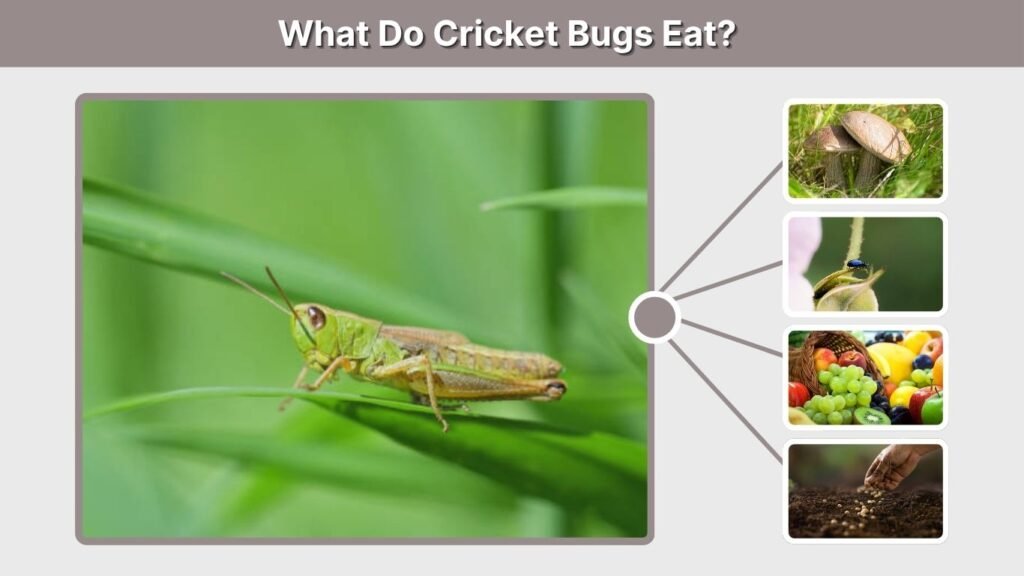
Crickets are generally opportunistic omnivores.
Their exact diet varies depending on species and available food.
Common Cricket Foods
Crickets may consume:
- Plant material
- Seeds
- Fruits
- Decaying vegetation
- Fungi
- Dead insects
- Small insects
- Organic debris
Some crickets behave mainly as scavengers, helping break down organic material within their habitats.
Do Crickets Eat Other Bugs?
Yes, some crickets may eat small, dead, weakened, or vulnerable insects when the opportunity arises.
They are not specialized predators, however. Plant matter and decomposing organic material can also make up substantial portions of their diet.
Cricket Bug Sound
The familiar cricket chirp is usually produced by males.
Rather than using their mouths, many crickets create sound by rubbing specialized parts of their wings together, a process known as stridulation.
Why Do Crickets Chirp?
Cricket sounds can serve several purposes, including attracting females and communicating with competing males.
Chirping is often most noticeable after dark because many cricket species are nocturnal.
Temperature can influence the speed of chirping in some species, with calls generally becoming faster during warmer conditions within a suitable temperature range.
Are Cricket Bugs Dangerous?
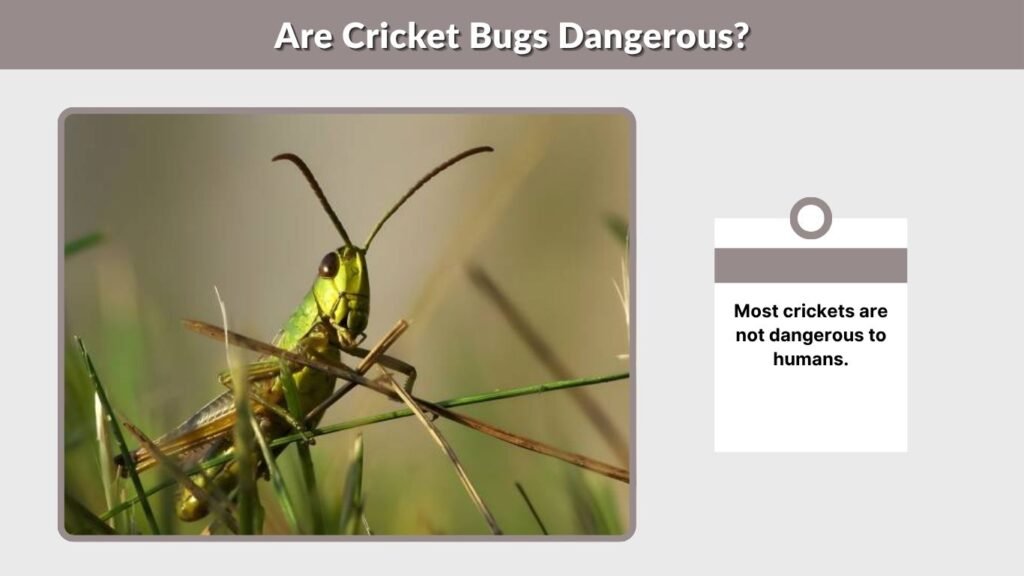
Most crickets are not dangerous to humans.
They do not have venomous stingers and generally try to escape rather than defend themselves aggressively.
A cricket can technically use its mouthparts if handled roughly, but ordinary encounters rarely result in meaningful injury.
The biggest problems associated with indoor crickets are usually noise, unwanted insect activity, and occasional damage to materials when populations become unusually large.
FAQs
Is a cricket a bug or an insect?
A cricket is an insect. In casual language, people commonly call almost any small insect a “bug,” which is why the phrase cricket bug is widely used. Scientifically, crickets belong to the insect order Orthoptera along with grasshoppers and katydids.
What bug looks like a cricket with spider legs?
A camel cricket, also called a spider cricket, is the most likely candidate. It has an arched body, very long legs, and long antennae that give it a spider-like appearance. However, it has six legs rather than the eight found on spiders.
Why do I have cricket bugs in my house?
Crickets may enter homes while searching for warmth, moisture, shelter, or food. Open doors, damaged screens, foundation cracks, and gaps around pipes can provide access. Damp basements, crawl spaces, and garages may be especially attractive to some species.
Can cricket bugs fly?
Some adult crickets can fly because they possess functional wings, while other species rarely fly or have reduced flying ability. A green flying insect that resembles a cricket may also be a katydid rather than a true cricket.
Are black cricket bugs harmful?
Black field crickets are generally harmless to people and do not sting. They may become a nuisance when they enter houses because of their chirping and jumping. Outdoors, they are normal members of ecosystems and consume plant material, insects, and decaying organic matter.