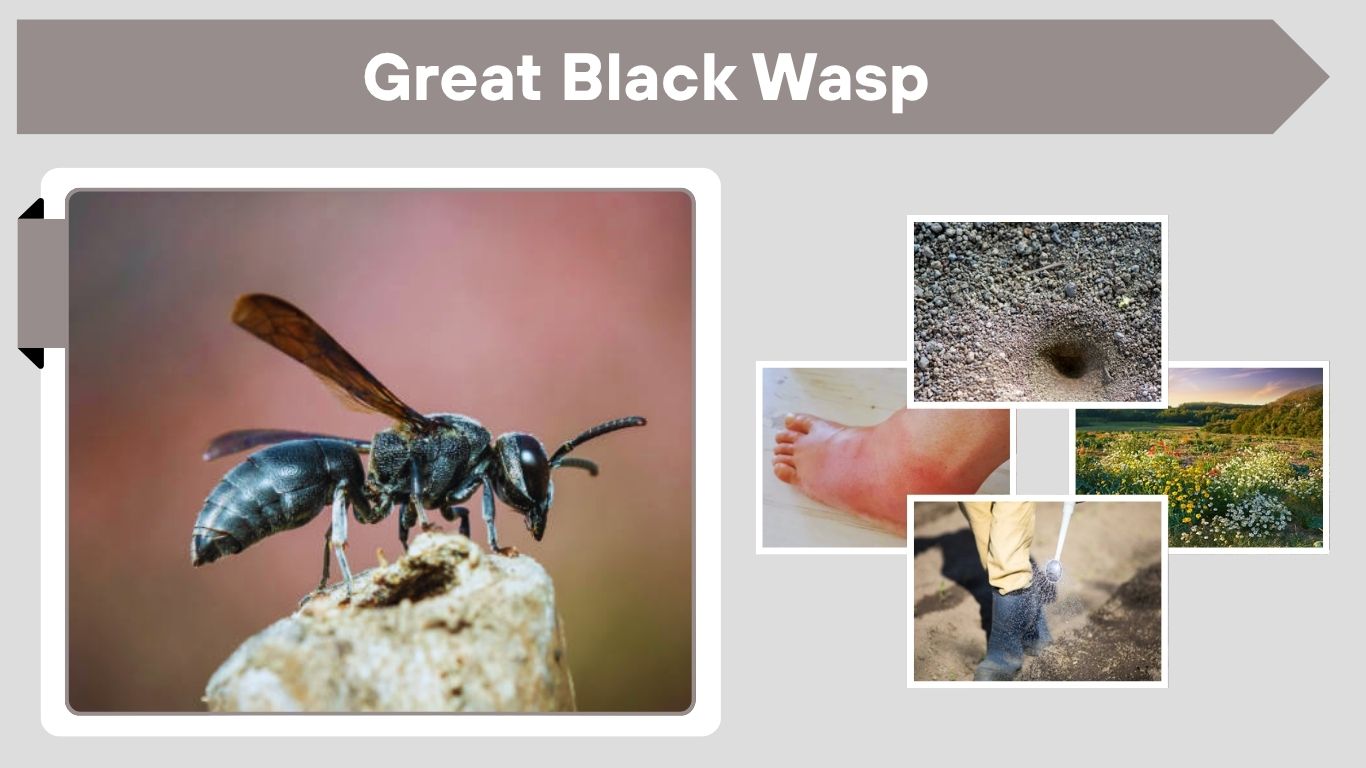
The great black wasp is a large solitary wasp commonly found throughout North America during the warmer months of the year. Known scientifically as Sphex pensylvanicus, this striking black insect often frightens homeowners because of its size and loud flight. Despite its intimidating appearance, the great black wasp is generally non-aggressive and plays an important role in controlling pest insects such as grasshoppers and katydids. Understanding its behavior, nesting habits, sting potential, and habitat can help people identify these wasps correctly and avoid unnecessary fear when encountering them outdoors.
What Is a Great Black Wasp?
The great black wasp is a species of digger wasp belonging to the family Sphecidae. Unlike social wasps that live in colonies, great black wasps are solitary insects that build individual underground nests. They are commonly seen flying around gardens, fields, and open grassy areas during summer.
Female great black wasps hunt insects and spiders to feed their developing larvae. They paralyze prey with their sting and carry it back to underground burrows. Adults mainly feed on flower nectar and are considered beneficial pollinators.
Key Facts About Great Black Wasps
- Scientific name is Sphex pensylvanicus
- Belongs to the digger wasp family
- Usually appears metallic black or dark blue-black
- Builds nests underground
- Commonly found across much of the United States
Why Great Black Wasps Look Scary
Many people mistake the great black wasp for a hornet because of its large body and fast flight. Their buzzing sound and shiny black appearance can seem intimidating at first glance.
However, these wasps are far less aggressive than hornets or yellowjackets. Most great black wasps avoid human contact and spend their time hunting prey or gathering nectar from flowers.
What Does a Great Black Wasp Look Like?
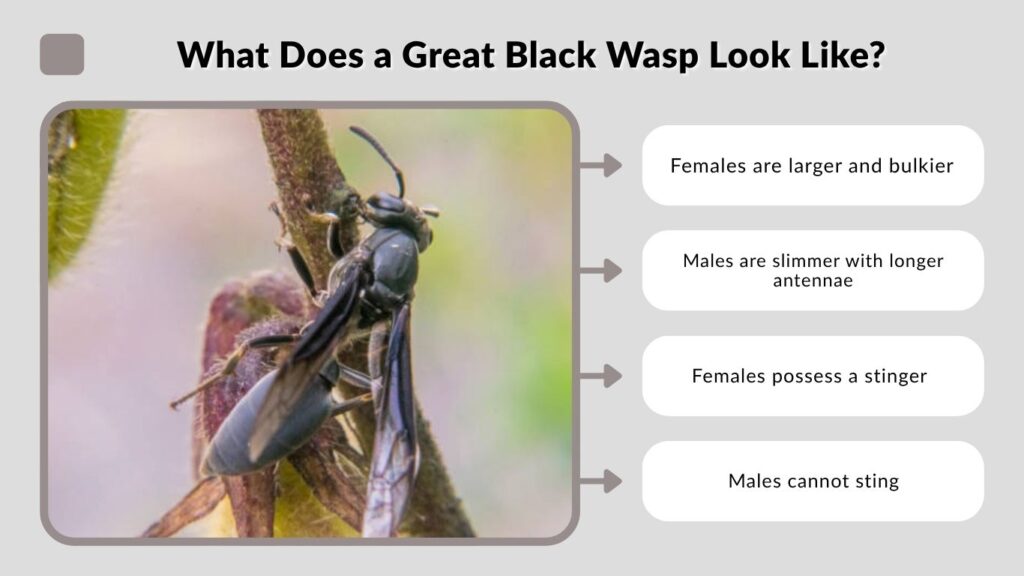
The great black wasp has a smooth black body with dark wings that often reflect blue or purple shades in sunlight. Its long legs and narrow waist give it the classic appearance of a hunting wasp.
Females are usually larger and more robust than males because they dig nests and transport prey underground. Males are slimmer and spend more time patrolling flowers and nesting areas.
Great Black Wasp Size
Adult great black wasps can grow between 1 and 1.5 inches long, making them one of the larger solitary wasps in North America. Their size often causes confusion with other large wasps such as mud daubers or tarantula hawks.
Great Black Wasp Male vs Female
There are several visible differences between male and female great black wasps.
- Females are larger and bulkier
- Males are slimmer with longer antennae
- Females possess a stinger
- Males cannot sting
- Females spend more time digging nests
People sometimes search for a “queen great black wasp,” but these wasps do not have queens like honeybees or hornets because they are solitary insects.
Are Great Black Wasps Dangerous?
Great black wasps are generally considered harmless to humans unless they are directly threatened. They are not naturally aggressive and rarely sting people during normal outdoor activities.
Most encounters happen when these wasps fly near flowers, lawns, patios, or garden beds. Their large size can make them appear dangerous, but they usually prefer escaping rather than attacking.
Female great black wasps can sting if handled or trapped, while males may hover near people defensively even though they cannot sting.
Are Great Black Wasps Aggressive?
Great black wasps are territorial but not highly aggressive. Male wasps often patrol areas around flowers or nests and may fly close to humans out of curiosity or defense.
Unlike social wasps, they do not swarm or aggressively defend colonies because each female maintains her own nest.
Are Great Black Wasps Poisonous?
Many people ask whether great black wasps are poisonous, but technically they are venomous rather than poisonous. Their venom is used to paralyze prey such as grasshoppers and katydids.
For humans, the sting is usually painful but not medically serious unless an allergic reaction occurs.
Do Great Black Wasps Sting?
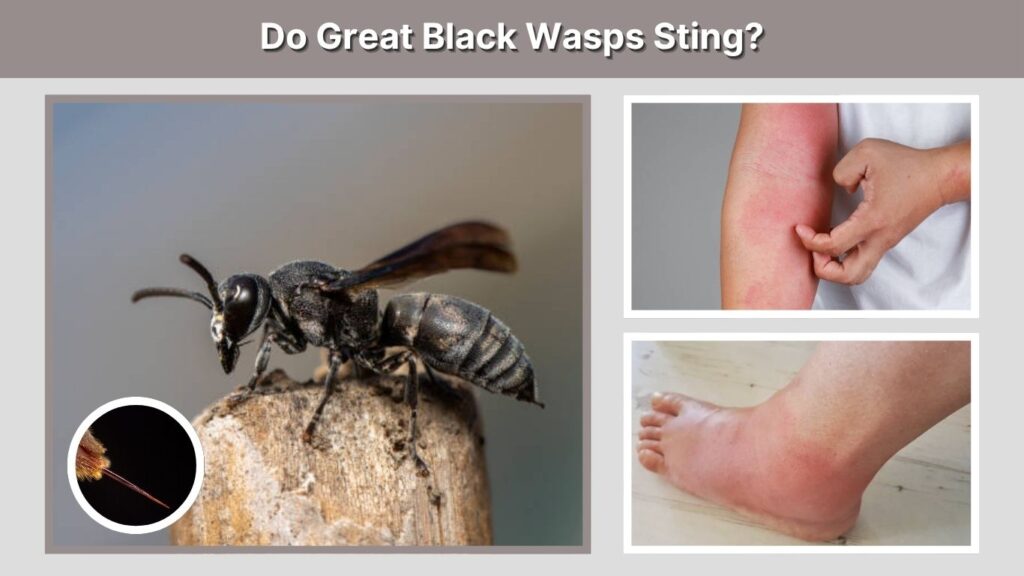
Only female great black wasps can sting because the stinger is actually a modified egg-laying organ. Males lack stingers completely.
Female great black wasps mainly use their sting for hunting prey rather than defending themselves. Because of this, human stings are uncommon compared to yellowjackets or hornets.
Great Black Wasp Sting Symptoms
Most stings cause temporary discomfort and localized irritation. Common symptoms include:
- Sharp burning pain
- Redness around the sting
- Mild swelling
- Temporary itching
- Sensitivity for several hours
Great Black Wasp Sting Pain Index
The sting of a great black wasp is considered moderately painful but usually less severe than a tarantula hawk sting. Pain often fades within a short period, though reactions vary depending on the individual.
Severe allergic reactions are rare but possible. Anyone experiencing breathing problems or major swelling after a sting should seek medical attention immediately.
Great Black Wasp Nest Identification
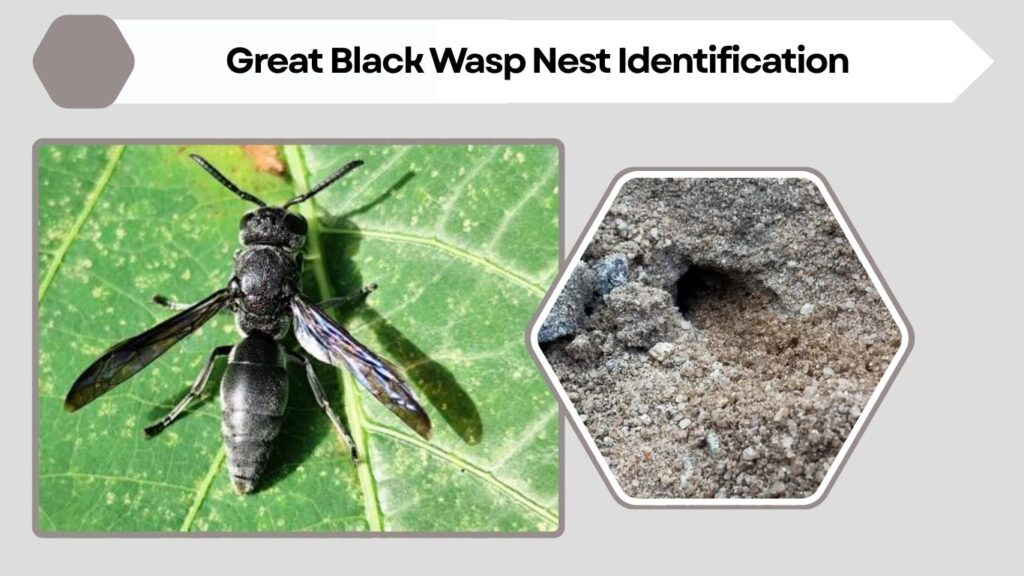
Great black wasps build nests underground in dry, loose soil. They prefer sunny locations with sandy or well-drained ground where digging is easier.
A female digs a tunnel and creates small chambers where she stores paralyzed prey for her larvae. These nests are usually hidden in lawns, gardens, near sidewalks, or open fields.
Signs of a Great Black Wasp Nest
- Small round holes in soil
- Loose dirt near burrow entrances
- Large black wasps flying low to the ground
- Increased activity during sunny afternoons
- Wasps carrying grasshoppers or katydids
Unlike social wasps, great black wasps do not form large hives or colonies. Multiple nests may appear in the same area, but each female operates independently.
What Do Great Black Wasps Eat?
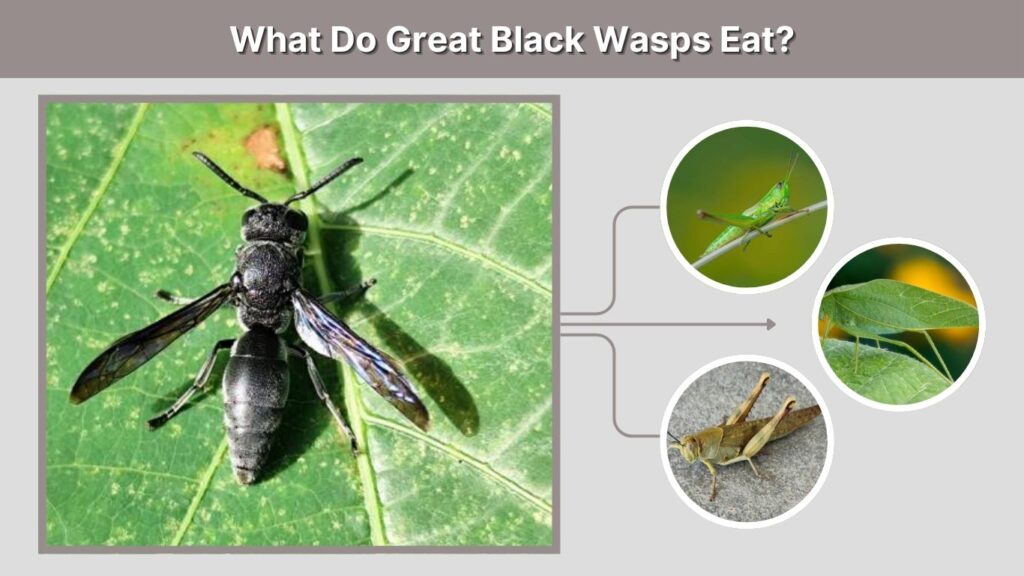
Great black wasps feed on different food sources depending on their stage of life. Adult wasps mainly consume nectar from flowers, while larvae depend on paralyzed insects stored inside underground nests.
These wasps are especially attracted to flowering plants during summer. They often visit gardens filled with wildflowers, mint, milkweed, and goldenrod. Because of their nectar-feeding habits, they also contribute to pollination.
Female great black wasps hunt large insects to feed developing larvae. Grasshoppers, katydids, and crickets are among their most common prey items.
Common Food Sources of Great Black Wasps
- Flower nectar
- Grasshoppers
- Katydids
- Crickets
- Plant juices
Great Black Wasp Carrying Grasshopper
One of the most fascinating behaviors of the great black wasp is carrying prey much larger than itself. After stinging and paralyzing a grasshopper or katydid, the female drags or flies it back to the nest.
The prey is placed inside a nesting chamber where a single egg is laid. Once the larva hatches, it feeds on the immobilized insect until it matures.
Great Black Wasp Habitat and Range
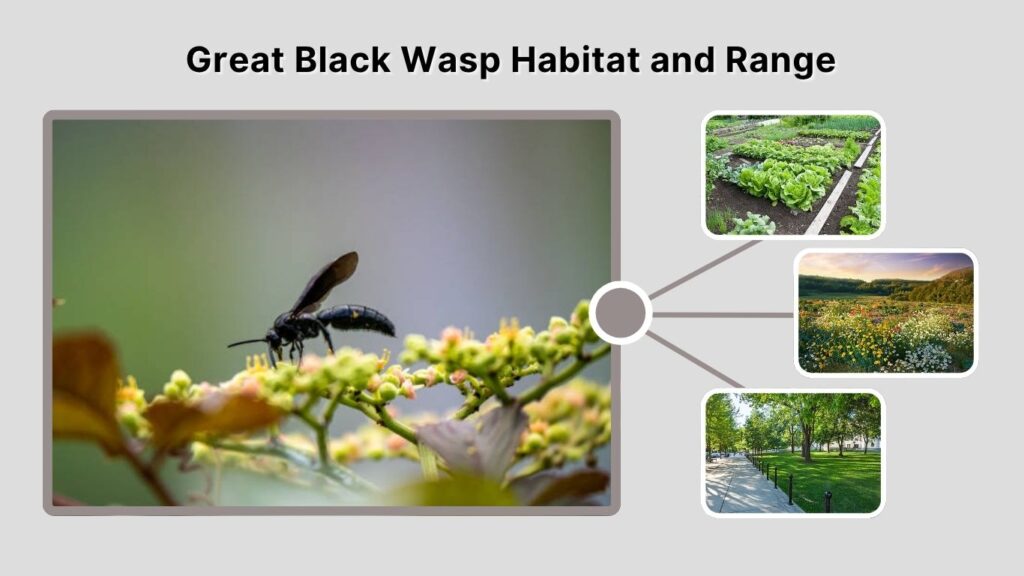
Great black wasps are widely distributed throughout North America and are commonly found in warm regions with open ground and abundant flowering plants. They thrive in both rural and suburban environments where suitable nesting areas are available.
These wasps prefer sunny habitats with loose soil because digging underground burrows is easier in dry conditions. Gardens, meadows, parks, lawns, and woodland edges are all common locations for sightings.
States Where Great Black Wasps Are Common
Great black wasps are frequently reported in many parts of the United States, including:
- Florida
- Texas
- Michigan
- Ohio
- Wisconsin
- Virginia
- Minnesota
- California
Great Black Wasp in Houses
Occasionally, a great black wasp may enter a house through open doors, vents, or windows. In most cases, the insect entered accidentally while searching for light or attempting to escape outdoor heat.
These wasps do not build nests indoors regularly and usually try to leave once trapped inside.
Great Black Wasp Life Cycle
The life cycle of the great black wasp begins when the female lays eggs inside underground nesting chambers. Each chamber contains paralyzed prey that serves as food for the developing larva.
After hatching, the larva feeds on the stored insects until it becomes fully developed. It then enters the pupal stage underground before emerging as an adult during warm weather.
Adult great black wasps are mainly active during summer and early fall. Their lifespan is relatively short, but their reproductive cycle continues each year through new generations.
Stages of the Great Black Wasp Life Cycle
- Egg stage
- Larval stage
- Pupal stage
- Adult emergence
Great Black Wasp Lifespan
Most adult great black wasps live for only a few weeks. Their primary goals during adulthood include mating, hunting prey, and building nests for offspring.
By the end of the season, adult wasps die off while immature wasps remain protected underground until warmer temperatures return.
Great Black Wasp vs Mud Dauber
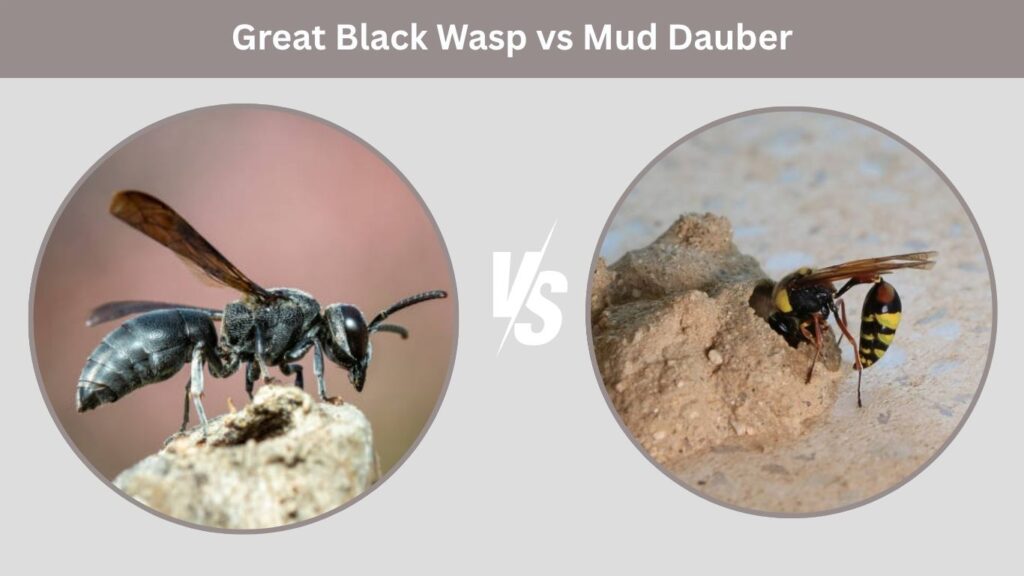
Great black wasps are often confused with mud daubers because both insects have dark bodies and long wings. However, there are several major differences between these wasps.
Mud daubers build mud nests attached to walls or structures, while great black wasps dig underground burrows. Great black wasps are also bulkier and more robust than the slender mud dauber.
Main Differences Between Great Black Wasps and Mud Daubers
| Feature | Great Black Wasp | Mud Dauber |
| Nest Type | Underground burrow | Mud nest |
| Body Shape | Thick and robust | Thin and narrow |
| Main Prey | Grasshoppers and katydids | Spiders |
| Color | Solid black | Black or metallic with markings |
| Behavior | Ground nesting hunter | Mud nest builder |
How to Get Rid of Great Black Wasps
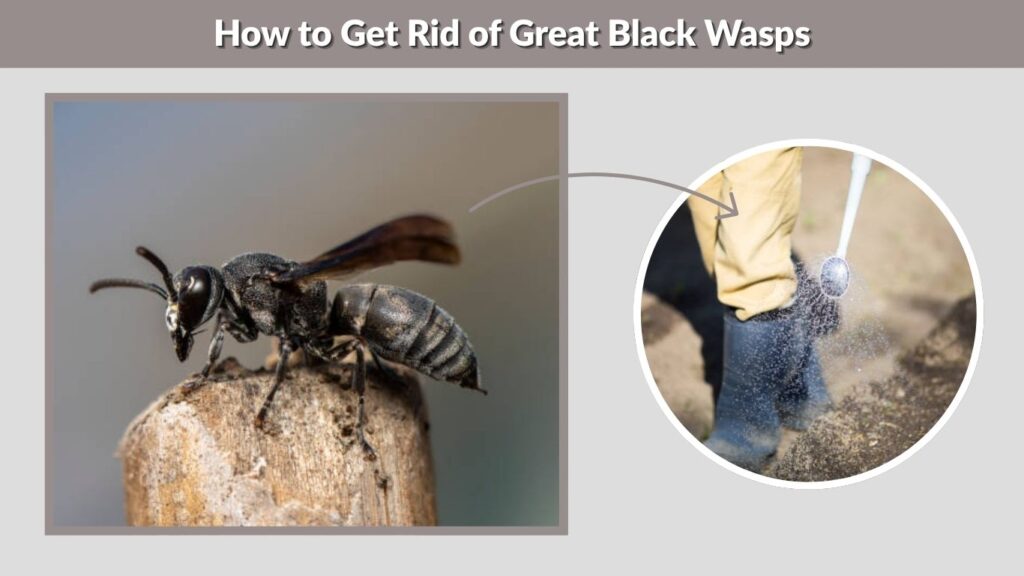
Most great black wasps do not require removal because they are beneficial insects that help control pest populations naturally. However, homeowners may want to reduce activity in heavily used outdoor spaces.
The best way to discourage great black wasps is by making the environment less suitable for nesting.
Natural Prevention Methods
- Water dry soil regularly
- Improve lawn thickness
- Cover bare ground with mulch
- Reduce insect prey populations
- Seal openings around the home
Pest Control Options
In severe cases, homeowners may consider:
- Applying insecticidal dust to active burrows
- Treating nests during evening hours
- Contacting professional pest control services
- Using protective clothing during nest treatment
Avoid disturbing active nests during the daytime because females may defend themselves if threatened directly.
Are Great Black Wasps Beneficial?
Great black wasps provide several ecological benefits and are considered helpful insects in many environments. Their hunting behavior naturally reduces populations of grasshoppers and katydids that may damage plants or crops.
As adults, they also visit flowers for nectar and contribute to pollination. Since they are non-aggressive and solitary, they are usually less problematic than social wasp species.
Understanding the role of great black wasps in nature can help homeowners appreciate their importance rather than fear their presence unnecessarily.
FAQs
Can a great black wasp kill you?
A great black wasp sting is rarely dangerous for healthy people. Serious medical emergencies are usually linked to severe allergic reactions rather than the venom itself. Anyone experiencing breathing problems or major swelling after a sting should seek emergency medical care immediately.
Do great black wasps sting humans often?
Great black wasps rarely sting humans because they are generally non-aggressive insects. Females may sting if handled, trapped, or threatened, while males cannot sting at all since they do not possess stingers.
Are great black wasps beneficial for gardens?
Yes, great black wasps are beneficial because they help control pest insects such as grasshoppers and katydids. Adult wasps also visit flowers for nectar, which supports pollination in gardens and natural habitats.
Why are great black wasps flying around my yard?
Great black wasps are usually attracted to yards with flowering plants, loose soil, and abundant insect prey. Females may also search for nesting areas in dry sunny ground during the summer months.
How can I identify a great black wasp nest?
Great black wasp nests are typically underground burrows in sandy or loose soil. Signs include small holes in the ground, loose dirt piles, and large black wasps flying low while carrying grasshoppers or katydids.