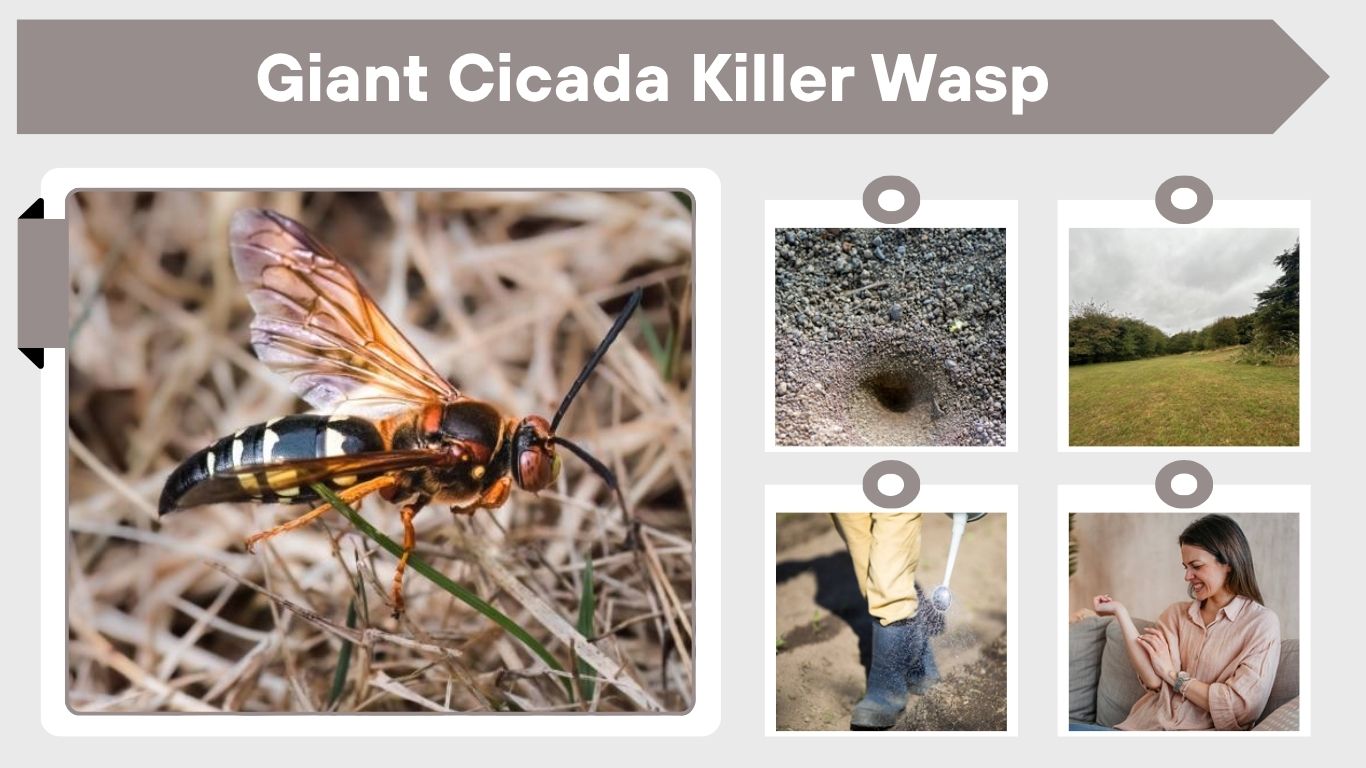
The giant cicada killer wasp is one of the largest wasps found in North America, and its intimidating appearance often causes people to mistake it for a dangerous hornet. These solitary wasps are famous for hunting cicadas and dragging them into underground burrows as food for their young. Despite their massive size and loud buzzing, cicada killer wasps are usually non-aggressive toward humans. Understanding their behavior, nest habits, and differences from giant hornets can help homeowners react calmly when spotting these giant wasps in yards and gardens during summer months.
What Is a Giant Cicada Killer Wasp?
The giant cicada killer wasp is a large solitary wasp belonging to the genus Sphecius. It is commonly called the eastern cicada killer in the United States and is widely known for preying on cicadas. Unlike social wasps such as yellowjackets or hornets, cicada killers do not live in aggressive colonies.
These wasps are most active during the warmest months of summer when cicadas are abundant. Female cicada killers hunt cicadas, sting them to cause paralysis, and carry them into underground nests. The immobilized cicadas become food for developing larvae.
Key Characteristics of Giant Cicada Killer Wasps
- Usually 1.5 to 2 inches long
- Black body with yellow band markings
- Rust-colored wings
- Loud buzzing flight
- Solitary rather than colony-based
Why People Mistake Them for Giant Hornets
Many people panic when they first see a giant cicada killer wasp because its size resembles an Asian giant hornet. Their large bodies and strong flight patterns create fear, especially when they hover near lawns or gardens.
However, cicada killers are far less aggressive than hornets. Male cicada killers may appear territorial, but they cannot sting. Females can sting, though they rarely do unless directly handled or threatened.
What Does a Giant Cicada Killer Wasp Look Like?
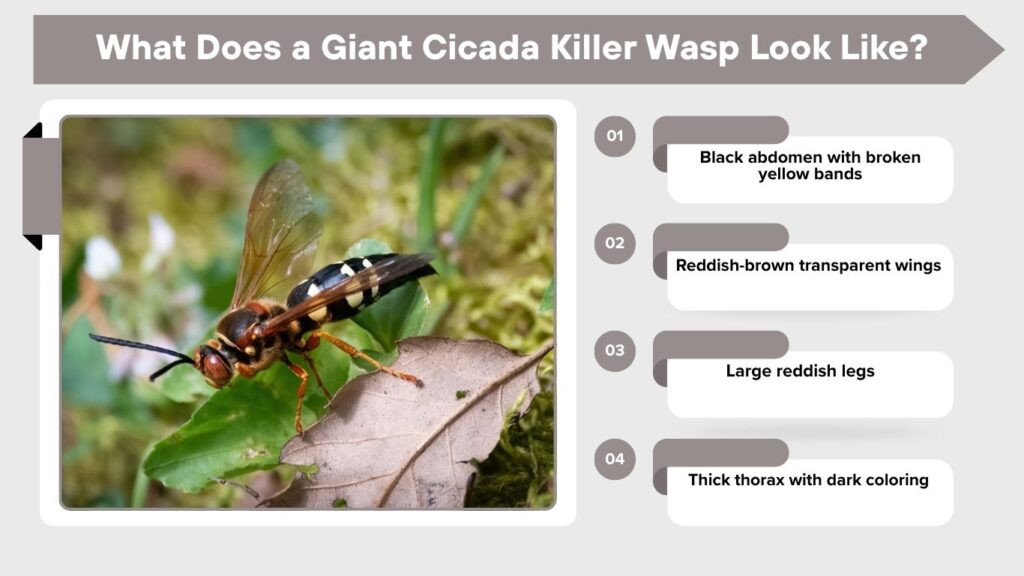
The giant cicada killer wasp has a thick body and bold yellow markings that make it stand out among other wasps. Females are usually larger than males and have stronger bodies designed for carrying cicadas back to the nest.
Their appearance changes slightly depending on location, but most eastern cicada killers share similar physical traits. Their size alone is often enough to alarm homeowners.
Physical Features of a Cicada Killer Wasp
- Black abdomen with broken yellow bands
- Reddish-brown transparent wings
- Large reddish legs
- Thick thorax with dark coloring
- Curved stinger in females
Giant Queen Cicada Killer Wasp Size
Large female cicada killers are sometimes called giant queen cicada killer wasps because of their impressive size. Females are the hunters and nest builders, so they tend to appear bulkier than males.
A mature female can grow close to 2 inches long, making her one of the biggest wasps commonly seen in North America.
Cicada Killer Wasp vs Asian Giant Hornet
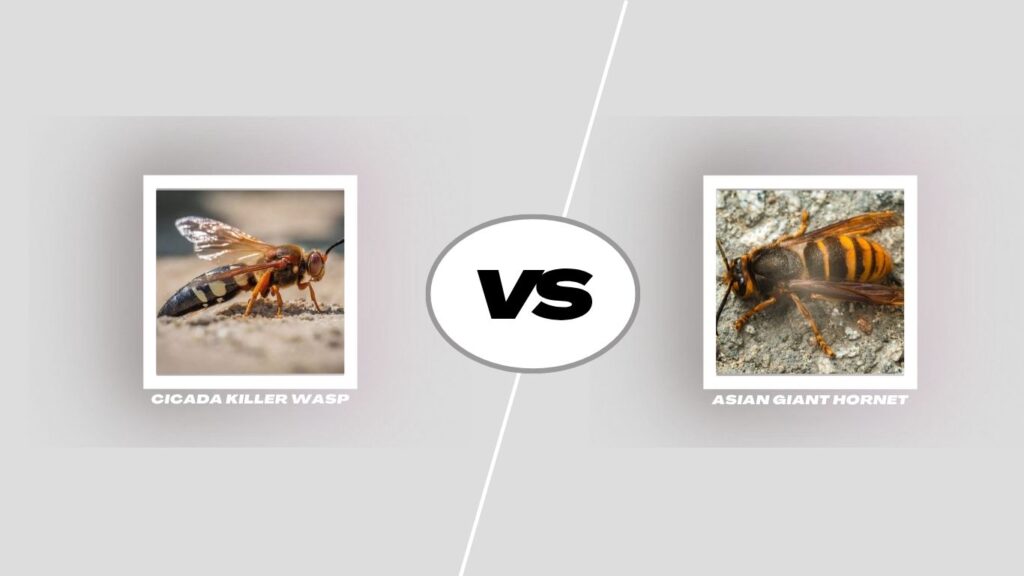
Many online searches compare the cicada killer wasp vs Asian giant hornet because both insects are enormous and intimidating. While they may appear similar at first glance, they are very different in behavior and danger level.
The Asian giant hornet is a social hornet species known for defending nests aggressively. Cicada killer wasps are solitary hunters that prefer avoiding humans whenever possible.
Major Differences Between Cicada Killers and Giant Hornets
| Feature | Cicada Killer Wasp | Asian Giant Hornet |
| Behavior | Solitary | Social colony insect |
| Aggression | Low | High near nests |
| Diet | Cicadas | Insects and honeybees |
| Sting Frequency | Rare | More defensive |
| Nest Type | Underground burrows | Large colony nests |
Cicada Killer Wasp vs Asian Giant Hornet Size
The Asian giant hornet is generally heavier and slightly larger overall than the cicada killer wasp. However, cicada killers often appear longer because of their stretched body shape and long wings.
People frequently mistake cicada killers for giant hornets during summer because both insects are active in warm weather and produce loud buzzing sounds while flying.
Are Giant Cicada Killer Wasps Dangerous?
Although their appearance looks frightening, giant cicada killer wasps are usually harmless to humans. They spend most of their time hunting cicadas or digging nests rather than attacking people.
Male cicada killers aggressively patrol nesting areas, which can make them seem threatening. They often hover close to people but are physically unable to sting.
Females possess stingers but typically avoid confrontation unless touched or trapped. Their venom is designed mainly for paralyzing cicadas rather than defending against large animals.
Signs a Cicada Killer Wasp Feels Threatened
- Being stepped on accidentally
- Direct handling
- Disturbing the underground nest
- Trapping the wasp indoors
For most homeowners, cicada killer wasps are more of a visual nuisance than a serious danger. Their presence may actually help control cicada populations naturally.
What Does a Giant Cicada Killer Wasp Sting Feel Like?
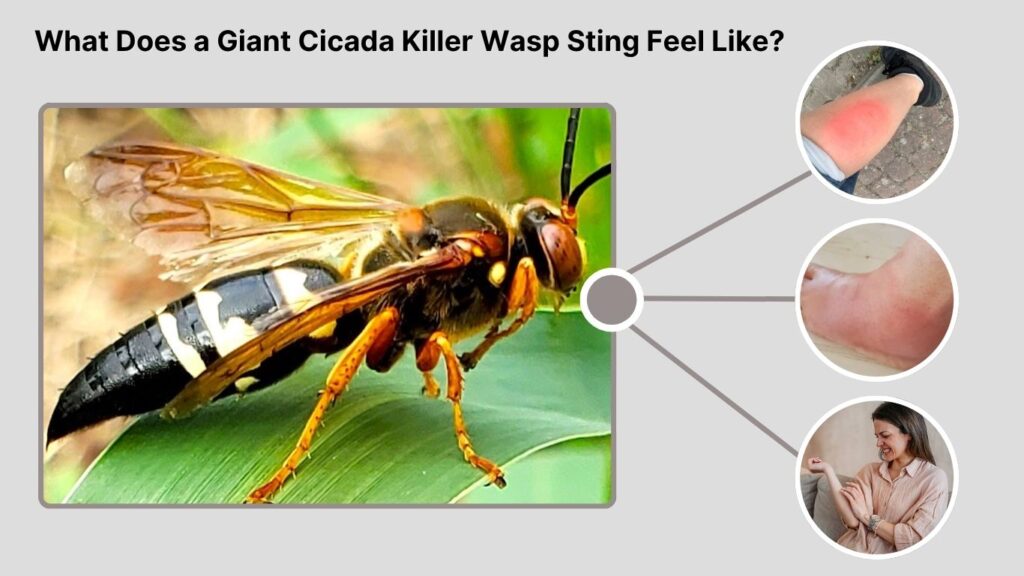
A giant cicada killer wasp sting is painful but usually not dangerous for healthy individuals. Most people describe the sting as sharp and intense at first, followed by temporary burning or swelling around the affected area.
Unlike aggressive hornets, cicada killers rarely sting humans unless they are directly threatened. Female wasps use their venom mainly for hunting cicadas rather than defense.
Common Sting Symptoms
- Sudden sharp pain
- Redness around the sting site
- Mild swelling
- Temporary burning sensation
- Itching during healing
When to Seek Medical Attention
Some people may experience allergic reactions after any wasp sting. Immediate medical care is important if symptoms become severe.
Watch for:
- Difficulty breathing
- Swelling of the throat or face
- Rapid heartbeat
- Severe dizziness
- Widespread hives
Most mild reactions improve within a few hours or days with basic home treatment such as ice packs and antihistamines.
Why Do Giant Wasps Kill Cicadas?
The giant cicada killer wasp gets its name from its unusual hunting behavior. Female wasps capture cicadas and use them as food for developing larvae underground.
After locating a cicada in trees or shrubs, the female attacks and injects venom that paralyzes the insect without killing it immediately. She then drags or flies the cicada back to her nest.
Inside the burrow, the wasp places an egg on the immobilized cicada. When the larva hatches, it feeds on the cicada as its primary food source.
This hunting cycle plays an important role in the natural ecosystem because cicada killer wasps help regulate cicada populations during peak summer seasons.
Giant Cicada Killer Wasp Nest Identification
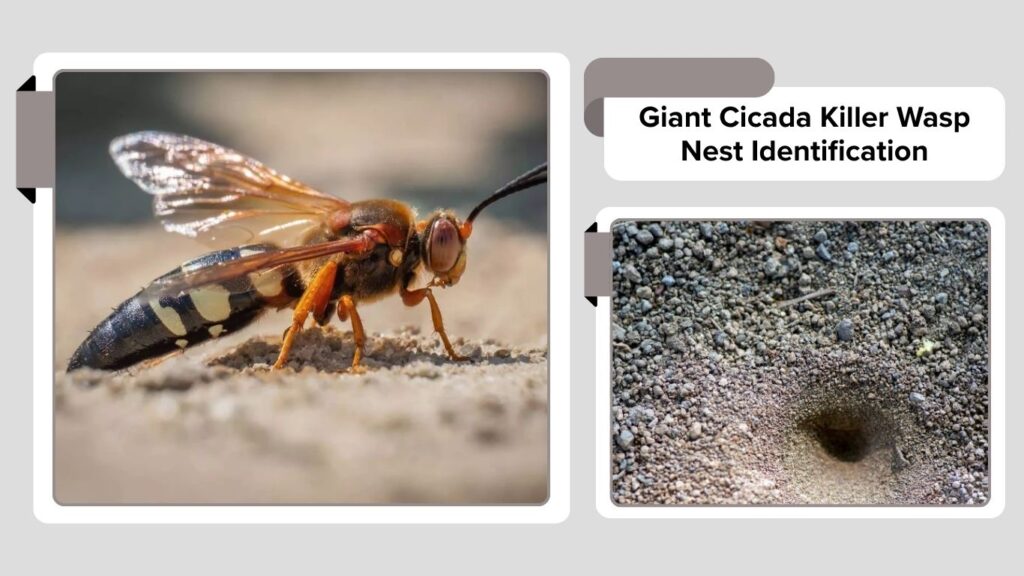
Cicada killer wasps create underground nests in dry, sandy, or loose soil. Their burrows are commonly found in lawns, flower beds, playgrounds, golf courses, and near sidewalks.
The nest entrance usually appears as a round hole surrounded by a mound of fresh dirt. Multiple burrows may appear in the same area if conditions are favorable.
Signs of a Cicada Killer Wasp Nest
- Half-inch wide holes in the soil
- Piles of loose dirt near openings
- Large wasps hovering low to the ground
- Increased activity during sunny afternoons
- Occasional cicada remains nearby
Why They Prefer Certain Areas
Cicada killer wasps choose nesting areas that receive direct sunlight and have well-drained soil. Bare patches of ground are especially attractive because they make digging easier.
Even though many nests can appear close together, these wasps are still solitary insects rather than true colony builders like hornets or yellowjackets.
Giant Cicada Killer Wasp Infestation
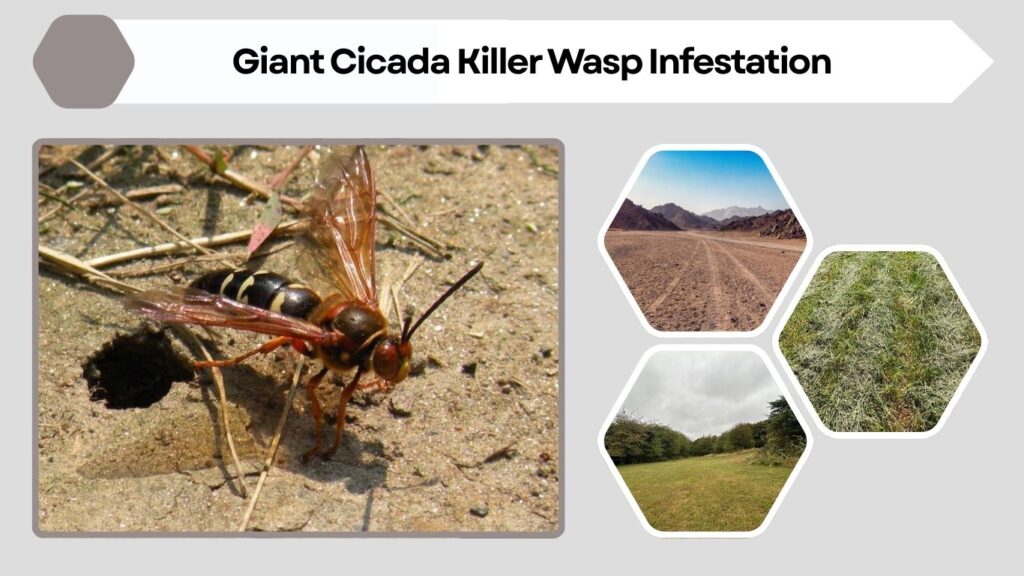
A giant cicada killer wasp infestation usually occurs when many females choose the same yard or open area for nesting. Large populations can make homeowners uncomfortable, especially when giant wasps constantly fly around outdoor spaces.
Despite the alarming appearance, these infestations are generally seasonal and temporary. Most adult cicada killers die off by early fall after completing their reproductive cycle.
Common Causes of Infestations
- Large cicada populations nearby
- Dry or sandy soil
- Thin grass coverage
- Warm sunny conditions
- Undisturbed open ground
Are Infestations Dangerous?
Most infestations are more intimidating than harmful. Cicada killers are not naturally aggressive toward humans and pets. However, repeated nesting can damage lawns or create concerns in heavily used outdoor areas.
Homeowners with severe wasp anxiety or allergies may prefer professional pest control assistance if large nesting groups continue returning each year.
How to Get Rid of Giant Cicada Killer Wasps
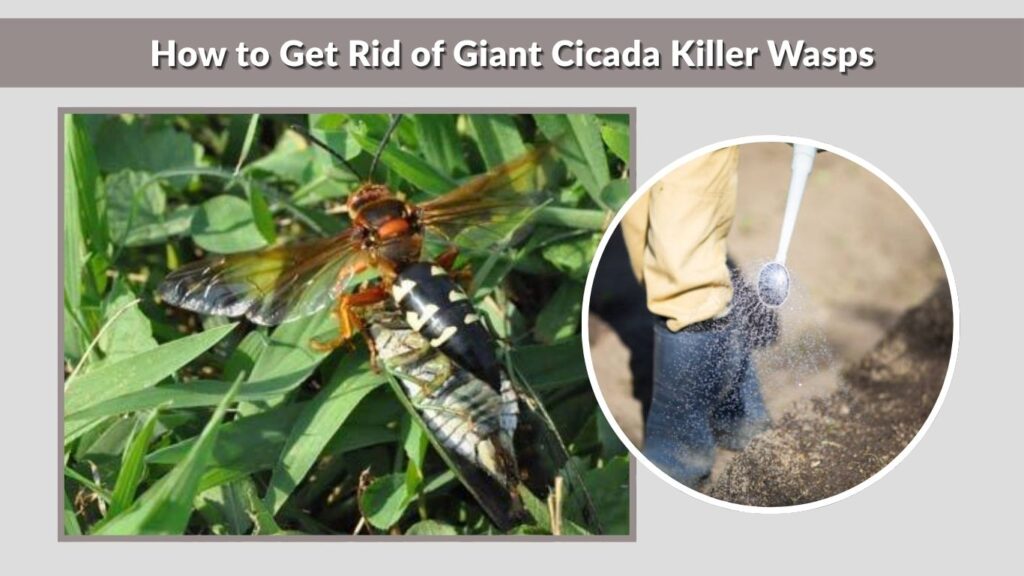
Removing giant cicada killer wasps usually focuses on making the environment less attractive for nesting. Because these wasps prefer loose dry soil, improving lawn conditions often reduces future activity.
Chemical treatments may work for severe infestations, but many homeowners successfully manage cicada killers through prevention methods alone.
Natural Prevention Methods
- Water dry soil regularly
- Improve grass thickness
- Cover bare ground areas
- Add mulch to garden beds
- Reduce cicada activity when possible
Pest Control Solutions
If natural methods fail, homeowners may consider:
- Applying insecticidal dust to active burrows
- Treating nests at dusk when wasps are less active
- Hiring licensed pest control professionals
- Using protective clothing during treatment
Avoid disturbing active nests during the daytime because females may defend themselves if directly threatened.
Wallace’s Giant Bee vs Cicada Killer Wasp
Many insect enthusiasts wonder whether Wallace’s giant bee is bigger than a cicada killer wasp. While both insects are enormous, Wallace’s giant bee is generally considered bulkier and heavier.
The cicada killer wasp may appear longer because of its narrow body and large wingspan, but Wallace’s giant bee has a thicker body structure overall.
These insects belong to completely different groups and behave very differently in nature. Cicada killers are predatory wasps, while Wallace’s giant bee is a rare bee species known for its massive jaw size and unusual nesting habits.
FAQs
Are giant cicada killer wasps aggressive?
Giant cicada killer wasps are usually not aggressive toward humans. Males may hover nearby to defend territory, but they cannot sting. Females can sting if threatened or handled, though they normally avoid human contact and focus on hunting cicadas.
How long do giant cicada killer wasps live?
Adult giant cicada killer wasps typically live for a few weeks during the summer. Their main purpose is mating, hunting cicadas, and building nests. Most adults die by early fall after completing their life cycle.
Do cicada killer wasps damage lawns?
Cicada killer wasps can create small dirt mounds and holes while digging underground burrows. Minor lawn damage may occur in areas with many nests, but the damage is usually cosmetic rather than severe.
What attracts giant cicada killer wasps to yards?
These wasps are attracted to dry, sandy soil and areas with high cicada activity. Bare ground, sunny locations, and thin grass coverage make nesting easier and encourage cicada killer wasps to settle nearby.
Can giant cicada killer wasps fly while carrying cicadas?
Yes, female cicada killer wasps are strong enough to carry or drag paralyzed cicadas back to their nests. They sometimes struggle with heavy prey and may climb trees or structures before flying again.