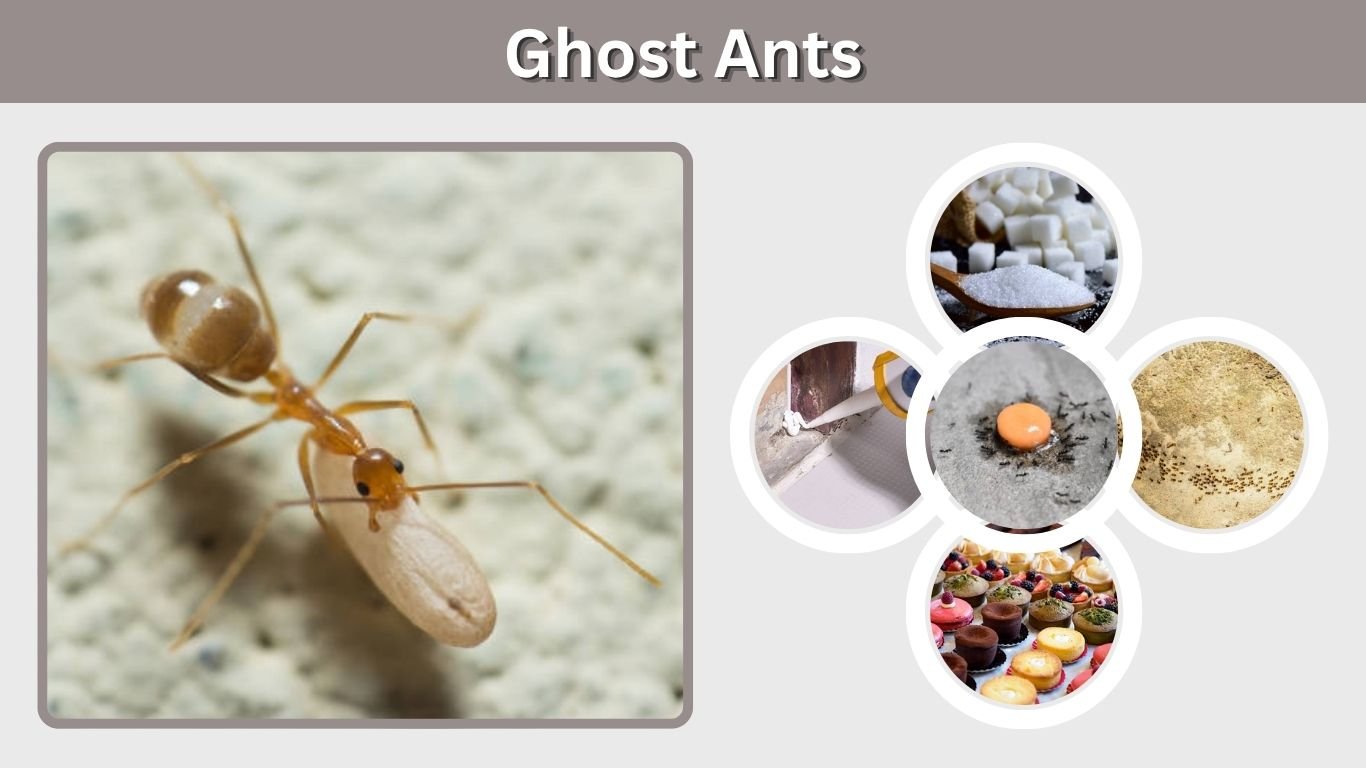
Ghost ants are tiny household pests with dark heads and nearly transparent legs and abdomens. Their pale bodies make them difficult to see, which explains their unusual name. They frequently invade kitchens, bathrooms, wall spaces and potted plants while searching for moisture and sweet food. Ghost ant colonies may contain several queens and multiple connected nesting sites, making them difficult to eliminate with ordinary sprays. Slow-acting bait, sanitation, moisture control and careful inspection usually provide the most effective long-term control.
Ghost Ant Quick Facts
Ghost ants are scientifically known as Tapinoma melanocephalum. They are tropical ants that thrive outdoors in warm climates but can survive inside heated buildings in cooler regions. They are particularly common in Florida and Hawaii and have also become established in parts of Texas.
| Feature | Information |
| Scientific name | Tapinoma melanocephalum |
| Worker size | About 1.3–1.5 mm |
| Head and thorax | Dark brown |
| Abdomen and legs | Pale or milky white |
| Preferred food | Sweets, honeydew and insects |
| Common locations | Kitchens, bathrooms and wall voids |
| Colony structure | Multiple queens and connected nests |
| Bite risk | Very low |
| Best control | Slow-acting ant bait |
What Do Ghost Ants Look Like?
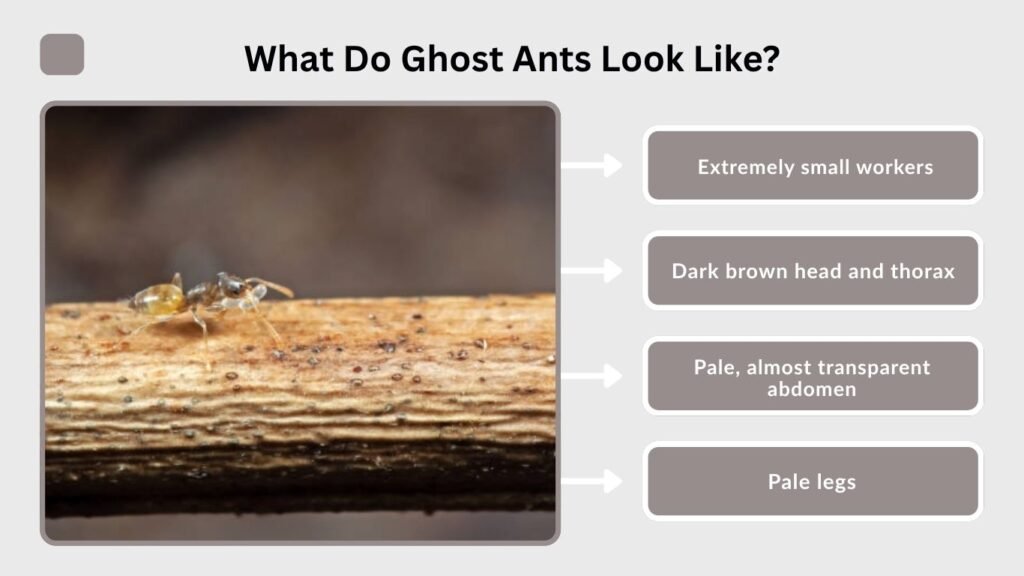
Ghost ants are among the smallest ants commonly found inside homes. Workers measure only around 1.3–1.5 millimeters long.
Their head and thorax are dark brown, while the legs and abdomen are pale, translucent or milky white. The light-colored abdomen can be difficult to see against countertops, sinks and floors, making the dark head appear to move by itself.
Identification Features
Look for the following characteristics:
- Extremely small workers
- Dark brown head and thorax
- Pale, almost transparent abdomen
- Pale legs
- Twelve-segmented antennae
- No visible spines on the thorax
- One waist node hidden beneath the abdomen
- Rapid, irregular movement when disturbed
Crushed ghost ants may produce an odor sometimes compared to rotten coconut. They belong to the same genus as odorous house ants, but ghost ants are much smaller and have distinctive two-toned bodies.
Where Do Ghost Ants Come From?
Ghost ants are widely distributed in tropical and subtropical regions. Commerce and plant shipments have helped spread them to many parts of the world.
In the United States, they are well established in Florida and Hawaii. Outdoor populations also occur in parts of Texas. In colder states, they usually survive only inside greenhouses, apartments and other heated buildings.
Outdoor Nesting Sites
Outside, ghost ants commonly nest in:
- Potted plants
- Damp grass
- Plant stems
- Beneath loose bark
- Leaf litter and debris
- Soil beneath objects
- Bases of palm fronds
- Cracks near foundations
Branches and plants touching a house may provide easy pathways indoors.
Indoor Nesting Sites
Inside a home, ghost ants can establish small nests in:
- Wall voids
- Spaces behind baseboards
- Kitchen cabinets
- Cracks around sinks
- Spaces between books
- Potted plants
- Bathroom walls
- Gaps around windows and pipes
A colony may be divided among several nesting sites. Workers and queens can move between these locations using established odor trails.
Why Are Ghost Ants in the Kitchen?
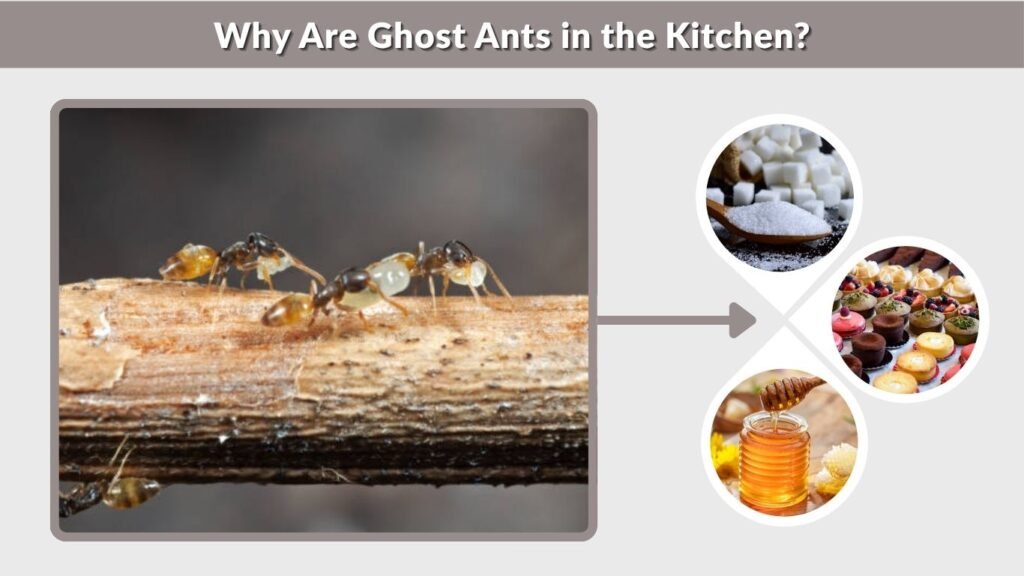
Kitchens provide the food, water and protected nesting spaces ghost ants need. Workers are especially attracted to sweet foods and may form trails around sinks, counters, cupboards and appliances.
Common attractants include:
- Sugar and syrup
- Cakes and baked foods
- Fruit juice
- Honey
- Soft drinks
- Grease and food residue
- Pet food
- Moisture around sinks
- Leaking pipes
- Honeydew-producing insects on houseplants
Outside, ghost ants feed on dead or living insects and collect sugary honeydew produced by aphids, scales, whiteflies and similar plant pests.
Even a small spill or a few crumbs can maintain an active trail. Workers can enter loosely closed food packaging because of their extremely small size.
Do Ghost Ants Bite Humans?
Ghost ants are not considered dangerous biting ants. They do not have functional stingers, and their tiny size makes noticeable bites unlikely. They are primarily nuisance pests rather than a direct threat to people or pets.
A person might occasionally feel a mild pinching sensation when an ant becomes trapped against the skin, but visible skin reactions are uncommon. Marks blamed on ghost ants may actually come from mosquitoes, fleas, bed bugs, mites or another source.
What Does a Ghost Ant Bite Look Like?
There is no distinctive skin mark that confirms a ghost ant bite. A suspected reaction might appear as a tiny itchy or irritated spot, but appearance alone cannot identify the cause.
Wash irritated skin with soap and water and apply a cold compress if needed. Seek medical advice when swelling, pain or redness continues worsening. Breathing difficulty, facial swelling or faintness requires emergency care.
Are Ghost Ants Dangerous?
Ghost ants do not sting, damage wood or normally cause serious injuries. Their primary concern is food contamination and their ability to establish difficult-to-reach colonies throughout a building.
They may crawl across rubbish, sinks and contaminated surfaces before entering food containers. Large infestations can become persistent because colonies contain several queens and reproduce by budding.
Budding occurs when queens, workers and developing ants leave one nesting site and establish another nearby. This behavior allows a single infestation to spread into several rooms.
How to Get Rid of Ghost Ants
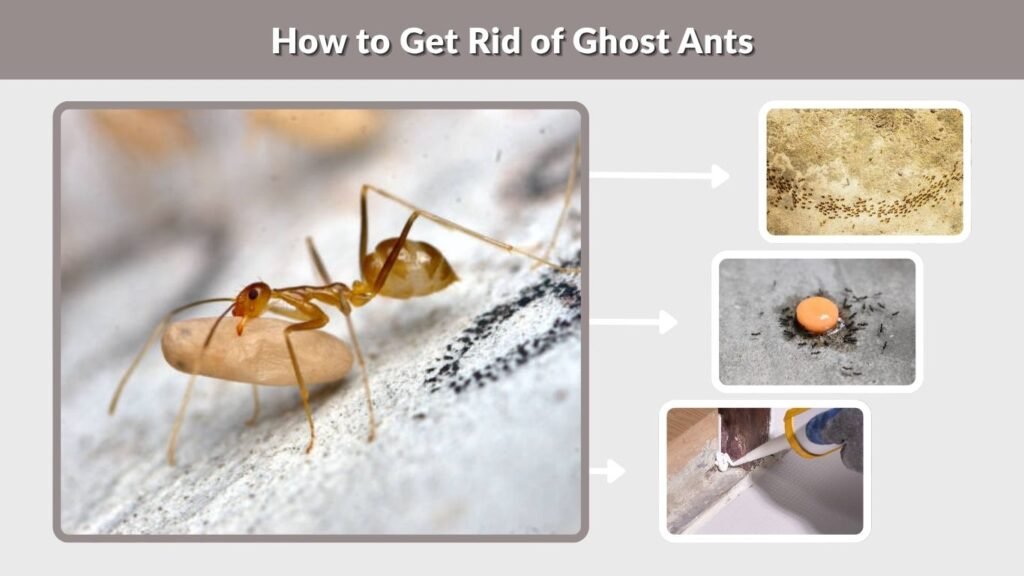
Eliminating ghost ants requires targeting the colony rather than simply killing visible workers. Only a small percentage of the colony is usually outside the nest at one time.
1. Follow the Ant Trails
Observe where workers travel and try to determine whether they are entering from outside or nesting within the building.
Check around:
- Sink pipes
- Baseboards
- Windows
- Cabinets
- Electrical outlets
- Potted plants
- Bathroom fixtures
- Exterior foundation cracks
Avoid disturbing trails before placing bait because active workers can lead you toward important nesting or feeding areas.
2. Remove Food and Water Sources
Clean kitchen counters, floors and cupboard shelves regularly. Store sugar, cereal, baked goods and pet food in tightly sealed containers.
Repair dripping taps and leaking pipes. Remove standing water from sinks, plant saucers and appliance trays. Moisture reduction makes kitchens and bathrooms less attractive to ghost ants.
3. Use Slow-Acting Ant Bait
Baits are usually more effective than contact sprays because workers carry the food back to the colony and share it with queens, larvae and other ants.
Place bait:
- Beside active trails
- Under sinks
- Near cabinet edges
- Behind appliances
- Close to entry points
- Where children and pets cannot reach it
Sweet liquid or gel baits are often attractive because ghost ants commonly prefer sugary foods. Check the bait within one or two days. Relocate it when the ants are not feeding.
Baits must act slowly enough for workers to return to the nest before dying. Effective baiting can take several days or weeks, particularly when numerous subcolonies are present. Slow-acting baits allow workers to spread the active ingredient through food sharing.
4. Avoid Spraying Ant Trails
Spraying visible ants may provide temporary relief, but it rarely eliminates the queens. Repellent sprays can also disturb the colony and encourage ants to move into new nesting sites.
Do not spray household cleaners or insecticides directly around bait stations. Strong odors may prevent workers from approaching and carrying the bait home.
5. Check Potted Plants
Ghost ants frequently nest in flowerpots. Examine indoor and outdoor plants for trails moving into drainage holes, soil or spaces beneath containers.
Move infested outdoor pots away from the building. Treating an indoor plant requires care because ordinary household pesticides may damage the plant or create an exposure risk. Follow the label of any product used.
6. Seal Entry Points
After bait activity begins declining, seal cracks around:
- Windows and doors
- Plumbing lines
- Electrical cables
- Baseboards
- Exterior siding
- Foundation joints
Trim shrubs and branches touching the house. Removing these bridges can reduce the number of outdoor foragers entering the building.
Ghost Ants vs. Pharaoh Ants
Ghost ants and Pharaoh ants are both tiny indoor pests, but their appearance and body structure differ.
| Feature | Ghost ant | Pharaoh ant |
| Body color | Dark head with pale abdomen | Yellow to reddish body |
| Waist nodes | One hidden node | Two nodes |
| Worker size | About 1.3–1.5 mm | About 1.5–2 mm |
| Preferred food | Mainly sweets and honeydew | Sweets, fats and proteins |
| Indoor nesting | Wall voids, cabinets and plants | Warm cracks and wall voids |
| Stinger | Absent | Small but not used on people |
Correct identification is important because bait preferences and treatment strategies may vary. Ghost ants can also be confused with tiny “sugar ants,” a general name used for several sweet-feeding household species.
When to Call a Ghost Ant Exterminator
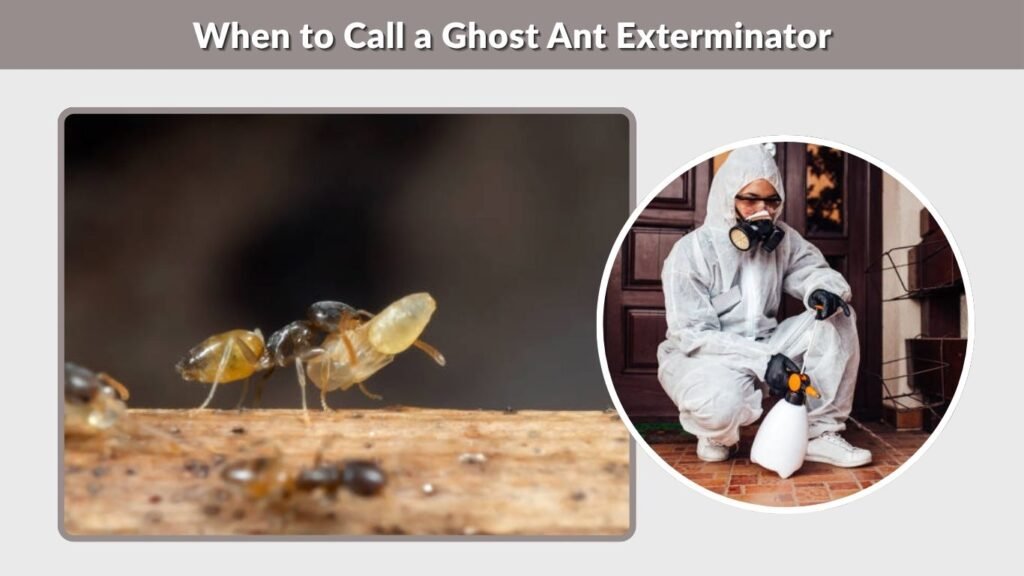
Professional pest control may be necessary when:
- Ants remain after several weeks of baiting
- Trails appear in many rooms
- Colonies are nesting inside walls
- Ants repeatedly return after treatment
- The infestation affects an apartment building
- Safe bait placement is difficult
- The species cannot be identified
A pest professional can identify the ant, locate major activity areas and select a bait that matches its current food preference.
FAQs
What attracts ghost ants?
Ghost ants are attracted to sugary foods, crumbs, syrup, honey, fruit juice and moisture. Outdoors, they feed on insects and honeydew produced by sap-feeding plant pests.
What is the best bait for ghost ants?
A slow-acting sweet liquid or gel bait is often effective. The ants must willingly feed on it and carry it back to the colony. Change the bait or location when workers ignore it.
How long does it take to eliminate ghost ants?
A small infestation may decline within several days, while a colony with multiple queens and nests may require several weeks. Continue sanitation and baiting until trails completely disappear.
Can ghost ants damage a house?
Ghost ants do not eat or excavate wood like termites. They use existing cracks and spaces for shelter, so their presence does not normally indicate structural damage.
Are ghost ants common in Florida?
Yes. Ghost ants are important household pests in central and southern Florida and also occur farther north in the state. Florida’s warm climate allows them to live both indoors and outdoors.