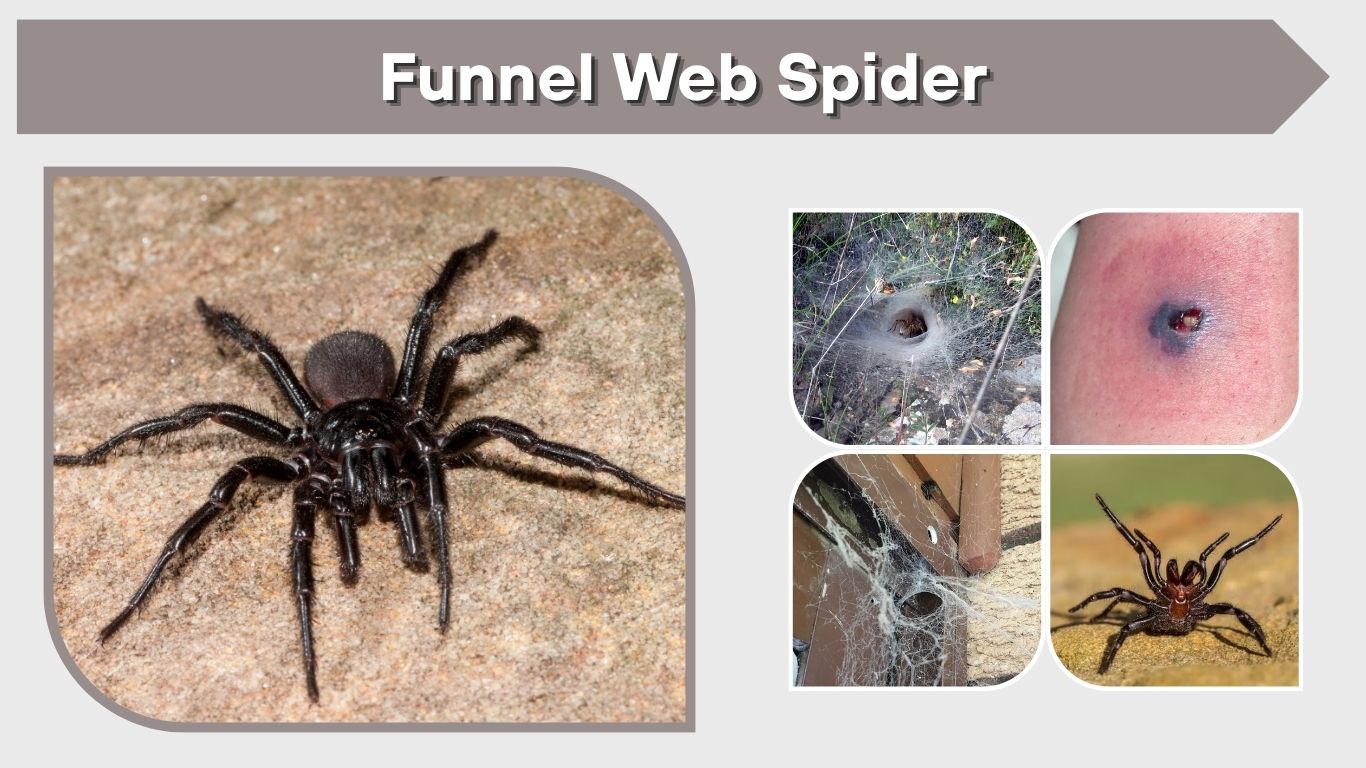
Funnel web spiders are often confusing because the name can refer to different spiders in different places. In Australia, it usually means dangerous funnel-web spiders like the Sydney funnel-web spider. In the United States, it often refers to funnel weavers or grass spiders that make funnel-shaped webs. This guide explains what funnel web spiders are, where they live, what their webs look like, and why some species need serious caution.
What Is a Funnel Web Spider?
A funnel web spider is a spider known for making or living near a funnel-shaped retreat. The name can be confusing because it may refer to dangerous Australian funnel-web spiders or harmless funnel-weaver spiders found in many other places. Understanding the difference is important before judging risk, bite danger, or identification.
Australian Funnel-Web Spiders
Australian funnel-web spiders are a group of dark, sturdy spiders found mainly in eastern Australia. They include the famous Sydney funnel-web spider, also called Atrax robustus. These spiders are medically important because some species have venom that can cause serious illness in humans if a bite is not treated quickly.
Sydney Funnel-Web Spider
The Sydney funnel-web spider is the best-known and most dangerous member of this group. It is usually glossy, dark brown to black, and strongly built. It lives in parts of New South Wales, especially around Sydney and nearby regions. Males are often more dangerous because they wander while searching for females.
American Funnel Web Spiders
In the United States, the term “funnel web spider” usually refers to funnel weavers or grass spiders, not the dangerous Australian type. These spiders make flat sheet webs with a funnel-shaped tunnel where they hide. They may look scary, but they are not the same as Sydney funnel-web spiders and are usually not considered medically dangerous.
Funnel Web Spider Web and Nest
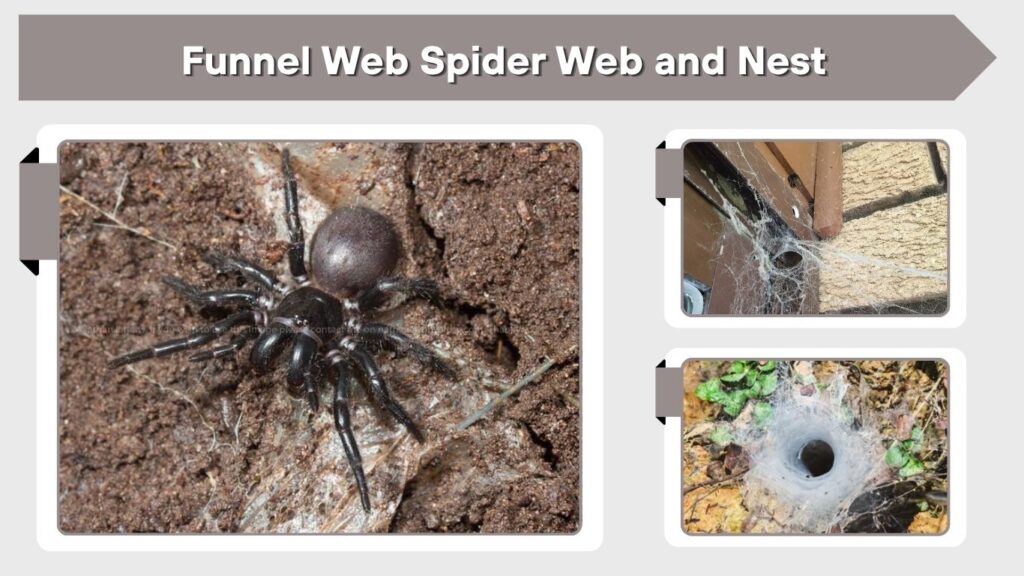
The web is one of the easiest ways to understand why these spiders are called funnel web spiders. Their webs are not round like orb-weaver webs. Instead, they often have a tunnel-like retreat where the spider waits. However, web shape and spider type can vary depending on whether the spider is Australian or American.
What Does a Funnel Web Spider Web Look Like?
A funnel web spider web usually has a flat or messy sheet leading into a narrow funnel or tunnel. The spider hides inside the funnel and rushes out when it senses prey nearby. In gardens, lawns, sheds, and corners, these webs may look like white sheets with a dark opening at one end.
Funnel Web Spider Burrow
Australian funnel-web spiders often live in silk-lined burrows in moist, sheltered ground. These burrows may be found under logs, rocks, garden debris, or shaded soil. The entrance can have silk trip-lines that help the spider detect movement. The spider usually stays hidden inside unless disturbed or searching for a mate.
Common Web Locations
- Garden beds
- Damp soil
- Under logs
- Rock cracks
- Leaf litter
- Lawn edges
- Sheds and barns
- Wall corners
- Around grass clumps
- Under boards or debris
Funnel Web Spider Size and Identification
Funnel web spider identification depends heavily on location. A dark spider in Australia may require serious caution, while a funnel-web-making spider in the United States is usually a funnel weaver or grass spider. Size, body shape, web location, and region all help identify what type of spider you are seeing.
Funnel Web Spider Size
Australian funnel-web spiders are medium to large spiders, often around 1 to 5 cm in body length depending on species and sex. The Sydney funnel-web spider is strongly built, with a glossy front body and powerful fangs. American funnel weavers are often smaller and slimmer, with longer legs and a more delicate body shape.
Male vs Female Funnel Web Spider
Male Australian funnel-web spiders are usually more lightly built than females and may wander during breeding season. Females often stay closer to their burrows. Males are important in bite cases because they may enter homes, shoes, pools, garages, or garden areas while searching for females.
How to Identify a Funnel-Web Spider
Australian funnel-web spiders are often glossy, dark, heavy-bodied, and found near moist burrows. American funnel weavers are usually brownish, faster, and associated with sheet-like webs in grass, barns, or corners. Because identification can be difficult, never handle a spider if you are unsure what it is.
Funnel Web Spider Bite and Venom
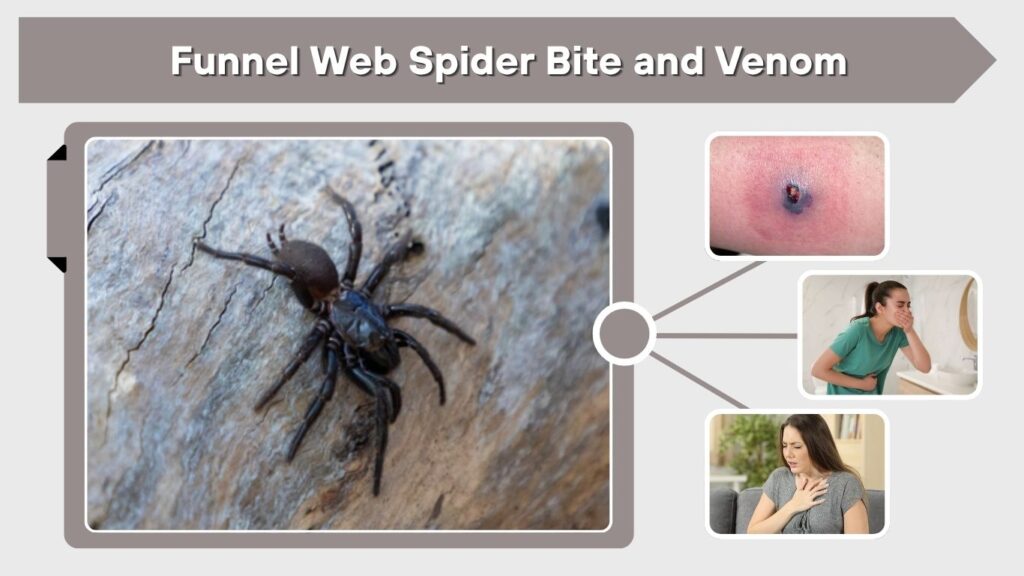
Funnel web spider bites are a major search topic because the Sydney funnel-web spider has a dangerous reputation. The risk depends on the species and location. Australian funnel-web bites can be serious and require emergency care, while most American funnel-weaver bites are far less concerning and usually not life-threatening.
Sydney Funnel-Web Spider Bite
A Sydney funnel-web spider bite can be medically serious. The venom affects the nervous system and may cause severe symptoms if not treated quickly. Anyone bitten by a suspected Australian funnel-web spider should treat it as an emergency, apply pressure-immobilisation first aid, and seek medical help immediately.
Funnel Web Spider Bite Symptoms
Symptoms can vary, but serious Australian funnel-web bites may cause pain, sweating, nausea, breathing difficulty, muscle twitching, increased saliva, confusion, or other nervous system effects. A bite mark alone is not enough to judge danger. If the spider may be an Australian funnel-web, urgent medical care is needed.
Funnel Web Spider Antivenom
Antivenom has made funnel-web spider bites much safer than in the past. Since antivenom became available, deaths from Sydney funnel-web bites have become extremely rare or absent in modern records. However, this does not mean the bite is harmless. Fast first aid and hospital treatment are still essential.
Where Do Funnel Web Spiders Live?
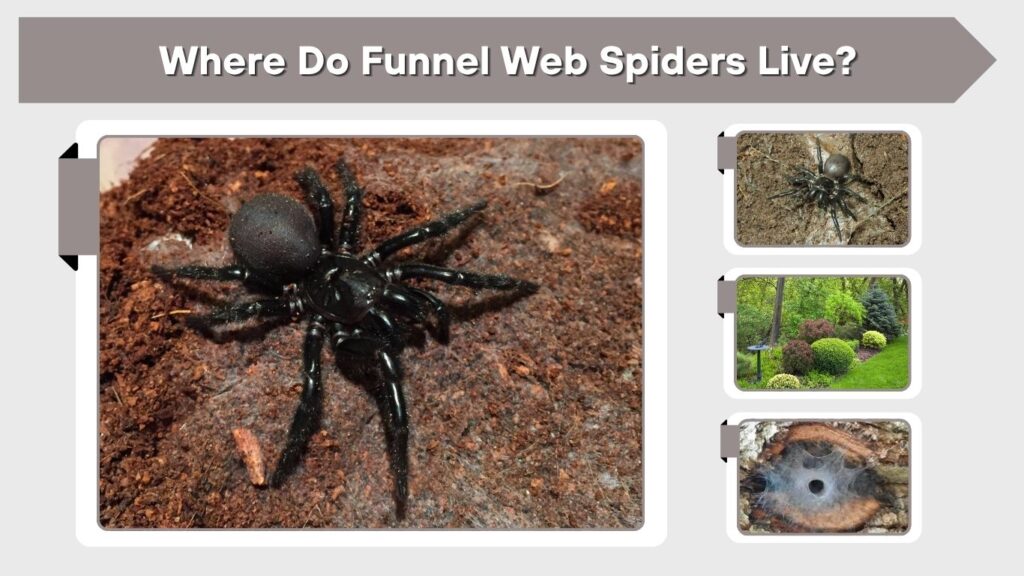
Funnel web spiders are found in different regions depending on which group you mean. Australian funnel-web spiders are mostly linked with eastern Australia, while funnel weavers and grass spiders are common in many parts of North America. Search results for states like Ohio, Texas, Georgia, California, and Florida usually refer to funnel weavers, not Sydney funnel-web spiders.
Funnel Web Spider Australia
Australian funnel-web spiders live mainly in eastern Australia. They prefer cool, moist, sheltered places such as forests, gardens, rock edges, logs, and burrows. The Sydney funnel-web spider is especially associated with the Sydney region and surrounding areas, where it may sometimes enter suburban spaces.
Funnel Web Spider USA
In the USA, “funnel web spider” usually means a funnel weaver, grass spider, or barn funnel weaver. These spiders may be found in lawns, shrubs, sheds, basements, barns, and house corners. They make funnel-shaped webs, but they are not the same as the dangerous Australian funnel-web spiders.
Funnel Web Spider in States Like Texas, Ohio, and California
Searches for funnel web spiders in Texas, Ohio, California, Florida, Georgia, Michigan, North Carolina, Oregon, Colorado, and Arizona usually involve local funnel weavers. These spiders can look alarming because of their webs and speed, but they should not be confused with the Sydney funnel-web spider.
Are Funnel Web Spiders Aggressive?
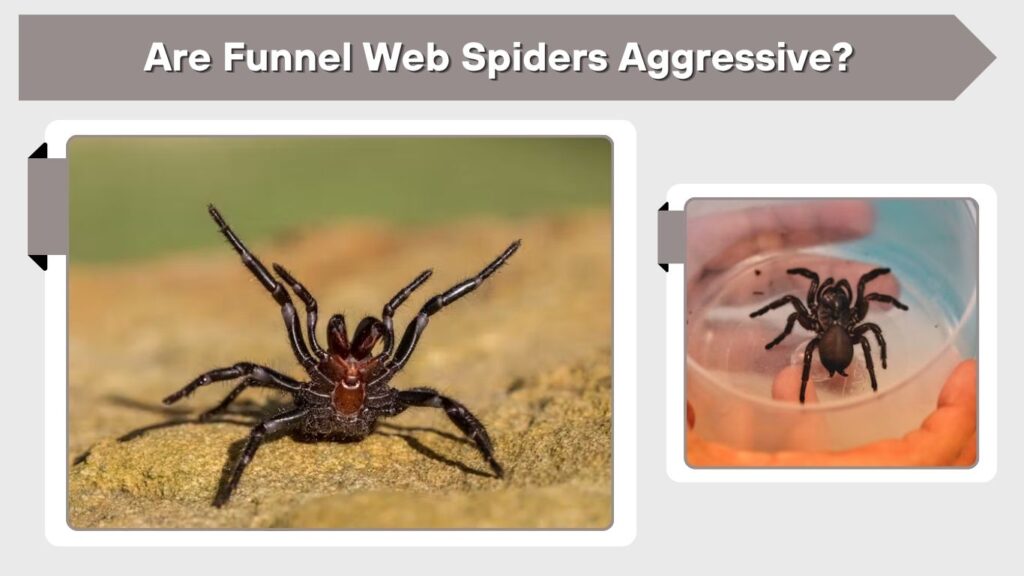
Funnel web spiders are often described as aggressive, but that word can be misleading. They do not chase humans to attack. Their defensive behavior happens when they feel trapped, threatened, or disturbed. The Sydney funnel-web spider is dangerous because it can deliver a serious defensive bite, not because it actively hunts people.
Why They Seem Aggressive
Australian funnel-web spiders may rear up, expose their fangs, and strike if threatened. This defensive display makes them look aggressive. In reality, they are trying to protect themselves. Most encounters happen when people accidentally disturb a spider in a garden, shoe, laundry area, pool, or dark corner.
Do Funnel Web Spiders Chase People?
Funnel web spiders do not chase people as prey. They may move quickly when disturbed, and males may wander during mating season, which increases human encounters. If you see one, keep distance, avoid handling it, and contact local experts or pest services if it is inside the home.
Why Aren’t Funnel Web Spider Bites Fatal to Dogs?
Dogs and some other animals may react differently to funnel-web venom than humans. Venom effects depend on the species bitten, dose, bite location, and animal biology. Even so, pets should not be allowed to interact with spiders. If a pet is bitten by a suspected funnel-web spider, contact a veterinarian quickly.
What to Do If Bitten by a Funnel Web Spider
A suspected Australian funnel-web spider bite should be treated as a medical emergency. The most important steps are to stay calm, limit movement, apply correct first aid, and get professional medical help. Do not wait for severe symptoms before acting, especially in Australia or areas where dangerous funnel-web spiders occur.
Emergency Steps
- Call emergency services immediately.
- Keep the bitten person as still as possible.
- Apply a firm pressure bandage over the bite area.
- Immobilize the limb with a splint if possible.
- Do not wash the bite site if venom identification may be needed.
- Do not cut, suck, or apply ice to the bite.
- Get to the hospital as quickly as possible.
- Bring a photo of the spider if safe, but do not risk another bite.
If You Are in the United States
If you are in the United States, the spider is more likely to be a funnel weaver than an Australian funnel-web spider. Still, bites can cause pain, redness, or irritation. Clean the area, monitor symptoms, and seek medical help if there is severe pain, allergic reaction, infection signs, or uncertainty about the spider.
Prevention Tips
Wear gloves when moving logs, rocks, or garden debris in areas where dangerous spiders live. Check shoes, towels, and outdoor items before use. Keep yards clear of clutter and avoid placing hands into dark holes or hidden spaces. Never pick up a suspected funnel-web spider with bare hands.
FAQs
What is a funnel web spider?
A funnel web spider is a spider associated with a funnel-shaped web or retreat. The name may refer to dangerous Australian funnel-web spiders or to funnel weavers and grass spiders in other countries. The meaning depends strongly on location and spider type.
Is the Sydney funnel-web spider dangerous?
Yes, the Sydney funnel-web spider is considered dangerous to humans. Its venom can cause serious illness, especially if untreated. Anyone bitten by a suspected Sydney funnel-web spider should use pressure-immobilisation first aid and seek emergency medical care immediately.
Are funnel web spiders found in the USA?
True Australian funnel-web spiders are not native to the United States. In the USA, “funnel web spider” usually refers to funnel weavers, grass spiders, or barn funnel weavers. These spiders make funnel-shaped webs but are different from the medically dangerous Australian species.
What does a funnel web spider web look like?
A funnel web spider web often looks like a flat sheet with a tunnel or funnel-shaped retreat at one side. The spider hides inside the tunnel and comes out when prey moves across the web. These webs are common in grass, shrubs, corners, sheds, and garden areas.
What should I do if bitten by a funnel web spider?
If you are in Australia or suspect an Australian funnel-web spider bite, call emergency services, keep still, apply a pressure bandage, immobilize the limb, and go to hospital. If you are outside Australia, clean the bite and seek medical help if symptoms are severe or uncertain.