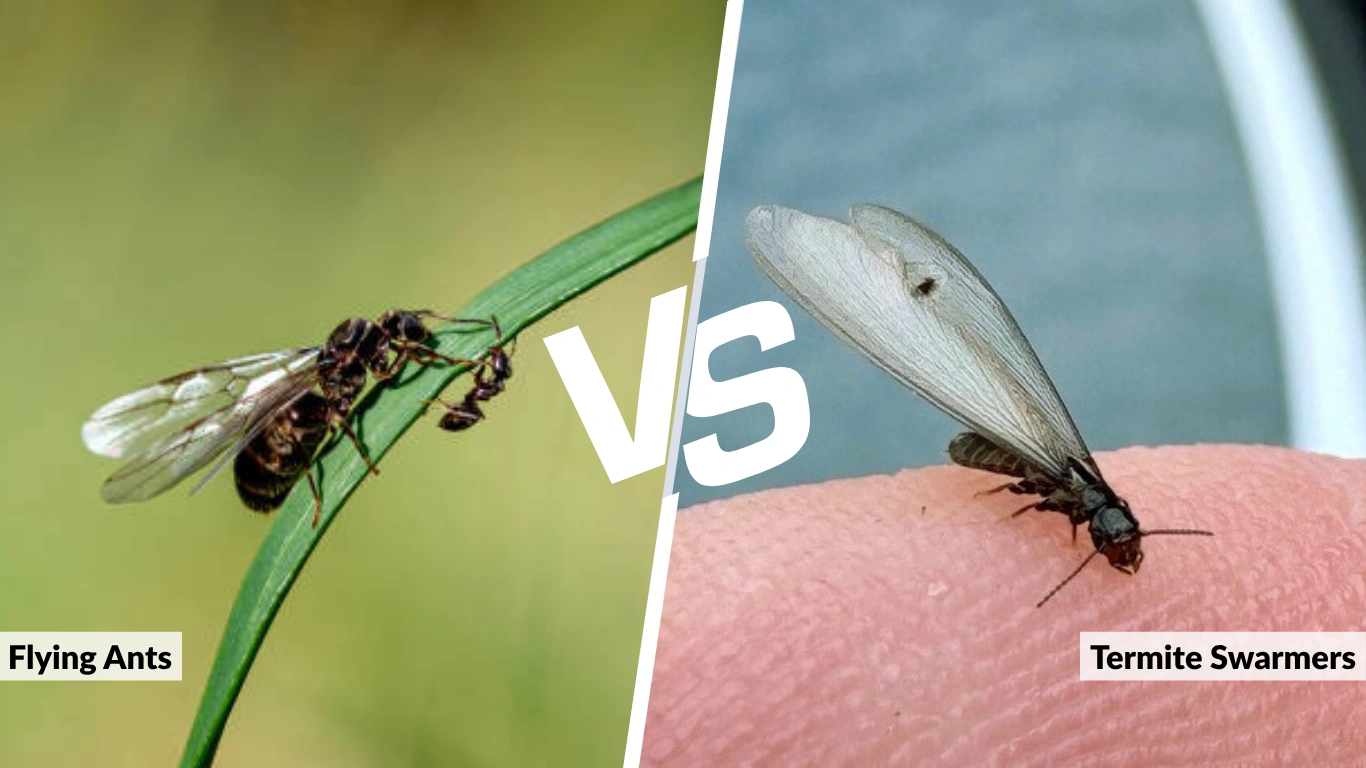
Flying ants and termites often look almost identical, especially when they swarm during warm, humid weather. These insects appear suddenly around lights, windows, and walls, creating confusion for homeowners. Yet, knowing which pest you’re dealing with is crucial—termites can silently destroy wood structures, while flying ants are mostly harmless. This guide helps you accurately identify them, understand key differences, and choose the right control method for your home.
Why People Confuse Flying Ants and Termites

Flying ants and termites have similar behavior patterns, particularly during their reproductive season. Both develop wings for a short time, usually after rain, and fly in swarms to mate and start new colonies. Their similar size and color make them hard to tell apart at a glance.
However, the main distinction lies in their biology and purpose:
- Flying ants are temporary swarmers that signal a colony’s maturity.
- Termites are destructive wood-feeding pests that can cause structural damage.
While flying ants are a seasonal nuisance, termites are a long-term threat to your property.
Physical Appearance: Flying Ants vs Termites

At first glance, flying ants and termites appear nearly identical in size, but their body shapes reveal clear distinctions.
2.1 Body Structure Comparison
| Feature | Flying Ants | Termites |
| Waist | Narrow, pinched waist between body segments | Broad, straight waist with no narrowing |
| Antennae | Bent or elbow-shaped | Straight, beaded antennae |
| Wings | Front pair longer than rear pair | Both wings are equal in size and shape |
| Color | Brown, black, or reddish | Creamy white to pale brown |
| Body Texture | Hard, shiny exoskeleton | Soft and fragile body |
Flying ants often look slimmer and more segmented, while termites have thicker bodies that appear uniform.
2.2 Flying Ant Wings vs Termite Wings
Wing structure is another key difference:
- Termite wings are identical in length, fragile, and fall off easily after swarming.
- Flying ant wings are uneven, with longer front wings and shorter back ones.
- You may find discarded termite wings near windows or doors after a swarm, signaling an active nest nearby.
If you notice wing piles indoors, it’s usually a warning sign of termites nesting within walls or flooring.
Flying Ants vs Termites in Behavior and Habitat

Beyond their looks, behavior and nesting preferences make it easier to tell them apart.
- Flying ants prefer dry areas and are often seen around lights, windows, or gardens. They feed on nectar, crumbs, or sugary substances but rarely damage wood.
- Termites, on the other hand, live in damp, dark spaces and feed on cellulose—wood, paper, and drywall. They create mud tunnels for travel and moisture retention.
- While flying ants form visible colonies outdoors, termites often remain hidden, feeding inside wooden structures and weakening them from within.
Spotting flying ants usually means a temporary mating swarm, but termites indicate ongoing structural infestation.
Regional Variations: Florida, California & Australia

Different climates influence how and when flying ants and termites appear. Recognizing regional behavior patterns can help with prevention and early detection.
4.1 Flying Ants vs Termites in Florida
Florida’s humid climate supports both subterranean termites and flying carpenter ants.
- Termites are active year-round, especially after rain, and build mud tubes along walls or foundations.
- Flying ants swarm near lights and pools during summer evenings.
To distinguish them, look for mud tunnels—a clear sign of termite presence.
4.2 Flying Ants vs Termites in California
In California, drywood termites are more common, thriving in warm, dry attics and wooden furniture.
- These termites cause slow but steady wood damage.
- Flying ants in the region emerge after spring rain and are mostly outdoor pests.
If you find small piles of powdery dust, it’s likely termites rather than ants.
4.3 Flying Ants vs Termites in Australia
Australia experiences intense swarming after summer thunderstorms.
- Termites, often called white ants, attack garden posts, decks, and foundations.
- Flying ants usually stay outdoors, nesting in soil or decaying wood but rarely entering homes.
Due to high termite activity, regular pest inspections are essential for Australian homeowners.
Flying Carpenter Ants vs Termites

Flying carpenter ants are often mistaken for termites due to their size and wood-related nesting habits. However, they differ in how they interact with wood.
- Carpenter ants excavate wood to build tunnels but don’t eat it. Their damage looks like smooth, clean galleries.
- Termites, in contrast, actually consume wood, leaving behind rough, hollowed structures and dirt-filled tunnels.
- Carpenter ants prefer moist or decaying wood, while termites can infest both dry and damp timber.
If you find wood shavings or sawdust-like debris, it’s a carpenter ant infestation. If you notice hollow wood that crumbles when tapped, termites are to blame.
Flying Ants vs Termite Swarmers

Both insects produce winged reproductives—known as swarmers—during mating season, but their behavior differs greatly.
- Flying ants swarm outdoors, gathering around lights, gardens, or patios. Their swarming typically lasts a few hours.
- Termite swarmers often appear indoors, emerging from walls, floor cracks, or vents after rain.
- Termites shed their wings soon after mating, leaving visible piles near windowsills or vents.
- Flying ants may continue flying or retreat to outdoor colonies.
If you notice large swarms indoors, especially with wing piles afterward, it’s likely a termite problem requiring immediate attention.
Identifying Termite Damage vs Flying Ant Activity
Recognizing the signs of termite activity early can save thousands in repairs. While flying ants leave behind minimal traces, termites cause visible structural destruction.
- Termite damage: Wood sounds hollow when tapped, paint may bubble, and you might notice mud tubes along walls or foundations. Termites also create maze-like tunnels inside wood.
- Flying ant signs: Small sawdust piles, visible holes in walls or wood, and occasional ant sightings near windows or lights.
- Additional clues: Termites remain hidden, but flying ants are active and visible. If you see discarded wings indoors, it’s a strong indication of termite swarmers.
When in doubt, inspect wooden beams, skirting boards, and attic frames for subtle hollow spots or peeling surfaces.
How to Get Rid of Flying Ants vs Termites

Both pests require different treatment strategies. Termites need aggressive control, while flying ants can often be handled with simple methods.
8.1 For Flying Ants
- Use bait traps: Place near entry points and windows to attract and poison ants.
- Spray natural repellents: A vinegar or peppermint oil mix disrupts their scent trails.
- Seal entry cracks: Close openings around walls and vents to block access.
- Vacuum and clean: Remove visible ants and immediately discard the vacuum bag.
- Maintain dry surroundings: Reduce humidity and fix leaks that attract swarming ants.
These steps control minor infestations and prevent new colonies from forming indoors.
8.2 For Termites
- Install termite bait systems: Place bait stations around the foundation to kill colonies.
- Apply liquid barriers: Use termiticides that create protective zones around your property.
- Remove wood contact: Keep firewood and wooden furniture away from soil.
- Hire professionals: For severe infestations, pest control experts use thermal imaging and soil treatment to destroy colonies.
- Prevent reinfestation: Regularly inspect for mud tubes and seal any foundation gaps.
Termites often operate invisibly for years, so proactive monitoring is essential even after treatment.
Pictures & Identification Reference
Visual identification helps homeowners distinguish flying ants from termites more confidently.
Include clear, close-up images of:
- Flying ants vs termites (side-by-side): Highlight differences in body shape and wings.
- Termite swarmers: Focus on straight antennae and equal-sized wings.
- Flying carpenter ants: Show larger body size and bent antennae.
- Wing comparison: Display termite wings overlapping evenly, unlike ants’ uneven pair.
Using these visual cues can make at-home identification much easier during swarm season.
Prevention Tips for Both Insects
A clean, dry environment is the best defense against both flying ants and termites. Preventive care ensures you never face large infestations again.
- Fix leaks and moisture issues: Both pests thrive in damp conditions.
- Store wood properly: Keep timber, mulch, and firewood at least 20 feet from your home.
- Seal entry points: Caulk gaps in doors, walls, and window frames.
- Reduce outdoor lighting: Flying insects are strongly attracted to bright lights at night.
- Schedule yearly inspections: Pest control professionals can detect termite colonies before visible damage occurs.
Consistent monitoring and maintenance can help safeguard your property from expensive damage and recurring infestations.
FAQs
How can I tell if I have flying ants or termites?
Flying ants have bent antennae, narrow waists, and two wings of different lengths. Termites have straight antennae, thick bodies, and wings of equal size. Observing these traits under light can help you identify which pest has invaded your space.
Which causes more damage—flying ants or termites?
Termites are far more destructive since they feed on wood and can silently hollow out structures over time. Flying ants only nest in wood and cause minor cosmetic damage, making termites the greater long-term threat to homes.
What do flying termites look like?
Flying termites, also known as swarmers, have pale brown bodies, straight antennae, and equal-length wings. They usually emerge after rain or during humid weather and often shed their wings indoors near windowsills or vents.
How can I get rid of termites and flying ants together?
Use ant bait traps and natural sprays for flying ants, and professional-grade bait or barrier systems for termites. Treat both nests separately, keep the house dry, and seal cracks to prevent re-entry. If the problem persists, contact a pest control specialist.
Do both flying ants and termites swarm after rain?
Yes. Both insects swarm during humid conditions, typically after rainfall. Flying ants do so to mate and expand their colony, while termites swarm to establish new colonies—often signaling an existing infestation nearby that needs immediate action.