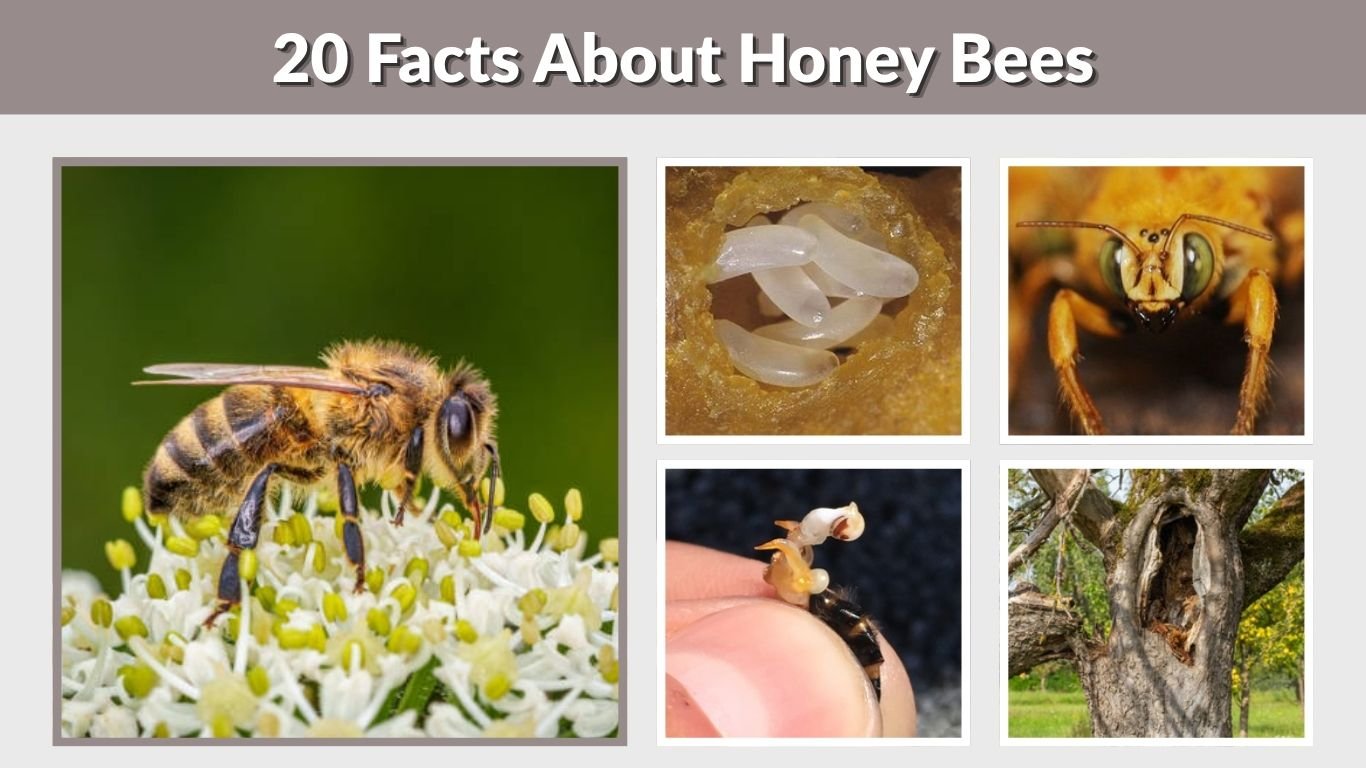
Honey bees are remarkable social insects that produce honey, pollinate flowering plants, and communicate through movement and scent. A healthy colony functions as an organized community containing a queen, thousands of female workers, and seasonal male drones. Every bee performs tasks that support the survival of the entire colony. From seeing ultraviolet patterns to controlling the hive’s temperature, honey bees possess many surprising adaptations. These 20 facts explore their bodies, behavior, honey production, social organization, life cycle, and ecological importance.
Facts About the Honey Bee Colony
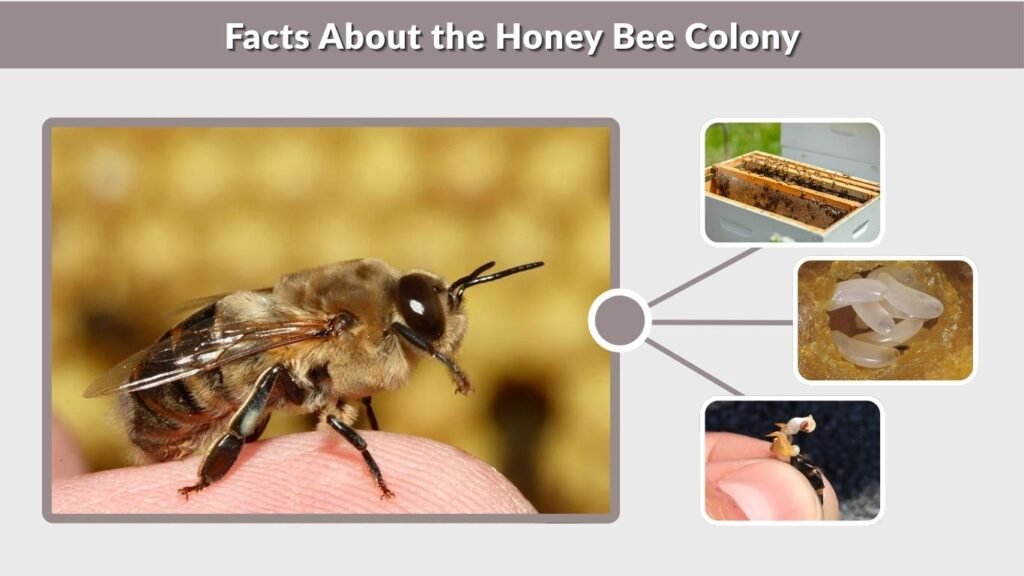
A honey bee colony operates almost like one large organism. Individual bees perform specialized duties based on their sex, age, and the colony’s needs. No single bee can maintain the nest alone; survival depends on communication and cooperation among the queen, workers, and drones.
1. A Colony Contains Three Types of Bees
A honey bee colony contains a queen, female workers, and male drones. The queen lays eggs, while workers perform nearly every other essential job. Drones are produced mainly to mate with queens from other colonies.
A strong colony can contain tens of thousands of workers during its busiest season. The number drops considerably when flowers become scarce or winter approaches.
2. Nearly All Bees in a Hive Are Female
Worker bees are females, and they make up most of the colony. They clean cells, feed larvae, build wax comb, guard the entrance, process nectar, regulate temperature, and collect food.
Workers are not normally able to mate. Their reproductive development is suppressed by the queen’s pheromones and the social organization of the colony.
3. The Queen Can Lay Thousands of Eggs
During periods of rapid colony growth, a productive queen may lay around 1,500–2,000 eggs in one day. Her daily egg production can equal a substantial portion of her body weight.
The queen does not control the colony like a human ruler. Workers regulate her feeding, prepare brood cells, and influence how much brood the colony can support.
4. A Queen Stores Sperm for Years
A young queen takes one or more mating flights and mates with multiple drones in the air. She stores sperm inside a specialized organ called the spermatheca.
This supply allows her to fertilize eggs for the remainder of her productive life without mating again. Fertilized eggs normally develop into females, while unfertilized eggs become male drones.
5. The Colony Recognizes Its Members by Smell
Every colony has a characteristic odor created by its queen, workers, stored food, wax, and surrounding environment. Guard bees use scent to help determine whether an approaching bee belongs to their colony.
A worker from another hive may be rejected, especially when she attempts to steal honey. However, guards may accept nectar-carrying drifters more readily than empty intruders.
Amazing Facts About Honey Bee Bodies
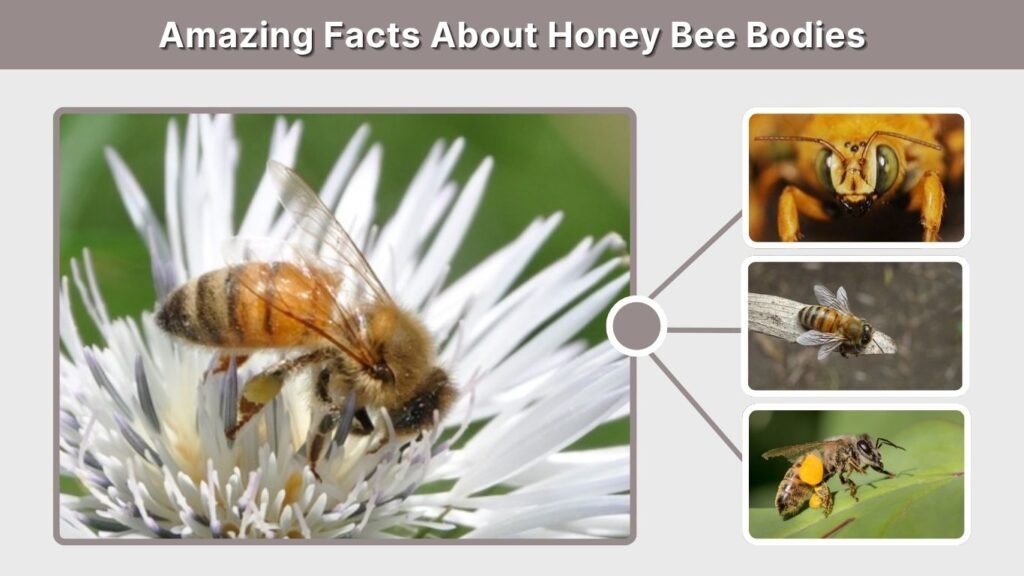
Despite their small size, honey bees have complex sensory systems and specialized body structures. Their eyes, antennae, wings, legs, and mouthparts help them locate flowers, communicate, carry food, construct comb, and navigate between the hive and distant foraging locations.
6. Honey Bees Have Five Eyes
A honey bee has two large compound eyes and three smaller simple eyes called ocelli. The compound eyes contain thousands of visual units that detect patterns, colors, movement, and polarized light.
The ocelli are located on top of the head. They primarily detect changes in light intensity and assist with orientation rather than producing detailed images.
7. Bees Can See Ultraviolet Light
Honey bees can detect ultraviolet wavelengths that humans cannot see. Many flowers have ultraviolet markings called nectar guides that direct pollinators toward nectar and pollen.
Bees see blue, green, and ultraviolet especially well, but they do not perceive red in the same way humans do. A red flower may appear dark unless it also reflects ultraviolet light.
8. Their Antennae Detect Smell, Taste, and Movement
A bee’s two antennae are covered with sensory receptors. They detect floral odors, pheromones, humidity, temperature, carbon dioxide, air movement, and physical contact.
Bees use their antennae when communicating inside the dark hive. Workers may touch one another while exchanging food or gathering information about nectar collected by returning foragers.
9. Four Wings Function Like Two
Honey bees possess two pairs of wings. Tiny hooks called hamuli connect each smaller hind wing to the larger forewing during flight. The linked wings then operate together as one broad surface on each side.
The hooks separate when the bee is resting. Rapid wing movement creates the familiar buzzing sound heard around flowers and hive entrances.
10. Workers Carry Pollen in Baskets
A worker has specialized structures called corbiculae, or pollen baskets, on her hind legs. She moistens collected pollen with nectar and packs it into these smooth areas.
The colorful pollen loads visible on a worker’s legs may be yellow, orange, red, cream, gray, or green depending on the plants she visited. Inside the hive, other workers remove and store the pollen.
Fun Facts About Bees and Honey
Honey is a concentrated food reserve that allows colonies to survive when flowering plants are unavailable. Creating it requires many workers performing different tasks. Foragers gather nectar, house bees add enzymes, and other workers circulate air until the stored liquid contains much less water.
11. Honey Begins as Flower Nectar
A forager draws nectar from flowers with her proboscis and stores it inside a special expandable crop commonly called the honey stomach. This organ is separate from the stomach primarily used for digestion.
After returning home, the forager transfers the nectar to another worker. The liquid may pass between several bees before being deposited into a honeycomb cell.
12. Bees Change Nectar With Enzymes
Enzymes added by worker bees begin breaking complex nectar sugars into simpler sugars. This chemical process helps transform nectar into a more stable food.
Workers spread the liquid across cells and fan their wings to circulate air. As water evaporates, the nectar becomes thicker and more resistant to fermentation. Mature honey is sealed beneath a wax capping.
13. Bees Make Honey to Survive Food Shortages
Honey is the colony’s stored carbohydrate supply. Bees consume it during winter, drought, heavy rain, and other periods when foraging is impossible or flowers are scarce.
The energy supports flight, wax production, brood care, and temperature regulation. Honey bees do not produce honey for humans; beekeepers harvest only the surplus that a colony can safely lose.
14. Beeswax Comes From Worker Bees
Young workers produce tiny wax scales from glands on the underside of their abdomens. They soften and shape the wax with their mouthparts, gradually forming the hive’s hexagonal cells.
Producing wax requires substantial energy. The finished cells are used to raise young bees and store nectar, mature honey, and pollen.
15. Honey Can Remain Stable for a Long Time
Honey’s low moisture, high sugar concentration, and acidic composition make it difficult for many microorganisms to grow. Properly sealed honey may remain usable for a remarkably long period.
Honey can crystallize as glucose forms solid crystals, but crystallization does not mean it has spoiled. Its texture and crystallization speed vary according to its floral source and storage temperature.
Interesting Facts About Honey Bee Behavior
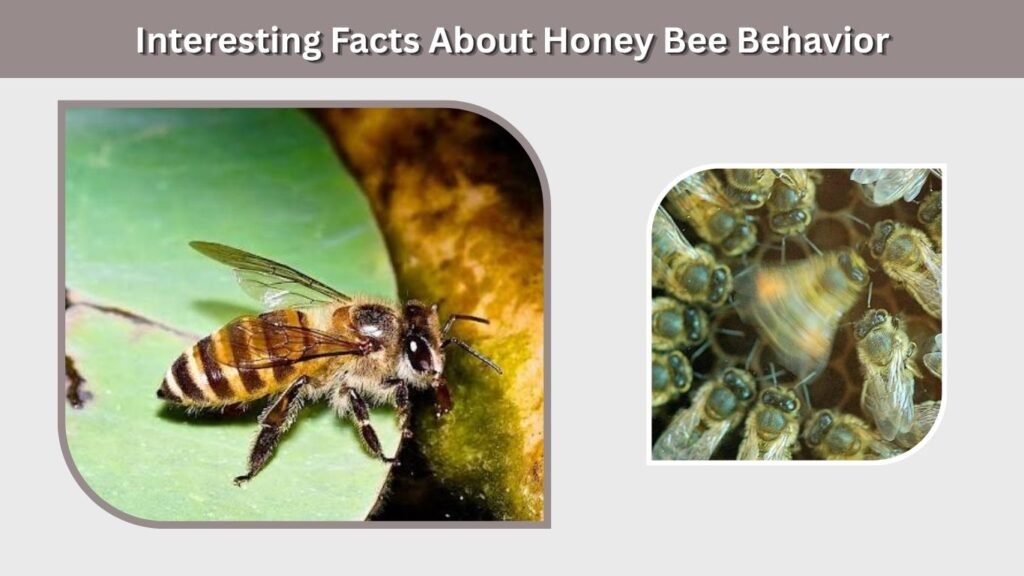
Honey bees coordinate food collection, reproduction, nest maintenance, and defense through dances, vibrations, pheromones, and food exchanges. Their collective decisions emerge from thousands of interactions rather than commands from one controlling individual.
16. Honey Bees Perform a Waggle Dance
A returning forager can perform a waggle dance to communicate the location of a valuable food or water source. The dance’s direction relates to the source’s direction compared with the sun, while its duration provides information about distance.
Other workers follow the dancer, detect floral odors on her body, and then fly out to locate the resource.
17. Workers Change Jobs as They Age
Young workers usually begin by cleaning cells and tending brood. They later produce wax, process nectar, guard the entrance, and ventilate the hive.
Older workers commonly become foragers and leave the colony to collect nectar, pollen, water, and plant resins. This progression is flexible. Workers can change duties when the colony suddenly needs more nurses or foragers.
18. Bees Control Their Hive’s Temperature
Workers maintain the brood area near the temperature required for healthy development. During cold weather, they cluster and vibrate their flight muscles to generate heat.
When the hive becomes hot, bees collect water, spread droplets, and fan their wings. Evaporation cools the interior. Some workers may gather outside in a formation called bearding to reduce internal crowding.
19. Summer Workers Have Short Lives
A busy summer worker may live for only five to seven weeks. Foraging is physically demanding, and wings gradually become worn or damaged.
Workers produced before winter can live for several months because they forage less and develop larger nutritional reserves. Queens may survive for several years, while drones generally have much shorter adult lives.
20. Swarming Is Colony Reproduction
When a colony becomes strong and crowded, the old queen may leave with a large group of workers. The swarm temporarily gathers on a tree or another surface while scouts search for a new home.
The original colony raises a replacement queen. One colony has now become two, allowing the honey bee population to expand into another nesting site.
Honey Bee Habitat and Pollination
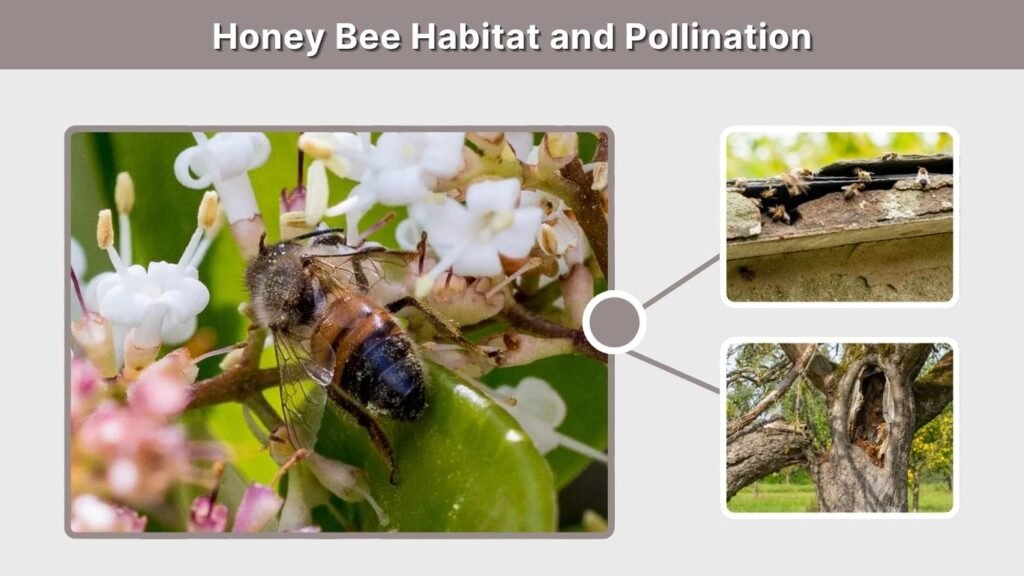
Honey bees can live anywhere that provides flowering plants, water, and a protected nesting cavity. Managed colonies occupy artificial hives, while feral colonies often choose hollow trees, wall cavities, rock openings, and other enclosed spaces.
Why Honey Bees Are Important
Honey bees pollinate many crops and wild plants as they move pollen between flowers. Their agricultural contributions include fruits, nuts, vegetables, herbs, seeds, and animal-feed crops.
However, honey bees are only one part of the pollinator community. Bumblebees, solitary bees, butterflies, moths, beetles, flies, birds, and bats also provide essential pollination. Protecting diverse habitats benefits both managed honey bees and native pollinators.
FAQs
How many honey bees live in one hive?
A strong colony may contain tens of thousands of bees during spring or summer. Its population becomes smaller during winter or periods of limited food.
How long does a honey bee live?
Summer workers commonly live around five to seven weeks, while winter workers may survive for several months. Queens can live for several years.
Do all bees make honey?
No. Honey bees and some stingless bees produce stored honey. Most solitary bees create small nectar-and-pollen provisions for larvae rather than harvestable honey.
Can honey bees recognize people?
Honey bees can learn visual patterns, colors, and odors. They may learn to distinguish certain human faces in experiments, although their recognition differs from the way humans identify one another.
Do honey bees sleep?
Yes. Honey bees experience periods of sleep and reduced activity. Foragers commonly sleep at night, while younger workers may rest at different times inside the hive.