
The early signs of bed bugs on a mattress can be difficult to notice, especially when an infestation is just beginning. Tiny black spots, reddish stains, shed skins, and small insects hiding along mattress seams are common warning signs. Bed bugs often remain concealed during the day, making careful inspection important. Identifying an infestation early can prevent the insects from spreading throughout your home. This guide explains what bed bug evidence looks like, where to inspect your mattress, and what steps to take if you discover suspicious signs.
What Are the Early Signs of Bed Bugs on a Mattress?
The first signs of bed bugs on a mattress often appear near seams, edges, and fabric folds where these insects hide. During an early infestation, you may notice only a few tiny marks rather than visible insects. Recognizing physical evidence is more reliable than identifying bites alone because many other insects and skin conditions cause similar reactions.
7 Early Signs of Bed Bugs on a Mattress
Look for these warning signs:
- Tiny black spots: Dark fecal marks that may resemble small ink dots on mattress fabric.
- Reddish-brown stains: Rust-colored marks sometimes caused by crushed, blood-fed bed bugs.
- Shed skins: Pale yellow or translucent outer coverings left behind as young bed bugs grow.
- Small white eggs: Tiny, approximately 1 mm eggs attached to protected surfaces.
- Live bed bugs: Small, flattened, oval insects with six legs and reddish-brown bodies as adults.
- Empty eggshells: Whitish shells remaining after bed bug eggs hatch.
- Unusual odor: A sweet, musty smell sometimes associated with heavier infestations.
These signs are useful clues, but identifying an actual bed bug provides stronger confirmation.
What Do the First Signs Usually Look Like?
In mild infestations, dark fecal spots or a small number of live insects may be the first noticeable evidence.
Eggs and shed skins can be difficult to recognize without good lighting. A strong odor is generally not a dependable early warning sign.
How to Check a Mattress for Bed Bugs
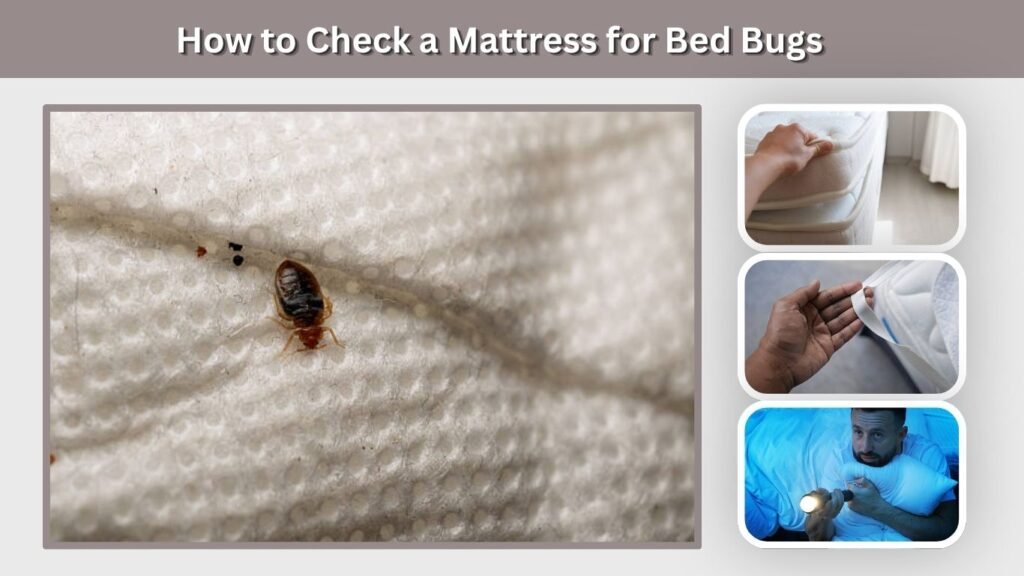
Inspecting a mattress requires careful attention because bed bugs can hide inside extremely narrow spaces. They generally prefer protected areas close to sleeping people, including mattress piping, fabric seams, and bed frames. A quick examination of the mattress surface may miss an infestation. Using a flashlight and checking surrounding furniture improves the chances of discovering hidden insects or their traces.
Step-by-Step Mattress Inspection
Follow these steps:
- Remove bedding: Carefully inspect sheets, blankets, and pillowcases for dark spots or insects.
- Check mattress seams: Examine stitched edges, piping, and folded fabric.
- Inspect mattress labels: Look underneath tags and fabric attachments.
- Examine mattress corners: Check creases and protected areas around the edges.
- Look underneath: Carefully inspect the underside of the mattress.
- Inspect the box spring: Check fabric folds, joints, and accessible interior edges.
- Use a flashlight: Illuminate narrow spaces where insects may remain hidden.
Avoid moving potentially infested bedding into other rooms during inspection.
Where Do Bed Bugs Hide Around a Mattress?
Bed bugs do not necessarily remain inside the mattress. They commonly hide around bed frames, headboards, box springs, and nearby furniture.
Small cracks in wooden furniture, screw holes, and joints provide suitable hiding places.
In more established infestations, insects may spread into baseboards, upholstered chairs, and other protected spaces.
Can You Have Bed Bugs Without Signs on Your Mattress?
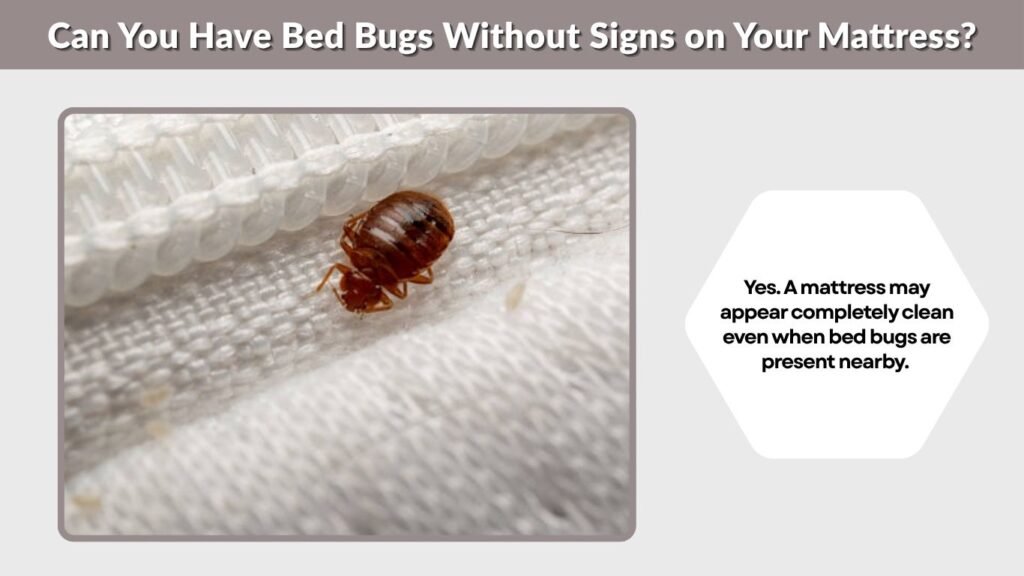
Yes. A mattress may appear completely clean even when bed bugs are present nearby. Early infestations are particularly difficult to detect because the insects can remain hidden for long periods. Sometimes, people discover unexplained skin irritation before noticing physical evidence. However, itchy bumps alone are insufficient to confirm bed bugs, and other possible explanations should also be considered.
Why Are There No Visible Bed Bugs?
Bed bugs typically hide during daylight hours and emerge to feed when a host is available.
A small infestation may contain only a few insects occupying hidden locations around the bed.
Repeated inspections, bed bug interceptors, and professional identification can help reveal activity that an initial mattress examination misses.
Are Blood Stains Always a Sign of Bed Bugs?
No. Blood spots on sheets or mattresses can have several causes, including scratched skin, minor injuries, and other sources.
Similarly, small black marks may come from dirt, fabric debris, or unrelated insects.
Suspicious stains become more meaningful when accompanied by live bed bugs, eggs, or shed skins.
Signs of Bed Bugs on Different Mattress Types
Bed bugs can occur around traditional mattresses, memory foam mattresses, air mattresses, and beds protected by mattress covers. Although mattress materials differ, these insects generally seek narrow, sheltered hiding places near sleeping people. Even a newly purchased mattress can become exposed to bed bugs already present in a room. Understanding the differences helps homeowners inspect each bedding arrangement more effectively.
Signs of Bed Bugs on an Air Mattress
Air mattresses typically provide fewer fabric hiding places than conventional upholstered mattresses.
However, bed bugs may occupy seams, folds, valve areas, and nearby furniture or flooring.
Inspect the mattress edges and surrounding sleeping area carefully. The absence of fabric padding does not guarantee protection from infestation.
Can Bed Bugs Hide Under Mattress Protectors?
Yes. Bed bugs can hide beneath ordinary mattress protectors or along exposed edges.
A properly installed bed bug-proof encasement helps contain insects already inside the mattress and prevents new insects from entering it, provided the cover remains sealed and undamaged.
However, bed bugs can still hide on the outside of the encasement or elsewhere in the bed.
Can a New Mattress Have Bed Bugs?
A new mattress can become infested after delivery if bed bugs are already present in the home.
Exposure during transportation or storage is also possible.
Inspect new mattresses before installation, and examine the surrounding bed frame when unexplained signs continue appearing.
What to Do if You Find Bed Bugs on Your Mattress

Discovering possible bed bug evidence requires a careful response rather than immediately discarding the mattress. Moving infested furniture or bedding without precautions can spread insects throughout the property. Early action is important because smaller infestations are generally easier to manage. Confirming the insect’s identity, containing affected materials, and selecting appropriate treatment methods can improve control efforts.
Immediate Steps to Take
If you discover suspicious evidence:
- Confirm identification: Capture a specimen in a sealed container or photograph it clearly.
- Avoid moving furniture: Do not transfer potentially infested mattresses into other rooms.
- Treat washable fabrics: Use a clothes dryer on high heat for 30 minutes when the fabric permits.
- Vacuum carefully: Clean mattress seams, bed frames, and nearby cracks, then seal and dispose of vacuum contents promptly.
- Use mattress encasements: Choose covers specifically designed for bed bug control.
- Contact pest professionals: Seek qualified assistance when an infestation is confirmed or difficult to control.
Never apply outdoor pesticides, rubbing alcohol, or unapproved chemicals directly to mattresses.
Can Bed Bugs Be Removed From a Mattress?
Yes. Bed bugs can often be controlled without discarding the mattress.
Professional pest control may use appropriately labeled insecticides, heat treatment, vacuuming, and other integrated pest management methods.
Because bed bugs also hide outside mattresses, treating the mattress alone is rarely enough to eliminate an established infestation.
How Can You Prevent Another Infestation?
Regularly inspect mattress seams, bed frames, and surrounding furniture, especially after travel or purchasing secondhand items.
Use protective encasements and bed-leg interceptors where appropriate.
Avoid bringing discarded mattresses or upholstered furniture into your home without thorough inspection.
FAQs
Recognizing bed bugs early can be challenging because the insects are small and often remain hidden. Homeowners frequently wonder whether stains, skin reactions, or unusual mattress markings indicate an infestation. Understanding normal bed bug behavior helps distinguish reliable evidence from misleading clues. The following questions address common concerns about early detection, mattress inspection, and identifying bed bugs before an infestation becomes more widespread.
1. What Is the First Sign of Bed Bugs on a Mattress?
One early sign is small, dark fecal spots near mattress seams. Live insects, tiny eggs, and shed skins may also be present.
2. Can You See Bed Bugs on a Mattress?
Yes. Adult bed bugs are visible without magnification and are roughly the size of an apple seed. Young nymphs are smaller and harder to detect.
3. Do Bed Bugs Leave Black Spots on Mattresses?
Yes. Bed bug fecal material may leave dark brown or black spots that resemble ink marks. However, similar-looking stains can have other causes.
4. Can Bed Bugs Live Inside Memory Foam Mattresses?
Bed bugs generally cannot burrow through intact memory foam, but they can hide in seams, covers, folds, and surrounding bed structures.
5. Should You Throw Away a Mattress With Bed Bugs?
Not necessarily. Mattresses can often be treated and enclosed in suitable bed bug-proof encasements. Consult a qualified pest professional before deciding to discard one.