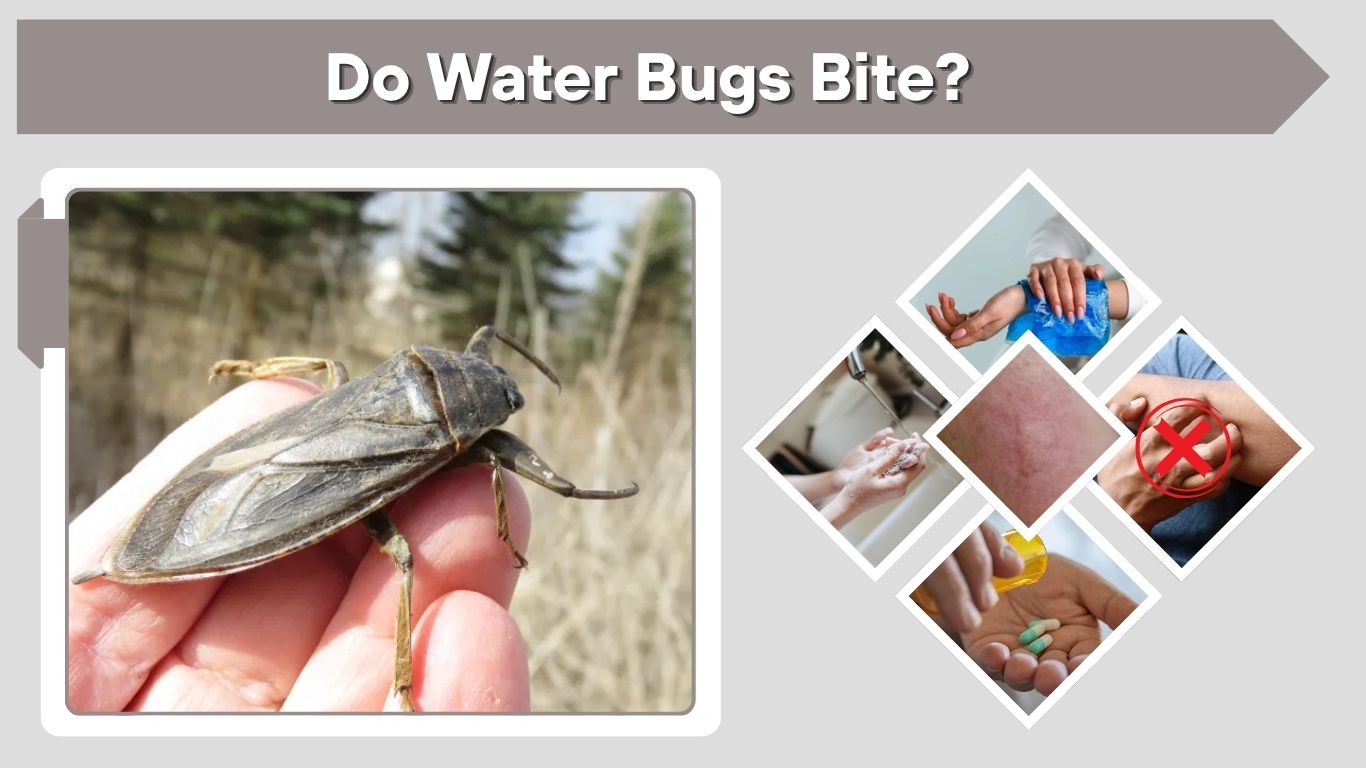
Water bugs can bite, but the answer depends on what kind of “water bug” you mean. True aquatic water bugs, especially giant water bugs, can deliver a painful bite if handled or threatened. However, many people call large cockroaches “water bugs,” and those roach-like pests rarely bite humans. Correct identification helps you understand the real risk.
Do Water Bugs Bite Humans?
Yes, some true water bugs can bite humans. Giant water bugs are the best-known example because they have a strong piercing mouthpart used to catch prey. They do not bite because they want to feed on people. Most bites happen when someone picks them up, steps on them, or accidentally traps them against the skin.
Water bugs do not sting like bees or wasps. They bite with a sharp beak-like mouthpart. The bite can feel sudden, sharp, and painful. Because of this, giant water bugs are sometimes called “toe-biters,” especially when people encounter them in shallow water.
The important thing to know is that true water bugs are not usually aggressive toward people. They prefer to avoid humans. A bite is usually defensive, not an attack.
True Water Bugs vs Roach-Like Water Bugs
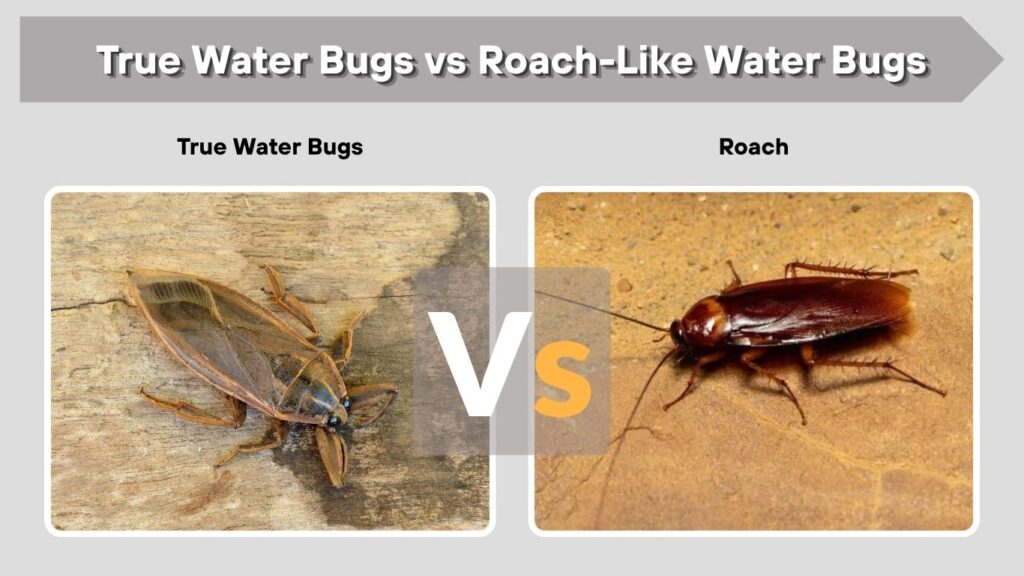
The name “water bug” causes a lot of confusion. In many homes, apartments, and cities, people use the term for large cockroaches, especially American cockroaches or Oriental cockroaches. These insects are not true aquatic water bugs.
Key Differences
| Feature | True Water Bug | Roach Called a Water Bug |
| Bite risk | Can bite if handled | Rarely bites humans |
| Habitat | Ponds, pools, wetlands, streams | Drains, basements, kitchens, bathrooms |
| Antennae | Short and less visible | Long and thin |
| Body | Broad, thick, oval | Flat, oval, fast-moving |
| Behavior | Aquatic predator | Indoor scavenger |
| Main concern | Painful defensive bite | Contamination and infestation |
If the insect has long antennae and runs quickly across the floor, it is probably a cockroach. If it has short hidden antennae, strong front legs, and was found near water, it may be a true water bug.
What Do Water Bug Bites Look Like?
A water bug bite may look like a small red mark, swollen spot, or irritated bump. In some cases, the skin may become tender around the bite area. The appearance can vary depending on the person’s skin reaction, the size of the insect, and how deep the bite was.
Common Signs
- Sharp pain at the time of the bite
- Redness around the area
- Mild swelling
- Tenderness or soreness
- Itching in some cases
- Small puncture-like mark
- Warm feeling around the bite
A water bug bite does not usually look like a line of small bites the way some bed bug bites can. It is more often a single painful bite after direct contact with the insect.
If a bite becomes very swollen, produces pus, spreads redness, or causes fever, it may be infected or reacting badly. In that case, medical advice is recommended.
Do Giant Water Bugs Bite?
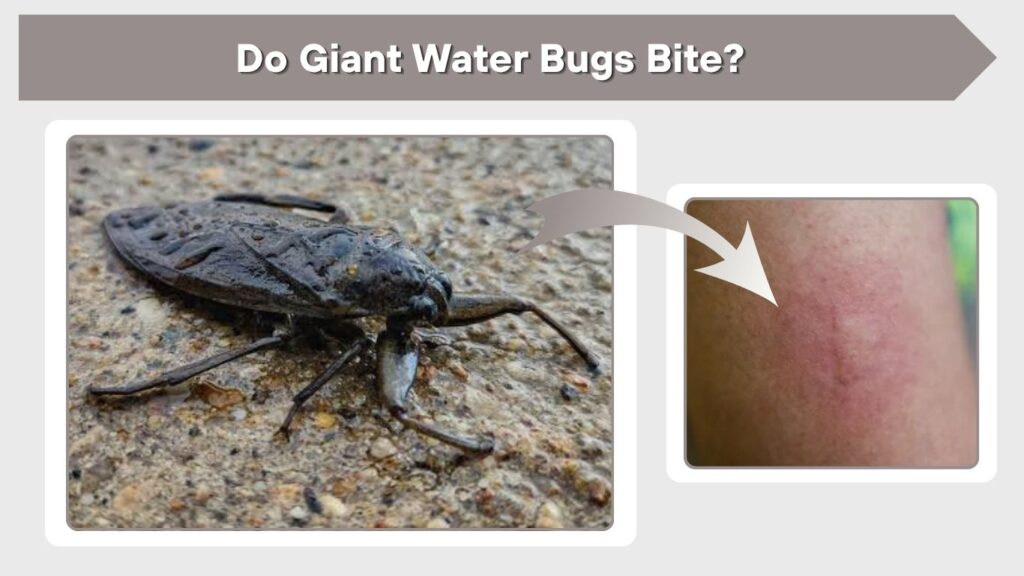
Yes, giant water bugs can bite humans. They are among the most famous biting water bugs because they are large, predatory insects. Their bite can hurt more than many common insect bites because they use a strong piercing mouthpart.
Why Giant Water Bug Bites Hurt
Giant water bugs use their mouthparts to pierce prey. They inject digestive fluids into small aquatic animals before feeding. When a person is bitten, that same piercing action can cause sharp pain.
The bite is usually not life-threatening, but it can be very uncomfortable. People often describe it as intense, burning, or stabbing. The pain may last for a short time or longer depending on the bite and individual reaction.
When Bites Happen
Most giant water bug bites happen when someone handles the insect. They may also happen in shallow water, around pools, or near outdoor lights if the insect is accidentally touched.
These insects are not hunting humans. They bite as a defense when they feel trapped.
Do Water Bugs Bite in the Pool?
Yes, true water bugs in pools can bite if they are handled or pressed against the skin. Pools can attract aquatic insects because they reflect light and resemble natural water. Water bugs may also come to pools to hunt other small insects.
However, they do not usually swim around looking for people to bite. Most pool-related bites happen when someone steps on one, grabs one, or brushes against it.
Pool Safety Tips
- Use a pool net to remove insects.
- Do not pick up water bugs with bare hands.
- Keep pool lights off when not needed.
- Use a pool cover at night.
- Remove floating debris and insects.
- Keep the pool clean and balanced.
- Reduce standing water around the yard.
If you see a large water bug in the pool, remove it carefully. Do not assume it is harmless just because it is in water.
Do House Water Bugs Bite?
A “house water bug” is often not a true water bug. Many people use this name for cockroaches that appear in bathrooms, basements, laundry rooms, and kitchens. These roaches usually do not bite humans.
American cockroaches and Oriental cockroaches may be called water bugs because they like damp areas. They may crawl near drains, pipes, floor gaps, and sewer-connected spaces. Their main risk is not biting. The bigger concern is contamination, odor, allergens, and possible infestation.
When Roaches Might Bite
Cockroach bites are rare, but they can happen in unusual situations, especially where infestations are heavy and food is limited. Even then, it is not the normal behavior most people should worry about.
If you are seeing many “water bugs” indoors, focus on identifying whether they are cockroaches. Repeated indoor sightings usually point to a pest-control issue.
Do Black Water Bugs Bite?
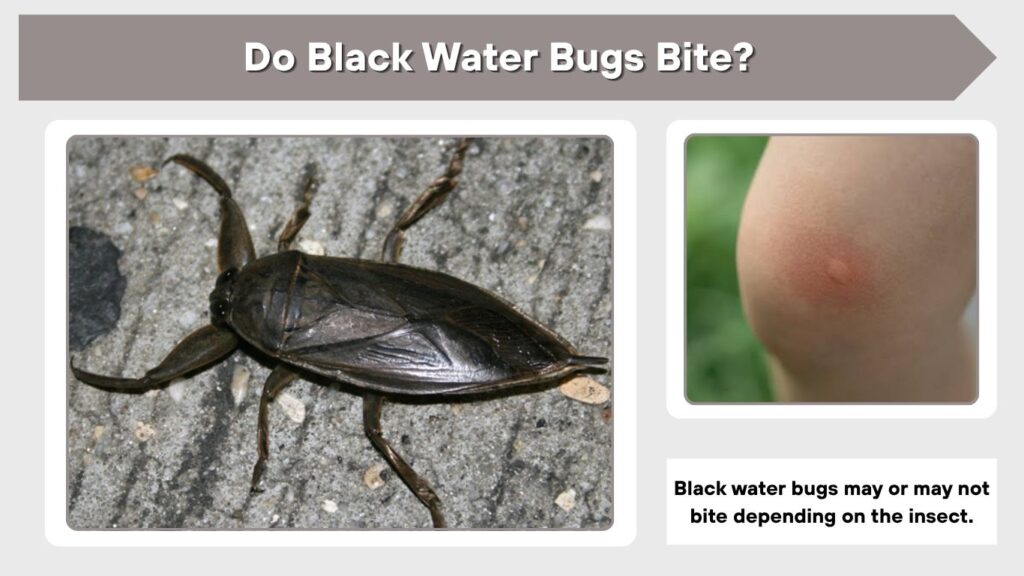
Black water bugs may or may not bite depending on the insect. A true black aquatic water bug can bite if handled. But a black “water bug” inside the house may be an Oriental cockroach, which rarely bites people.
How to Tell the Difference
- A true water bug has shorter antennae.
- An Oriental cockroach has long antennae.
- A true water bug is more likely near water or outdoor lights.
- An Oriental cockroach is more likely in damp indoor places.
- A true water bug may have strong front legs.
- An Oriental cockroach has running legs and a shiny dark body.
If the black bug is repeatedly appearing in a basement, bathroom, or drain area, it is probably a roach-like pest rather than a true water bug.
Do Small Water Bugs Bite?
Some small aquatic insects can bite or pinch, but not all are dangerous or painful. The term “small water bug” may include many different insects, such as water boatmen, backswimmers, small aquatic beetles, or young water bugs.
Water boatmen are often considered less likely to bite people, while backswimmers can bite and may cause a painful reaction. Because small water insects can look similar, it is best not to handle unknown bugs from pools, ponds, or water features.
If small insects keep appearing in a pool, cleaning, filtration, lighting, and nearby standing water should be checked.
Why Do Water Bugs Bite?
Water bugs bite mainly for defense or feeding. They do not see humans as food. True water bugs are predators that use their mouthparts to catch insects, tadpoles, small fish, and other aquatic animals.
Main Reasons for Biting
- They are picked up by hand.
- They are squeezed or trapped.
- Someone steps on them.
- They are caught in clothing or towels.
- They are disturbed in shallow water.
- They feel threatened while being removed.
A water bug bite is usually preventable. The safest rule is simple: do not touch large aquatic insects with bare hands.
How Long Do Water Bug Bites Last?
A mild water bug bite may hurt for a short time and improve within a few hours. Redness, tenderness, or swelling may last longer for some people. The duration depends on skin sensitivity, bite depth, and whether the bite area becomes irritated.
Normal Healing Signs
- Pain slowly decreases
- Redness stays small
- Swelling does not spread
- No pus appears
- No fever develops
- The area improves over time
Warning Signs
Seek medical advice if you notice spreading redness, severe swelling, increasing pain, pus, fever, dizziness, breathing difficulty, or an allergic-type reaction. These signs are not typical for a simple bite and should be taken seriously.
What to Do If a Water Bug Bites You
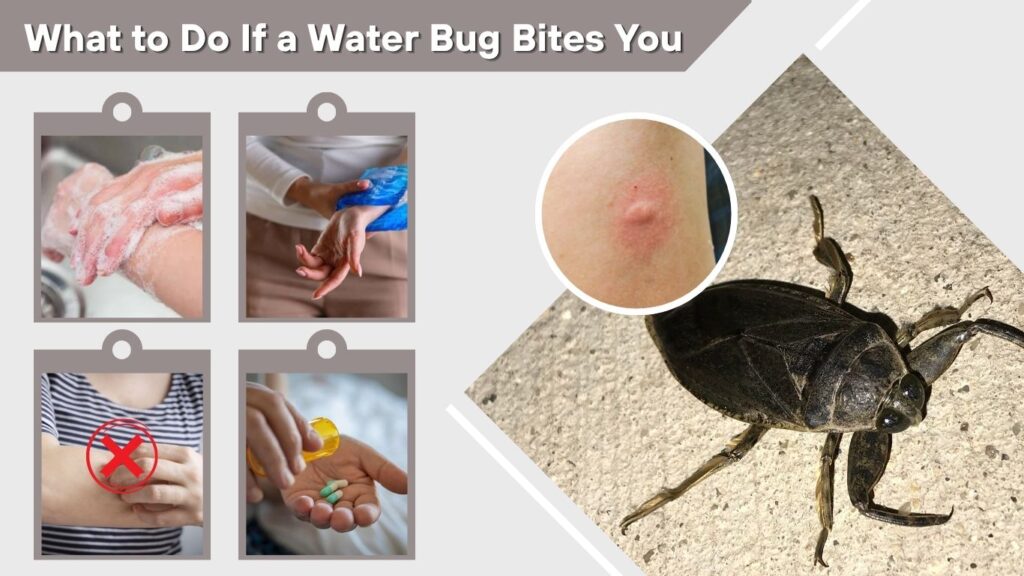
Most water bug bites can be handled with simple first aid. The goal is to clean the area, reduce pain, and prevent infection.
First Aid Steps
- Wash the bite with soap and clean water.
- Apply a cold compress for pain and swelling.
- Avoid scratching the bite area.
- Keep the area clean and dry.
- Use an over-the-counter pain reliever if needed.
- Watch for signs of infection or allergic reaction.
Do not cut the bite, squeeze it, or apply harsh chemicals. If symptoms become severe or unusual, get medical help.
Do Water Bugs Bite Dogs?
True water bugs can bite dogs if the dog tries to paw, bite, or swallow them. A curious dog may get bitten around the mouth, nose, paw, or tongue. The bite can cause sudden pain, drooling, pawing at the mouth, or swelling.
If your dog reacts strongly after contacting a large water bug, rinse the area if possible and contact a veterinarian for advice. Keep dogs away from pool insects, pond edges, and large unknown bugs.
Roach-like water bugs are less likely to bite dogs, but they can still be a sanitation concern if they are part of an indoor infestation.
How to Prevent Water Bug Bites
Preventing bites is mostly about avoiding direct contact. True water bugs usually bite only when disturbed. Around the home, prevention also means reducing the conditions that bring them close.
Prevention Tips
- Do not pick up water bugs by hand.
- Wear gloves when cleaning pools or outdoor drains.
- Use a net to remove insects from pools.
- Shake out towels, shoes, and pool items left outside.
- Keep outdoor lights away from doors when possible.
- Seal gaps around windows and doors.
- Fix torn screens.
- Remove standing water near the house.
- Keep pools and water features clean.
If the insects are actually cockroaches, prevention should focus on moisture control, sanitation, sealing cracks, and using roach baits or professional pest control when needed.
How to Get Rid of Biting Water Bugs
If you are dealing with true water bugs, you usually do not need heavy indoor treatment. They are often accidental visitors. Remove them safely and reduce attractants.
Outdoor and Pool Control
- Remove bugs with a pool net.
- Cover the pool at night.
- Reduce bright lights near water.
- Clean leaf litter and debris.
- Remove standing water in containers.
- Keep grass and vegetation trimmed near pool edges.
- Check nearby ponds, ditches, and drains.
Indoor Control
If you see one true water bug indoors, remove it with gloves, a container, or a dustpan. Then check for entry points. Seal gaps under doors, repair screens, and reduce indoor moisture.
If you see many “water bugs” indoors, they are probably cockroaches. In that case, use sticky traps, clean food sources, fix leaks, seal cracks, and consider pest control.
FAQs
Do water bugs bite or sting?
Water bugs bite; they do not sting. True water bugs use a sharp, beak-like mouthpart to pierce prey or defend themselves. The bite can be painful, especially from a giant water bug. They do not have a stinger like bees, wasps, or hornets.
Do water bugs bite people in the house?
True water bugs may bite in the house if they are picked up or trapped, but this is uncommon. Many “house water bugs” are actually cockroaches, and cockroaches rarely bite people. Repeated indoor sightings usually mean you should check for a roach problem.
What do water bug bites look like?
A water bug bite may look like a red, swollen, tender spot with a small puncture mark. It is often a single bite rather than a cluster. Some people may have mild itching or soreness. Severe swelling, pus, fever, or spreading redness should be checked by a doctor.
Do water bug bites hurt?
Yes, bites from true water bugs can hurt. Giant water bug bites are known for being especially painful because of their piercing mouthpart. The pain may feel sharp, burning, or stabbing. Most bites improve with basic first aid, but severe reactions need medical attention.
Do pool water bugs bite?
Some water bugs found in pools can bite if handled or pressed against the skin. They do not usually chase swimmers, but accidental contact can happen. Use a pool net instead of your hands, keep the pool clean, and cover it at night to reduce insect activity.