

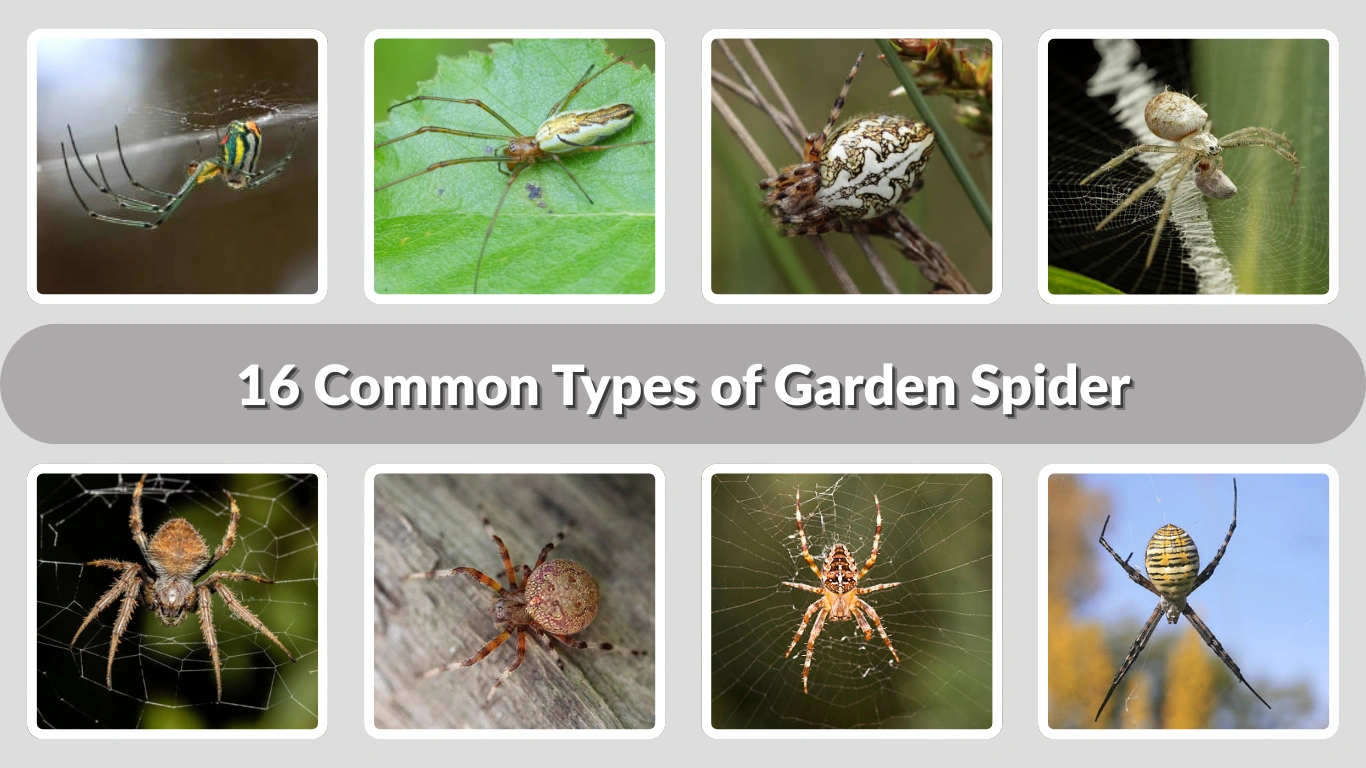
Garden spiders are a familiar sight in yards, gardens, and orchards around the world. They thrive in outdoor spaces where insects are plentiful and plants provide perfect web-building supports. Although their webs and size may seem intimidating, most garden spiders are harmless and highly beneficial. They help control pest populations naturally while adding to the balance of the garden ecosystem. This guide explores the most common garden spider types you’re likely to encounter.
1. Garden Orb-Weaver (Araneus)

The Garden Orb-Weaver is a common and beneficial spider found in gardens, yards, and landscaped areas. It is best known for building large, circular webs and helping control flying insect populations.
Identification
- Medium to large spider with a rounded abdomen
- Brown, tan, or orange coloration with patterned markings
- Hairy legs often showing light and dark banding
- Females noticeably larger than males
Habitat
Garden Orb-Weavers live in gardens, shrubs, tall grasses, fences, and around outdoor structures. They prefer areas with open space where their large orb-shaped webs can stretch between plants or supports.
Behaviors
This spider is mostly active during evening and nighttime hours. It sits at the center of its web or hides nearby during the day. Garden Orb-Weavers are non-aggressive and rarely bite unless handled directly.
Lifecycle
Females lay egg sacs in late summer or fall, attaching them to leaves or protected surfaces. Adults usually die before winter, while spiderlings hatch in spring and mature through the warm months.
2. Yellow Garden Spider (Argiope aurantia)

The Yellow Garden Spider is a large, striking spider commonly seen in gardens and open yards. Its bold black-and-yellow coloring and decorative web make it one of the most recognizable garden spiders.
Identification
- Large spider with a black and bright yellow patterned abdomen
- Long legs with black and orange banding
- Females much larger than males
- Distinct zigzag silk pattern in the center of the web
Habitat
Yellow Garden Spiders are found in gardens, fields, tall grasses, and along fences. They prefer sunny, open areas where they can anchor large orb-shaped webs between plants.
Behaviors
This spider is calm and non-aggressive, spending most of its time in the center of its web. It helps control pest insects such as flies, mosquitoes, and grasshoppers.
Lifecycle
Females lay egg sacs in late summer or early fall, attaching them to nearby vegetation. Adults usually die after egg-laying, while spiderlings overwinter inside the sac and emerge in spring.
3. Spiny Orb-Weaver (Gasteracantha cancriformis)

The Spiny Orb-Weaver is a small but visually striking garden spider known for its hard, spiked abdomen and bright colors. Despite its intimidating appearance, it is completely harmless to humans.
Identification
- Small spider with a hard, flat abdomen
- Six prominent spines projecting from the body
- White, yellow, red, or orange coloration
- Short legs relative to body size
Habitat
Spiny Orb-Weavers live in gardens, shrubs, hedges, and wooded edges. They build small orb-shaped webs between low branches or plants, often at eye level.
Behaviors
This spider remains motionless in the center of its web during the day. It is non-aggressive and rarely leaves its web unless disturbed or rebuilding.
Lifecycle
Females place egg sacs on the underside of leaves or nearby surfaces. Spiderlings hatch within weeks and disperse using silk threads. Most individuals live less than one year.
4. Banded Garden Spider (Argiope trifasciata)

The Banded Garden Spider is a large, attractive garden spider often mistaken for the Yellow Garden Spider. It is known for its silver, yellow, and black banded abdomen and impressive web.
Identification
- Large spider with a long, oval abdomen
- Silver, white, yellow, and black banded markings
- Long legs with dark and light bands
- Females significantly larger than males
Habitat
Banded Garden Spiders are found in gardens, meadows, fields, and open grassy areas. They prefer sunny locations with tall vegetation for web construction.
Behaviors
This spider builds large orb webs and often sits head-down in the center. It is shy and rarely bites, quickly retreating if disturbed.
Lifecycle
Females lay egg sacs in late summer or fall and attach them to plants. Adults usually die after reproduction, while spiderlings hatch the following spring.
5. Cross Orb-Weaver (Araneus diadematus)

The Cross Orb-Weaver is a well-known garden spider recognized by the pale cross-shaped marking on its abdomen. It is commonly seen in gardens and around outdoor structures.
Identification
- Rounded abdomen with a distinct white or pale cross pattern
- Brown, orange, or tan body coloration
- Hairy legs with subtle banding
- Females larger and bulkier than males
Habitat
Cross Orb-Weavers live in gardens, hedges, fences, and around buildings. They prefer moist, sheltered areas where they can build sturdy orb-shaped webs.
Behaviors
This spider is mostly active during the evening and night. During the day, it may hide nearby while remaining connected to the web by a silk thread.
Lifecycle
Females lay egg sacs in fall and secure them to leaves or crevices. Adults usually die before winter, and spiderlings emerge in spring to mature through the warmer months.
6. Marbled Orb-Weaver (Araneus marmoreus)

The Marbled Orb-Weaver is a colorful garden spider often called the “pumpkin spider” due to its bright orange appearance. It is commonly found in gardens during late summer and fall.
Identification
- Rounded abdomen with orange, yellow, or cream marbled patterns
- White or pale markings on the back
- Stocky body with hairy, banded legs
- Females much larger than males
Habitat
Marbled Orb-Weavers prefer gardens, wooded edges, shrubs, and tall vegetation. They often build orb webs slightly away from their resting spot, hiding in nearby leaves during the day.
Behaviors
This spider is shy and non-aggressive. It typically rebuilds its web in the evening and rests nearby rather than sitting at the center during daylight hours.
Lifecycle
Females lay egg sacs in protected locations during fall. Adults die as temperatures drop, while spiderlings overwinter in egg sacs and emerge in spring to begin a new lifecycle.
7. Barn Spider (Araneus cavaticus)

The Barn Spider is a common garden and farm spider known for its large size and sturdy orb webs. It is often seen around barns, sheds, and outdoor structures near gardens.
Identification
- Large, rounded abdomen
- Brown, tan, or rusty coloration with subtle markings
- Hairy legs with light and dark bands
- Females noticeably larger than males
Habitat
Barn Spiders live around gardens, barns, fences, bridges, and sheds. They prefer quiet outdoor areas where they can build large webs between solid supports.
Behaviors
This spider is mostly nocturnal and rebuilds its web at night. It is calm and non-aggressive, usually dropping from its web or hiding when disturbed.
Lifecycle
Females lay egg sacs in late summer or fall and attach them to protected surfaces. Adults die before winter, while spiderlings hatch the following spring and mature during warm months.
8. Silver Argiope (Argiope argentata)

The Silver Argiope is a striking garden spider known for its silvery body and bold web design. It is commonly found in warm, sunny gardens and open landscapes.
Identification
- Silvery-white cephalothorax and abdomen
- Long legs with black and orange banding
- Females significantly larger than males
- Large orb web often with a zigzag silk pattern
Habitat
Silver Argiope spiders live in gardens, open fields, coastal areas, and landscaped yards. They prefer sunny locations with tall plants or shrubs for anchoring their webs.
Behaviors
This species sits in the center of its web during the day, often with legs paired together. It is non-aggressive and will retreat or drop from the web if disturbed.
Lifecycle
Females lay egg sacs on nearby vegetation during late summer or fall. Adults typically die after reproduction, while spiderlings overwinter in egg sacs and emerge in warmer months.
9. Silver Argiope (Argiope argentata)

The Shamrock Orb-Weaver is a colorful garden spider known for its rounded body and wide variation in color. It is commonly found in shrubs and flowering plants during late summer.
Identification
- Rounded abdomen that may be green, yellow, orange, or reddish
- Pale markings sometimes forming a leaf-like pattern
- Hairy, banded legs
- Females much larger than males
Habitat
Shamrock Orb-Weavers live in gardens, bushes, hedges, and forest edges. They prefer dense vegetation where they can build orb webs between branches and leaves.
Behaviors
This spider is mostly nocturnal, rebuilding its web in the evening. During the day, it often hides in curled leaves or nearby shelter connected to the web by a silk line.
Lifecycle
Females lay egg sacs in early fall, attaching them to vegetation. Adults die before winter, while spiderlings remain protected in egg sacs until emerging in spring.
10. Tropical Orb-Weaver (Eriophora ravilla)

The Tropical Orb-Weaver is a large garden spider commonly found in warm regions. It is known for its impressive size and the massive orb webs it constructs in open garden spaces.
Identification
- Large, bulky spider with a rounded abdomen
- Brown, gray, or orange coloration with faint patterns
- Thick, hairy legs often showing subtle banding
- Females significantly larger than males
Habitat
Tropical Orb-Weavers live in gardens, wooded edges, parks, and around outdoor lighting. They prefer open areas where their large webs can stretch between trees, shrubs, or structures.
Behaviors
This spider is mostly nocturnal and builds its web at night, often taking it down by morning. It is shy and non-aggressive, retreating quickly when disturbed.
Lifecycle
Females lay egg sacs on vegetation or protected surfaces. Adults usually die after egg-laying, while spiderlings hatch later and mature through the warmer months.
11. Furrow Orb-Weaver (Larinioides cornutus)

The Furrow Orb-Weaver is a sturdy garden spider often found near water and outdoor structures. It is known for its thick body and well-defined abdominal markings.
Identification
- Medium to large spider with a robust body
- Brown or gray abdomen with furrowed, leaf-like patterns
- Hairy legs with faint banding
- Females larger and rounder than males
Habitat
Furrow Orb-Weavers live in gardens, shrubs, bridges, docks, and near ponds or wetlands. They prefer areas with moisture and solid structures for web attachment.
Behaviors
This species is mostly active at night, resting in a nearby retreat during the day. It is calm and non-aggressive, usually hiding when disturbed.
Lifecycle
Females lay egg sacs in late summer or fall, attaching them to protected surfaces. Adults die before winter, while spiderlings overwinter in egg sacs and emerge in spring.
12. Hentz Orb-Weaver (Neoscona crucifera)

The Hentz Orb-Weaver is a very common garden spider in North America, frequently seen in backyards and around homes. It is known for its variable coloration and large nighttime webs.
Identification
- Medium to large spider with a rounded abdomen
- Color ranges from tan and brown to reddish-orange
- Distinct dark markings on the back
- Hairy, banded legs
Habitat
Hentz Orb-Weavers live in gardens, yards, forest edges, and around buildings. They often build large orb webs between trees, shrubs, fences, and outdoor structures.
Behaviors
This spider is mostly nocturnal, constructing its web in the evening and taking it down by morning. It is shy and non-aggressive, retreating quickly when disturbed.
Lifecycle
Females lay egg sacs in fall and secure them to bark, leaves, or structures. Adults die before winter, while spiderlings overwinter in egg sacs and emerge in spring.
13. Labyrinth Orb-Weaver (Metepeira)

The Labyrinth Orb-Weaver is a unique garden spider known for building a complex web system that includes a retreat and a maze-like structure above the main orb.
Identification
- Small to medium-sized spider with a rounded abdomen
- Brown or gray coloration with subtle markings
- Short, banded legs
- Less colorful than many other orb-weavers
Habitat
Labyrinth Orb-Weavers are found in gardens, shrubs, wooded edges, and low vegetation. They prefer dense plant growth where their layered web structure can be supported.
Behaviors
This spider hides in a silken retreat near the web rather than sitting in the center. It is non-aggressive and quickly retreats when disturbed.
Lifecycle
Females lay egg sacs in protected retreats near the web. Spiderlings hatch and disperse nearby, maturing over the warmer months and completing their lifecycle within a year.
14. Long-Jawed Orb-Weaver (Tetragnatha)

The Long-Jawed Orb-Weaver is a slender garden spider known for its elongated body and jaws. It is commonly seen resting along plant stems, where it blends in remarkably well.
Identification
- Long, narrow body with an elongated abdomen
- Very long legs and noticeable jaws
- Brown, green, or silvery coloration
- Slim appearance compared to other orb-weavers
Habitat
Long-Jawed Orb-Weavers live in gardens, tall grasses, shrubs, and near ponds or wetlands. They prefer areas with dense vegetation where they can align their bodies with stems.
Behaviors
This spider is mostly active at night, building delicate orb webs. During the day, it stretches along plant stems to camouflage itself and avoid predators.
Lifecycle
Females lay egg sacs on vegetation near water or dense plants. Spiderlings hatch and disperse by ballooning. Most individuals mature and reproduce within one year.
15. Orchard Orb-Weaver (Leucauge venusta)

The Orchard Orb-Weaver is a small, elegant garden spider known for its shiny body and neatly woven webs. It is commonly found in orchards, gardens, and shaded yards.
Identification
- Small spider with a slender, elongated abdomen
- Metallic green, silver, or yellow markings
- Long, delicate legs often greenish in color
- Glossy, reflective body surface
Habitat
Orchard Orb-Weavers live in gardens, orchards, shrubs, forest edges, and under tree canopies. They prefer shaded, humid areas where their horizontal orb webs can be suspended.
Behaviors
This spider rests upside down in the center of its web and is active mainly during daylight hours. It is non-aggressive and rarely bites, quickly retreating when disturbed.
Lifecycle
Females lay egg sacs on nearby leaves or branches. Spiderlings hatch and disperse within weeks, maturing over the warm season and usually completing their lifecycle within one year.
16. Golden Silk Orb-Weaver (Trichonephila clavipes)

The Golden Silk Orb-Weaver is a large and visually impressive garden spider known for producing strong, golden-colored webs. It is commonly seen in warm gardens and wooded landscapes.
Identification
- Very large spider with a long, narrow abdomen
- Yellow, orange, and brown body markings
- Long black legs with yellow bands and tufts
- Females much larger than males
Habitat
Golden Silk Orb-Weavers live in gardens, wooded edges, trails, and around fences or buildings. They prefer open spaces between trees or structures where their massive webs can stretch freely.
Behaviors
This spider spends most of its time sitting in the center of its web. It is non-aggressive and rarely bites humans. The strong web efficiently captures large flying insects.
Lifecycle
Females lay egg sacs on nearby vegetation in late summer or fall. Spiderlings hatch after a few weeks and disperse. Most individuals complete their lifecycle within one year.
FAQs
Are garden spiders harmful to humans?
Most garden spiders are harmless and rarely bite. Even when bites occur, they are usually mild and comparable to a mosquito sting. Garden spiders are not aggressive and help control insect populations naturally.
What do garden spiders eat?
Garden spiders mainly feed on flying insects such as flies, mosquitoes, moths, beetles, and grasshoppers. By catching these pests in their webs, they play an important role in maintaining a healthy garden ecosystem.
Why do garden spiders build large webs?
Large webs help garden spiders capture more prey efficiently. Orb-shaped webs are designed to stop flying insects mid-air, providing a reliable food source with minimal energy spent hunting.
How long do garden spiders live?
Most garden spiders live for about one year. They typically hatch in spring, mature during summer, reproduce in late summer or fall, and then die as temperatures drop.
Should I remove garden spiders from my yard?
In most cases, garden spiders should be left alone. They are beneficial predators that reduce pest insects and pose little risk to people, pets, or plants.
