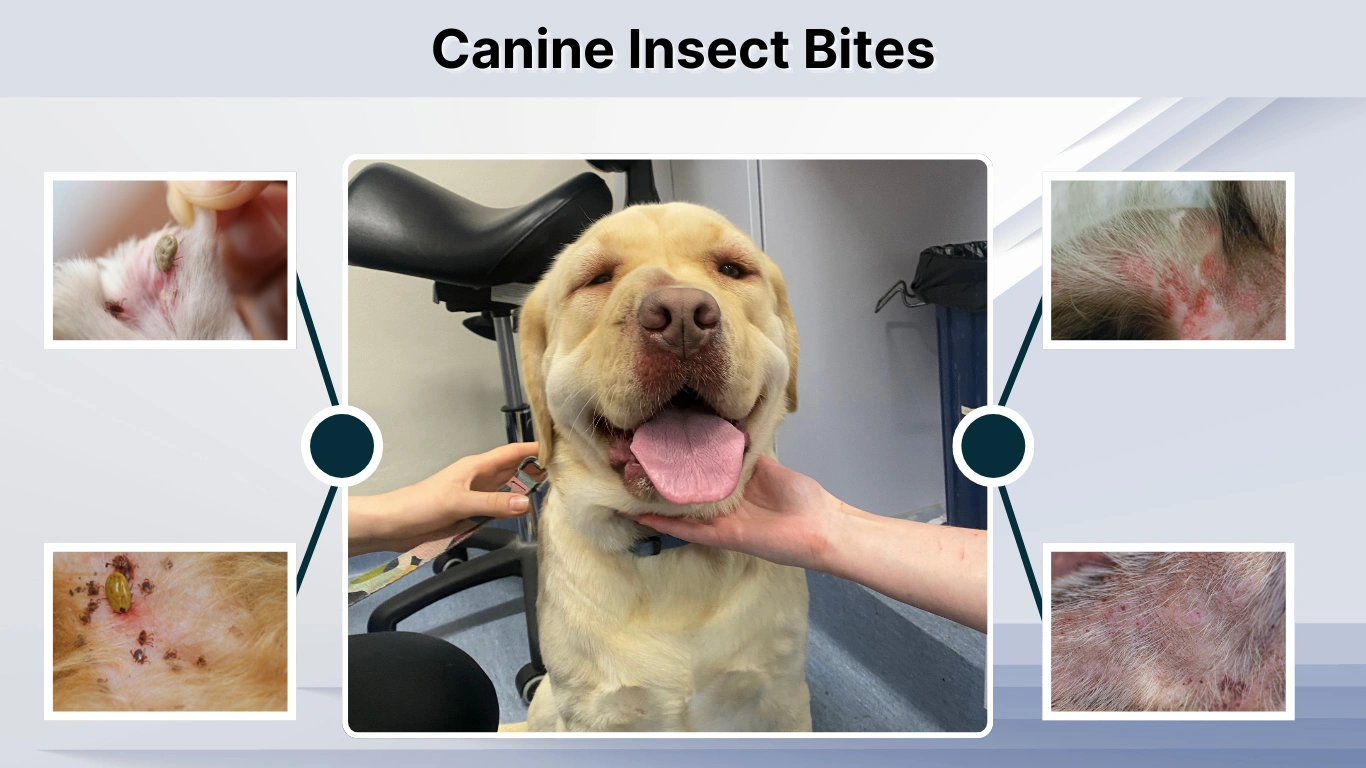
Dogs are naturally curious, often spending hours outdoors exploring gardens, trails, and grassy areas. While this is great for exercise and stimulation, it also exposes them to a variety of biting and stinging insects. Just like humans, dogs can develop mild or severe reactions to insect bites, making identification and prompt treatment critical. Understanding what canine insect bites look like, the symptoms they cause, and how to respond helps owners keep their pets safe and comfortable.
Common Insects That Bite Dogs

Several insects are known to bite or sting dogs, each causing different types of reactions:
- Mosquitoes – leave small red bumps and may transmit diseases like heartworm.
- Fleas – cause itchy bites and can trigger flea allergy dermatitis (FAD).
- Ticks – embed in the skin and may transmit Lyme disease and other illnesses.
- Bees and wasps – deliver painful stings that can swell dramatically.
- Spiders – some harmless, while venomous species may cause dangerous symptoms.
- Ants (especially fire ants) – inflict multiple painful stings at once.
Recognizing which insect caused the bite can guide both first aid and prevention.
Identifying Insect Bites on Dogs

Spotting insect bites on dogs can be tricky, especially under thick fur. However, there are common signs owners can look for:
- Redness and swelling around the bite site.
- Small raised bumps or hives.
- Puncture marks in cases of bee stings or spider bites.
- Excessive scratching, licking, or chewing of one area.
Bites often occur on exposed body parts such as the ears, belly, groin, muzzle, and paws. These areas have thinner fur and are easier for insects to target. It’s also important to distinguish insect bites from other conditions like skin allergies or bacterial infections.
Typical Canine Reactions to Insect Bites

Most insect bites cause only mild, localized irritation in dogs. Typical reactions include:
- Itching and scratching.
- Redness at the site of the bite or sting.
- Localized swelling that may last a few hours.
However, the severity of the reaction depends on factors such as the dog’s breed, age, size, and overall health. Some dogs may show minimal symptoms, while others may react strongly, especially if they are allergic to the insect venom or saliva.
Symptoms of Mild Insect Bites
In most cases, insect bites are not life-threatening and can be managed at home. Mild bites typically present with:
- Itching and irritation that leads the dog to scratch or lick excessively.
- Small red bumps or raised hives in one localized area.
- Mild discomfort or restlessness.
Owners may notice their dog focusing on one body area more than usual, often indicating the site of the bite. These mild symptoms usually resolve within a day or two with simple care.
Symptoms of Severe Reactions

Although rare, some insect bites or stings can trigger severe allergic reactions in dogs. This condition, known as anaphylaxis, requires immediate veterinary attention. Warning signs include:
- Excessive swelling around the face, muzzle, or throat.
- Difficulty breathing, wheezing, or drooling.
- Sudden weakness, vomiting, or collapse.
- Widespread hives or severe itching.
Because anaphylaxis can develop rapidly, even a single bee sting or spider bite may be life-threatening for sensitive dogs. Quick recognition and emergency care are essential.
Mosquito and Flea Bites on Dogs

Two of the most common insect offenders for dogs are mosquitoes and fleas.
- Mosquito bites usually cause small, red, raised bumps that itch. Beyond irritation, mosquitoes are also a serious concern because they can transmit heartworm disease, a potentially fatal condition if untreated.
- Flea bites are tiny but intensely itchy. Many dogs develop flea allergy dermatitis (FAD), an allergic reaction to flea saliva, which leads to inflamed skin, hair loss, and scabbing. Flea bites are most commonly found around the tail base, abdomen, and groin.
Managing these two insects is especially important, as both can lead to long-term health problems if not controlled.
Tick Bites and Associated Risks

Ticks are among the most concerning insects for dogs because they transmit serious diseases. A tick bite usually appears as a small red bump with the tick still attached. If undetected, the area may become irritated or infected.
Risks of tick bites include:
- Lyme disease – causes joint pain, fever, and lethargy.
- Ehrlichiosis and anaplasmosis – lead to blood disorders.
- Rocky Mountain spotted fever – a severe bacterial infection.
Owners should check dogs regularly, especially after outdoor walks, and remove ticks promptly with proper tools to reduce disease transmission.
Bee and Wasp Stings in Dogs

Bee and wasp stings are painful and often dramatic because swelling occurs quickly. The sting site is usually red and tender, with dogs pawing or licking the area. In bees, a stinger may remain embedded, continuing to release venom until removed.
Signs of bee or wasp stings include:
- Sudden yelping or pawing at the face.
- Localized swelling, often on the muzzle or paws.
- Possible allergic reactions if the dog is sensitive.
Multiple stings can be dangerous and require veterinary attention, especially if swelling affects breathing or spreads beyond the immediate sting site.
Spider and Ant Bites

Not all spiders and ants pose a risk to dogs, but certain species can cause significant problems.
- Spider bites: Most are harmless, but bites from black widows or brown recluse spiders can cause severe pain, muscle tremors, or tissue damage.
- Ant bites: Fire ants are especially aggressive, delivering multiple stings at once. These cause burning pain, swelling, and clusters of red pustules.
Dogs that disturb nests are at greatest risk of multiple bites, which can escalate into serious health issues.
Immediate First Aid for Insect Bites

Knowing basic first aid can help owners reduce discomfort and prevent complications before reaching a veterinarian.
Steps include:
- Remove stingers or ticks carefully using tweezers or a tick-removal tool.
- Clean the bite site with mild antiseptic or soap and water.
- Apply a cold compress to reduce swelling and pain.
- Prevent excessive scratching by distracting the dog or using a cone collar if necessary.
Avoid home remedies like vinegar or essential oils, as many can irritate the skin or be toxic to dogs.
Veterinary Treatments and Medications
If symptoms worsen or severe reactions occur, veterinary care is essential. Treatment options may include:
- Antihistamines: To reduce itching and allergic swelling.
- Anti-inflammatory drugs or corticosteroids: For significant swelling or pain.
- Topical ointments: To soothe localized irritation and prevent infection.
- Emergency care for anaphylaxis: Epinephrine, oxygen therapy, and intravenous fluids.
Vets will also check for systemic issues such as heartworm (mosquitoes) or tick-borne diseases and recommend preventive medications if necessary.
Preventing Insect Bites in Dogs
Prevention is often easier than treatment. Owners can take several steps to reduce insect exposure:
- Flea and tick preventives such as collars, topical treatments, or oral medications.
- Avoiding mosquito-heavy areas during dusk and dawn, when they are most active.
- Using pet-safe insect repellents designed specifically for dogs.
- Maintaining the yard by mowing grass, removing standing water, and treating ant nests.
Consistent preventive care not only protects dogs from irritation but also from serious diseases spread by insect bites.
When to See a Veterinarian
While mild insect bites can often be managed at home, certain signs mean it’s time to call the vet:
- Persistent swelling or redness that doesn’t improve in 24–48 hours.
- Signs of infection such as pus, oozing, or foul odor.
- Difficulty breathing or extreme facial swelling.
- Excessive scratching, hair loss, or constant discomfort.
A good rule of thumb: if the dog seems unusually distressed or symptoms escalate rapidly, professional care is essential.
FAQs
How can I tell if my dog was bitten by an insect?
Look for redness, swelling, small bumps, or bite marks on exposed areas like ears, paws, or belly. Dogs often scratch, lick, or chew at the affected site. If swelling spreads or the dog seems unusually distressed, it may indicate a more serious reaction.
Are insect bites on dogs dangerous?
Most insect bites are mild and cause only temporary discomfort. However, some can transmit diseases, like ticks spreading Lyme disease or mosquitoes causing heartworm. Severe allergic reactions are rare but possible. Any difficulty breathing, excessive swelling, or collapse requires immediate veterinary care to prevent life-threatening complications.
Can I use human insect repellents on my dog?
No, most human repellents contain chemicals like DEET or permethrin, which are toxic to dogs. Always choose repellents specifically formulated for pets. Safer alternatives include veterinary-approved sprays, flea and tick preventives, and natural pet-safe options. Consult your vet before using any new repellent on your dog.
What home treatments help with insect bites on dogs?
For mild bites, clean the area with mild soap and water, then apply a cold compress to reduce swelling. Prevent scratching by monitoring your dog or using a cone collar. Avoid human creams or essential oils, as some can be harmful. Persistent or worsening symptoms require veterinary advice.
When should I take my dog to the vet for an insect bite?
Seek veterinary care if your dog shows severe swelling, difficulty breathing, widespread hives, or signs of infection such as pus or persistent redness. If bites don’t improve within two days, or if your dog has a history of allergic reactions, contacting your vet is the safest option.