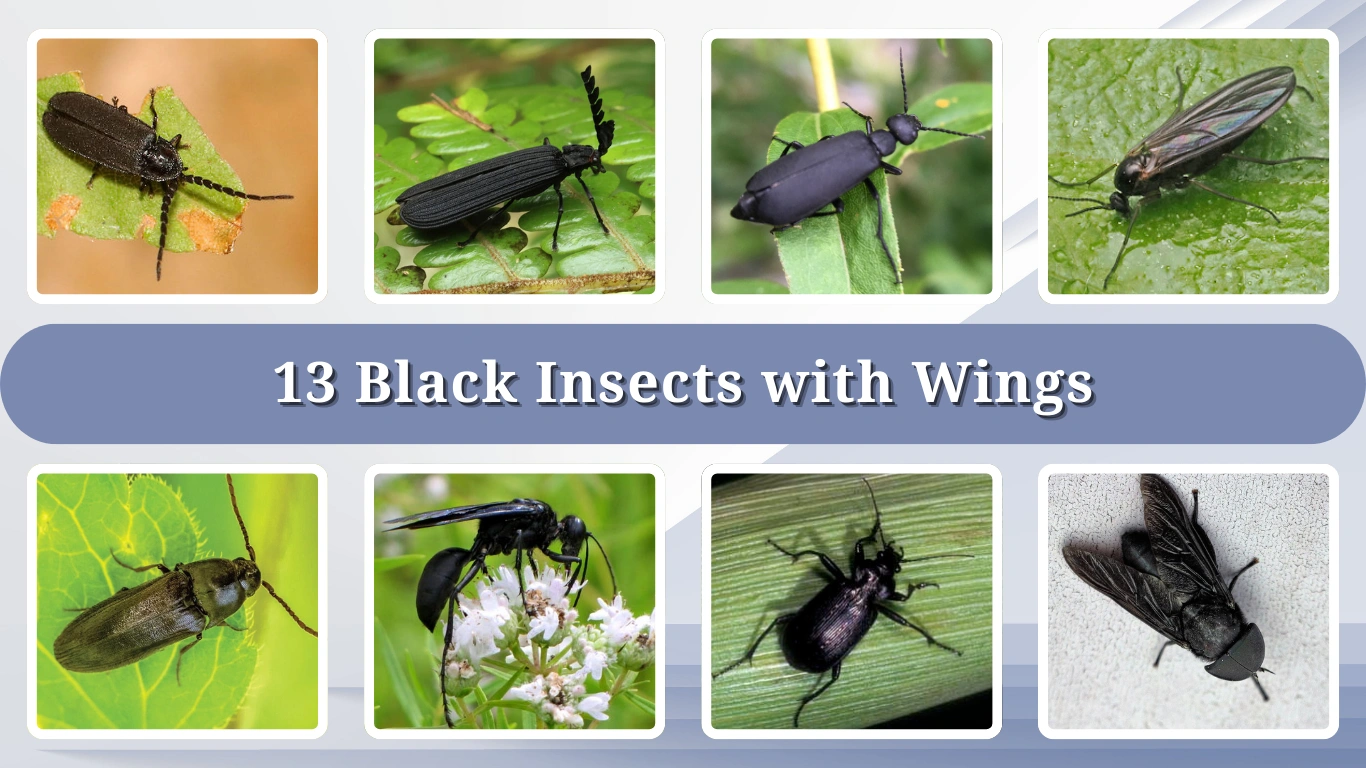
Insects come in many shapes and sizes, with black-winged species standing out for their unique traits and ecological roles. From pests like carpenter ants and carpet beetles to beneficial recyclers such as soldier flies and lacewings, these insects are part of diverse ecosystems. Some are helpful in pest control or pollination, while others may damage crops or household items. Exploring them reveals both their fascinating adaptations and their impact on humans and nature.
1. Black Carpenter Ant

Black Carpenter Ants are large, jet-black ants known for nesting inside wood. Unlike termites, they don’t eat wood but tunnel through it to build their colonies. These ants are commonly found around homes and forests, where decayed or damp wood provides the perfect environment.
Identification
- Size ranges from 6–12 mm, making them one of the largest ant species.
- Body is completely black with elbowed antennae.
- Smooth, rounded thorax with no spines.
- Strong mandibles used for chewing through wood.
Habitat
They prefer damp, decaying wood in forests, fallen logs, and structural timber in buildings. Colonies thrive in hollow spaces where moisture helps soften the wood for easier excavation.
Diet
Carpenter ants feed on honeydew from aphids, plant juices, and household food scraps. While they don’t consume wood, they cause structural damage by creating extensive tunnel systems.
Behavior and Impact
They live in large colonies with a clear caste system. Indoors, their tunneling weakens wooden structures, making them significant household pests. Prompt identification and control are important to avoid costly damage.
2. Black Soldier Fly

Black Soldier Flies are beneficial insects often used in composting and waste reduction. Their larvae play an important role in recycling organic matter, making them valuable for sustainable farming and waste management. Adults are harmless to humans and rarely seen indoors.
Identification
- Adult size ranges from 15–20 mm.
- Body is black with metallic blue or green sheen.
- Long, narrow wings held flat over the body when at rest.
- Antennae are elongated, unlike those of common houseflies.
Habitat
They thrive in warm, moist environments such as compost piles, manure heaps, and decaying organic matter. Adults are usually found outdoors around vegetation and waste areas.
Diet
Adults do not feed much, relying on stored energy. Larvae consume decomposing organic material, manure, and food waste, breaking them down into nutrient-rich matter.
Behavior and Impact
Larvae are efficient recyclers, used in composting and as animal feed. They reduce waste volume and control harmful fly populations, making them ecologically beneficial. Adults do not bite or spread disease.
3. Black Horsefly

Black Horseflies are large, fast-flying insects known for their painful bite. Females feed on blood, which they need for reproduction, while males consume nectar. These flies are often found in rural areas near livestock and water sources.
Identification
- Size ranges from 15–25 mm, larger than common flies.
- Robust black body with large compound eyes.
- Clear or smoky wings with visible veins.
- Mouthparts designed for cutting skin and sucking blood.
Habitat
They prefer wetlands, farms, and wooded areas near water. Breeding occurs in moist soil, muddy banks, and marshy environments. Adults often hover around animals and humans.
Diet
Females feed on blood from mammals, including livestock and humans. Males survive on nectar and plant juices. Their bites are painful and may cause allergic reactions.
Behavior and Impact
Horseflies are persistent biters and can spread pathogens to animals. They are a nuisance to livestock, reducing productivity due to stress and blood loss. Control is difficult because of their strong flight and wide range.
4. Black Ground Beetle

Black Ground Beetles are nocturnal predators that play a vital role in natural pest control. They are commonly found in gardens, forests, and agricultural fields, where they hunt harmful insects and larvae. Their shiny black body and quick movements make them easily recognizable.
Identification
- Size varies between 10–30 mm depending on species.
- Glossy black, elongated body with ridged wing covers (elytra).
- Strong legs adapted for running quickly on the ground.
- Large mandibles designed for grasping and crushing prey.
Habitat
They live under rocks, logs, and leaf litter in moist, shaded areas. Gardens, fields, and forest floors provide ideal shelter. They are ground-dwellers and rarely fly, preferring to run swiftly.
Diet
Primarily feed on caterpillars, aphids, slugs, and other soft-bodied pests. Some species also consume seeds, making them partly omnivorous. Their hunting helps regulate insect populations.
Behavior and Impact
Highly beneficial for natural pest management, they reduce crop damage by preying on harmful insects. They are non-aggressive toward humans and thrive in diverse environments. Encouraging their presence supports healthy ecosystems.
5. Black Wasp

Black Wasps are solitary insects known for their striking appearance and potent sting. Unlike social wasps, they live and hunt alone. They are skilled predators of caterpillars and other insects, often paralyzing prey to provide food for their larvae.
Identification
- Size typically ranges from 15–25 mm.
- Entire body is glossy black, sometimes with faint bluish sheen.
- Long, narrow wings folded lengthwise when at rest.
- Thin waist and strong stinger at the abdomen tip.
Habitat
They nest in soil burrows, hollow wood, or cracks in structures. Black Wasps prefer sunny, open habitats like gardens, meadows, and fields. Some species create mud cells for their offspring.
Diet
Adults feed on nectar and plant juices, making them important pollinators. Larvae consume paralyzed insects (mainly caterpillars and spiders) supplied by the mother. This hunting ensures steady nutrition for developing young.
Behavior and Impact
Black Wasps are solitary and rarely aggressive unless threatened. They help control pest populations and aid pollination. Though their sting is painful, they are generally beneficial and not considered major household pests.
6. Black Lacewing

Black Lacewings are delicate insects with finely veined wings and predatory larvae. They are valued in agriculture for their ability to control pest populations. Adults are nocturnal and often attracted to lights.
Identification
- Size ranges from 8–15 mm.
- Soft black body with long, net-like wings.
- Wings fold roof-like over the body when at rest.
- Long antennae and large, prominent eyes.
Habitat
They live in gardens, fields, and wooded areas. Commonly found near vegetation, they seek places where aphids and other soft-bodied insects are abundant. Adults rest in shaded spots during the day.
Diet
Adults feed on nectar, pollen, and honeydew, while larvae are active predators of aphids, mites, and small insect eggs. Their dual diet makes them both pollinators and natural pest controllers.
Behavior and Impact
Larvae, often called “aphid lions,” are highly effective in reducing pest numbers. Black Lacewings contribute to integrated pest management and support biodiversity in agricultural and natural ecosystems.
7. Black Click Beetle

Black Click Beetles are named for their unique ability to snap their bodies, creating a clicking sound. This movement helps them escape predators and flip upright if turned over. They are commonly found in wooded areas and gardens.
Identification
- Size generally 12–20 mm.
- Elongated, hard black body with ridged wing covers.
- Pronotum has backward-pointing spines.
- Can bend and snap body segments to produce a click.
Habitat
They hide under logs, bark, and soil in moist areas. Adults prefer wooded environments, fields, and gardens, while larvae live underground feeding on plant roots.
Diet
Adults feed on nectar and pollen, while larvae (wireworms) consume plant roots, seeds, and decaying vegetation. In agriculture, larvae may become pests by damaging crops.
Behavior and Impact
Known for their clicking jump defense, they deter predators effectively. While adults are harmless, larvae can harm crops, making them both beneficial and problematic depending on their life stage.
8. Black Fungus Gnat

Black Fungus Gnats are tiny flying insects often found indoors around houseplants. While adults are mostly nuisance pests, their larvae can damage plant roots by feeding on decaying matter and fungi in the soil.
Identification
- Small size, typically 2–5 mm long.
- Slender black body with long legs and antennae.
- Clear wings with distinctive vein patterns.
- Weak fliers, often seen hovering near plants.
Habitat
They thrive in damp soil, compost, and areas rich in organic matter. Indoors, they are commonly found in potted plants and greenhouses where moisture is high.
Diet
Adults feed lightly on nectar but rely on moisture. Larvae consume fungi, algae, and decaying organic material, sometimes damaging tender plant roots in the process.
Behavior and Impact
Fungus gnats reproduce rapidly in moist environments. While adults are harmless, larvae can weaken seedlings and houseplants. Proper soil drying and control methods help reduce infestations.
9. Black Carpet Beetle (Adult)

Black Carpet Beetles are household pests that damage fabrics and stored products. Adults are dark and oval-shaped, while larvae are destructive feeders of natural fibers and materials.
Identification
- Adult size ranges from 3–5 mm.
- Oval, black or very dark brown body.
- Short antennae ending in a club-like shape.
- Larvae are brownish with bristly bodies.
Habitat
They inhabit homes, warehouses, and museums, hiding in dark areas like closets, carpets, and storage boxes. Outdoors, they live in bird nests, wasp nests, and animal remains.
Diet
Adults feed on pollen and nectar, while larvae consume wool, feathers, leather, hair, and dried plant or animal products. They can infest stored foods as well.
Behavior and Impact
Black Carpet Beetles are major fabric pests, causing holes in clothing and carpets. Their resilience makes infestations persistent, requiring thorough cleaning and pest management for control.
10. Black Blister Beetle

Black Blister Beetles are known for secreting a defensive chemical called cantharidin, which can cause blistering on human skin. They are elongated, soft-bodied beetles commonly found in fields and meadows.
Identification
- Size typically 10–20 mm.
- Elongated black body with soft wing covers.
- Narrow thorax, appearing like the “neck” between head and body.
- Long legs and thread-like antennae.
Habitat
They inhabit grasslands, gardens, and agricultural fields. Adults are often seen on flowers, feeding on pollen and foliage during warm months.
Diet
Adults consume flowers, pollen, and foliage, sometimes damaging crops. Larvae are parasitic, feeding on grasshopper eggs or bee larvae depending on species.
Behavior and Impact
While beneficial in reducing grasshopper populations, they can harm pollinators and crops. Their chemical defense poses health risks to humans and livestock if ingested or handled carelessly.
11. Black Net-winged Beetle

Black Net-winged Beetles are small insects with soft, leathery wings that have a net-like appearance. They are not harmful and often serve as a warning example in mimicry systems due to their distastefulness to predators.
Identification
- Size generally 8–15 mm.
- Flattened black body with net-textured wing covers.
- Pronotum shields the head when viewed from above.
- Slow-moving with soft, flexible wings.
Habitat
Found in woodlands, meadows, and near decaying logs. They rest on vegetation and are often spotted in shaded, moist environments.
Diet
Adults feed on nectar, pollen, and fungi. Larvae consume decaying wood and organic matter, aiding in natural decomposition.
Behavior and Impact
They are harmless insects that play a role in recycling nutrients. Their black coloration and netted wings make them unappealing to predators, supporting ecological balance.
12. Black Firefly (Dark-Winged Species)

Black Fireflies are nocturnal beetles recognized for their ability to produce light, though some dark-winged species emit only faint or no glow. They are commonly seen in summer evenings and are admired for their bioluminescence.
Identification
- Size ranges from 7–15 mm.
- Elongated black body with soft wing covers.
- Pronotum often shields part of the head.
- Light-producing organs on the abdomen (in most species).
Habitat
They inhabit meadows, grasslands, and forest edges. Fireflies prefer moist environments, often near ponds, streams, or wetlands where larvae thrive.
Diet
Adults may feed on nectar, pollen, or remain non-feeding. Larvae are predatory, consuming snails, slugs, and soft-bodied insects, which they paralyze with digestive fluids.
Behavior and Impact
Known for their flashing courtship signals, fireflies use bioluminescence to attract mates. Some dark-winged species glow weakly or not at all, relying more on habitat and pheromones. They play an important role in pest control and are indicators of healthy ecosystems.