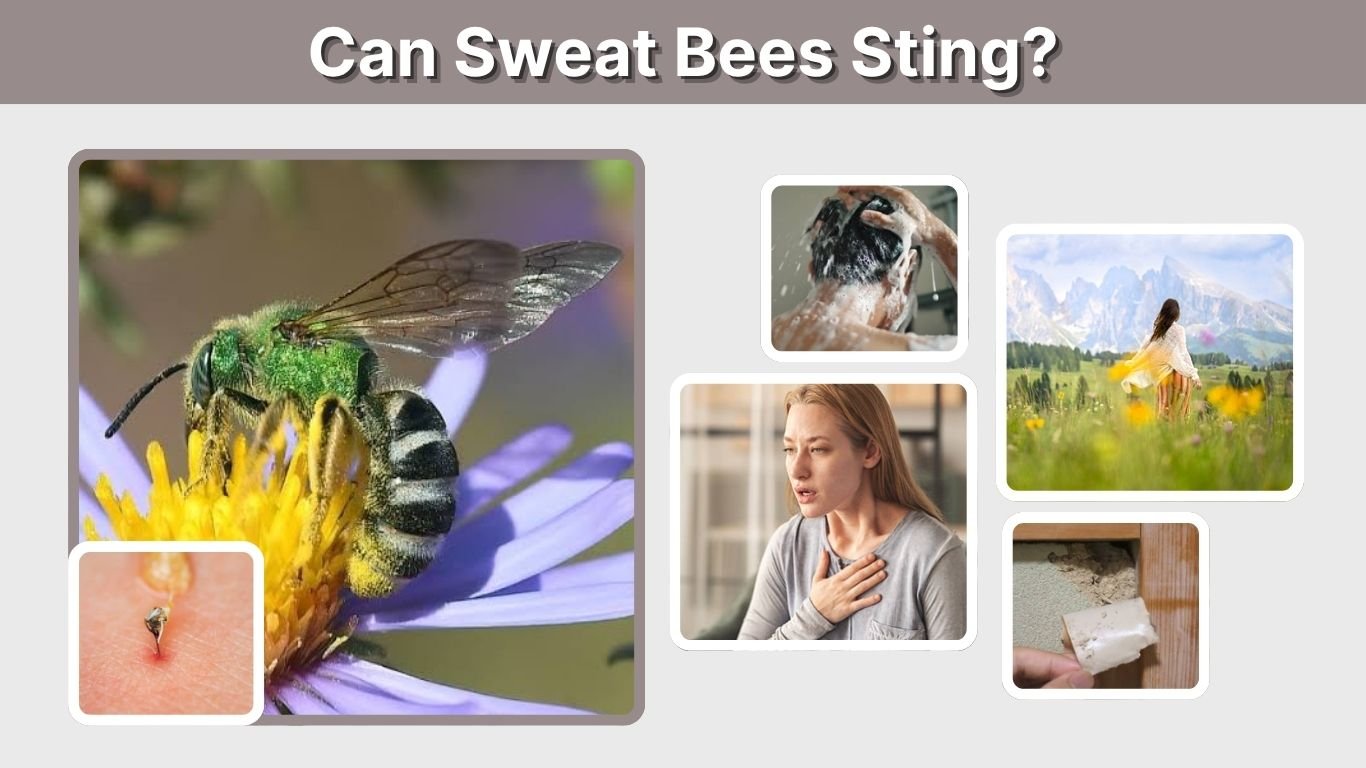
Yes, sweat bees can sting, but they are generally mild-mannered bees that rarely sting unless they feel trapped, pressed against the skin, or threatened. These small bees get their common name because some species are attracted to the salts in human sweat. A sweat bee may land on your arm or leg simply to collect moisture rather than to attack you. Although most stings cause only temporary pain, redness, or swelling, allergic reactions are possible and should be taken seriously.
Can Sweat Bees Sting You?
Sweat bees belong to the family Halictidae, a large group that includes many small black, brown, blue, and metallic-green bees. Some species are especially attracted to perspiration because sweat provides salts and minerals.
Female sweat bees have stingers and can sting people, while males do not have functional stingers. Even females are generally considered docile and are much more likely to fly away than sting. Oklahoma State University Extension notes that female sweat bees can sting, with stings often occurring when people try to brush the bees from their bodies.
Why Do Sweat Bees Land on People?
Sweat bees are interested in the moisture and salt on your skin. They may become particularly noticeable when you are:
- Sweating heavily outdoors
- Gardening or doing yard work
- Exercising
- Spending time outside during warm weather
- Wearing clothing that leaves sweaty skin exposed
A sweat bee sitting on your skin is usually looking for salt rather than preparing to sting.
Are Sweat Bees Aggressive?
Sweat bees are generally not aggressive toward humans. Stings are more likely when a bee becomes trapped against your body, caught inside clothing, squeezed, or swatted.
Instead of crushing a bee against your skin, allow it to fly away or gently encourage it to leave. Sweat bees and many other native bees normally sting primarily in self-defense.
Can You Feel a Sweat Bee Sting?
Yes. You can usually feel a sweat bee sting, although its intensity varies from person to person.
You might notice a quick sharp or burning sensation followed by mild redness, tenderness, itching, or swelling around the sting site. For most people, the discomfort remains localized and gradually improves.
Can Sweat Bees Bite or Sting?
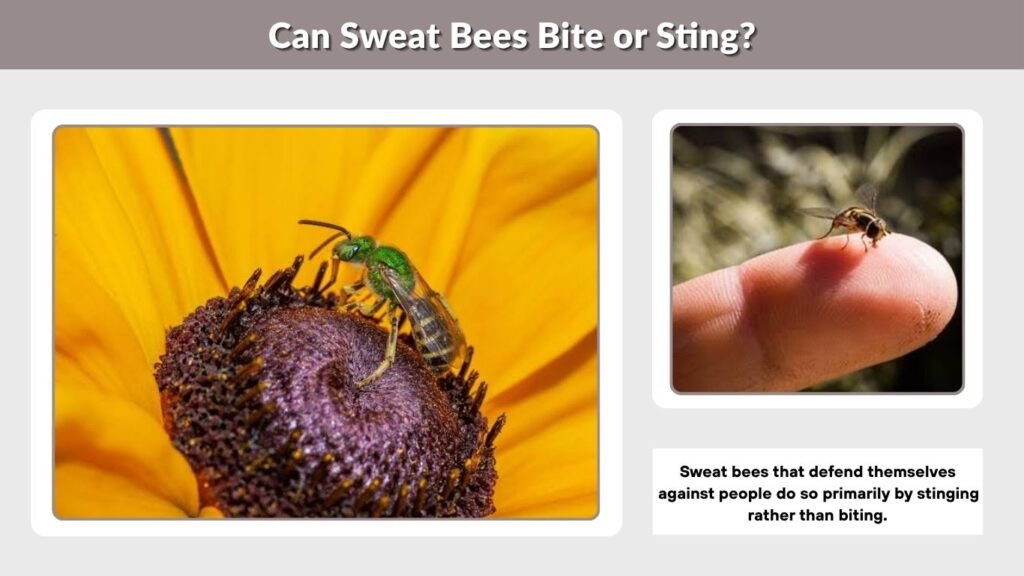
People sometimes describe these insects as biting, especially after noticing an uncomfortable sensation while a bee is sitting on their skin. However, sweat bees that defend themselves against people do so primarily by stinging rather than biting.
Purdue University Extension specifically notes that the common idea that sweat bees bite people is incorrect. They can sting when threatened but are usually docile.
Do Sweat Bees Have Stingers?
Female sweat bees have stingers because the bee stinger evolved from an egg-laying structure called an ovipositor. Male bees therefore lack a functional stinger.
This means a male sweat bee may fly around you or land nearby without being capable of stinging.
Why Might a Sweat Bee Sting?
Common situations that may trigger a defensive sting include accidentally:
- Pressing the bee against your skin
- Swatting it while it is collecting sweat
- Stepping on or grabbing a bee
- Trapping one underneath clothing
- Handling the bee
- Disturbing nesting areas
Simply seeing several sweat bees around flowers or bare soil does not mean they are preparing to attack.
Can Sweat Bees Sting More Than Once?
Yes. A female sweat bee can potentially sting multiple times. Unlike a worker honey bee, which generally leaves its barbed stinger in mammalian skin, many other bees have stingers that allow repeated use.
University of Illinois safety guidance notes that female bees and wasps generally can sting more than once, with honey bees being an important exception because their stingers can lodge in the skin.
How Many Times Can a Sweat Bee Sting?
There is no useful fixed number of times that applies to every sweat bee. The important point is that its first sting does not necessarily prevent another sting.
Repeated stings are still unusual in normal encounters because sweat bees generally try to escape rather than continue attacking.
Can a Sweat Bee Leave a Stinger in Your Skin?
A sweat bee normally does not leave a barbed stinger behind in the same way a honey bee may.
If you have been stung and see something embedded in the skin, however, avoid assuming which insect caused it. Remove a visible stinger promptly and clean the area.
What Does a Sweat Bee Sting Look and Feel Like?
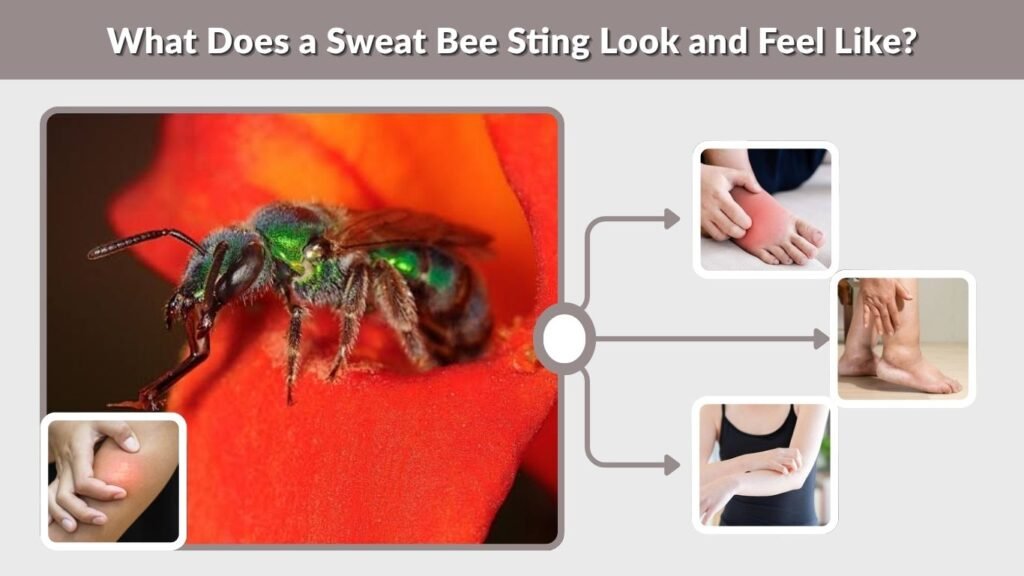
A normal local reaction may be uncomfortable but is usually limited to the area surrounding the sting. Symptoms vary depending on individual sensitivity.
Common Symptoms
A mild reaction may include:
- Immediate sharp or burning pain
- Redness
- A small raised bump
- Mild swelling
- Tenderness
- Itching
- Warmth around the sting
Redness, swelling, and itching around an insect sting are common non-allergic reactions.
Can a Sweat Bee Sting Cause a Lot of Swelling?
It can. Some people develop a larger local reaction in which swelling extends well beyond the small sting site.
Large swelling alone does not necessarily mean someone is experiencing anaphylaxis. However, rapidly worsening symptoms or swelling affecting the mouth, tongue, or throat requires urgent medical attention.
Can Sweat Bees Make You Itch or Cause a Rash?
A local itchy area can develop after a sting. Some people may also develop hives or a more widespread rash during an allergic reaction.
Pay attention to symptoms occurring elsewhere on the body rather than only around the sting.
Can You Be Allergic to Sweat Bees?
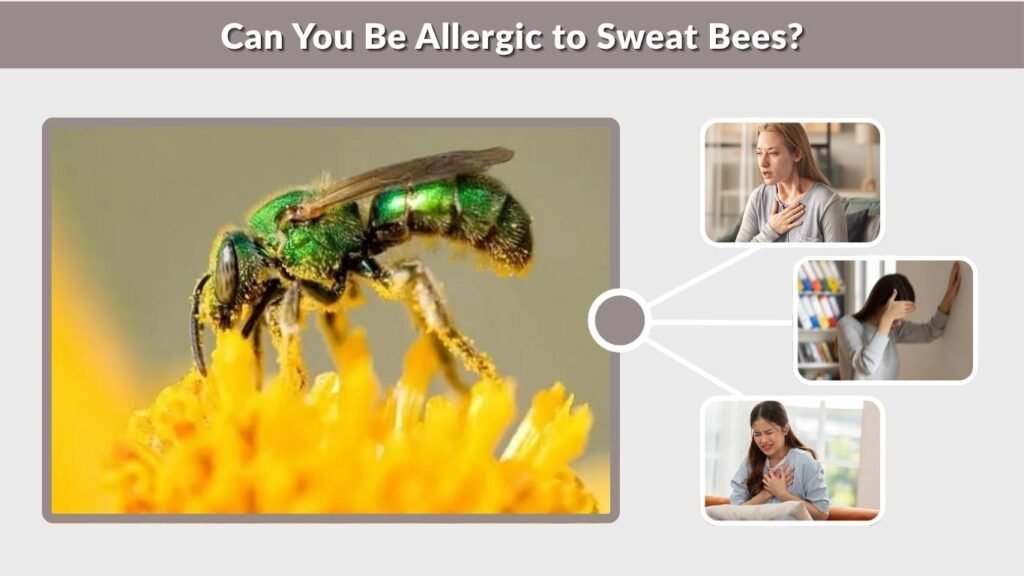
Yes. A person can potentially experience an allergic reaction to insect venom, including bee venom.
Most people experience only local discomfort, but insect-sting allergies can occasionally produce a severe systemic reaction called anaphylaxis. The American Academy of Allergy, Asthma & Immunology lists symptoms such as widespread hives, throat or tongue swelling, breathing difficulty, dizziness, stomach cramps, nausea, or diarrhea among possible signs of serious sting allergy.
Signs of a Serious Allergic Reaction
Seek emergency medical care immediately if symptoms include:
- Difficulty breathing or wheezing
- Swelling of the tongue or throat
- Trouble swallowing
- Widespread hives
- Dizziness or fainting
- Sudden weakness
- Chest tightness
- Repeated vomiting
- Rapidly worsening symptoms
Anaphylaxis can become life-threatening and requires immediate treatment.
Anyone who has previously experienced a serious reaction to an insect sting should discuss future sting management with a qualified healthcare professional or allergist.
What Should You Do After a Sweat Bee Sting?
Most uncomplicated stings can be managed with basic first aid. The goal is to clean the area, reduce discomfort, and watch for signs that the reaction is becoming more serious.
Basic Sting Care
For a mild reaction:
- Move away from the area where the sting occurred.
- Wash the skin gently with soap and water.
- Apply a cool compress to reduce discomfort and swelling.
- Avoid scratching the area.
- Monitor your symptoms for signs of a larger allergic reaction.
If symptoms become severe, particularly breathing problems, throat swelling, faintness, or widespread hives, seek emergency medical help.
How Can You Keep Sweat Bees Away?
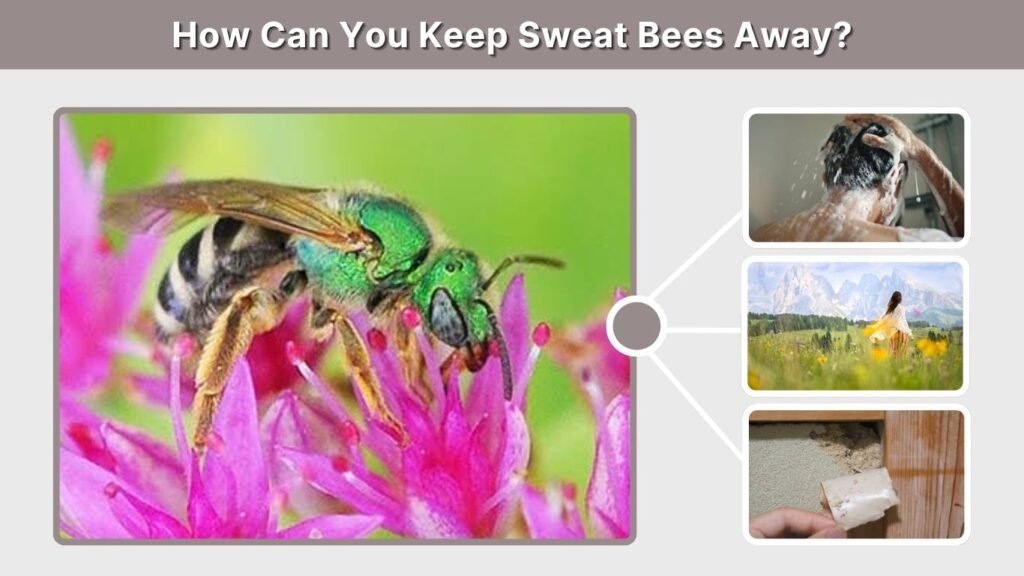
Because sweat bees are valuable pollinators and are rarely aggressive, killing them is usually unnecessary. Reducing their attraction to your body is often enough to make outdoor activities more comfortable.
Ways to Reduce Encounters
You can:
- Wipe away heavy perspiration regularly.
- Shower after intense outdoor activity.
- Wear lightweight clothing that covers more skin.
- Avoid swatting bees that land on you.
- Move calmly away from areas with concentrated bee activity.
- Repair areas where bees repeatedly enter indoor spaces.
Many sweat bees nest in soil and contribute to pollination, so nests that are not creating a safety problem are often best left alone. Ohio State University’s bee guide describes sweat bees as ground-nesting bees, with some species attracted to salts in human sweat.
If large numbers are nesting immediately beside doors, children’s play spaces, or another high-traffic location and stings are occurring regularly, a qualified local pest professional can assess the situation.
FAQs
Can a sweat bee sting you more than once?
Yes. Female sweat bees can potentially sting multiple times because they do not normally lose their stinger after one sting.
Can sweat bees bite?
Sweat bees are not generally considered biting pests. When defending themselves against people, female sweat bees sting rather than bite.
Can you be allergic to sweat bee stings?
Yes. Although most reactions are mild and localized, some people can develop allergic reactions to insect venom. Severe breathing problems, throat swelling, fainting, or widespread hives require emergency medical attention.
Can a sweat bee sting kill you?
For most people, a sweat bee sting causes only mild discomfort. However, a severe allergic reaction such as anaphylaxis can potentially become life-threatening if it is not treated promptly.
Do sweat bees live in Canada?
Yes. Members of the sweat bee family occur across much of North America, including Canada. Their activity is most noticeable during warmer periods when bees are foraging and people are spending more time outdoors.