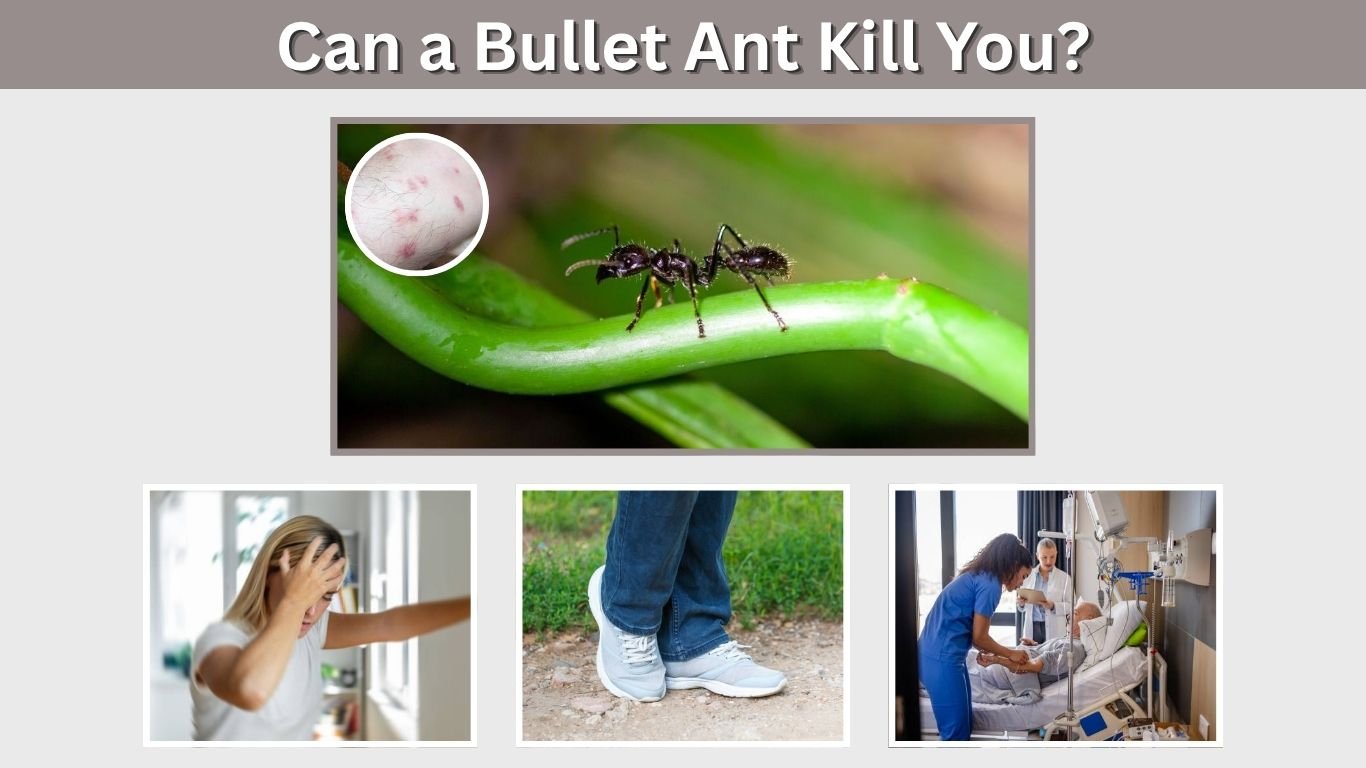
The bullet ant is famous for having one of the most painful insect stings in the world. Because of that reputation, many people ask one simple question: can a bullet ant kill you? In most cases, a single bullet ant sting is extremely painful but not usually deadly for a healthy adult. However, it can still be dangerous if the person has a serious allergic reaction, receives multiple stings, or does not treat the wound properly.
Can a Bullet Ant Kill You?
A bullet ant is not known mainly as a deadly insect. It is known for pain. The species, Paraponera clavata, is a large tropical ant from Central and South America, and AntWiki describes it as a very large New World tropical ant with a powerful sting.
The safest answer is: a bullet ant sting is unlikely to kill most healthy people, but it should not be treated as harmless. Severe allergic reactions to insect venom can become life-threatening. Mayo Clinic notes that anaphylaxis can cause shock, narrowed airways, weak pulse, rash, nausea, vomiting, and breathing trouble.
Does a Bullet Ant Bite or Sting?
Many people search “can a bullet ant kill you if it bites you,” but the famous injury is actually a sting, not a normal bite. Bullet ants have mandibles and can bite, but their venom is delivered through the stinger.
| Search Phrase | Correct Meaning |
| Can a bullet ant kill you? | Usually asking about sting danger |
| Can a bullet ant sting kill you? | More accurate question |
| Can a bullet ant kill you if it bites you? | Usually means sting, not bite |
| Can multiple bullet ant stings kill you? | Possible risk is higher, especially with allergy |
Why People Say “Bite”
People often use “bite” for any painful insect injury. But ants, wasps, bees, and hornets may injure humans through stings. In the bullet ant’s case, the venomous sting is what causes the extreme pain.
How Dangerous Is a Bullet Ant Sting?
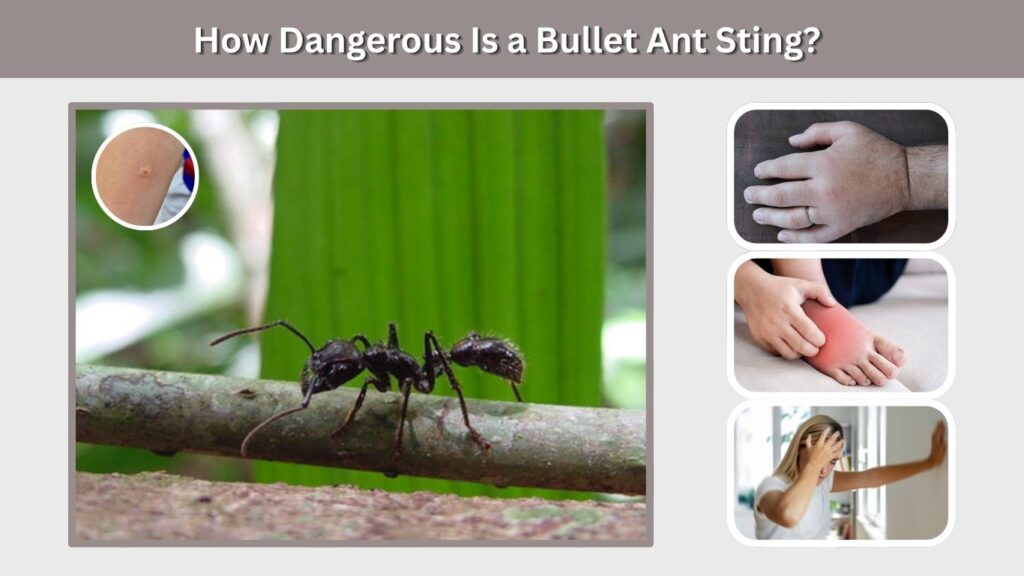
A bullet ant sting is dangerous mainly because of pain and venom reaction. ScienceDirect summarizes that Paraponera clavata injects venom that causes intense, debilitating pain lasting several hours, and the affected area may become greatly swollen within about an hour.
Common Effects
- Severe burning pain
- Throbbing or wave-like pain
- Swelling around the sting area
- Redness and tenderness
- Temporary weakness or shaking
- Possible nausea or sweating
- Possible allergic reaction in sensitive people
For most people, the pain is the biggest problem. For allergic people, the body’s reaction can be the bigger danger.
Why Is the Bullet Ant Sting So Painful?
The bullet ant’s venom contains poneratoxin, a toxin linked to nerve effects and severe pain. A scientific review describes poneratoxin as a voltage-gated sodium channel modulator found in bullet ant venom, helping explain the burning, throbbing pain associated with the sting.
The Natural History Museum also lists the bullet ant among the highest pain-level insects on the Schmidt Sting Pain Index.
Pain vs Deadliness
Painful does not always mean deadly. A bullet ant sting can feel terrifying, but the pain itself is not the same as a fatal toxin dose. The main danger comes when the body reacts badly to the venom or when a person receives many stings.
Can Multiple Bullet Ant Stings Kill You?
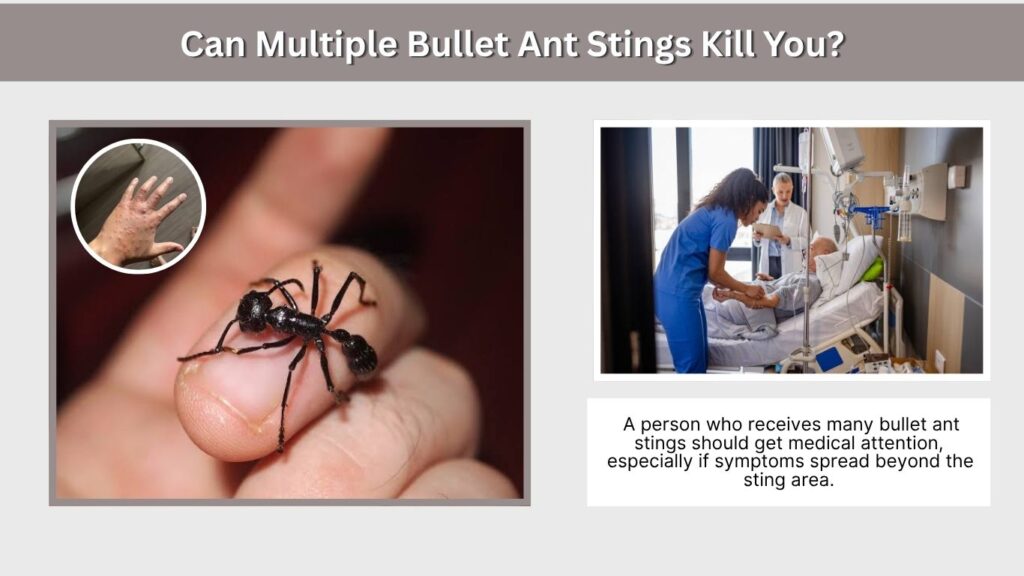
Multiple stings are more concerning than one sting. More stings mean more venom, more pain, more swelling, and a higher chance of serious body-wide symptoms. A person who receives many bullet ant stings should get medical attention, especially if symptoms spread beyond the sting area.
Higher-Risk Situations
- Many stings at once
- Sting near the face, mouth, throat, or neck
- History of insect sting allergy
- Trouble breathing after the sting
- Dizziness, fainting, or confusion
- Widespread hives or swelling
- Severe pain that does not improve
A single sting may not be deadly for most people, but multiple stings should be taken seriously.
What Happens If a Bullet Ant Stings You?
The first symptom is usually sudden, intense pain. The skin may become red, swollen, and warm. The pain may feel sharp, burning, electric, or deep. Some people describe it as coming in waves.
| Time After Sting | Possible Reaction |
| First minutes | Sudden burning or sharp pain |
| First hour | Swelling, redness, throbbing |
| Several hours | Severe pain may continue |
| Later | Soreness, tenderness, itching |
The visible mark may not look as dramatic as the pain feels. A person may only see a small puncture mark, red bump, or swollen patch.
Bullet Ant Sting Treatment
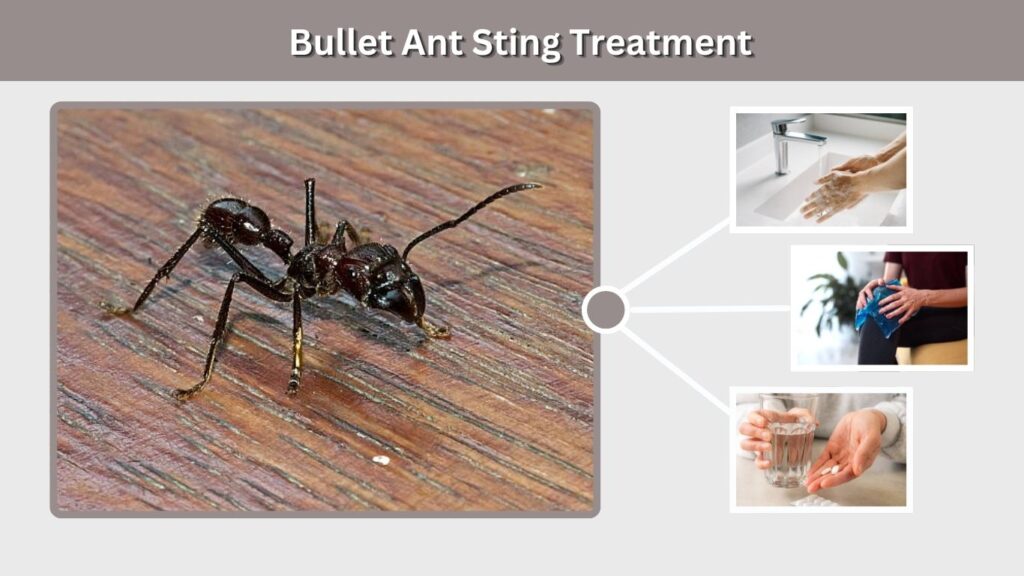
There is no simple home method that instantly removes the pain. Treatment is mostly about cleaning the area, reducing swelling, and watching for emergency symptoms.
First Aid Steps
- Move away from the ant or nest.
- Wash the sting area with soap and clean water.
- Apply a cold pack wrapped in cloth.
- Keep the area raised if possible.
- Avoid scratching the wound.
- Use an over-the-counter pain reliever if safe for you.
- Seek medical help for severe symptoms.
Do not cut the wound, burn the skin, or try to suck out venom. These methods can damage the skin and increase infection risk.
When to Get Emergency Help
Emergency care is needed if there are signs of anaphylaxis or a severe body-wide reaction. Mayo Clinic lists insect venom as a common trigger of anaphylaxis, which can narrow airways and cause shock.
Emergency Warning Signs
- Trouble breathing
- Swelling of the face, lips, tongue, or throat
- Fainting or dizziness
- Rapid or weak pulse
- Chest tightness
- Widespread hives
- Repeated vomiting
- Confusion or collapse
These symptoms are more dangerous than the pain itself.
Where Do Bullet Ants Live?
Bullet ants live in tropical regions of Central and South America. They are mainly associated with humid rainforest habitats. AntWiki notes that workers forage in trees and that nests are often underground at the bases of trees.
This means most people will not meet a true bullet ant unless they are in rainforest areas, especially in countries such as Costa Rica, Panama, Brazil, Peru, Colombia, and nearby regions.
How to Avoid Bullet Ant Stings
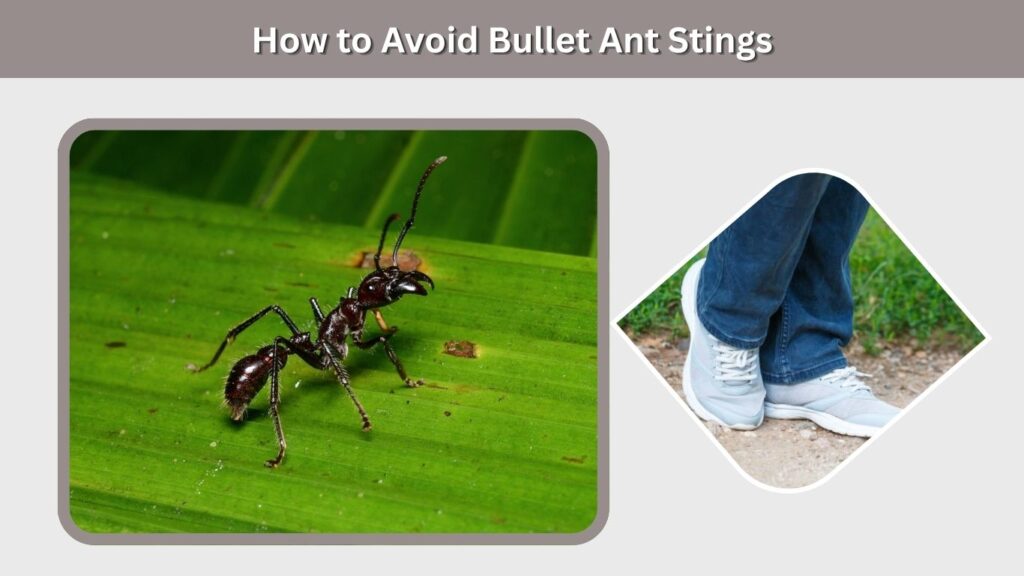
Avoiding the sting is much easier than treating the pain afterward. Bullet ants are not insects to handle for curiosity, videos, or challenges.
Safety Tips
- Do not touch large ants in rainforest areas.
- Do not disturb nests near tree bases.
- Wear closed shoes in forests.
- Watch where you place your hands.
- Avoid leaning on trees without checking first.
- Follow local guides in tropical forests.
- Never try a bullet ant sting challenge.
FAQs
Can a bullet ant sting kill you?
A single bullet ant sting is not usually deadly for a healthy adult, but it can be dangerous. The biggest risks are severe allergic reaction, multiple stings, and stings near sensitive areas like the throat or face.
Can a bullet ant kill you if it bites you?
The famous injury is a sting, not a bite. Bullet ants can bite with their jaws, but the extreme pain comes from venom injected by the stinger. A normal bite is not the main danger.
Can multiple bullet ant stings kill you?
Multiple stings are more dangerous than one sting because more venom enters the body. They can cause severe pain, swelling, and possible body-wide reactions. Medical help is recommended after multiple stings.
What should you do if a bullet ant stings you?
Wash the area with soap and water, apply a cold pack, keep the area raised, and avoid scratching. Get urgent medical help if you have breathing trouble, throat swelling, dizziness, fainting, or widespread hives.
Is bullet ant venom deadly?
Bullet ant venom is famous for extreme pain rather than common fatality. However, insect venom can trigger life-threatening allergic reactions in some people. That is why serious symptoms after a sting should always be treated as an emergency.