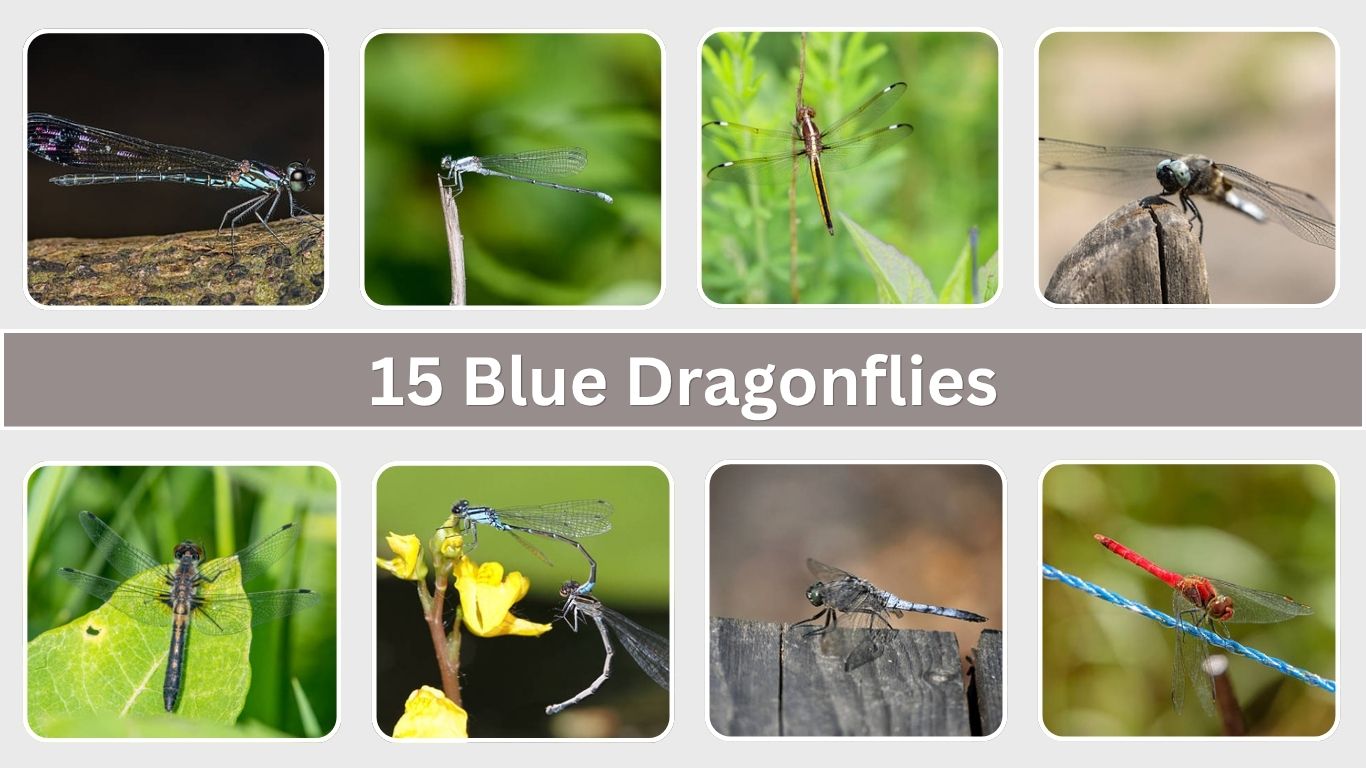
Blue dragonflies are some of the most eye-catching insects found near ponds, lakes, marshes, streams, and wetlands. Their bright blue colors, fast flight, and interesting behaviors make them popular among nature lovers. Some are true dragonflies, while others are damselflies closely related to them. This guide covers 15 beautiful blue species with simple details about their characteristics, habitat, behavior, and diet.
1. Blue Dasher Dragonfly
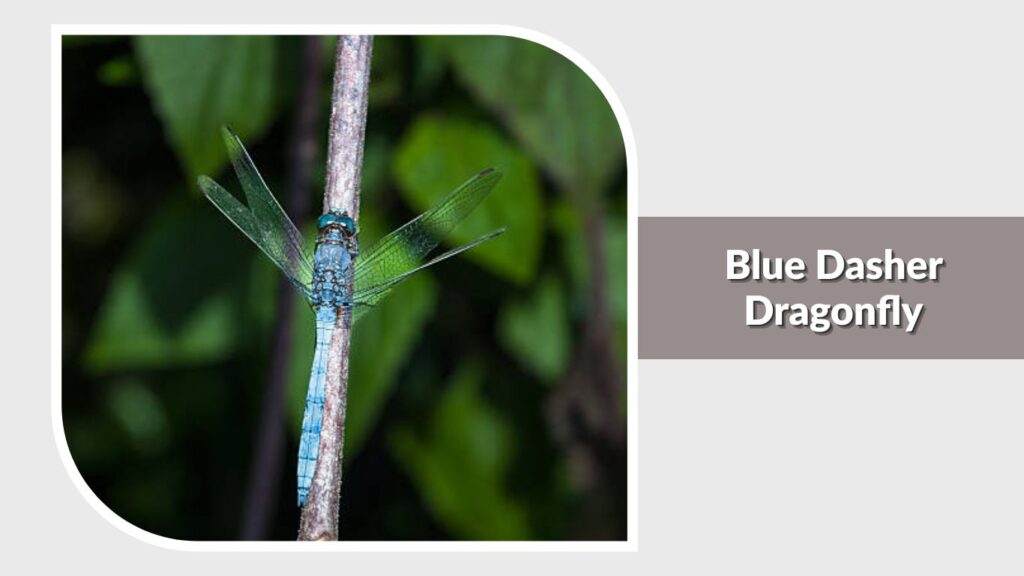
The Blue Dasher is one of the most common and attractive blue dragonflies found near ponds, lakes, marshes, and slow-moving streams. It is known for its bright blue body, quick flying style, and habit of resting on plants near water. This dragonfly is often seen during warm months and is easy to recognize because of its bold color and active behavior.
Characteristics
- The male Blue Dasher has a powdery blue body.
- It has a dark-tipped abdomen and clear wings.
- The face is usually pale or whitish.
- Females are often brownish-yellow with patterned markings.
- It commonly perches on twigs, grasses, or reeds.
- It is a strong and fast flyer.
Habitat
Blue Dashers usually live around still or slow-moving water. They are often found near ponds, wetlands, garden pools, and lakesides. These areas provide food, shelter, and suitable places for laying eggs.
Behavior
This dragonfly is very active and territorial. Males often guard small areas near water and chase away other insects. They frequently return to the same perch after flying out to catch prey.
Diet
Blue Dashers mainly eat small flying insects such as mosquitoes, flies, gnats, and tiny moths. Because they feed on pests, they are helpful insects in natural and garden environments.
2. Blue Emperor Dragonfly
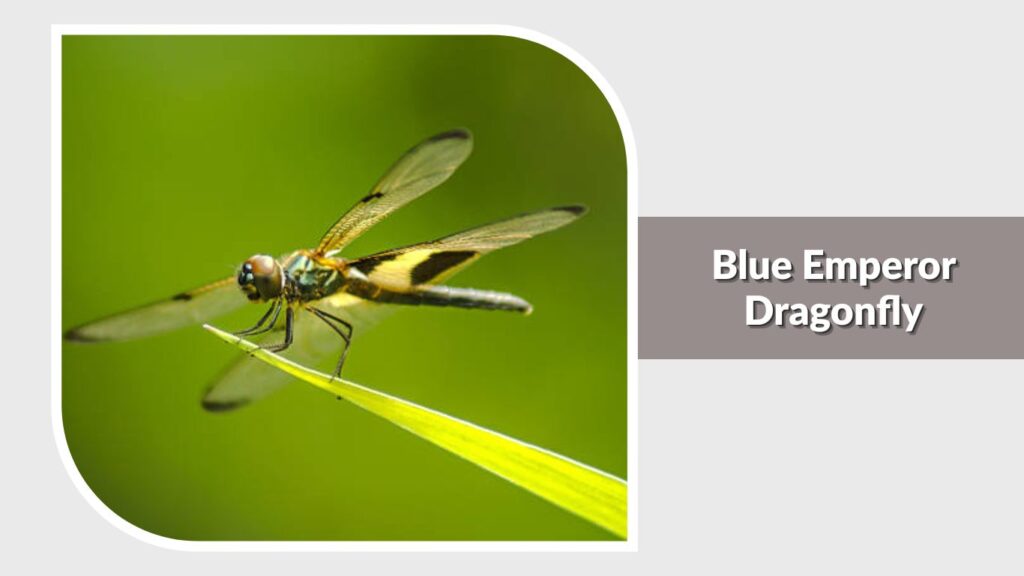
The Blue Emperor is a large and powerful dragonfly known for its bright blue markings and strong flight. It is often seen flying over ponds, lakes, canals, and slow rivers. This dragonfly is easy to notice because of its size, speed, and habit of patrolling open water for long periods.
Characteristics
- The male Blue Emperor has a blue abdomen with dark markings.
- It has a greenish thorax and large clear wings.
- Females are usually green or brownish-green.
- It is one of the larger dragonfly species.
- Its eyes are large and help it hunt while flying.
- It has a strong, steady flying style.
Habitat
Blue Emperors usually live near still or slow-moving freshwater. They prefer ponds, lakes, canals, marshes, and wetlands with plenty of aquatic plants. These plants provide shelter for young dragonflies and places for females to lay eggs.
Behavior
This dragonfly is very active and territorial. Males often patrol the same area over water and chase away rivals. They rarely rest for long and can often be seen flying back and forth.
Diet
Blue Emperors feed on flying insects, including mosquitoes, flies, butterflies, and smaller dragonflies. They catch their prey in the air using their legs and eat while perched or sometimes during flight.
3. Blue Skimmer Dragonfly
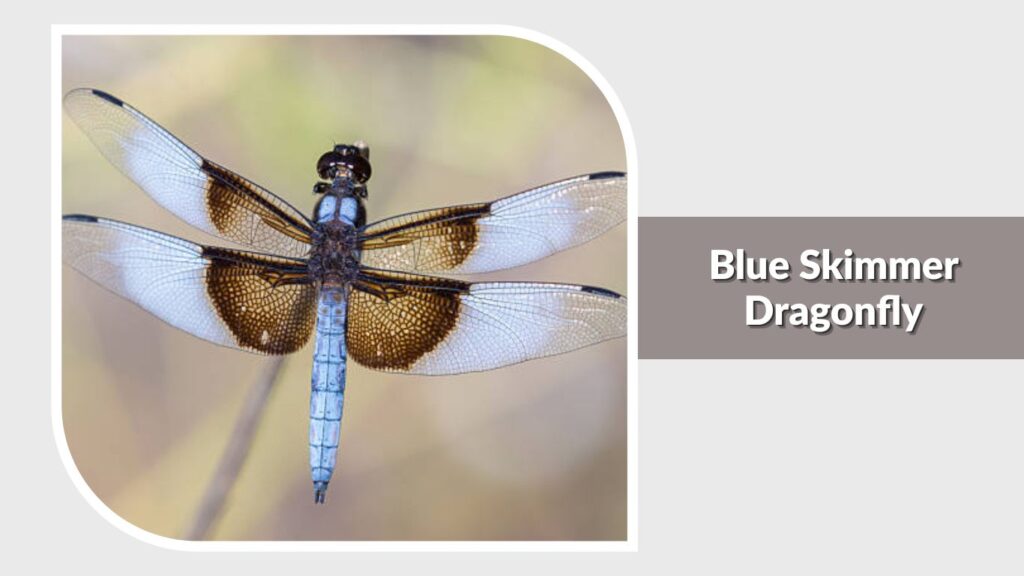
The Blue Skimmer is a beautiful dragonfly often recognized by its soft blue body and calm perching habit. It is commonly found near sunny ponds, wetlands, lakesides, and slow streams. This dragonfly is especially noticeable when it rests on reeds, grasses, or open branches near water.
Characteristics
- Male Blue Skimmers usually have a pale blue body.
- Females are often brown or yellowish with darker markings.
- The wings are mostly clear and delicate.
- It has a medium-sized body compared to many dragonflies.
- Its eyes are large and well-developed.
- It often rests with wings spread wide.
Habitat
Blue Skimmers prefer warm, sunny freshwater areas. They are commonly found around ponds, marshes, ditches, lakes, and slow-moving streams. They need aquatic vegetation because their young develop in the water.
Behavior
This dragonfly often perches quietly and flies out quickly to catch prey. Males may guard small territories near water. After chasing insects or rivals, they usually return to the same resting spot.
Diet
Blue Skimmers eat small flying insects such as mosquitoes, midges, flies, and gnats. They are useful predators because they help reduce pest insects around wetlands and gardens.
4. Blue-eyed Darner Dragonfly
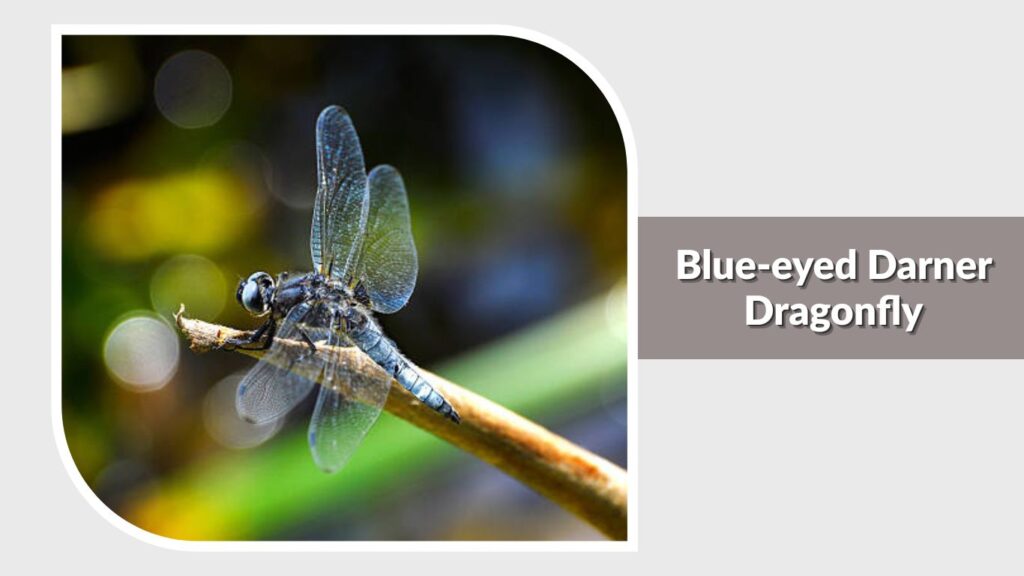
The Blue-eyed Darner is a striking dragonfly known for its bright blue eyes and patterned body. It is a strong flyer and is often seen moving quickly over ponds, lakes, streams, and open fields near water. Its bold colors make it one of the more attractive blue dragonflies.
Characteristics
- It has bright blue eyes, especially in mature males.
- The body has blue and dark patterned markings.
- It has a long, slender abdomen.
- The wings are clear and strong.
- Females may show greenish or yellowish tones.
- It is a fast and skillful flyer.
Habitat
Blue-eyed Darners are usually found near freshwater habitats such as ponds, lakes, marshes, and slow streams. They may also fly through nearby meadows, fields, and woodland edges while searching for food.
Behavior
This dragonfly spends much of its time flying instead of perching. Males often patrol along water edges and may defend their territory. They can fly for long periods while hunting or searching for mates.
Diet
Blue-eyed Darners eat many kinds of flying insects. Their diet includes mosquitoes, flies, moths, and smaller insects. They catch prey in midair and are important natural hunters in wetland ecosystems.
5. Common Blue Damselfly
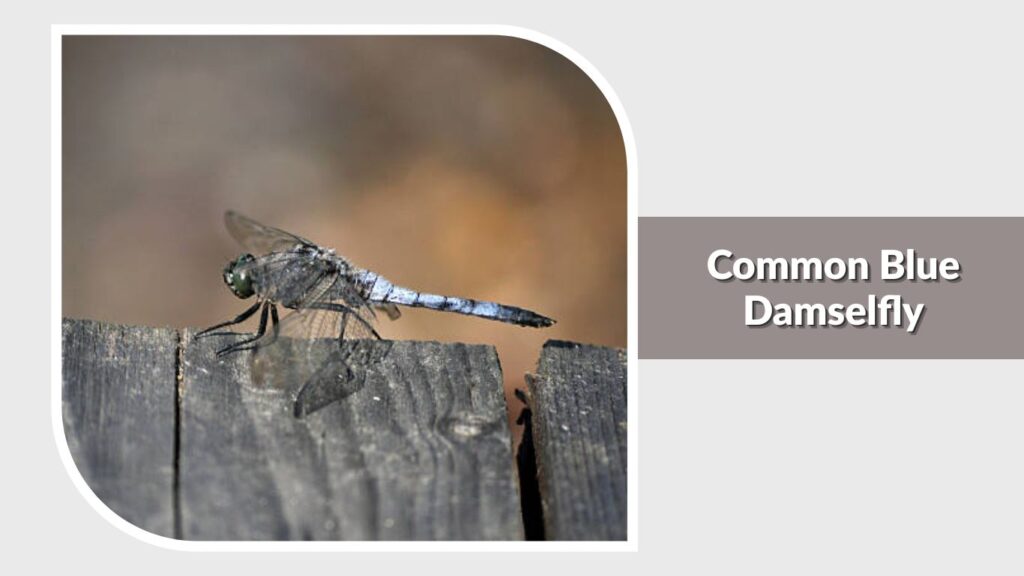
The Common Blue Damselfly is a small and delicate insect often seen near ponds, lakes, canals, and slow streams. Although it is not a true dragonfly, it is closely related and is often grouped with blue dragonflies by nature lovers. Its slim body and bright blue color make it easy to admire.
Characteristics
- Males usually have a bright blue body with black markings.
- Females may be blue, green, or brownish.
- It has a slim and delicate body.
- The wings are clear and held together when resting.
- It is smaller than most dragonflies.
- It has a gentle, fluttering flight.
Habitat
Common Blue Damselflies live around still or slow-moving freshwater. They are often found near ponds, canals, lakes, marshes, and grassy wetland edges. They prefer places with plenty of plants for resting and egg-laying.
Behavior
This damselfly often rests on grasses and reeds close to water. Males may stay near breeding areas and search for females. Their flight is lighter and slower than most dragonflies.
Diet
Common Blue Damselflies feed on tiny insects such as mosquitoes, midges, aphids, and small flies. They help control small pest insects and are an important part of wetland food chains.
6. Azure Hawker Dragonfly
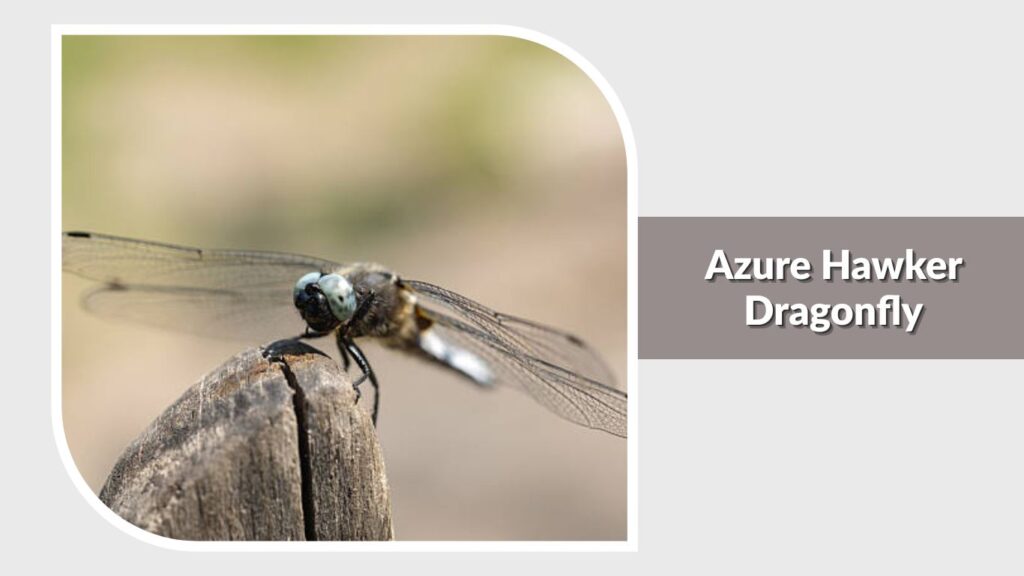
The Azure Hawker is a beautiful blue dragonfly known for its bright markings and strong flying ability. It is usually found around wetlands, bogs, marshes, and quiet freshwater areas. This dragonfly is admired for its bold color, active hunting style, and close connection to clean, natural habitats.
Characteristics
- Males often have blue markings on a dark body.
- Females may show greenish or yellowish markings.
- It has a long, slender abdomen.
- The wings are clear and strong.
- Its large eyes help it detect prey while flying.
- It is a fast and active hunter.
Habitat
Azure Hawkers usually live near bogs, marshes, ponds, and wet woodland areas. They prefer quiet freshwater habitats with plenty of vegetation. These places provide shelter for young dragonflies and good hunting areas for adults.
Behavior
This dragonfly is often seen flying low over wetlands and along vegetation edges. Males may patrol small territories and search for females. It can fly for long periods while hunting insects.
Diet
Azure Hawkers feed on small flying insects such as mosquitoes, flies, midges, and moths. They catch prey in the air using their legs and help control insect populations in wetland areas.
7. Blue-tailed Damselfly
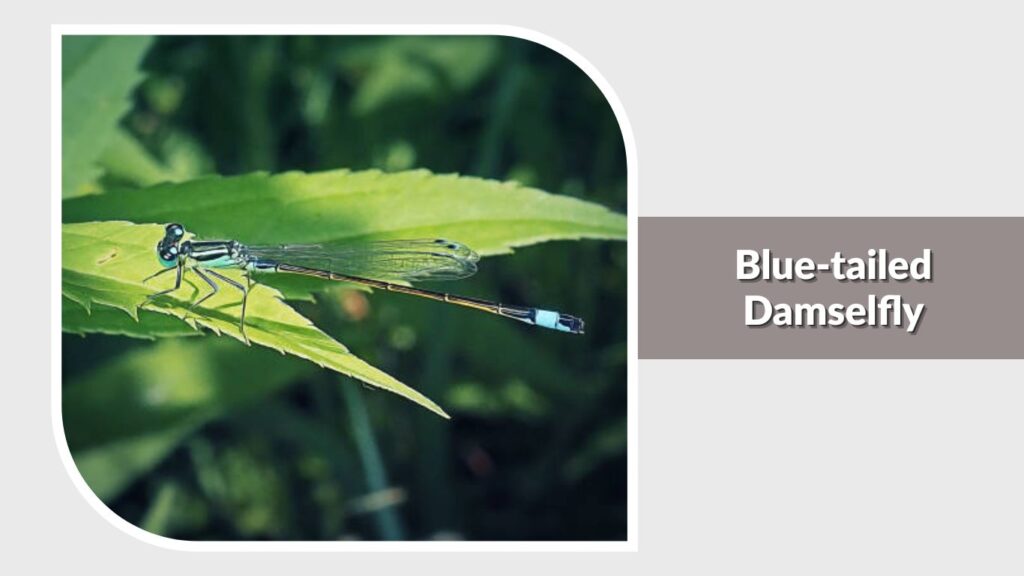
The Blue-tailed Damselfly is a small and delicate insect with a slim body and a bright blue patch near the end of its abdomen. Although it is a damselfly, it is closely related to dragonflies. It is commonly seen near ponds, ditches, canals, lakes, and slow streams.
Characteristics
- It has a thin, dark body with a blue tail patch.
- Males usually have a bright blue marking near the abdomen tip.
- Females can appear in several color forms.
- The wings are clear and held closed when resting.
- It is smaller and slimmer than most dragonflies.
- It has a light, gentle flying style.
Habitat
Blue-tailed Damselflies live around still and slow-moving freshwater. They are often found near ponds, canals, ditches, marshes, and wet grasslands. They prefer areas with reeds, grasses, and other plants for resting and egg-laying.
Behavior
This damselfly often rests on low plants close to water. It flies short distances and quickly returns to vegetation. Males commonly search for females near breeding areas and may stay close to the water’s edge.
Diet
Blue-tailed Damselflies eat tiny insects such as mosquitoes, midges, aphids, and small flies. They are useful predators in gardens, wetlands, and waterside habitats.
8. Spangled Skimmer Dragonfly
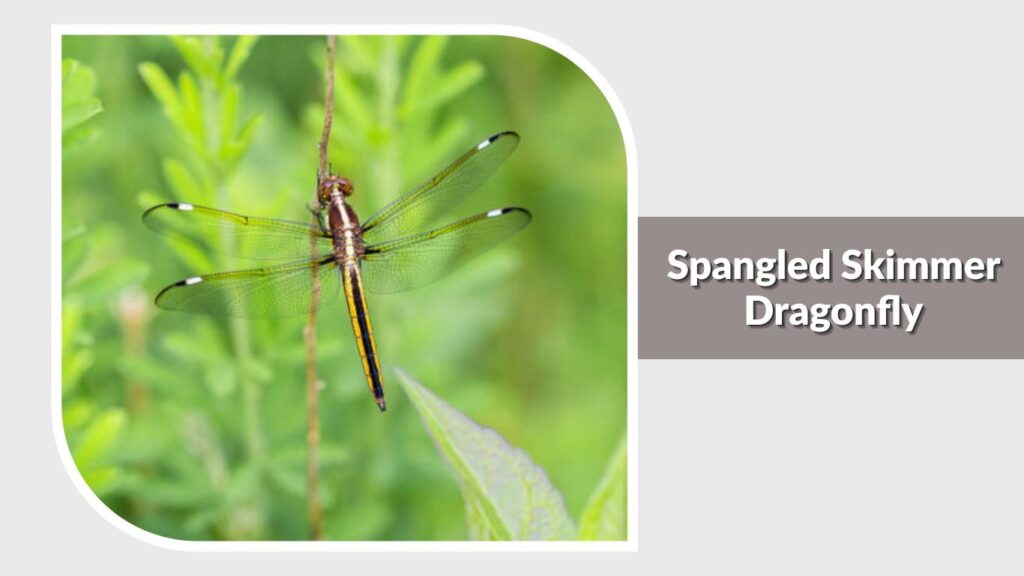
The Spangled Skimmer is a medium-sized dragonfly known for its pale blue body and unique white marks on the wings. These small wing spots make it stand out from many other skimmers. It is often found near ponds, marshes, lakes, and quiet waters with sunny edges.
Characteristics
- Mature males often have a pale blue body.
- It has clear wings with noticeable white wing spots.
- Females are usually brownish or yellowish.
- The body is medium-sized and sturdy.
- It has large eyes for spotting prey.
- It often rests with wings spread wide.
Habitat
Spangled Skimmers prefer sunny freshwater habitats such as ponds, marshes, lakes, and slow streams. They are often seen near open water with grasses, reeds, and shoreline plants. These areas support both adults and developing young.
Behavior
This dragonfly often perches on plants, twigs, or low branches near water. Males may defend small territories and chase away rivals. After short hunting flights, they often return to the same perch.
Diet
Spangled Skimmers feed on flying insects, including mosquitoes, flies, gnats, and small moths. They catch prey in midair and help reduce insect numbers around wetland and garden areas.
9. Frosted Whiteface Dragonfly
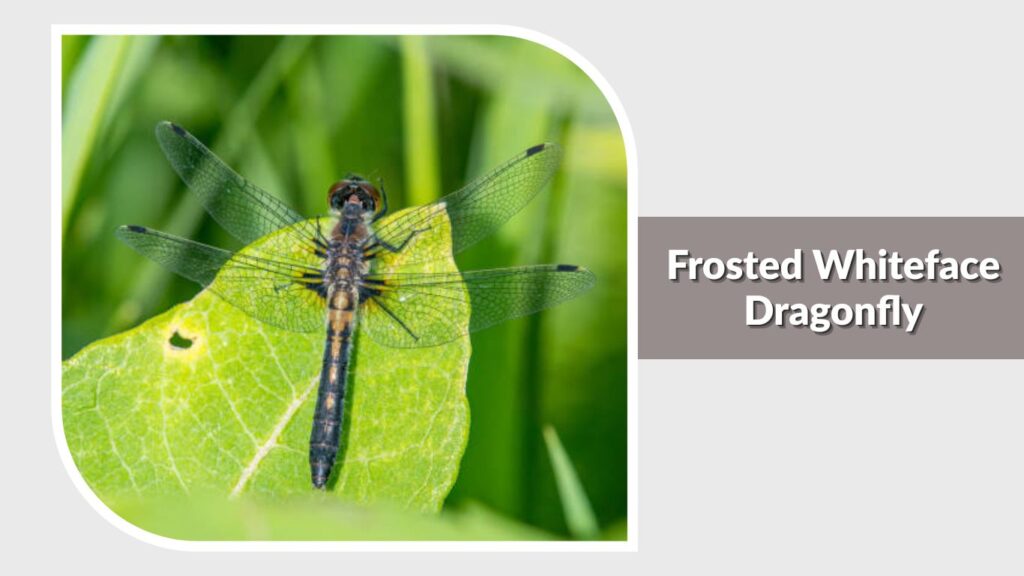
The Frosted Whiteface is a small dragonfly with a dark body and pale blue or frosted markings. It is often found in bogs, marshes, ponds, and wetlands. Its frosty appearance makes it attractive, while its small size and quick movements make it interesting to watch.
Characteristics
- Mature males may show bluish or frosted markings.
- It has a dark body with a pale face.
- The body is smaller than many common dragonflies.
- The wings are mostly clear.
- Females are usually darker with yellowish markings.
- It has a quick and agile flying style.
Habitat
Frosted Whitefaces usually live near boggy ponds, marshes, wetlands, and quiet freshwater areas. They prefer places with rich vegetation and clean water. These habitats provide shelter for young dragonflies and hunting areas for adults.
Behavior
This dragonfly often flies low near water and vegetation. Males may guard small areas during breeding season. It sometimes perches on plants or low stems before flying out to catch prey.
Diet
Frosted Whitefaces eat small flying insects such as mosquitoes, midges, flies, and gnats. They are helpful predators in wetland ecosystems and support natural insect balance.
10. Marsh Bluet Damselfly
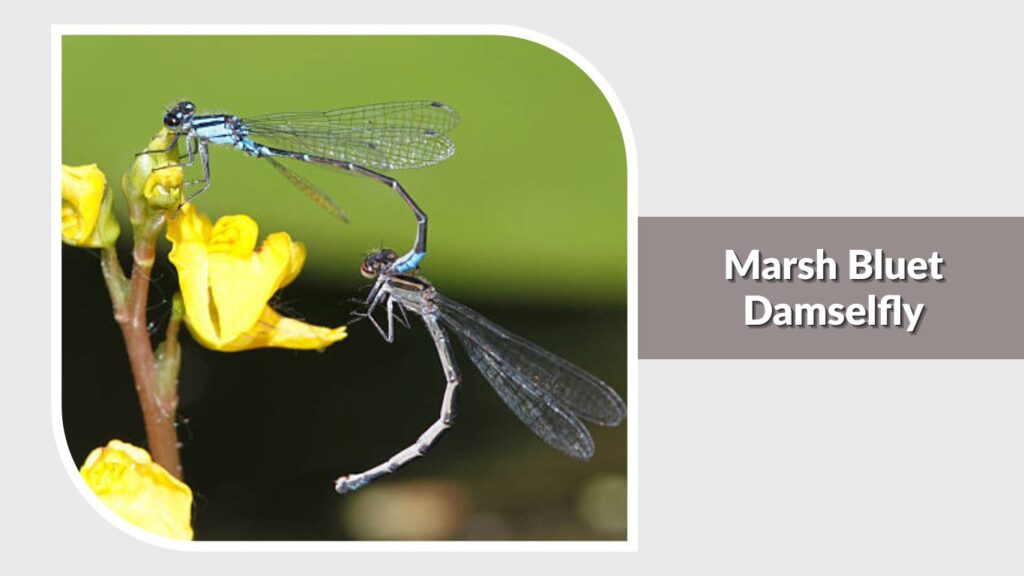
The Marsh Bluet is a small blue damselfly often seen near marshes, ponds, wetlands, and slow-moving waters. It has a slim body with blue and black markings. Though delicate in appearance, it is an active hunter of tiny insects and an important part of freshwater habitats.
Characteristics
- Males usually have blue and black body markings.
- Females may be duller, greenish, or brownish.
- It has a very slim and delicate body.
- The wings are clear and held together when resting.
- It is much smaller than most dragonflies.
- It has a soft, fluttering flight.
Habitat
Marsh Bluets prefer wetlands, marshes, ponds, and quiet water edges with plenty of plants. They are often found resting on grasses, reeds, and low vegetation near water. These plants help them hide, rest, and reproduce.
Behavior
This damselfly usually stays close to vegetation near freshwater. Males often search for females around breeding sites. It flies gently and may move from stem to stem while hunting or resting.
Diet
Marsh Bluets feed on tiny insects, including mosquitoes, midges, aphids, and small flies. They help control small insect populations and provide food for birds, frogs, and larger insects.
11. Tule Bluet Damselfly
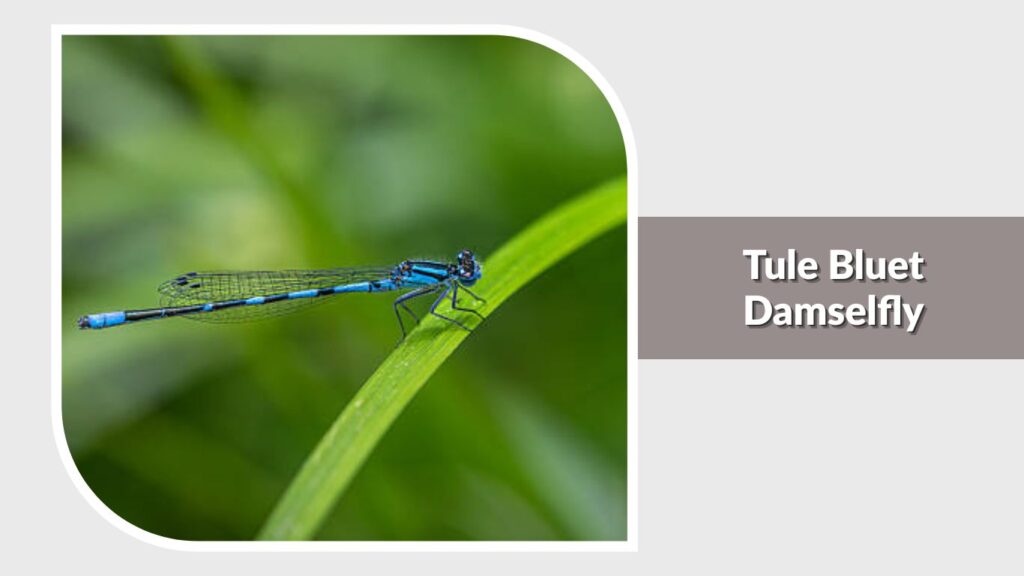
The Tule Bluet is a small blue damselfly often found near ponds, marshes, lakes, and slow-moving streams. It has a slim body with blue and black markings, making it easy to notice on grasses and reeds near water. Although delicate, it is an active hunter and an important part of freshwater ecosystems.
Characteristics
- Males usually have blue and black markings.
- Females may appear duller, greenish, or brownish.
- It has a very thin and delicate body.
- The wings are clear and held together when resting.
- It is smaller than most true dragonflies.
- It has a soft and fluttering flight.
Habitat
Tule Bluets usually live around freshwater areas with plenty of plants. They are common near marshes, ponds, lakesides, canals, and slow streams. Reeds, grasses, and shoreline vegetation give them places to rest, hide, and lay eggs.
Behavior
This damselfly often stays close to the water’s edge. It moves gently from plant to plant and may rest on reeds or grasses for long periods. Males usually search for females near breeding areas.
Diet
Tule Bluets eat tiny flying insects such as mosquitoes, midges, aphids, and small flies. They help control small pest insects and also serve as food for birds, frogs, spiders, and larger insects.
12. Northern Bluet Damselfly
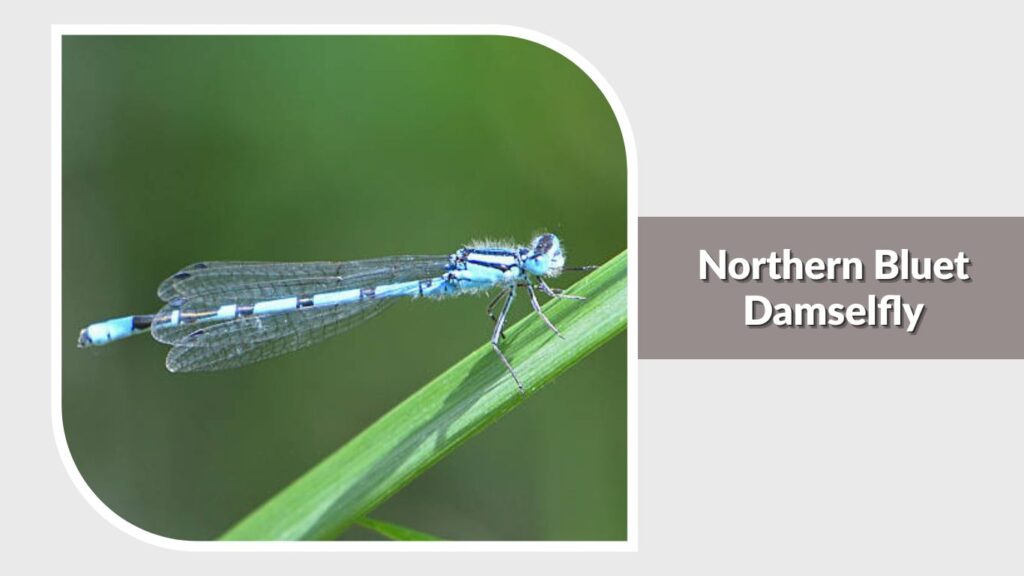
The Northern Bluet is a small and attractive damselfly with blue and black body markings. It is often seen near cool ponds, marshes, lakes, and quiet wetlands. Like other bluets, it is delicate in appearance but active in hunting tiny insects around freshwater plants.
Characteristics
- Males usually show bright blue and black markings.
- Females may be greenish, brownish, or dull blue.
- The body is slim and lightweight.
- Its wings are clear and narrow.
- It holds its wings together when resting.
- It has a gentle, floating flight.
Habitat
Northern Bluets are usually found near ponds, marshes, lakes, bogs, and slow streams. They prefer freshwater habitats with grasses, reeds, and aquatic plants. These areas provide good shelter and breeding spaces.
Behavior
This damselfly often rests on low vegetation near the water. It flies short distances and returns to plants quickly. During the breeding season, males stay near wetland edges and search for females.
Diet
Northern Bluets feed on very small insects, including mosquitoes, midges, gnats, aphids, and tiny flies. Their feeding helps maintain balance in wetland insect populations and supports the food chain.
13. Powdered Dancer Damselfly
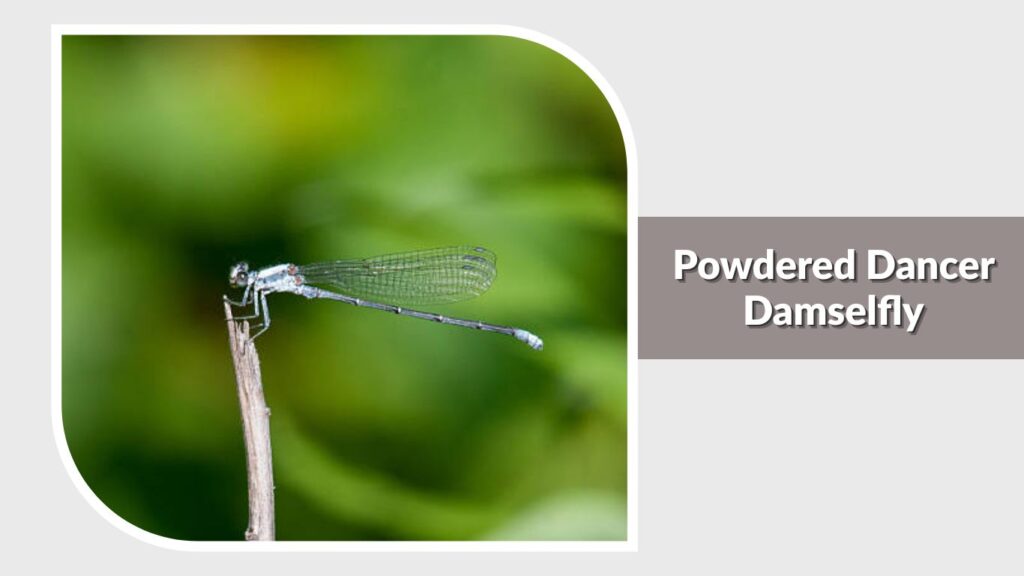
The Powdered Dancer is a slim damselfly known for the pale, powdery blue color seen on mature males. It is often found near rivers, streams, ponds, and lake edges. Its soft blue appearance and delicate movement make it a beautiful insect to observe in sunny freshwater habitats.
Characteristics
- Mature males often have a powdery blue body.
- Females are usually brownish or grayish.
- It has a long and slender body.
- The wings are clear and narrow.
- It rests with its wings held together.
- It has a light and graceful flight.
Habitat
Powdered Dancers usually live near clean freshwater, especially streams, rivers, ponds, and lakeshores. They often rest on rocks, grasses, reeds, and low plants near the water. These habitats provide food, shelter, and breeding areas.
Behavior
This damselfly often moves gently along the water’s edge. Males may perch near breeding sites and watch for females. They fly short distances to catch prey or escape danger, then return to resting spots.
Diet
Powdered Dancers eat small insects such as mosquitoes, midges, gnats, aphids, and tiny flies. They catch prey while flying and help reduce small insect populations near freshwater areas.
14. Stream Bluet Damselfly
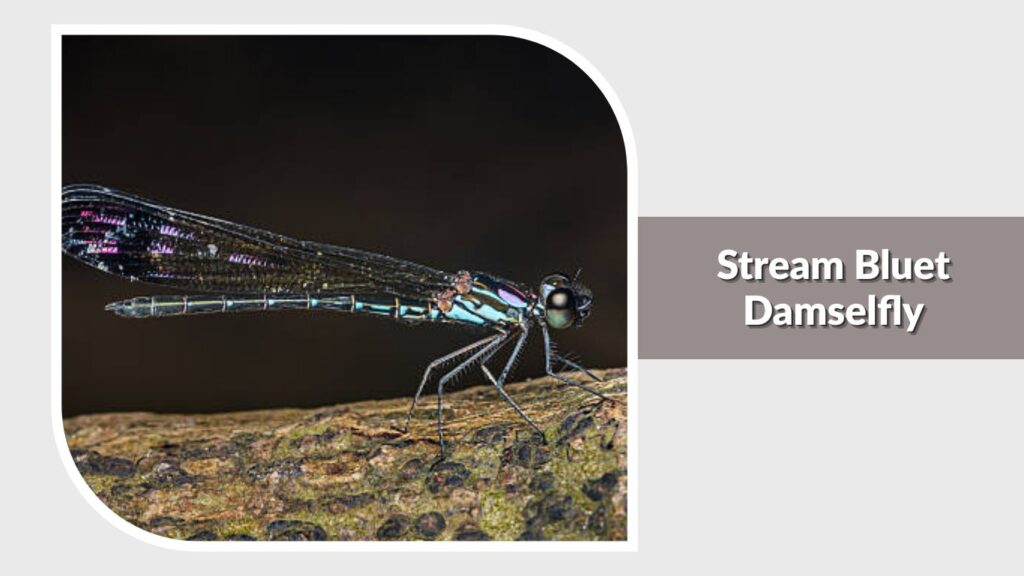
The Stream Bluet is a small blue damselfly commonly found near streams, rivers, and other flowing freshwater habitats. It has a slim body with blue and dark markings. This delicate insect is often seen resting on grasses, stones, or plants along clean water edges.
Characteristics
- Males usually have blue and black body patterns.
- Females may appear greenish, brownish, or dull blue.
- It has a thin and delicate body.
- The wings are clear and narrow.
- It holds its wings together while resting.
- It has a soft, quick flight near water.
Habitat
Stream Bluets prefer flowing freshwater such as streams, creeks, and small rivers. They may also be found near ponds or wetlands connected to moving water. Vegetation along the banks gives them shelter and resting places.
Behavior
This damselfly usually remains close to the water. It rests on low plants, grasses, or stones and makes short flights when hunting. Males often stay near suitable breeding areas and look for females.
Diet
Stream Bluets feed on tiny flying insects, including mosquitoes, midges, gnats, aphids, and small flies. They are helpful predators in streamside habitats and part of the natural food chain.
15. Variable Dancer Damselfly
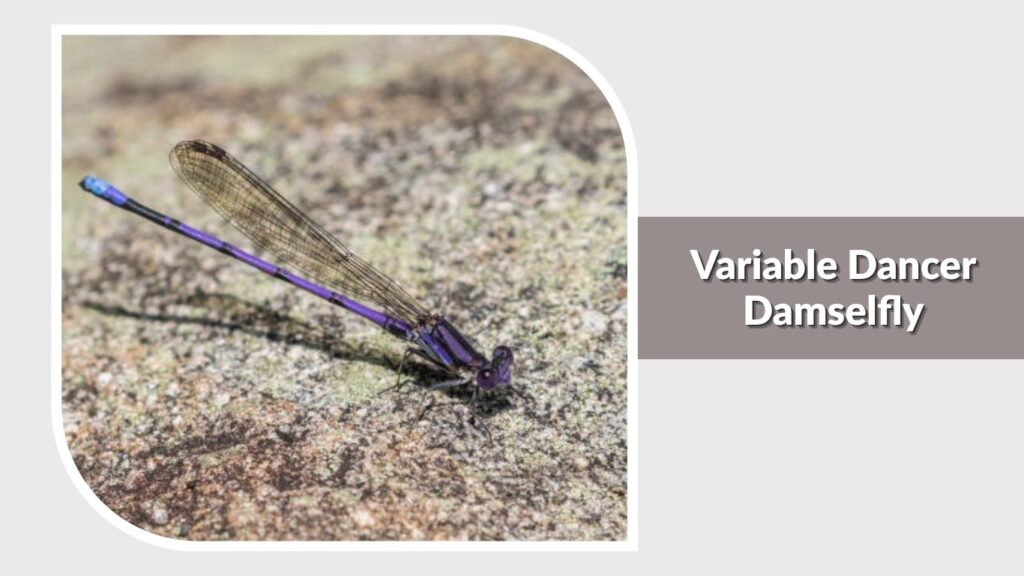
The Variable Dancer is a slender damselfly that may show blue, purple, or dark markings depending on age, sex, and location. It is often found near streams, rivers, ponds, and lakes. Its delicate body and graceful movement make it a common sight around freshwater edges.
Characteristics
- Males may show blue or violet markings.
- Females are often brownish, grayish, or dull-colored.
- It has a long, slim body.
- The wings are clear and held together at rest.
- Its color can vary between individuals.
- It has a light and graceful flying style.
Habitat
Variable Dancers live near freshwater habitats such as streams, rivers, ponds, lakes, and wetlands. They prefer areas with plants, grasses, stones, or low branches near the water. These spaces help them rest, hide, and reproduce.
Behavior
This damselfly often perches near water and makes short, gentle flights. Males may patrol small areas and search for females. It is usually seen close to vegetation or along sunny stream banks.
Diet
Variable Dancers eat tiny insects such as mosquitoes, gnats, midges, aphids, and small flies. They help control small insect populations and provide food for larger predators in freshwater ecosystems.