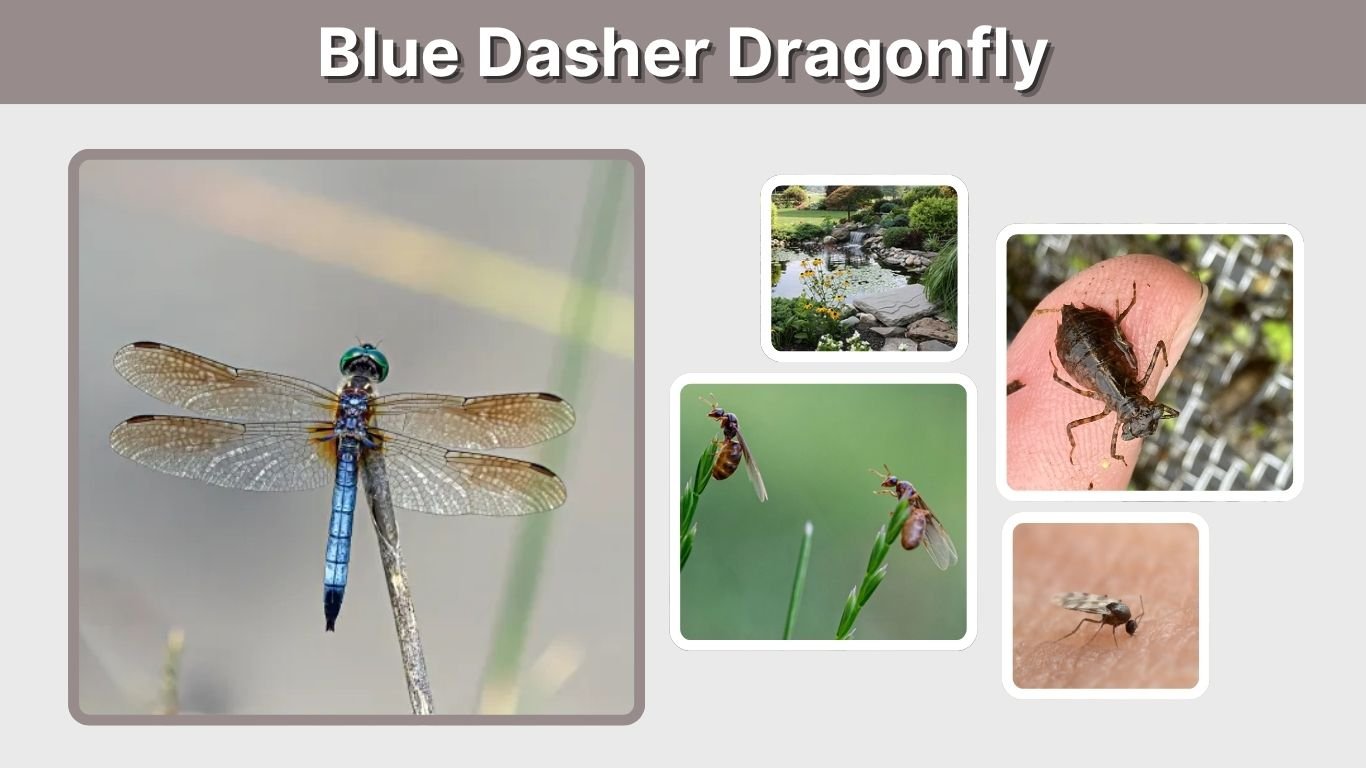
The blue dasher dragonfly is a small but striking dragonfly commonly seen around ponds, lakes, marshes, and slow-moving water across much of North America. Mature males are easy to recognize by their powdery blue abdomen, while females and young males are more yellow and brown with striped markings. Scientifically known as Pachydiplax longipennis, this active predator spends warm days perching on vegetation and darting after flying insects. Blue dashers are beneficial insects that help control mosquitoes, flies, and other small pests.
What Is a Blue Dasher Dragonfly?
The blue dasher is a member of the skimmer dragonfly family, Libellulidae. Despite its scientific name longipennis, meaning “long-winged,” its wings are not unusually long compared with many other dragonflies. Blue dashers are known for their fast, darting flights and frequent habit of returning to exposed perches after chasing prey or rival dragonflies.
Blue Dasher Quick Facts
- Scientific name: Pachydiplax longipennis
- Family: Libellulidae
- Type: Dragonfly
- Adult length: About 1–1.7 inches
- Color: Blue in mature males; yellow-brown in females
- Habitat: Ponds, lakes, marshes, and slow streams
- Diet: Mosquitoes, flies, gnats, and other insects
- Young stage: Aquatic nymph
- Activity: Mainly during warm daylight hours
- Range: Much of the United States and nearby regions
Why Is It Called a Blue Dasher?
The name refers to two of its most recognizable traits. Mature males develop a blue, powder-like coating over much of the abdomen, while both sexes can make rapid dashing flights when hunting insects or defending territory.
Their frequent short flights between perches make the “dasher” name particularly appropriate.
Blue Dasher Identification
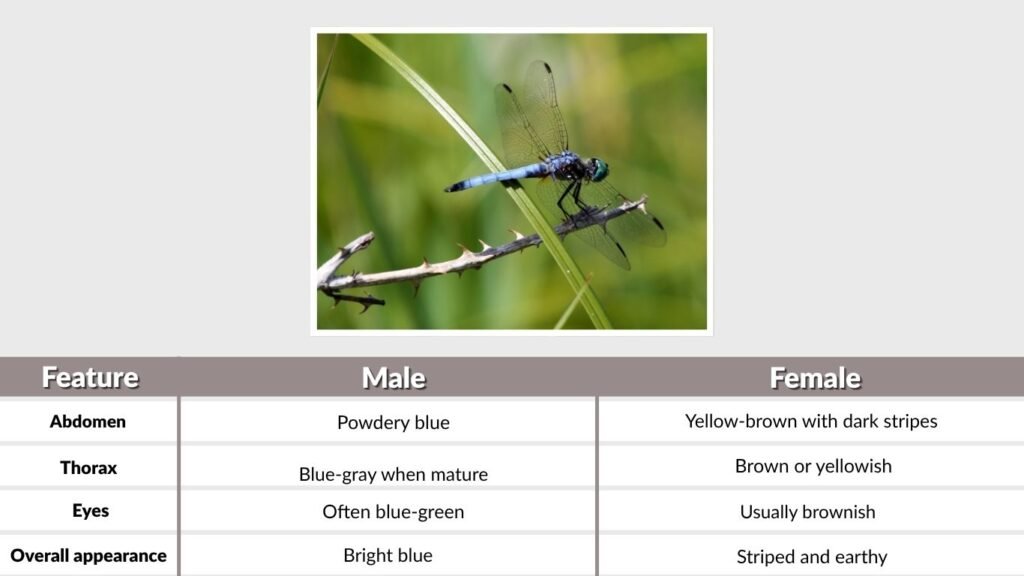
Blue dashers are relatively small compared with many large dragonflies, but their body coloration and perching habits make them noticeable. Males and females look quite different, especially when fully mature. Age can also affect coloration, so young males may initially resemble females before gradually developing their characteristic blue appearance.
Male Blue Dasher
Mature males are the classic electric-blue dragonflies that give the species its common name.
Important male features include:
- Powdery blue abdomen
- Darkened tip of the abdomen
- Pale blue or grayish thorax
- Greenish or bluish eyes
- Mostly clear wings
- Small dark patches near the bases of the hindwings
- Slender body with long wings
The blue coloration is caused by a waxy surface coating called pruinosity. Males develop more of this coating as they mature.
Female Blue Dasher
Females are usually less blue and have a completely different pattern.
They typically have:
- Yellow or golden-brown abdomen
- Dark longitudinal stripes along the abdomen
- Brownish or yellowish thorax
- Reddish-brown or brown eyes
- Clear wings with small dark basal markings
Females can sometimes be mistaken for other small skimmer dragonflies because they lack the male’s obvious blue coloration.
Blue Dasher Male vs. Female
| Feature | Male | Female |
| Abdomen | Powdery blue | Yellow-brown with dark stripes |
| Thorax | Blue-gray when mature | Brown or yellowish |
| Eyes | Often blue-green | Usually brownish |
| Overall appearance | Bright blue | Striped and earthy |
| Territorial behavior | Very noticeable | Generally less territorial |
Blue Dasher Habitat and Range
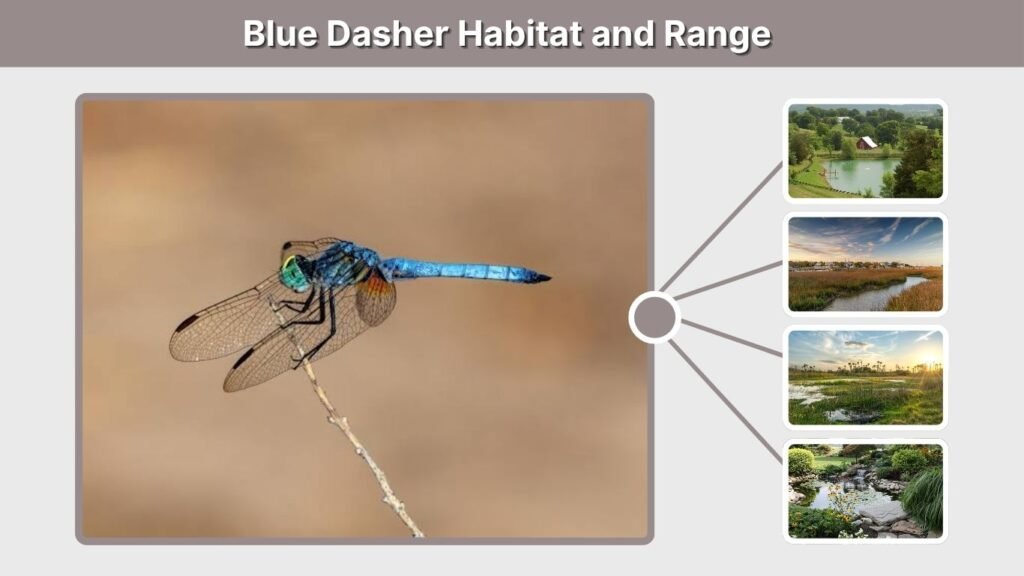
Blue dashers thrive around still or slow-moving freshwater habitats. They are particularly successful around sunny ponds with abundant vegetation because these environments provide breeding sites, hunting opportunities, and exposed perches. Adults may also travel away from water while feeding, especially through open fields and garden areas.
Where Do Blue Dashers Live?
Common habitats include:
- Farm ponds
- Lakeshores
- Marshes
- Wetlands
- Slow-moving streams
- Ditches containing permanent water
- Swamps
- Vegetated ponds
- Garden ponds
They often perch on reeds, grasses, twigs, fences, and other exposed surfaces where they can watch for passing insects.
Blue Dasher Range
Blue dashers are widespread across much of the United States. They are especially common through eastern, central, and southern regions but also occur in portions of western North America.
Their ability to tolerate a variety of freshwater environments has helped make them one of the more frequently encountered dragonflies around human-modified ponds and wetlands.
What Do Blue Dashers Eat?
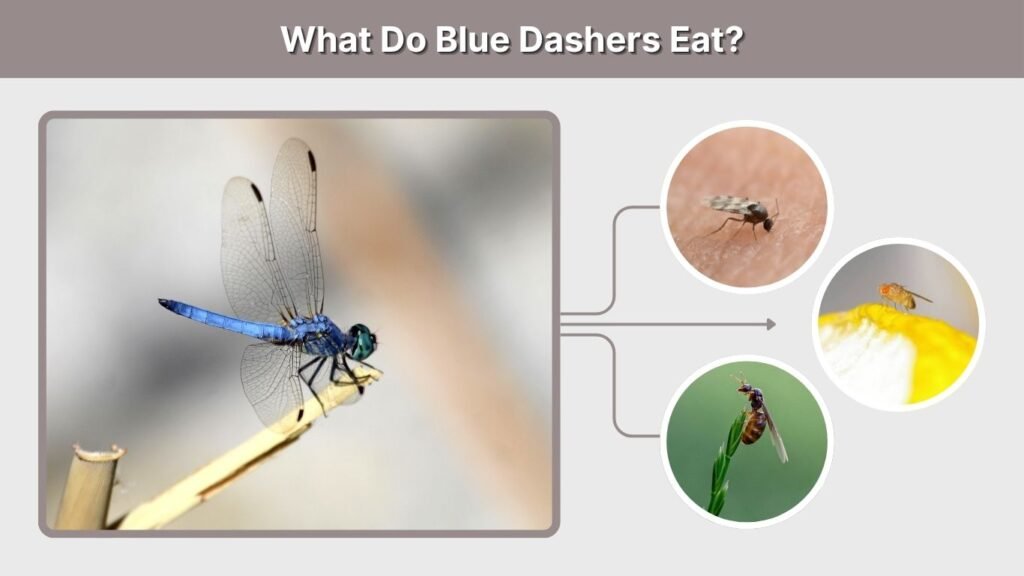
Blue dashers are carnivorous predators throughout both their adult and aquatic stages. Adults hunt visually, using their large compound eyes to detect small flying insects. They frequently launch from a perch, capture prey in midair with their legs, and either consume it during flight or return to a perch.
Blue Dasher Diet
Common prey includes:
- Mosquitoes
- Gnats
- Midges
- Small flies
- Tiny moths
- Flying ants
- Small beetles
- Other small airborne insects
Their insect-eating behavior makes blue dashers beneficial around ponds, gardens, and wetlands.
How Do Blue Dashers Hunt?
Rather than flying constantly, blue dashers frequently use a “sit-and-wait” strategy. An individual rests on an exposed perch and watches the surrounding airspace.
When prey passes nearby, the dragonfly darts upward, catches the insect, and often returns to the same perch.
Their legs form a basket-like structure beneath the body during flight, allowing them to scoop insects from the air.
Blue Dasher Life Cycle
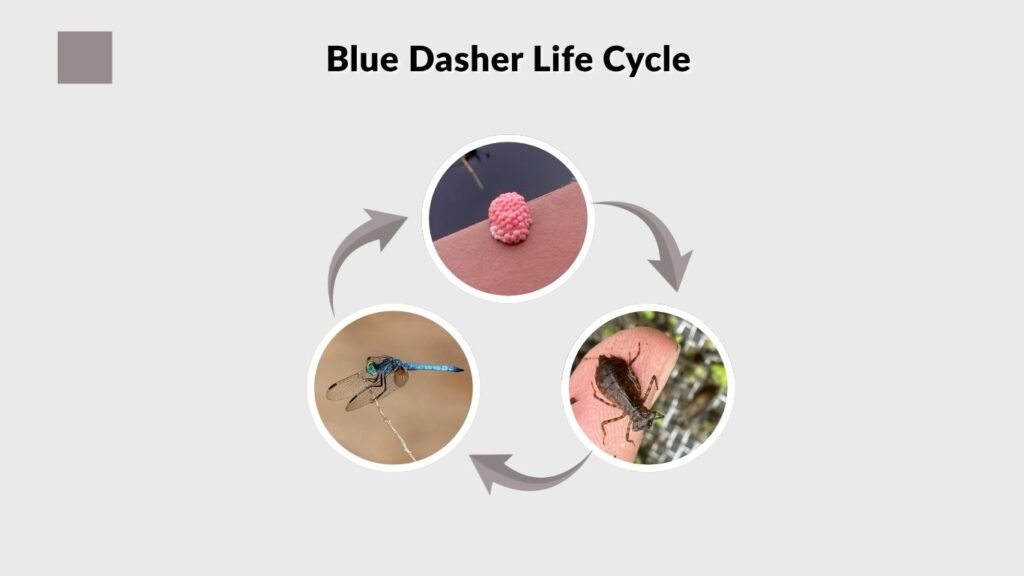
Like all dragonflies, blue dashers undergo incomplete metamorphosis. Their development includes egg, aquatic nymph, and adult stages without a pupal stage. Most of their early life takes place underwater, making the aquatic portion of the life cycle very different from the colorful flying adults people typically notice.
Eggs and Reproduction
Mating usually takes place around suitable freshwater habitat. Male blue dashers may establish and defend territories, chasing away rival males while watching for females.
After mating, females deposit eggs into water, often touching the surface repeatedly with the tip of the abdomen while flying.
Eggs eventually hatch into aquatic nymphs.
Blue Dasher Nymph
The nymph lives underwater and looks nothing like an adult dragonfly. It has a compact body, six legs, and a specialized extendable mouthpart used for capturing prey.
Blue dasher nymphs may eat:
- Mosquito larvae
- Aquatic insect larvae
- Tiny crustaceans
- Small aquatic organisms
- Other suitable invertebrates
The nymph molts repeatedly as it grows.
From Nymph to Adult
When development is complete, the mature nymph crawls out of the water onto vegetation, rocks, stems, or another exposed surface.
Its outer skin splits and the adult slowly emerges. The wings expand and harden before the new dragonfly is capable of strong flight.
The empty nymph skin, called an exuvia, may remain attached to the emergence site.
Blue Dasher Behavior and Characteristics
Blue dashers are highly visual, active insects that become particularly noticeable on hot sunny days. Males often perch conspicuously and repeatedly return to favorite locations after short flights. Territorial disputes can involve rapid chasing, circling, and aerial maneuvering.
Why Do Blue Dashers Point Their Abdomen Up?
On extremely hot days, blue dashers sometimes point their abdomen nearly vertically toward the sun. This behavior is commonly called the obelisk posture.
By reducing the amount of body surface directly exposed to sunlight, the dragonfly can limit heat absorption and help regulate its body temperature.
This behavior is especially noticeable during midday when sunlight is intense.
Do Blue Dashers Bite or Sting?
Blue dashers do not have stingers and are not dangerous to people. Dragonflies have mouthparts designed for consuming insects, but they do not normally bite humans.
If handled roughly, a large dragonfly might attempt to nip defensively, but blue dashers pose essentially no meaningful threat.
They are much more interested in hunting insects than interacting with humans.
Blue Dasher Predators and Ecological Role
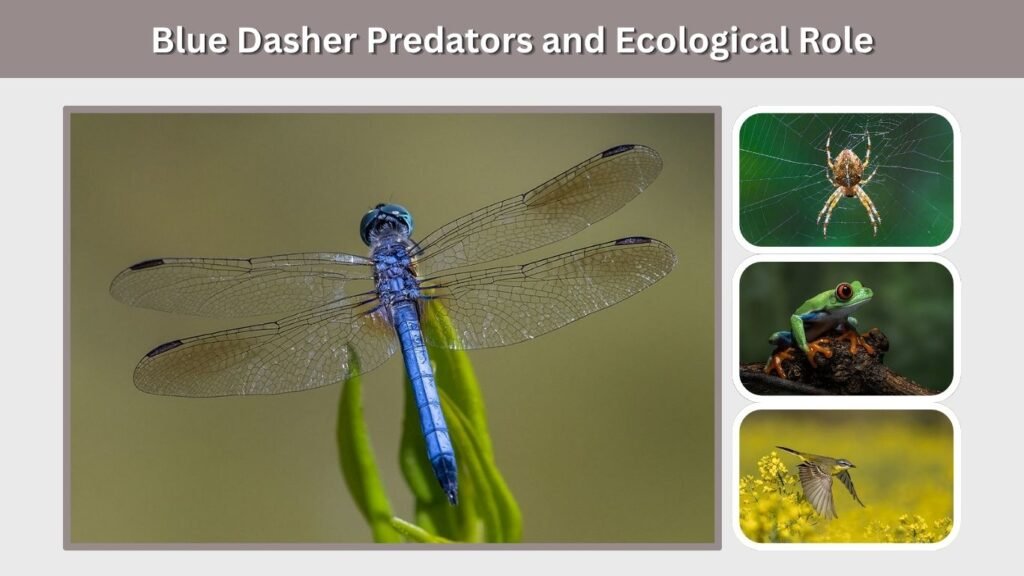
Although blue dashers are effective aerial predators, they are also important prey for other wildlife. Their aquatic nymphs and flying adults connect freshwater ecosystems with surrounding terrestrial habitats and form part of a much larger food web.
Common Predators
Blue dashers may be eaten by:
- Birds
- Frogs
- Fish
- Larger dragonflies
- Spiders
- Predatory insects
- Small reptiles
Aquatic nymphs face particularly heavy predation from fish and other aquatic hunters.
Why Blue Dashers Are Beneficial
Blue dashers consume numerous small insects, including mosquitoes and midges. Their nymphs also prey on mosquito larvae and other aquatic organisms.
However, dragonflies should not be viewed simply as mosquito-control machines. They are generalist predators that consume whatever suitably sized prey is available.
Their presence around a pond can also indicate that the area provides enough aquatic habitat to support dragonfly reproduction.
Blue Dasher vs. Eastern Pondhawk
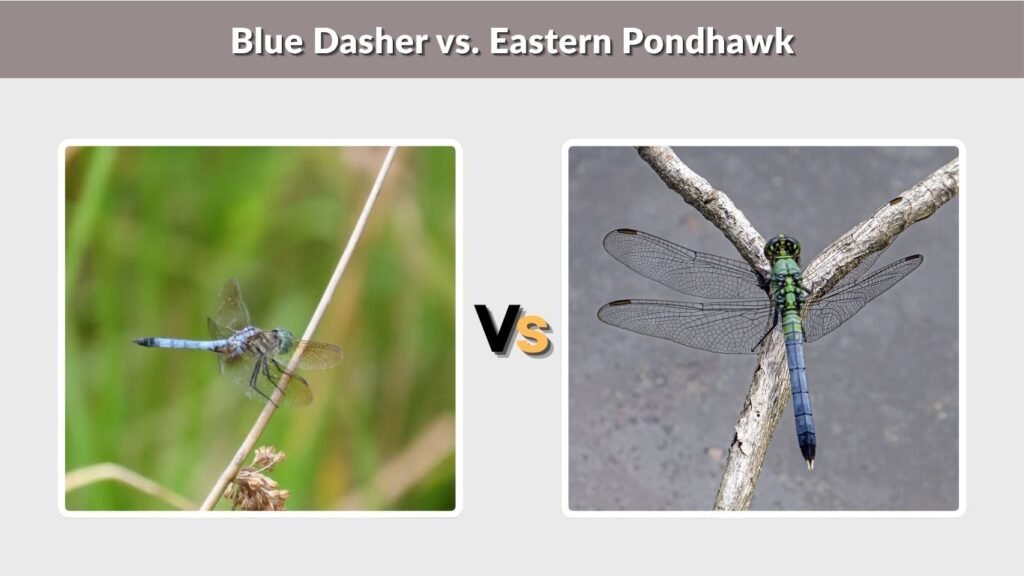
Blue dashers and eastern pondhawks can both appear bright blue and may live around similar freshwater habitats. Their size, coloration, and body structure provide useful identification clues.
How to Tell Them Apart
Mature male blue dashers are generally smaller and have a powdery blue abdomen with a darker tip. Their thorax can also develop a pale bluish appearance.
Male eastern pondhawks are usually larger and more robust, with a green face and a noticeably stronger body.
Female pondhawks are especially distinctive because they are bright green with dark abdominal markings, whereas female blue dashers are more yellow-brown and striped.
Blue Dasher Spiritual Meaning
There is no scientific spiritual meaning specifically associated with the blue dasher. Symbolic interpretations come from personal beliefs, traditions, and broader associations with dragonflies rather than biological research.
Dragonflies are sometimes used symbolically to represent transformation, adaptability, change, renewal, or personal growth. Their transition from an aquatic nymph to a powerful flying adult makes this interpretation easy to understand. The blue color may additionally be associated by some people with calmness, clarity, or communication.
FAQs
What is the scientific name of the blue dasher?
The scientific name of the blue dasher dragonfly is Pachydiplax longipennis. It belongs to the family Libellulidae.
Is a blue dasher really a dragonfly?
Yes. The blue dasher is a true dragonfly and one of the common skimmer dragonflies found around freshwater habitats in North America.
How can you tell a female blue dasher from a male?
Mature males have powdery blue abdomens, while females are primarily yellow or brown with dark longitudinal stripes. Young males can resemble females before developing their blue coloration.
What does a blue dasher dragonfly eat?
Adults mainly eat mosquitoes, gnats, midges, flies, and other small flying insects. Aquatic nymphs feed on mosquito larvae and other small aquatic animals.
Where do blue dasher dragonflies live?
Blue dashers commonly inhabit ponds, marshes, lakeshores, wetlands, slow streams, and other sunny freshwater environments with abundant vegetation.