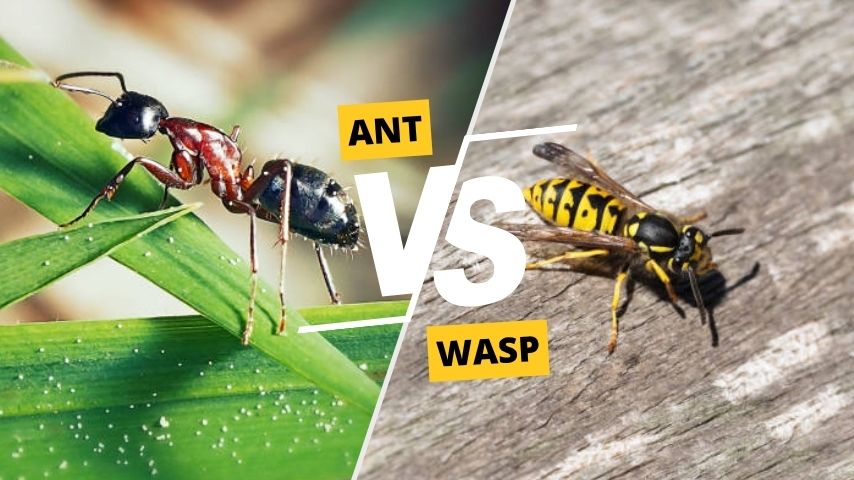
Ants and wasps are closely related insects that belong to the same scientific order, yet they behave very differently in nature. Ants are known for their powerful colonies and teamwork, while wasps are famous for their painful stings and flying ability. Many people compare ants and wasps because of their similar body shape, social structure, and defensive behavior. Questions about flying ants vs wasps, ant stings vs wasp stings, and which insect would win in a fight are especially common. Understanding their differences helps explain why these insects survive so successfully worldwide.
Ant vs Wasp: What’s the Main Difference?
Although ants and wasps belong to the Hymenoptera order, they differ greatly in body structure, behavior, and survival strategies. Ants usually live in underground colonies and rely heavily on teamwork, while wasps are often flying predators that use venomous stings for hunting and defense. These differences affect how they build nests, find food, and protect their colonies from danger.
Body Structure Differences
Ants and wasps share similar segmented bodies but have several noticeable physical differences.
- Ants usually have elbowed antennae
- Wasps have straighter antennae
- Wasps often have wings
- Ant bodies appear thicker
- Wasps have narrow waists
- Wasps usually possess visible stingers
Social Behavior Comparison
Both ants and wasps can live in colonies with queens and workers, but their colony behavior differs in important ways.
Ant colonies often contain thousands or even millions of workers focused on gathering food and expanding underground tunnels. Wasp colonies are usually smaller and more defensive, especially during nesting season when workers aggressively protect larvae and queens.
Hunting and Feeding Differences
Ants are often scavengers that collect food from many sources including seeds, insects, and sugary materials. Some species also farm fungi or protect aphids for honeydew production.
Wasps are more active predators and hunters. Many species capture caterpillars, spiders, and other insects to feed developing larvae inside their nests.
Are Ants and Wasps Related?
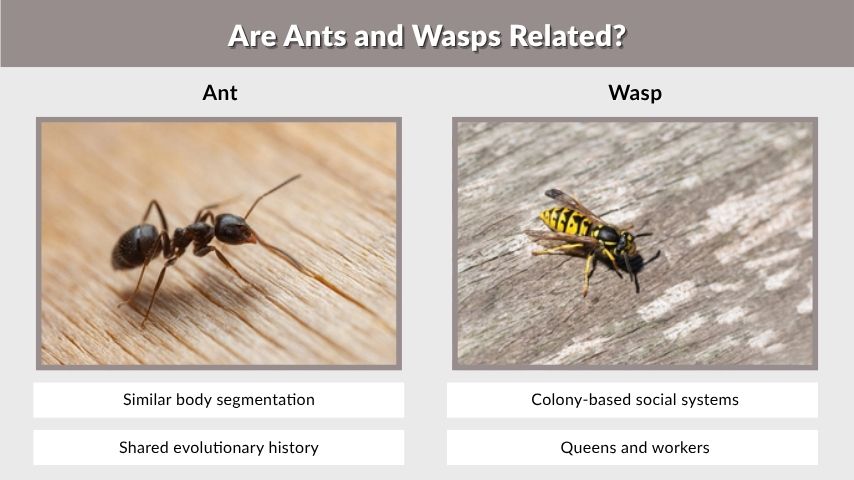
Ants and wasps are closely related insects that evolved from common ancestors millions of years ago. Scientists believe ants developed from ancient wasp-like insects through evolutionary changes that favored ground living and colony cooperation. Despite their differences today, ants and wasps still share many biological traits and behaviors.
Shared Insect Order
Both ants and wasps belong to the insect order Hymenoptera, which also includes bees.
- Similar body segmentation
- Shared evolutionary history
- Colony-based social systems
- Queens and workers
- Defensive stinging ability
Did Ants Evolve From Wasps?
Most scientists believe ants evolved from wasp ancestors that gradually adapted to living on the ground rather than flying. Over time, some ancient wasps developed stronger colony organization and lost many winged traits in worker females.
This evolutionary relationship explains why ants and wasps still share similar body structures and social behaviors despite appearing very different today.
Similar Traits They Share
Even though ants and wasps behave differently, they still share several important characteristics inherited from common ancestors.
- Social colony systems
- Egg-laying queens
- Protective worker castes
- Communication chemicals
- Strong defensive instincts
Flying Ant vs Wasp
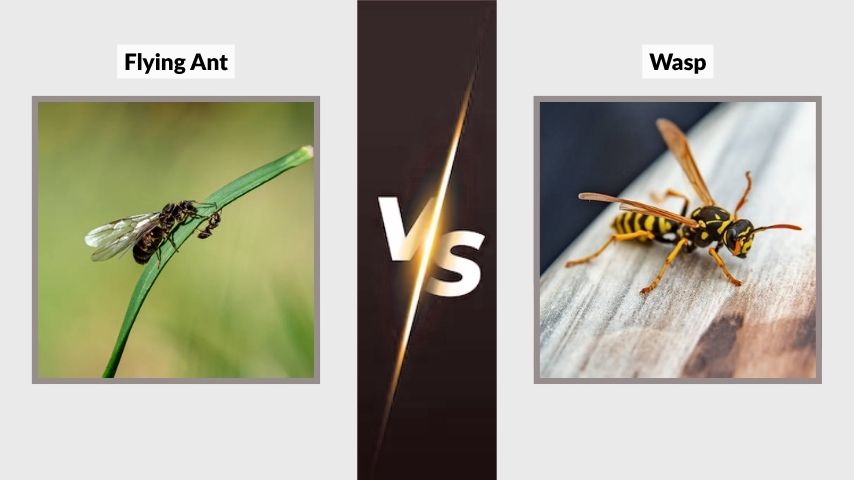
Flying ants and wasps are often confused because both may appear outdoors in large numbers during warmer months. However, important differences exist in their body shape, wings, and behavior. Flying ants are usually reproductive ants leaving the colony to mate, while wasps remain active hunters and defenders throughout the season.
How to Tell Them Apart
Several physical features help distinguish flying ants from wasps.
- Flying ants have bent antennae
- Wasps have narrow waists
- Flying ants have two equal wing pairs
- Wasp wings are uneven sizes
- Wasps appear smoother and thinner
Flying Ant Swarms vs Wasp Activity
Flying ants commonly appear in large swarms during mating flights, especially after rain or warm weather. These swarms usually last only a short time before the ants settle and start new colonies.
Wasps remain active throughout summer while hunting prey, defending nests, and feeding larvae. Unlike flying ants, wasps are not limited to short mating swarms and may stay aggressive near colonies for months.
Which Is More Dangerous?
Most flying ants are harmless to humans and rarely bite or sting. Wasps are generally considered more dangerous because many species possess painful venomous stings and aggressive defensive behavior.
- Wasps can sting repeatedly
- Flying ants rarely attack
- Wasp venom causes swelling
- Wasp colonies defend nests aggressively
- Flying ants mainly focus on reproduction
Ant Sting vs Wasp Sting
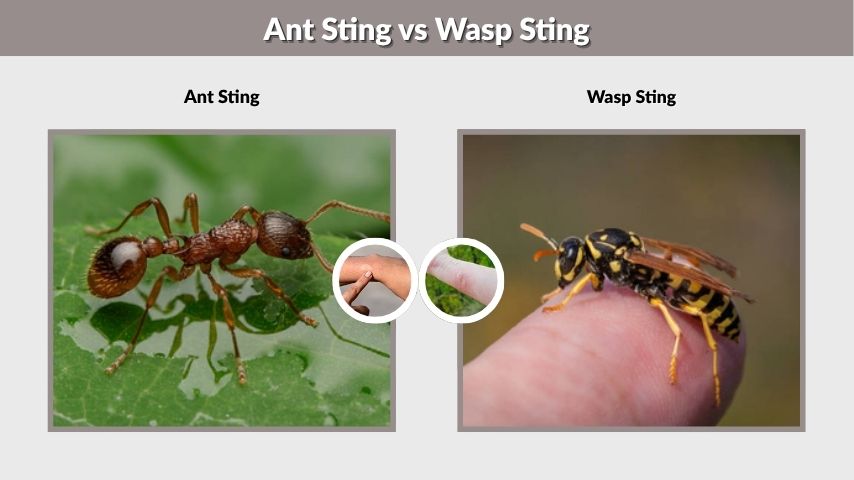
Ant and wasp stings differ greatly in pain level, venom strength, and body reactions. Some ant species produce painful stings, but wasps are generally more aggressive and capable of repeated attacks. Understanding these differences helps explain why certain insects earn reputations for extremely painful defensive stings.
Fire Ant Sting vs Wasp Sting
Fire ants and wasps both deliver painful venom, but their sting reactions differ.
- Fire ant stings often form pustules
- Wasp stings cause swelling
- Fire ants attack in groups
- Wasps inject venom repeatedly
- Both create burning pain
Bullet Ant vs Wasp Sting
The bullet ant possesses one of the most painful insect stings in the world. Some wasps, such as the executioner wasp and warrior wasp, are also famous for intense pain.
Many people compare these insects using the Schmidt Pain Index, which ranks sting severity based on human pain experiences.
Wasp Sting vs Ant Bite
People often confuse ant bites and wasp stings because both can cause pain and swelling. However, the injuries happen in different ways and produce different reactions.
Wasps use venomous stingers to inject toxins directly into the skin, causing sharp burning pain and inflammation. Ants may bite using strong jaws, sting with venom, or combine both actions depending on the species involved.
Bullet Ant vs Executioner Wasp
Bullet ants and executioner wasps are famous for having some of the most painful insect stings known to humans. Both insects rely on venom for defense, but their attack styles and pain effects differ significantly. These comparisons are popular because both species rank extremely high on the Schmidt Sting Pain Index and are feared for their intense stings.
Which Sting Hurts More?
The bullet ant is often considered the most painful stinging insect in the world, although executioner wasps are also extremely painful.
- Bullet ant pain may last for hours
- Executioner wasp causes intense burning
- Both rank high on pain scales
- Pain descriptions vary by victim
- Both create severe discomfort
Venom Strength Comparison
The venom of both insects contains chemicals designed to defend against predators and create intense pain reactions.
Bullet ant venom contains powerful neurotoxins that affect nerves and muscles. Executioner wasp venom causes severe burning pain and swelling that may continue long after the sting itself.
Which Insect Is More Dangerous?
Neither insect is normally aggressive toward humans unless threatened, but both can deliver extremely painful stings.
People allergic to insect venom face greater risks from either species. Multiple stings or sensitive reactions may require medical treatment, especially in remote outdoor environments.
Army Ants vs Wasps
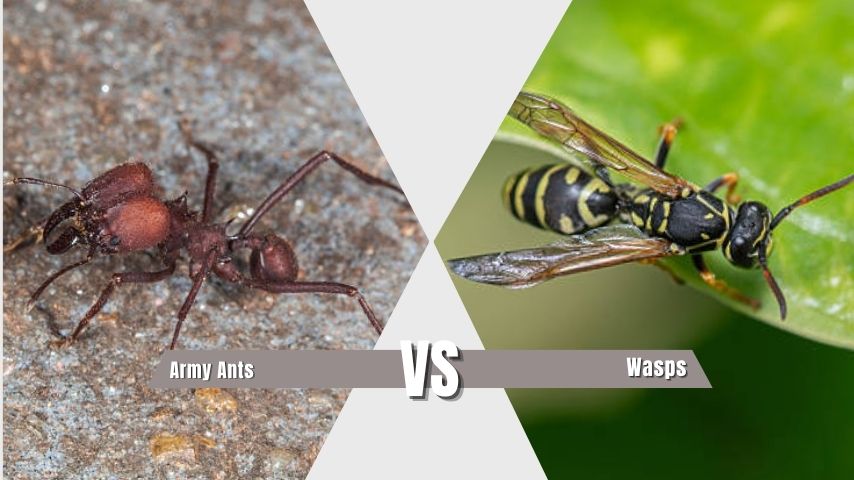
Army ants and social wasps are highly organized predators that defend colonies aggressively. Army ants dominate on the ground using overwhelming numbers and coordinated attacks, while wasps possess flight and venom advantages. Comparing these insects highlights how different survival strategies can make both groups powerful in their own environments.
Army Ant Strengths
Army ants rely heavily on teamwork and overwhelming colony size.
- Massive coordinated colonies
- Powerful biting jaws
- Aggressive swarm attacks
- Efficient ground movement
- Strong communication systems
Wasp Colony Defenses
Wasps defend colonies using venomous stings and aerial mobility.
- Flight advantage
- Venomous repeated stings
- Fast defensive attacks
- Strong nest protection
- Alarm pheromone communication
Who Would Win?
The outcome depends heavily on environment and colony size. Army ants dominate on the ground through overwhelming numbers, while wasps gain major advantages in the air.
Small isolated wasps could easily be overwhelmed by massive ant swarms. However, flying wasps attacking from above could avoid direct ground combat and repeatedly sting ant attackers.
Ant vs Wasp Who Would Win?
People often imagine hypothetical battles between ants and wasps because both insects possess powerful defensive abilities. Ants rely on colony coordination and physical strength, while wasps depend on venom, speed, and flight. The winner usually depends on species type, environment, and whether the battle involves individuals or entire colonies.
Physical Advantages of Ants
Ants possess several strengths that make them effective defenders and hunters.
- Powerful mandibles
- Large colony numbers
- Strong teamwork
- Underground nest systems
- Excellent communication
Physical Advantages of Wasps
Wasps possess mobility and venom advantages that ants generally lack.
- Fast flight ability
- Venomous stings
- Repeated attacks
- Strong defensive instincts
- Quick aerial movement
Battle Outcome Scenarios
One-on-one battles usually favor larger venomous wasps because of their mobility and painful stings. Colony battles become much more unpredictable because ant numbers can overwhelm isolated enemies.
Environmental conditions also matter greatly. Ants often dominate confined ground spaces, while wasps perform better in open areas where flying provides tactical advantages.
Ant Nests vs Wasp Nests
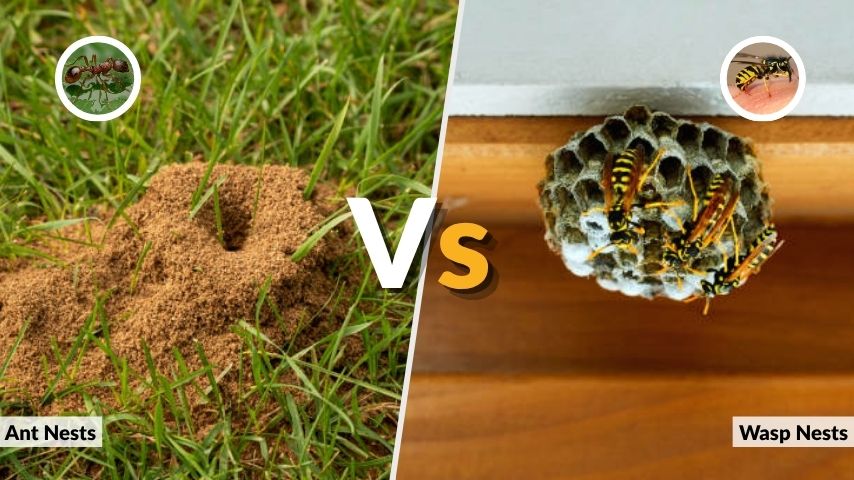
Ant and wasp nests differ greatly in structure, materials, and long-term survival strategies. Ant colonies often remain active for years underground, while many wasp colonies survive only one season. These differences reflect the insects’ contrasting lifestyles and colony organization systems.
Ant Nest Structure
Ant nests are usually built underground using complex tunnel systems and chambers.
- Underground tunnels
- Food storage chambers
- Nursery areas for larvae
- Multiple colony entrances
- Long-lasting nest systems
Wasp Nest Construction
Many wasps build paper nests using chewed wood fibers mixed with saliva. Some species create hanging nests while others nest underground.
Wasp nests are often highly defensive during summer because larvae and queens remain vulnerable inside exposed nest chambers.
Annual vs Perennial Colonies
Most wasp colonies are annual, meaning workers die during colder seasons and only queens survive winter. Ant colonies often persist for many years with continuous worker populations and expanding nest systems.
This long-term colony stability is one reason ants become such successful ecosystem engineers in many habitats worldwide.
FAQs
What is the difference between ants and wasps?
Ants are usually ground-dwelling social insects with strong jaws and large colonies, while wasps are often flying predators that use venomous stings for hunting and defense. Wasps generally have narrower waists and smoother bodies compared to ants.
Are ants related to wasps?
Yes, ants and wasps are closely related insects belonging to the Hymenoptera order. Scientists believe ants evolved from ancient wasp-like ancestors millions of years ago and still share several biological traits today.
Which hurts more, a bullet ant or a wasp sting?
The bullet ant is widely considered to have one of the most painful insect stings in the world. Some wasps, such as executioner wasps and warrior wasps, also produce extremely painful stings, but bullet ants usually rank higher on pain scales.
How can you tell a flying ant from a wasp?
Flying ants usually have bent antennae, thicker bodies, and equal-sized wings. Wasps typically have narrow waists, straighter antennae, and uneven wing sizes that make them appear slimmer and more streamlined.
Who would win in a fight between ants and wasps?
The winner depends on species type, environment, and colony size. Wasps have flight and venom advantages, while ants rely on massive colony numbers, teamwork, and powerful jaws to overwhelm opponents.