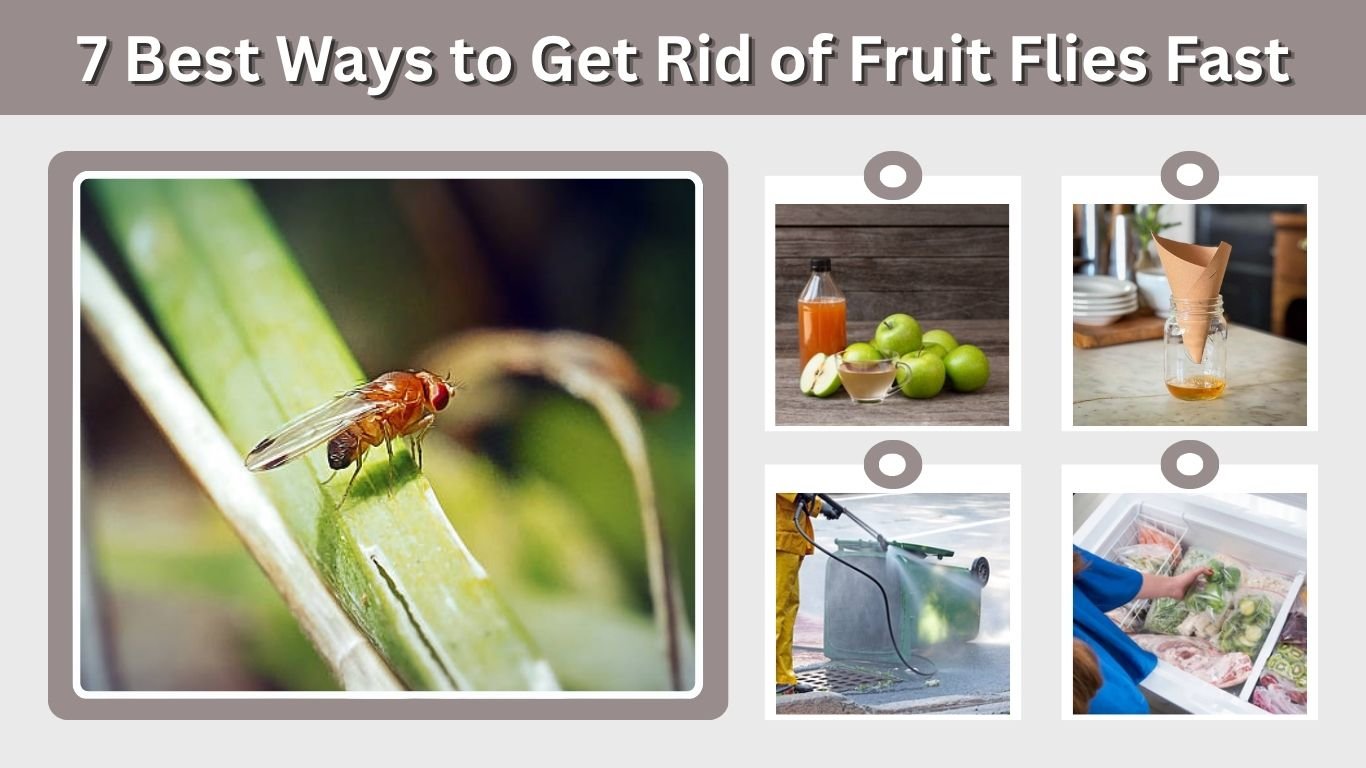
Fruit flies can quickly become a frustrating kitchen problem. These tiny flies gather around ripe fruit, garbage cans, recycling containers, drains, and spilled sugary liquids. Because females can lay hundreds of eggs, a few adult flies may turn into a noticeable infestation within days.
Killing the visible flies provides temporary relief, but successful control requires removing their food and breeding sources. The following seven methods explain how to get rid of fruit flies and prevent them from returning.
Why Are Fruit Flies in Your House?
Fruit flies are attracted to fermenting or decaying organic matter. They have an excellent sense of smell and can detect ripe fruit, sugary drinks, and food residue from a considerable distance.
Common attractions include:
- Overripe bananas, apples, peaches, and tomatoes
- Fermenting fruit juice, wine, or beer
- Dirty garbage and recycling containers
- Food residue inside drains
- Unwashed dishes and damp sponges
- Compost containers
- Spilled soda, syrup, or juice
- Potatoes and onions stored in cabinets
Adult fruit flies may enter through open doors, windows, and damaged screens. They can also arrive as eggs or larvae on ripe produce brought home from a grocery store or garden.
How to Identify Fruit Flies
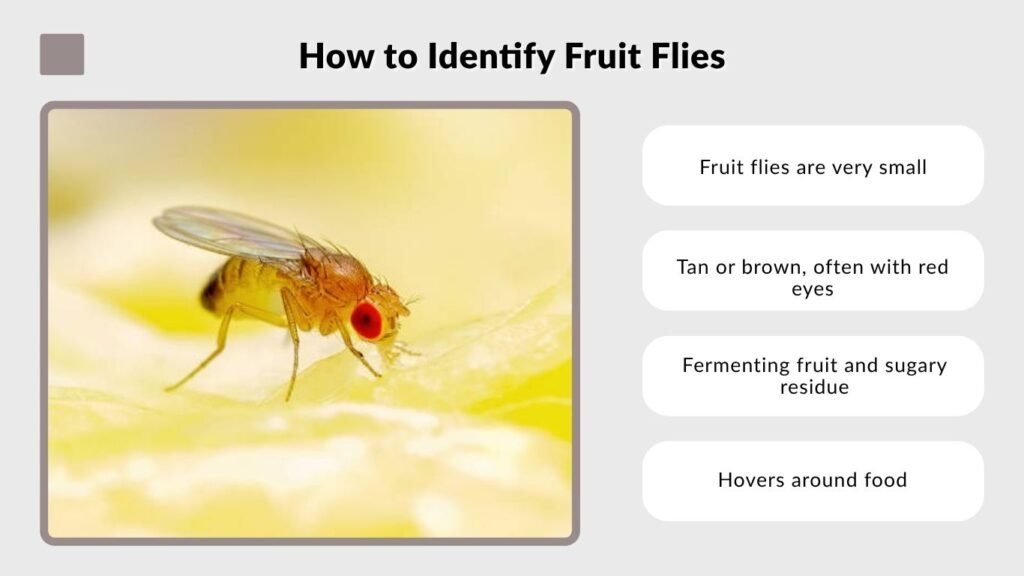
Fruit flies are very small, usually measuring approximately 1/8 inch long. Most have tan, yellowish-brown, or light brown bodies. Many common species have noticeable red eyes, although some species have darker eyes.
They generally hover around exposed produce, trash cans, empty drink containers, and kitchen counters. Their compact bodies and slow hovering flight help distinguish them from drain flies and fungus gnats.
| Feature | Fruit fly | Drain fly | Fungus gnat |
| Appearance | Tan or brown, often with red eyes | Fuzzy and moth-like | Dark, thin, and mosquito-like |
| Main attraction | Fermenting fruit and sugary residue | Slime inside drains | Moist potting soil |
| Flight pattern | Hovers around food | Short, weak flights | Erratic flight near plants |
| Typical location | Kitchens and trash areas | Bathrooms and sinks | Indoor plants |
Once you confirm that the insects are fruit flies, use the following methods to eliminate both adults and developing larvae.
1. Make an Apple Cider Vinegar Trap
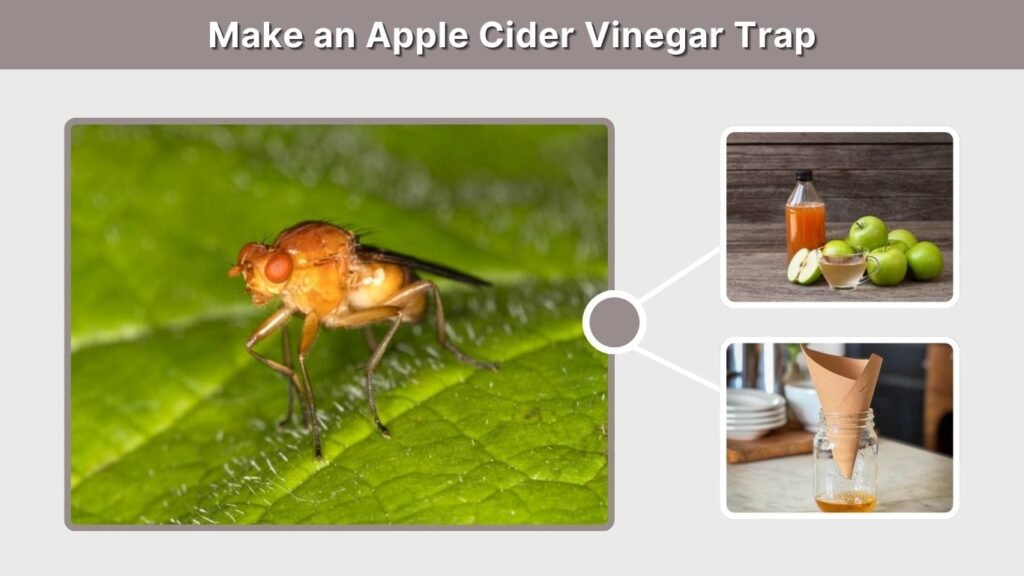
Apple cider vinegar is one of the most effective homemade fruit fly attractants. Its fermented smell resembles overripe fruit, encouraging adult flies to enter the trap.
How to Make the Trap
Pour approximately half an inch of apple cider vinegar into a glass, jar, or small bowl. Add one or two drops of liquid dish soap and stir gently.
The vinegar attracts the flies, while the dish soap breaks the liquid’s surface tension. When fruit flies land on the mixture, they sink instead of standing on the surface.
Place the trap near areas with the most activity, such as:
- Fruit bowls
- Trash cans
- Kitchen sinks
- Recycling containers
- Compost bins
Replace the mixture every one or two days until activity stops. Several small traps placed around the kitchen may work better than one large trap.
Regular white vinegar is generally less attractive because it lacks the strong fermented fruit smell. Apple cider vinegar, wine, or beer usually produces better results.
2. Use a Vinegar and Paper Funnel Trap
A paper funnel trap attracts fruit flies while making it difficult for them to escape. It is useful when you want to catch the adults without leaving an open bowl of liquid on the counter.
How to Set It Up
Place a small amount of apple cider vinegar, wine, beer, or overripe fruit inside a jar. Roll a piece of paper into a cone, leaving a tiny opening at the narrow end.
Insert the funnel into the jar without allowing its bottom to touch the bait. Tape the paper so it keeps its shape and make sure there are no large gaps around the edge.
Fruit flies follow the smell through the small opening. Once inside, they usually struggle to locate the narrow exit.
Empty and wash the jar regularly. Refresh the bait when its smell becomes weak or when too many dead flies collect inside.
This method catches adults, but it does not remove eggs and larvae hidden elsewhere. Use it alongside thorough cleaning and food storage.
3. Remove Overripe Fruit and Produce
Removing the breeding source is the most important step in fruit fly control. Traps may reduce the number of adults, but the infestation will continue if the flies can still reproduce in damaged or fermenting produce.
Inspect all fruits and vegetables, including items stored outside the refrigerator. Throw away produce that is leaking, moldy, cracked, or excessively soft.
Check less obvious storage areas, such as:
- Potatoes kept under the sink
- Onions inside cabinets
- Tomatoes on windowsills
- Fruit stored in shopping bags
- Produce fallen behind appliances
- Forgotten lunch boxes
- Open containers of fruit juice
Place discarded produce in a sealed bag and move it to an outdoor garbage container immediately. Leaving the bag inside allows adult flies to continue emerging.
Wash firm produce before storing it. Dry it thoroughly because fruit flies are attracted to moisture as well as fermenting material.
4. Clean Drains and Garbage Disposals
Fruit flies can feed and reproduce in organic residue around drains and garbage disposals. Although drain flies are more strongly associated with plumbing slime, fruit flies may also use moist food buildup near kitchen drains.
Pouring hot water down a drain may remove loose debris, but it rarely eliminates the thick film attached to the pipe walls.
Clean the Drain Properly
Remove the drain cover and scrub the inside of the opening with a stiff drain brush. Clean as far into the pipe as safely possible, paying attention to the underside of the cover and the edges of the disposal.
Use an enzyme-based drain cleaner according to its label. Enzyme or microbial products help break down organic material instead of temporarily masking the problem.
For garbage disposals:
- Turn the appliance off.
- Disconnect the power before reaching near its opening.
- Scrub the rubber splash guard.
- Remove trapped food residue.
- Clean the sink and surrounding surfaces.
Never mix bleach, ammonia, vinegar, drain opener, or other cleaning chemicals. Combining household cleaners can produce dangerous gases or reactions.
5. Empty and Wash Trash and Recycling Bins
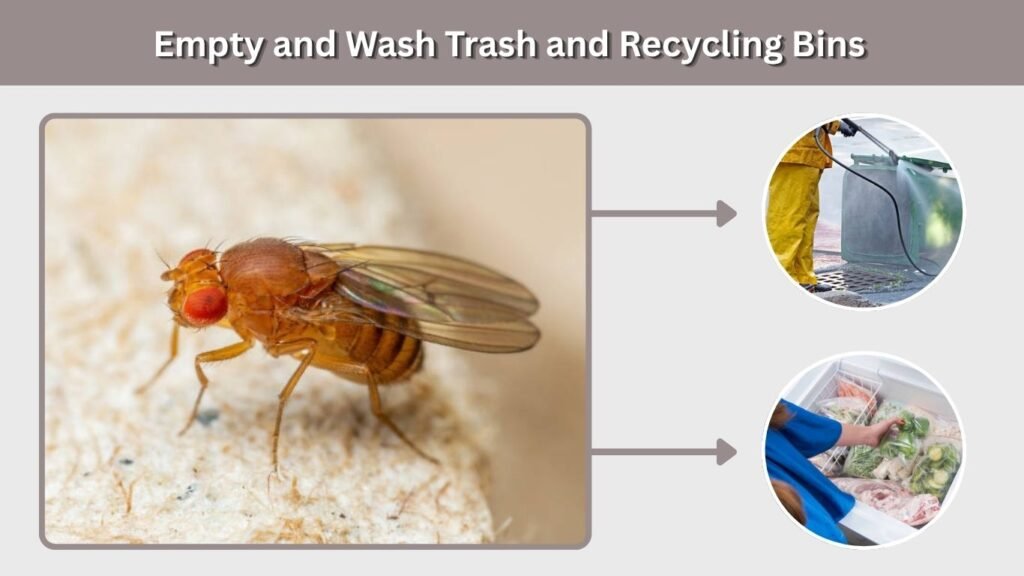
A nearly empty soda can or juice bottle can support fruit fly activity. Small amounts of fermenting liquid at the bottom of containers provide both food and an egg-laying site.
Empty kitchen trash frequently, especially when it contains fruit scraps, beverage containers, or food packaging. Do not simply replace the bag; wash the bin itself.
Areas That Need Cleaning
- The inside and outside of the trash can
- The underside of the lid
- Grooves around the rim
- The floor beneath the container
- Recycling bins
- Compost containers
- Bottle-return bags
Rinse cans, bottles, and jars before placing them in recycling. Allow them to dry whenever possible.
Use a tightly fitting lid on indoor garbage and compost containers. If the lid has cracks or does not close properly, replace the container.
Even a small sugary spill underneath a trash bag can continue attracting flies after the visible waste has been removed.
6. Store Fruit in the Refrigerator
Refrigerating ripe produce removes one of the flies’ main food sources and slows fruit fly development. Place bananas, berries, grapes, peaches, and other ripe fruits in the refrigerator whenever appropriate.
Some fruits can remain on the counter while ripening, but they should be inspected daily. Once ripe, eat them, refrigerate them, or place them inside a covered container.
Avoid storing fruit in an open bowl during an active infestation. A mesh fruit cover may prevent direct contact, but refrigeration provides stronger protection.
Also store the following items securely:
- Open fruit juice
- Wine and beer
- Syrups and sweet sauces
- Cut fruit
- Jam and jelly
- Smoothie ingredients
- Fermented foods
Wipe the outside of bottles and containers before storing them. Sticky residue around caps can attract adult flies even when the container is closed.
7. Use Sticky Traps and a Vacuum
Yellow sticky cards and other non-toxic traps can capture adult fruit flies that remain after breeding sources have been removed. Position traps near windows, fruit storage areas, trash cans, or other places where flies gather.
Do not place exposed sticky traps where children or pets can touch them. Avoid placing them directly above uncovered food preparation surfaces.
A vacuum cleaner can also provide immediate control when many adults are resting on walls, cabinets, or windows. Use the hose attachment to collect the flies, then empty the vacuum outdoors or seal and discard its contents.
Sticky traps and vacuuming work best as supporting methods. They cannot reach eggs or larvae developing inside food residue, produce, or containers.
How Long Does It Take to Eliminate Fruit Flies?
A noticeable reduction may occur within a few days after all food and breeding sources are removed. However, adult flies can continue emerging from hidden eggs and larvae for approximately one to two weeks.
Continue cleaning and trapping until no fruit flies have appeared for at least seven consecutive days. If the infestation continues, search for a hidden source.
Possible hidden breeding areas include:
- Food beneath refrigerators or ovens
- A leaking trash bag
- Old potatoes or onions in a cabinet
- Dirty mop heads
- Residue under appliance drip trays
- Forgotten beverage containers
- Wet compost
- Food buildup beneath cabinet liners
Persistent small flies around several drains may be drain flies or phorid flies rather than fruit flies.
How to Prevent Fruit Flies
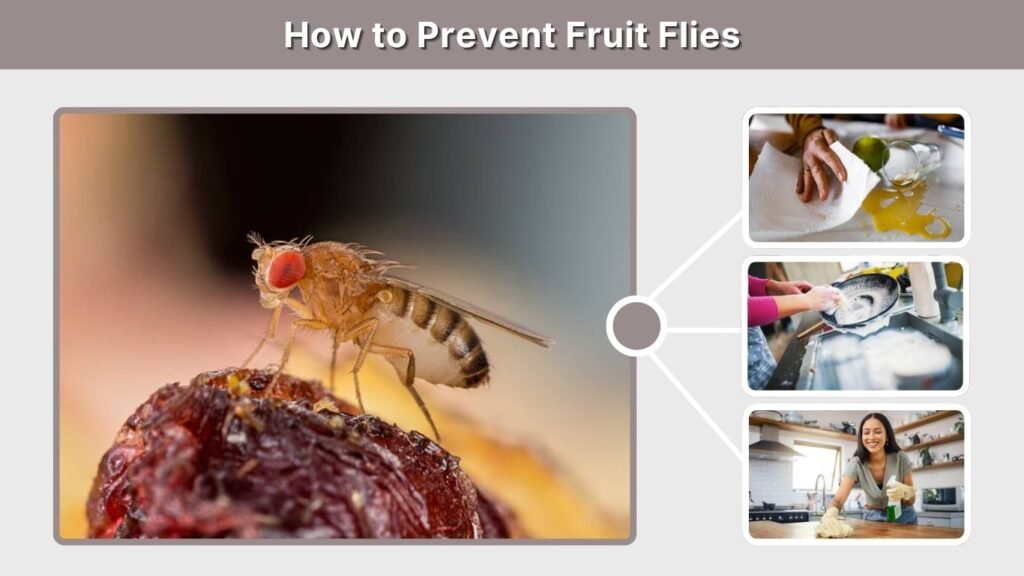
Prevention depends on limiting access to moisture, sugar, and fermenting organic matter.
Clean spills immediately and wipe kitchen counters every day. Rinse beverage containers, wash dishes promptly, and avoid leaving damp dishcloths or sponges near food.
Inspect produce before purchasing it. Avoid fruit with damaged skin, leaks, or signs of decay. Eat ripe produce promptly and refrigerate suitable items.
Take out food waste regularly and clean trash, recycling, and compost containers before residue develops. Screens should fit securely over doors and windows to reduce the number of flies entering from outside.
FAQs
What is the fastest way to get rid of fruit flies?
Remove overripe produce, food residue, and dirty containers first. Then place apple cider vinegar and dish soap traps near the affected areas. Source removal stops reproduction, while traps capture the adult flies that remain.
Can fruit flies come from drains?
Fruit flies can feed or reproduce in food residue around kitchen drains and garbage disposals. However, fuzzy flies that repeatedly emerge directly from a drain are more likely to be drain flies.
Will bleach kill fruit flies in drains?
Bleach may kill some insects it contacts, but it does not always remove the organic film supporting larvae. It can also be hazardous when mixed with other cleaners. Scrubbing and using an appropriate enzyme drain cleaner is usually more effective.
Why do fruit flies keep returning?
Fruit flies return when eggs, larvae, or hidden breeding materials remain. Common overlooked sources include recycling containers, potatoes, onions, garbage residue, beverage spills, compost, and food trapped beneath appliances.
Do fruit flies bite humans?
Common household fruit flies do not bite or feed on blood. They are mainly nuisance insects attracted to fermenting fruit, sugary liquids, and decaying organic matter.