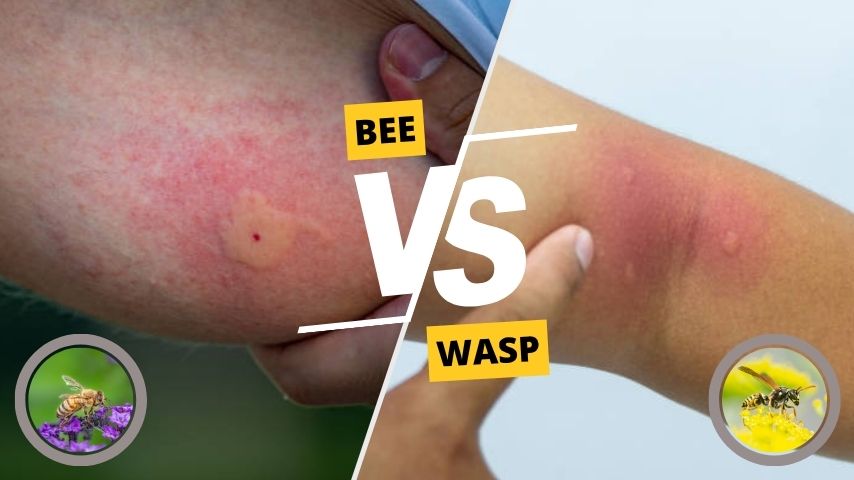
Bee and wasp stings are common outdoor injuries that can cause pain, swelling, and irritation. Although the symptoms may appear similar at first, there are important differences between bee stings and wasp stings. Knowing how to identify the sting type can help you choose the best treatment and recognize serious allergic reactions early.
Bees and wasps usually sting when they feel threatened or when protecting their nests. Some stings cause only mild discomfort, while others may trigger severe allergic reactions that require immediate medical attention. Understanding the symptoms and first aid steps is important for staying safe outdoors.
Bee Sting vs Wasp Sting Overview
Bee and wasp stings happen when insects inject venom into the skin using a stinger. Both stings can be painful, but the experience often feels different because the insects behave differently. Bees usually sting once, while wasps can sting multiple times during an attack.
What Happens During a Bee Sting?
When a bee stings, its barbed stinger becomes stuck in the skin. The stinger continues releasing venom for a short time even after the bee flies away. Honeybees usually die after stinging because part of their abdomen tears away with the stinger.
What Happens During a Wasp Sting?
Wasps have smooth stingers that allow them to sting repeatedly without losing the stinger. Their venom often causes a sharper burning sensation than a bee sting. Wasps can also become aggressive and attack in groups when their nest is disturbed.
Why Bees and Wasps Sting
- Protecting their nest
- Defending themselves
- Feeling threatened
- Guarding food sources
- Reacting to sudden movement
Are Bee and Wasp Stings the Same?
Bee and wasp stings share some symptoms such as redness, pain, and swelling. However, bee stings usually leave a visible stinger behind, while wasp stings do not. Wasp stings are also more likely to happen multiple times because wasps can sting repeatedly.
Difference Between Bee and Wasp Stings
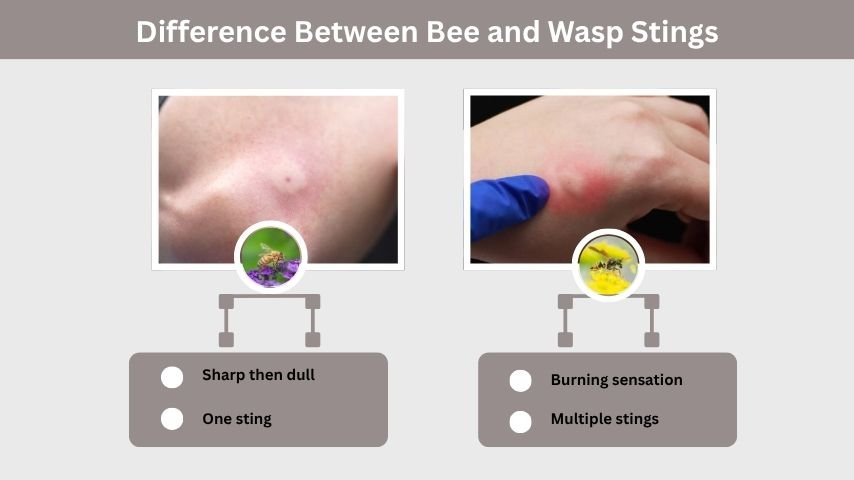
Although the symptoms may overlap, bee and wasp stings often have noticeable differences in appearance and pain level. Recognizing these differences can help determine the best treatment method and identify possible allergic reactions.
Physical Differences Between Stings
| Feature | Bee Sting | Wasp Sting |
| Stinger Left Behind | Usually yes | Usually no |
| Pain Type | Sharp then dull | Burning sensation |
| Number of Stings | One sting | Multiple stings |
| Swelling | Moderate | Often stronger |
What Does a Bee Sting Look Like?
A bee sting usually creates a small red bump with mild swelling around the area. In many cases, the stinger remains visible in the skin and should be removed carefully as soon as possible to reduce venom exposure.
What Does a Wasp Sting Look Like?
A wasp sting often appears as a swollen raised area with redness and stronger irritation. Because wasps do not leave their stinger behind, the sting site may look cleaner but can still become very painful and swollen.
Do Bee and Wasp Stings Feel Different?
Many people describe bee stings as sharp and sudden, followed by dull soreness. Wasp stings often create a stronger burning sensation and may feel more painful for a longer period. Individual reactions can vary depending on sting location and allergy sensitivity.
Symptoms of Bee and Wasp Stings
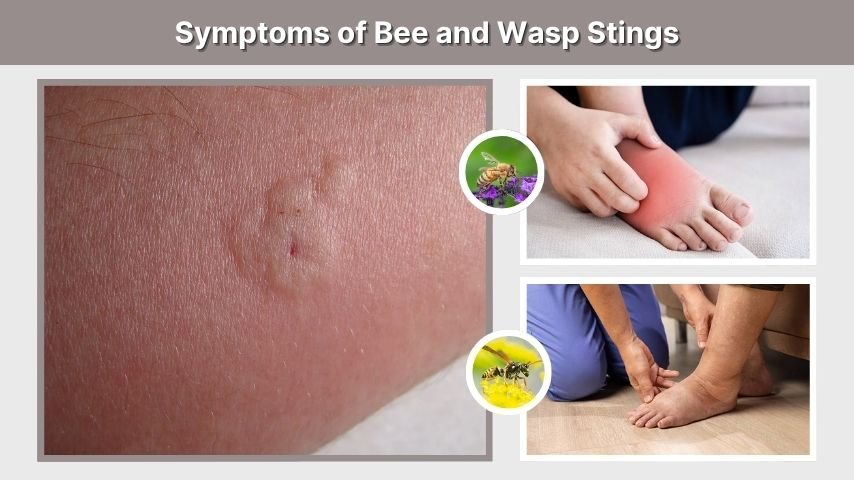
Most bee and wasp stings cause mild reactions that improve within a few hours or days. However, some people develop stronger swelling or dangerous allergic reactions that require emergency treatment. Recognizing the warning signs early is very important.
Common Sting Symptoms
- Pain at the sting site
- Redness
- Swelling
- Itching
- Warm skin sensation
Mild vs Severe Reactions
A mild reaction usually includes limited swelling and discomfort around the sting area. Larger local reactions may cause swelling that spreads several inches beyond the sting site. Severe allergic reactions can affect breathing and blood circulation and require emergency medical help immediately.
Allergic Reactions to Bee and Wasp Stings
Severe allergic reactions, called anaphylaxis, may include trouble breathing, swelling of the throat, dizziness, rapid heartbeat, and hives. These symptoms can appear within minutes after the sting and should always be treated as a medical emergency.
First Aid for Bee and Wasp Stings
Quick first aid can reduce pain, swelling, and irritation after a sting. Cleaning the area and using cold compresses are often the first steps for treatment. Severe symptoms should always be monitored carefully.
How to Treat a Bee Sting
- Remove the stinger quickly
- Wash the area with soap and water
- Apply an ice pack
- Use antihistamine cream
- Avoid scratching the sting
How to Treat a Wasp Sting
Wasp sting treatment usually focuses on reducing swelling and pain because there is no stinger to remove. Washing the area and applying a cold compress can help calm irritation and reduce inflammation.
Bee and Wasp Sting Treatment Options
Proper treatment can help reduce pain, itching, and swelling caused by bee and wasp stings. Most mild reactions improve with home care, but severe allergic symptoms may require emergency medical attention. Quick treatment is important because untreated swelling or allergic reactions can become more serious over time.
Over-the-Counter Treatments
- Hydrocortisone cream
- Antihistamine tablets
- Pain relievers
- Anti-itch lotion
- Cold compress packs
Cold Compress for Sting Relief
Cold compresses are one of the easiest ways to reduce swelling and pain after a sting. Ice wrapped in a cloth should be applied for short periods instead of directly on the skin. This helps calm inflammation and numbs the affected area.
Natural Treatments for Stings
Some people use natural remedies such as aloe vera, honey, or baking soda paste to soothe irritated skin. These remedies may help reduce itching and provide temporary relief, although severe reactions still require proper medical care.
Treatments to Avoid
Avoid scratching the sting because it can increase irritation and infection risk. Unsafe chemicals or home remedies that irritate the skin should also be avoided. If symptoms continue worsening, medical advice should be sought immediately.
Bee, Wasp, and Hornet Sting Differences
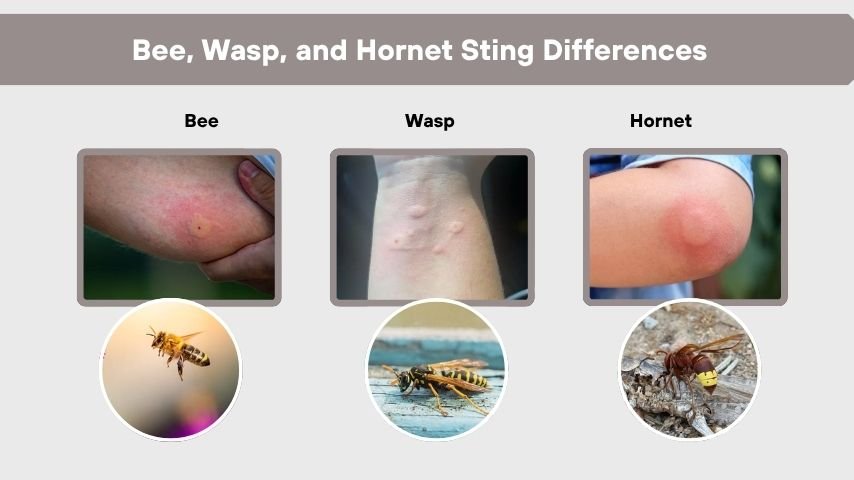
Bees, wasps, and hornets are all stinging insects, but their behavior and sting intensity can vary greatly. Understanding the differences can help people recognize which insect caused the sting and how serious the reaction may become.
Bee vs Wasp vs Hornet Stings
| Feature | Bee | Wasp | Hornet |
| Aggression | Lower | Moderate | Higher |
| Sting Frequency | Once | Multiple | Multiple |
| Pain Level | Moderate | Strong | Very painful |
Which Sting Hurts More?
Many people report hornet stings as the most painful because hornets inject a larger amount of venom. Wasp stings are usually more painful than bee stings because wasps can sting repeatedly and become aggressive in groups.
Do All Bees and Wasps Sting?
Only female bees and wasps have stingers because the stinger is a modified egg-laying organ. Most stings happen when insects feel threatened or when people accidentally disturb a nest.
Do Bees and Wasps Die After Stinging?
Honeybees usually die after stinging because their barbed stinger becomes trapped in the skin. Wasps and hornets survive after stinging because their stingers are smooth and can be used repeatedly.
How to Avoid Bee and Wasp Stings
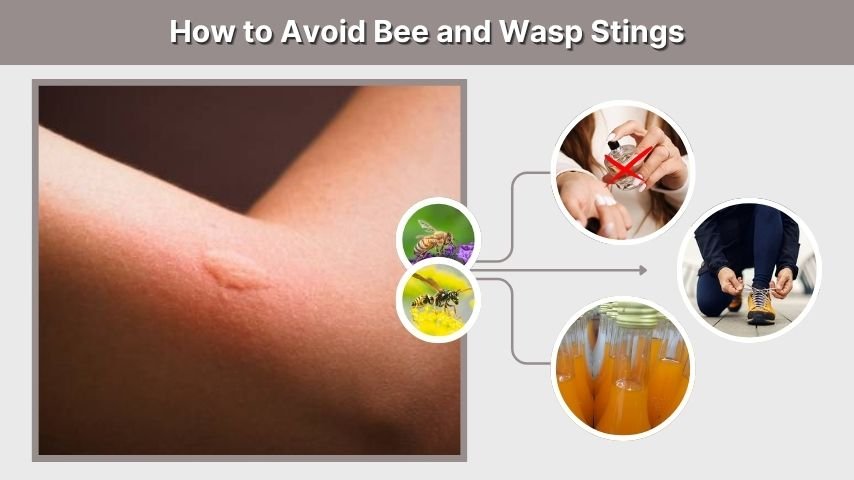
Preventing stings is often easier than treating them. Staying calm around insects and avoiding actions that disturb nests can greatly reduce the risk of being stung outdoors.
Outdoor Safety Tips
- Avoid sweet-smelling perfumes
- Wear shoes outside
- Cover sugary drinks
- Stay calm near insects
- Avoid bright floral clothing
Preventing Stings Around the Home
Removing nests safely and sealing small openings around buildings can reduce insect activity near the home. Trash cans should remain covered, and outdoor eating areas should be cleaned regularly to avoid attracting bees and wasps.
What to Do if a Bee or Wasp Approaches You
Sudden movements and swatting can make insects more defensive. Slowly moving away from the area is usually the safest response. Running wildly or waving arms may increase the chance of getting stung.
Common Myths About Bee and Wasp Stings
Many myths about stings and treatments continue spreading online and through home remedies. Understanding the facts can help people avoid dangerous mistakes and use safer treatment methods.
Are Bee and Wasp Stings Acidic or Alkaline?
Older myths claimed bee stings were acidic and wasp stings were alkaline, but modern research shows this is not a useful way to treat stings. Washing the area and reducing swelling are more important than trying to neutralize venom.
Does Mustard Help Bee and Wasp Stings?
Some people apply mustard to sting sites as a folk remedy. While mustard may feel soothing to some individuals, there is little scientific evidence proving it works better than standard treatments like ice and antihistamines.
Can You Build Immunity to Stings?
Repeated stings do not always create immunity. In some people, repeated exposure can actually increase the risk of allergic reactions. Allergy treatments should only be handled under medical supervision.
FAQs
What is the difference between a bee sting and a wasp sting?
A bee sting usually leaves a stinger behind in the skin, while a wasp sting does not. Bee stings often cause sharp pain followed by soreness, while wasp stings usually create a stronger burning sensation and can happen multiple times.
How do you treat bee and wasp stings?
Wash the sting area with soap and water, apply a cold compress, and use antihistamine or anti-itch cream if needed. For bee stings, remove the stinger quickly to reduce venom exposure.
Do bees and wasps die after stinging?
Honeybees usually die after stinging because their barbed stinger gets stuck in the skin. Wasps and hornets survive after stinging since they have smooth stingers that can be used repeatedly.
What helps reduce swelling from stings?
Ice packs, cold compresses, antihistamines, and hydrocortisone creams can help reduce swelling and itching. Keeping the affected area elevated may also help limit inflammation.
When should you go to the hospital after a sting?
Seek emergency medical help if the person has trouble breathing, swelling of the throat or face, dizziness, rapid heartbeat, or signs of a severe allergic reaction after a sting.