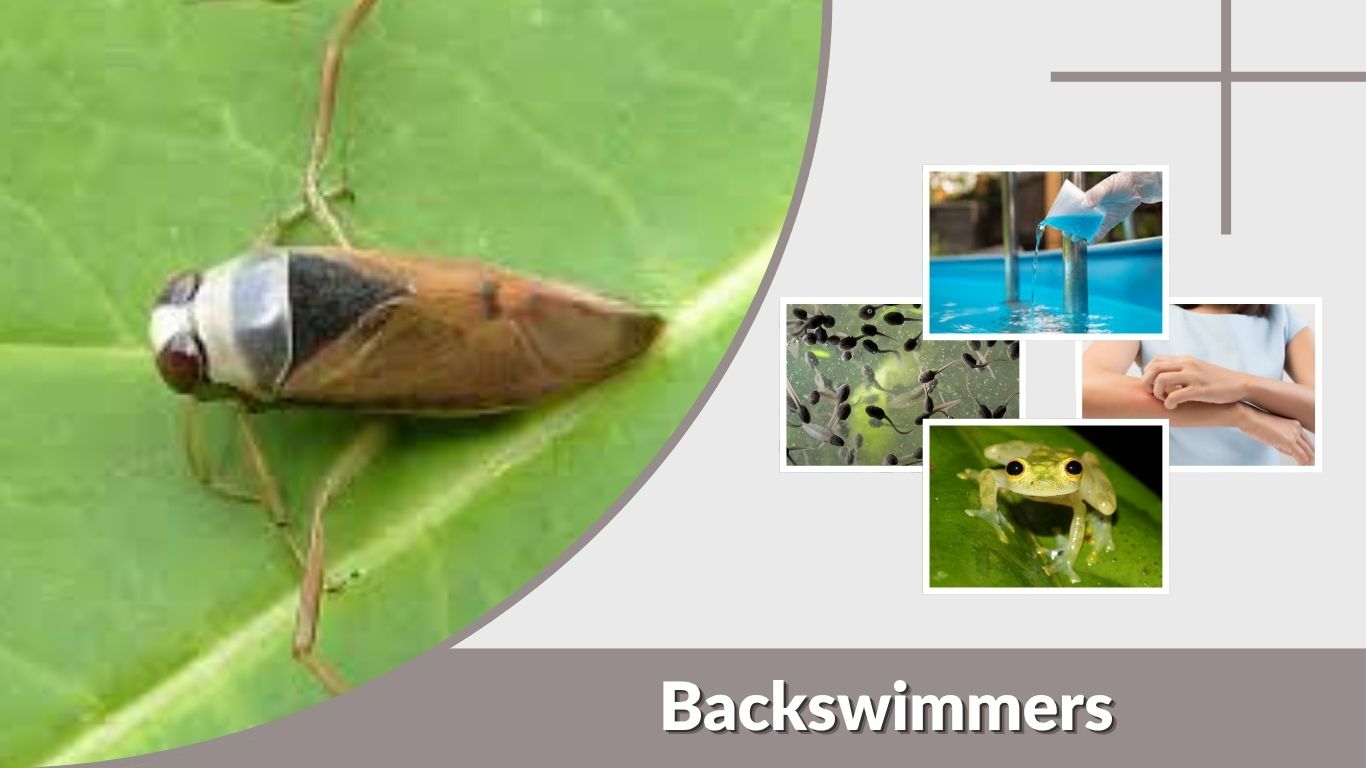
Backswimmers are aquatic insects often found in ponds, lakes, slow streams, and swimming pools. They get their name from their unusual habit of swimming upside down on their backs. Although they are small, backswimmers are strong predators and can deliver a painful bite if handled. Many people confuse them with water boatmen, but the two insects have important differences in behavior, diet, and bite risk.
What Are Backswimmers?
Backswimmers are true bugs that belong to the family Notonectidae. They live in freshwater and spend much of their time swimming upside down just below the water surface. Their bodies are shaped like small boats, and their long hind legs work like oars.
Backswimmer Bug Identification
A backswimmer bug usually has a narrow, boat-shaped body and long back legs covered with tiny hairs. These legs help it paddle quickly through water. Most backswimmers are light brown, gray, or yellowish, though their color can vary by species.
They are usually seen swimming below the surface rather than walking on top of the water like water striders.
Common features include:
- Upside-down swimming behavior
- Long, oar-like hind legs
- Slender, boat-shaped body
- Large eyes
- Fast swimming movement
- Ability to fly between water sources
Backswimmers Size
Most backswimmers are small, usually around 10 to 16 millimeters long. Some species may be slightly smaller or larger. Even though they are not large insects, they are active hunters and can catch prey smaller than themselves.
Where Do Backswimmers Live?
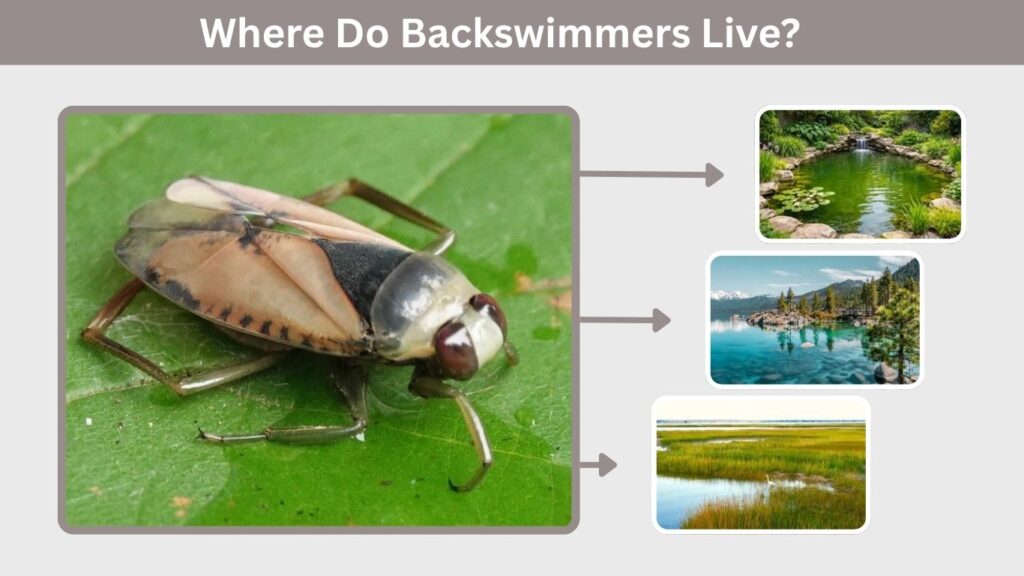
Backswimmers live in many freshwater habitats. They prefer still or slow-moving water where small insects, larvae, and other prey are available.
Common Habitats
You may find backswimmers in:
- Ponds
- Lakes
- Ditches
- Marshes
- Slow streams
- Garden ponds
- Water tanks
- Swimming pools
- Temporary rain-filled containers
They often stay near the surface because they breathe air. They carry air with them underwater and return to the surface when they need more oxygen.
Backswimmers in the UK
Backswimmers are found in the UK, especially in ponds, lakes, canals, and slow-moving water. One well-known species is often associated with the name Notonecta glauca. In the UK, they may be noticed in garden ponds and wildlife ponds during warmer months.
Backswimmers Quick Facts
| Topic | Details |
|---|---|
| Common name | Backswimmer |
| Insect group | True bug |
| Family | Notonectidae |
| Habitat | Ponds, lakes, streams, pools |
| Diet | Mosquito larvae, insects, tadpoles, small aquatic prey |
| Bite risk | Can bite and may cause pain |
| Swimming style | Upside down on its back |
| Can they fly? | Yes, adults can fly |
| Often confused with | Water boatmen |
What Do Backswimmers Eat?
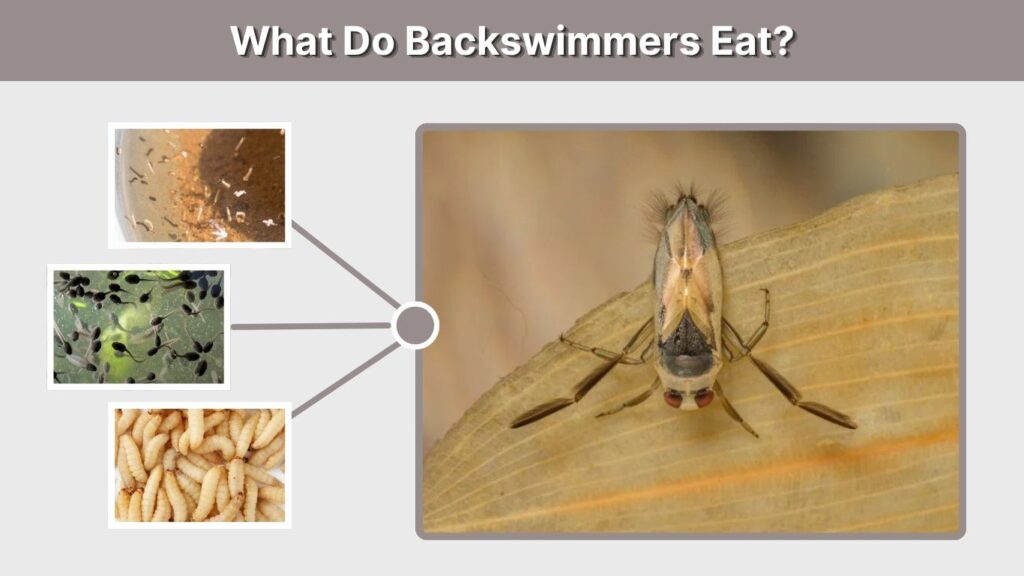
Backswimmers are predators. They feed on small aquatic animals and insects found in freshwater habitats. Unlike some similar-looking water bugs, backswimmers do not mainly graze on algae or plant material.
Backswimmers Diet
Their diet may include:
- Mosquito larvae
- Midge larvae
- Small aquatic insects
- Tiny crustaceans
- Tadpoles
- Small fish fry
- Other insect larvae
- Prey that falls onto the water surface
Backswimmers use their strong front legs to grab prey. Then they pierce the prey with their sharp mouthparts and suck out body fluids. This feeding style is common among true bugs.
Do Backswimmers Eat Mosquito Larvae?
Yes, backswimmers often eat mosquito larvae. This can make them useful in ponds and natural water bodies. However, they are not a complete mosquito-control solution because they also eat many other small aquatic animals.
Do Backswimmers Eat Tadpoles or Fish?
Backswimmers can eat very small tadpoles and fish fry if they are able to catch them. In a balanced pond, this is part of the natural food web. In a small garden pond where someone is trying to protect young fish or tadpoles, backswimmers may become a concern.
Do Backswimmers Bite?
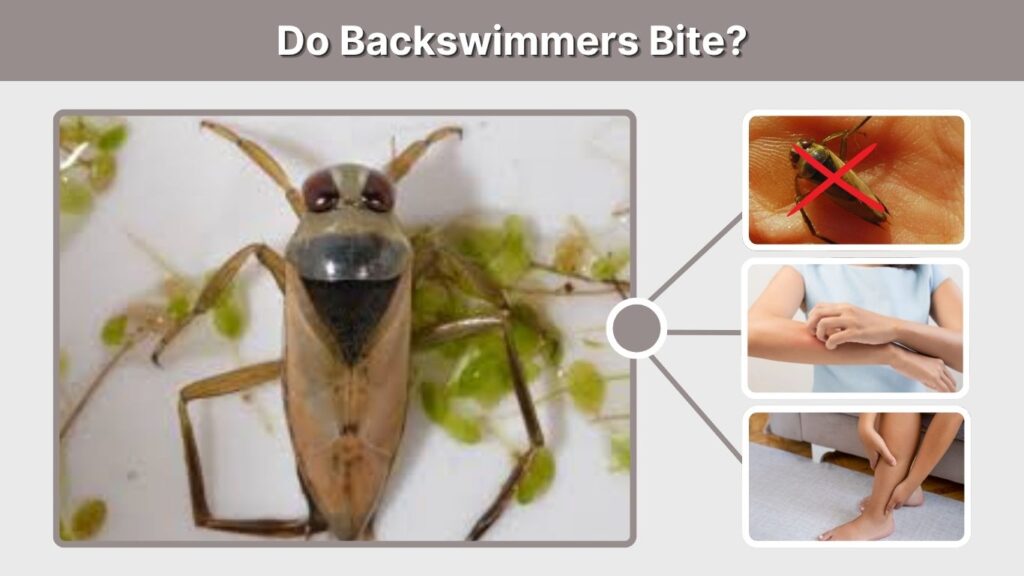
Yes, backswimmers can bite. Their bite is one of the main reasons people want to identify them correctly. They do not usually chase people, but they may bite if touched, trapped, or handled.
What Does a Backswimmer Bite Feel Like?
A backswimmer bite can feel like a sharp sting or painful pinch. Some people compare it to a bee sting. The bite happens because the insect has piercing mouthparts designed for feeding on prey.
Possible symptoms include:
- Sudden sharp pain
- Redness
- Mild swelling
- Itching or irritation
- Tenderness around the bite area
Most bites are not serious, but they can be uncomfortable.
Are Backswimmer Bites Dangerous?
Backswimmer bites are usually not dangerous to healthy adults. They are not known for spreading diseases to humans. However, the bite can be painful, and children may be more startled by it.
If bitten, wash the area with soap and water. A cold compress may help reduce pain or swelling. Seek medical advice if there is a strong allergic reaction, spreading redness, or signs of infection.
Are Backswimmers Dangerous?
Backswimmers are not highly dangerous, but they should be treated with caution. They are more likely to bite than many harmless pond insects, especially if handled.
Dangerous to Humans?
They are not aggressive in the way wasps or biting flies can be. However, because they can bite painfully, it is best not to pick them up with bare hands. Use a net or container if you need to remove them from a pool.
Dangerous to Pets?
Backswimmers are not usually a major danger to pets. A curious dog or cat might get bitten if it paws at or mouths one, but serious harm is unlikely. Still, removing them from swimming pools can help avoid unwanted contact.
Dangerous to Ponds?
In natural ponds, backswimmers are part of the ecosystem. They help control mosquito larvae and other small organisms. In ornamental ponds, they may worry owners because they can prey on fish fry and small tadpoles.
Backswimmers in Pool
Backswimmers in a pool are a common problem. They may appear suddenly and swim quickly below the surface. Since they can bite, people often want to remove them quickly.
Why Are Backswimmers in My Pool?
Backswimmers enter pools because the water attracts insects and provides hunting opportunities. They may also fly in from nearby ponds, ditches, or water features.
Common reasons include:
- Mosquito larvae or insects in the pool
- Poor water circulation
- Low chlorine levels
- Debris floating in the water
- Outdoor lights attracting bugs
- Nearby ponds or standing water
- Algae or organic matter supporting prey
Backswimmers do not usually appear without a food source. If they stay in your pool, there may be small insects or larvae present.
How Do Backswimmers Get in My Pool?
Adult backswimmers can fly. This means they can travel from natural water sources to swimming pools. At night, outdoor lights may attract flying insects, and backswimmers may arrive while searching for water or prey.
They can also enter pools during warm, humid weather when aquatic insects are more active.
How to Get Rid of Backswimmers in Pool
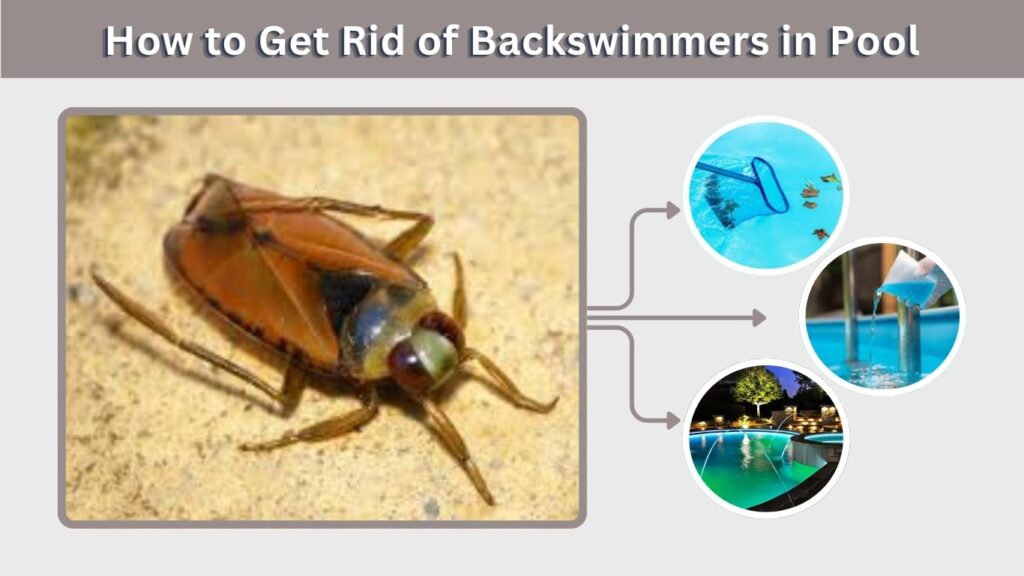
Getting rid of backswimmers means removing both the insects and the conditions that attract them. Since they feed on other small aquatic life, reducing their food source is important.
Step 1: Skim the Pool
Use a pool net to remove visible backswimmers. Avoid touching them with bare hands because they can bite. Place captured insects away from the pool area.
Step 2: Remove Debris
Leaves, grass, and organic matter can attract small insects and support algae growth. Skim the surface and vacuum the pool floor regularly.
Step 3: Balance Pool Chemistry
Proper chlorine and pH levels make the pool less suitable for insects and larvae. If chlorine is too low, small organisms may survive in the water and attract backswimmers.
Step 4: Brush and Vacuum
Brush the walls, steps, and corners of the pool. Vacuum thoroughly to remove eggs, larvae, algae, and organic buildup.
Step 5: Reduce Lights Near the Pool
Lights attract flying insects at night. Those insects can become food for backswimmers. Use fewer lights, move lights away from the pool, or switch to less attractive outdoor lighting.
Step 6: Remove Nearby Standing Water
Check buckets, plant saucers, drains, birdbaths, and other containers. Standing water can produce mosquitoes and other insects that attract backswimmers.
Backswimmers vs Water Boatman
Backswimmers and water boatmen are often confused because both live in water and have paddle-like legs. However, they are different insects.
Swimming Position
Backswimmers swim upside down on their backs. Water boatmen usually swim right-side up. This is one of the easiest ways to tell them apart.
Bite Risk
Backswimmers can bite painfully. Water boatmen are much less likely to bite and are generally considered less troublesome to humans.
Diet Differences
Backswimmers are predators that eat insects, larvae, tadpoles, and small aquatic animals. Water boatmen often feed more on algae, plant material, detritus, and tiny organisms, though some may also eat small prey.
Appearance Differences
Backswimmers often have a more slender, keeled body. Water boatmen tend to look flatter and more oval. Water boatmen may also have a darker, patterned appearance.
Backswimmers and Water Boatmen in Pools
Both insects can show up in swimming pools. Water boatmen often appear first when algae or organic material is present. Backswimmers may follow because they eat other insects, including water boatmen.
If you see both, the pool may have algae, debris, or small prey supporting an insect population. Cleaning and balancing the pool usually helps reduce both.
Can Backswimmers Fly?
Yes, adult backswimmers can fly. This is why they may suddenly appear in pools or new ponds. They use flight to find better habitats, escape drying water, locate mates, or search for food.
Do Backswimmers Fly at Night?
They may fly at night, especially when attracted by lights or when moving between water sources. Pool lights and patio lights can increase the chance of aquatic insects landing nearby.
Backswimmers Larvae
People often search for “backswimmers larvae,” but backswimmers do not have larvae in the same way beetles, flies, or mosquitoes do. They go through incomplete metamorphosis.
Backswimmer Life Stages
Their life stages are:
- Egg
- Nymph
- Adult
The young are called nymphs, not larvae. Backswimmer nymphs look like smaller versions of adults, though they are not fully developed and cannot reproduce yet. As they grow, they molt several times before becoming adults.
Backswimmer Predators
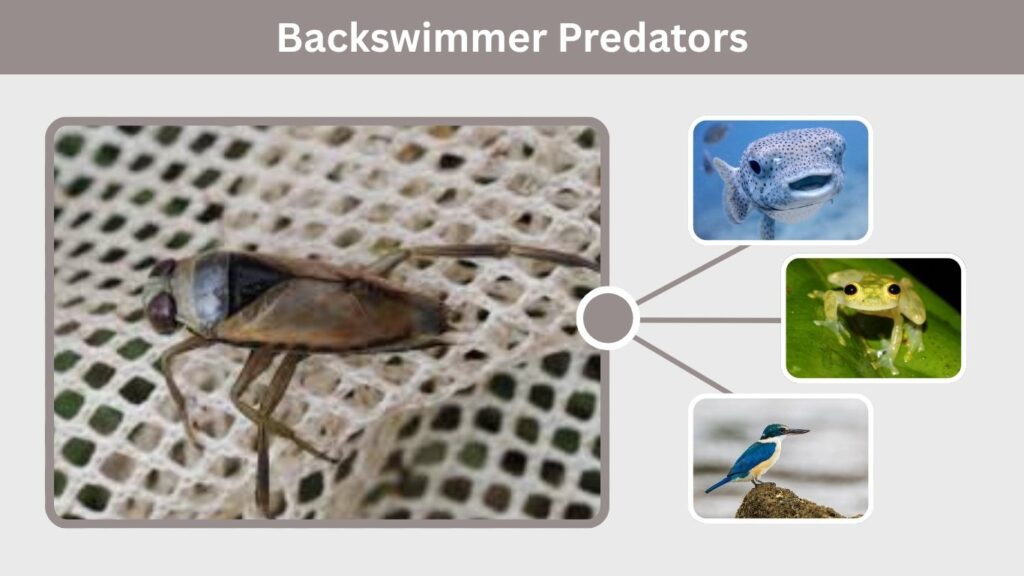
Backswimmers are predators, but they are also food for other animals. Many pond creatures may eat them, especially when they are young or vulnerable.
What Eats Backswimmers?
Common predators include:
- Fish
- Frogs
- Toads
- Birds
- Dragonfly nymphs
- Larger aquatic insects
- Spiders near water
Their fast swimming, ability to fly, and habit of staying near the surface help them escape many threats.
How to Prevent Backswimmers
Prevention is easier than removal. The goal is to make your pool or pond less attractive to them.
Pool Prevention Tips
To prevent backswimmers in pools:
- Keep chlorine at the correct level
- Maintain proper pH balance
- Run the pool pump regularly
- Skim insects and leaves daily
- Brush and vacuum the pool
- Use a pool cover when not in use
- Reduce nearby standing water
- Limit bright lights around the pool at night
Pond Prevention Tips
In ponds, it is usually better not to eliminate them completely. If you want fewer backswimmers, improve habitat balance rather than using chemicals. Add more plant cover for tadpoles and small fish, avoid overfeeding fish, and keep the pond from becoming overloaded with organic debris.
FAQs
Do backswimmers bite?
Yes, backswimmers can bite if handled or trapped against the skin. Their bite may feel like a sharp sting or painful pinch. They do not usually attack people, but it is best to avoid touching them with bare hands.
Are backswimmers dangerous?
Backswimmers are not usually dangerous, but their bite can be painful. They are not known for spreading disease to humans. In pools, they are mainly a nuisance and should be removed with a net rather than handled directly.
What do backswimmers eat?
Backswimmers eat mosquito larvae, small aquatic insects, tadpoles, fish fry, and other tiny water animals. They are predators and use piercing mouthparts to feed on the body fluids of their prey.
How do I get rid of backswimmers in my pool?
Skim them out with a pool net, clean debris, brush and vacuum the pool, and balance chlorine and pH levels. Reducing algae, insects, and mosquito larvae removes their food source and makes the pool less attractive.
What is the difference between backswimmers and water boatmen?
Backswimmers swim upside down and can bite painfully. Water boatmen usually swim right-side up and are less likely to bite. Backswimmers are mainly predators, while water boatmen often feed on algae, detritus, and tiny organisms.