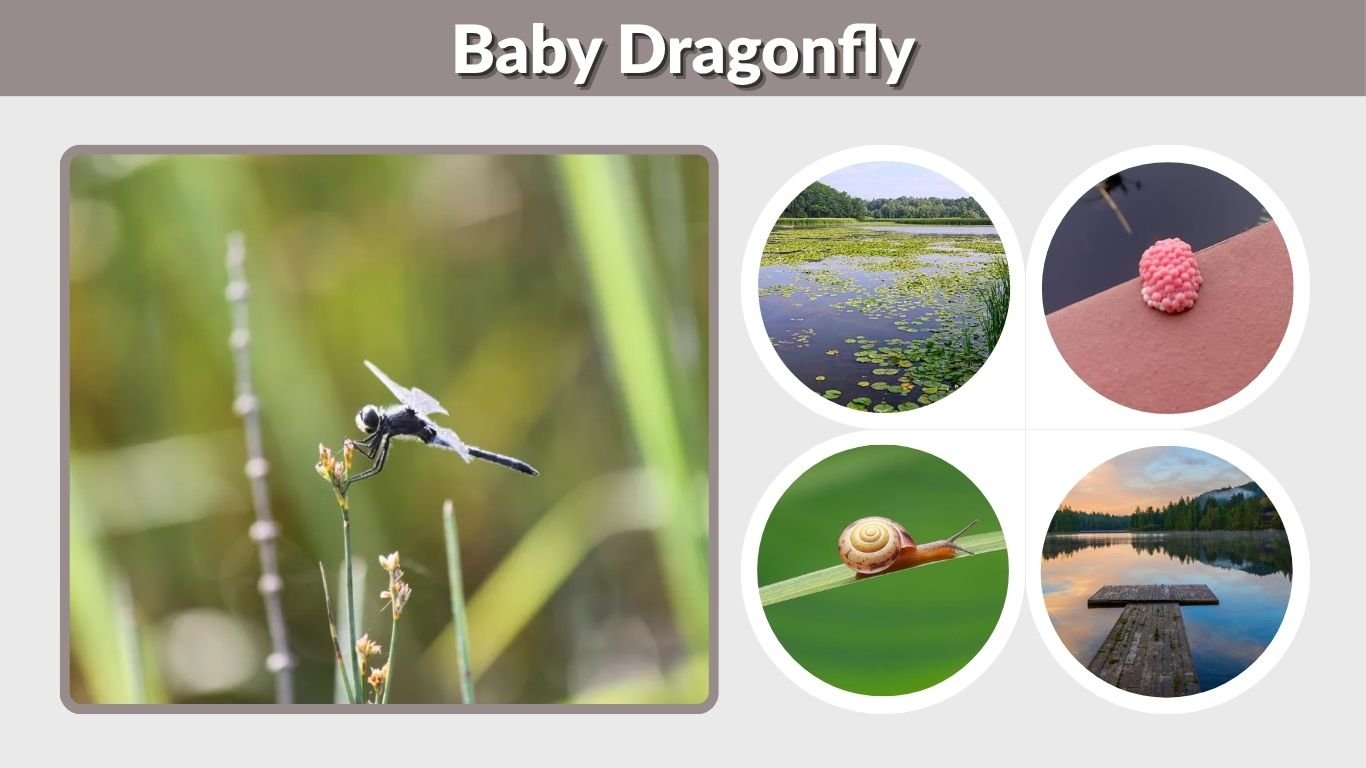
A baby dragonfly looks nothing like the colorful flying insect most people recognize. Young dragonflies are aquatic predators called nymphs or naiads, spending most of their early lives underwater in ponds, lakes, wetlands, and streams. Instead of wings, they have six strong legs, large eyes, a segmented body, and an unusually extendable lower jaw for grabbing prey. Depending on the species, this aquatic stage can last from several months to several years before the nymph finally leaves the water and transforms into a winged adult.
What Does a Baby Dragonfly Look Like?
Baby dragonflies have compact, alien-looking bodies that are very different from slender adult dragonflies. Their color usually blends with mud, vegetation, or debris, helping them remain hidden while hunting. They lack functional wings but older nymphs develop visible wing pads on the thorax. Their strong legs and broad heads give them the appearance of small underwater predators.
Baby Dragonfly Identification
A dragonfly nymph typically has:
- Six jointed legs
- A broad head with large compound eyes
- Brown, green, gray, or mottled coloration
- A segmented abdomen
- Small developing wing pads in older nymphs
- Strong claws for gripping vegetation
- A specialized hinged lower jaw
- No long external tail gills like a damselfly nymph
Body shape varies considerably. Darner nymphs tend to be long and streamlined, while some skimmers and clubtails are shorter, broader, and stockier.
How Big Are Baby Dragonflies?
Size depends heavily on species and age. Newly hatched nymphs can be extremely small, while mature nymphs of large dragonflies may reach several centimeters long.
Utah State University records some darner nymphs at approximately 31–50 mm long, while smaller dragonfly species mature at considerably shorter lengths.
Where Do Baby Dragonflies Live?
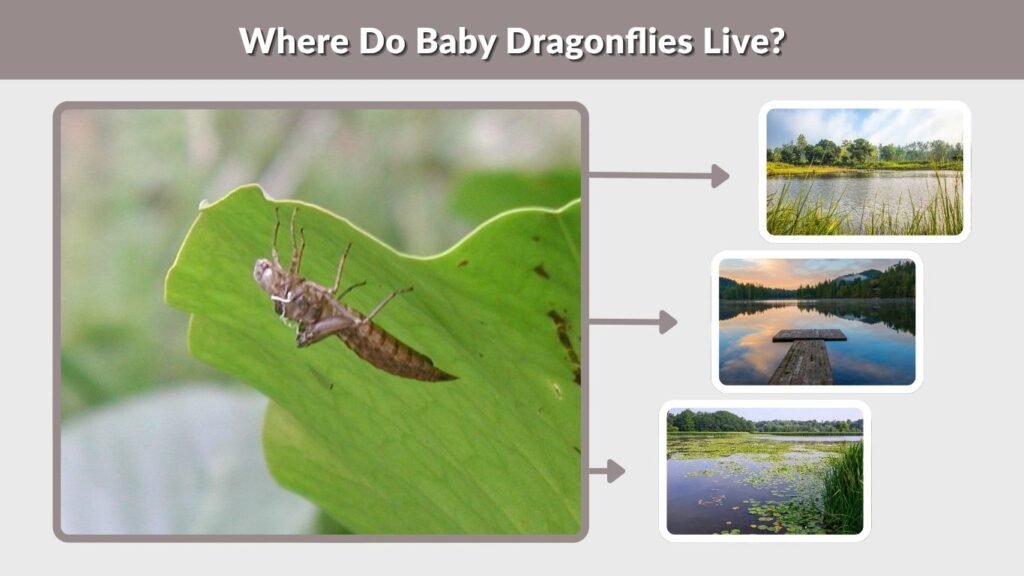
The young stage of a dragonfly is almost entirely aquatic. Nymphs occupy freshwater environments where they can find prey, hiding places, and suitable conditions for development. Some remain buried in sediment, while others climb through vegetation or crawl over submerged wood. Because different dragonflies specialize in different habitats, finding a nymph can also provide clues about the adult species living nearby.
Baby Dragonflies in Water
Dragonfly nymphs can live in:
- Ponds
- Lakes
- Wetlands
- Marshes
- Slow-moving streams
- Rivers
- Vernal pools
- Submerged vegetation
- Mud and bottom sediment
Most species favor still or slowly moving freshwater, although some have adapted to flowing streams and rivers.
They often remain concealed beneath plants, leaves, stones, or sediment while waiting for prey to move within striking distance.
Can Baby Dragonflies Live on Land?
Not during normal nymphal development.
Dragonfly nymphs are adapted to aquatic life and remain underwater until they are ready for their final molt. At that point, the mature nymph climbs onto vegetation, rocks, stems, or another surface above water.
The adult then emerges from the old nymphal skin and begins life as an aerial insect.
What Do Baby Dragonflies Eat?
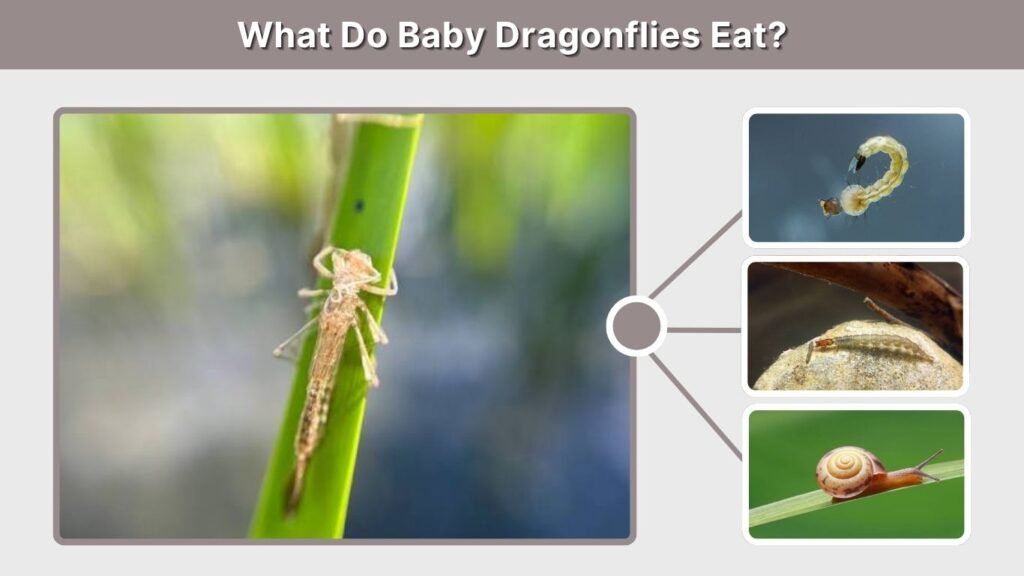
Baby dragonflies are predators from an early age. Rather than feeding on plants, mature nymphs ambush small animals moving through their freshwater habitat. Younger individuals start with tiny prey and gradually tackle larger animals as they grow. This predatory lifestyle makes dragonflies important members of pond and wetland food webs long before they become flying adults.
Baby Dragonfly Diet
Depending on their size, nymphs may eat:
- Zooplankton
- Mosquito larvae
- Aquatic insect larvae
- Small worms
- Tiny crustaceans
- Tadpoles
- Small snails
- Other dragonfly nymphs
- Small fish
Penn State notes that larger nymphs may capture tadpoles, insects, snails, small fish, and even other odonates.
Are Baby Dragonflies Dangerous to Koi?
Large dragonfly nymphs are capable predators, so they may capture very small fish or newly hatched fry if the opportunity arises.
Healthy adult koi are far too large for a dragonfly nymph to treat as prey. In an ornamental pond, the greatest potential risk is therefore to tiny fry rather than established fish.
Dragonfly nymphs are also part of a natural pond ecosystem and themselves become food for larger fish, frogs, birds, and other predators.
How Does a Baby Dragonfly Catch Its Prey?
Perhaps the most remarkable feature of a dragonfly nymph is its mouth. Beneath its head is a highly modified labium, or lower lip, that can extend rapidly toward prey. When folded, this structure sits beneath the head. When an insect, tadpole, or other small animal comes close enough, the nymph projects it forward to seize the victim.
The Famous Dragonfly Nymph Jaw
The feeding apparatus consists of a hinged, extendable lower mouthpart equipped for capturing prey.
Utah State University describes Odonata larvae as predators characterized by a large hinged labium.
The nymph usually relies on camouflage and patience rather than continually chasing prey. Once an animal enters striking range, the labium extends rapidly, captures it, and pulls it toward the normal chewing mouthparts.
Although close-up videos can make this mechanism look frightening, it is designed for catching small aquatic animals, not attacking humans.
Baby Dragonfly Life Cycle
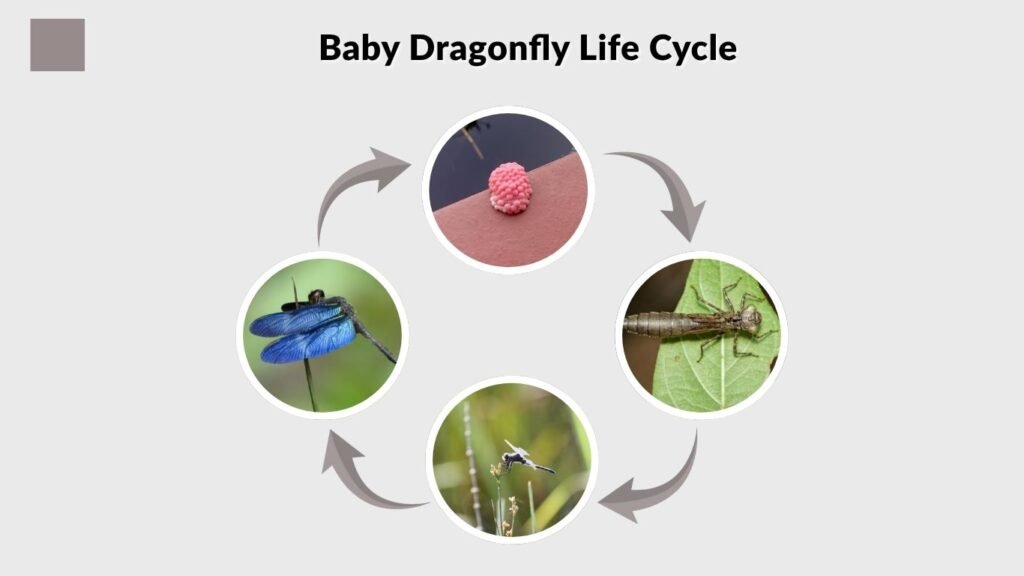
Dragonflies undergo incomplete metamorphosis, meaning there is no pupal stage between nymph and adult. The aquatic nymph is therefore essentially the developing juvenile form. This stage usually occupies much more of the dragonfly’s life than adulthood. Depending on species and environmental conditions, nymphal development can take months or several years.
From Egg to Adult Dragonfly
The main stages are:
- Egg: Females deposit eggs in or around freshwater.
- Young nymph: Eggs hatch and tiny aquatic predators begin feeding.
- Growing nymph: The nymph molts repeatedly as its body increases in size.
- Mature nymph: Wing pads become more developed as adulthood approaches.
- Emergence: The nymph climbs above the water and its exoskeleton splits.
- Adult: A soft dragonfly emerges, expands its wings and abdomen, and eventually flies away.
Unlike butterflies, dragonflies do not produce a chrysalis or cocoon.
How Long Is a Dragonfly a Nymph?
Development varies tremendously.
Penn State reports that the nymph stage can last a few months to years, depending on species. Illinois Extension gives roughly one to three years for many dragonflies.
Some migratory Common Green Darners develop much faster, while resident populations may spend roughly 11–12 months developing as nymphs.
Do Baby Dragonflies Fly, Bite or Sting?
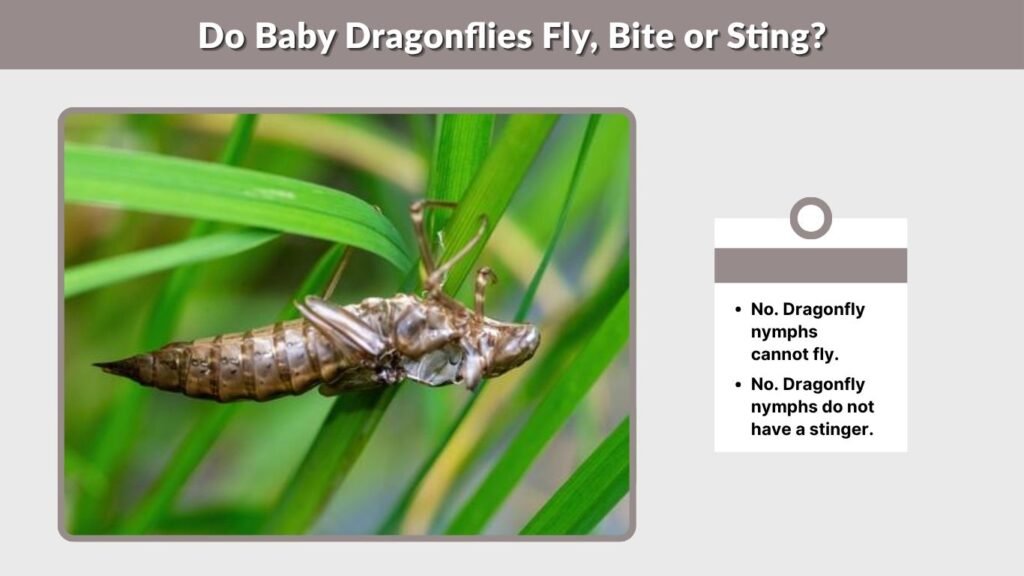
Because the word “baby” often suggests a miniature adult, people sometimes expect baby dragonflies to have tiny wings and fly. They do not. The true juvenile stage lives underwater and lacks functional adult wings. Despite its formidable predatory adaptations, a nymph poses little concern to people when left alone and has no specialized stinger.
Can Baby Dragonflies Fly?
No. Dragonfly nymphs cannot fly.
Flight only becomes possible after the final molt, when the adult emerges above water with four developing wings. The wings initially expand and harden before normal flight begins.
Penn State notes that the emergence itself can occur in less than an hour, although newly emerged adults remain delicate afterward.
Do Baby Dragonflies Bite?
Dragonfly nymphs have chewing mouthparts and powerful prey-catching structures, so a large individual may potentially pinch or nip if roughly handled.
They do not seek people as prey and should simply be observed without unnecessary handling.
Do Baby Dragonflies Have Stingers?
No. Dragonfly nymphs do not have a stinger.
Their predatory equipment is located at the mouth, particularly the extendable labium. The rear of a dragonfly nymph also plays an unusual role in movement: some species can force water from the rectal chamber, producing a form of jet propulsion that helps them escape quickly.
FAQs
Baby dragonflies are easy to misunderstand because people rarely see the aquatic stage compared with the familiar flying adults. Knowing that they are underwater nymphs explains their strange appearance, aggressive hunting behavior, and absence of functional wings. Their transformation from aquatic predator to aerial hunter is one of the most distinctive life histories found among common freshwater insects.
1. What is a baby dragonfly called?
A baby dragonfly is usually called a nymph or naiad. It is the aquatic immature stage between the egg and adult dragonfly.
2. What does a baby dragonfly look like?
It usually looks brown, green, or gray with six legs, large eyes, a segmented abdomen, and a broad head. Older nymphs also have visible wing pads.
3. Do baby dragonflies live underwater?
Yes. Dragonfly nymphs spend their development underwater in ponds, wetlands, lakes, streams, and other freshwater habitats.
4. What do baby dragonflies eat?
They are predators that consume mosquito larvae, aquatic insects, zooplankton, worms, tadpoles, and sometimes small fish or other dragonfly nymphs.
5. How does a baby dragonfly become an adult?
A mature nymph climbs out of the water, attaches itself to a surface, and undergoes its final molt. The adult emerges, expands its wings and abdomen, hardens, and eventually flies away.