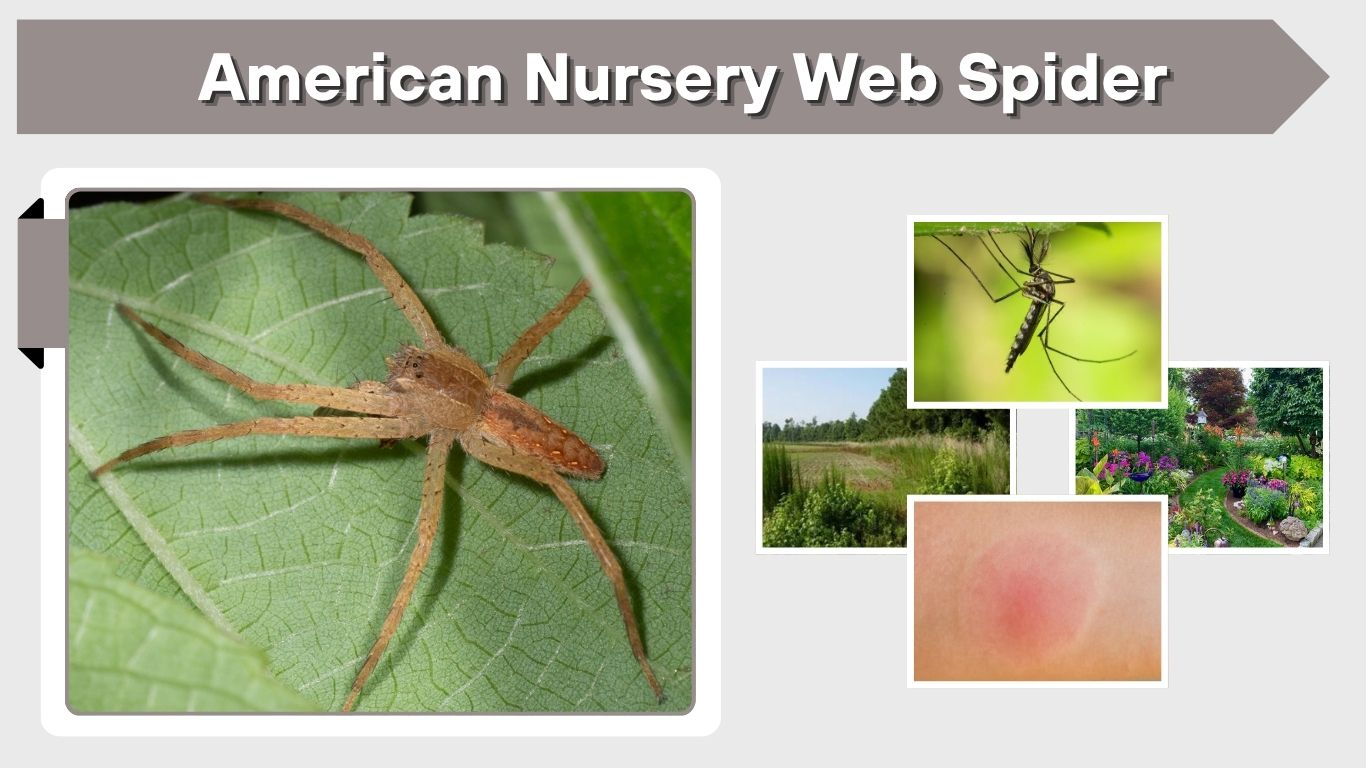
The American nursery web spider is a common outdoor spider that often gets attention because of its large size, long legs, and brown body pattern. Although it can look intimidating, this spider is not considered dangerous to humans. It is usually found in gardens, meadows, tall grass, shrubs, and wooded edges, where it hunts insects and protects its young in a silk nursery web.
What Is an American Nursery Web Spider?
The American nursery web spider, commonly identified as Pisaurina mira, is a hunting spider in the family Pisauridae. Unlike many spiders that rely on sticky webs to catch prey, nursery web spiders actively hunt insects. They use silk, but mostly for safety lines, egg sacs, resting areas, and the nursery structure that gives them their name.
The phrase “nursery web” comes from the female spider’s habit of carrying her egg sac and later building a protective silk shelter for the spiderlings. She often guards the young until they are ready to disperse. This behavior makes nursery web spiders especially interesting compared with many other common yard spiders.
American nursery web spiders are often found in the eastern and central United States and parts of Canada. Animal Diversity Web notes that Pisaurina mira occurs in the United States from Florida west to Texas and north to Kansas and Minnesota, as well as parts of Canada including Ontario, Quebec, and Nova Scotia.
American Nursery Web Spider Identification
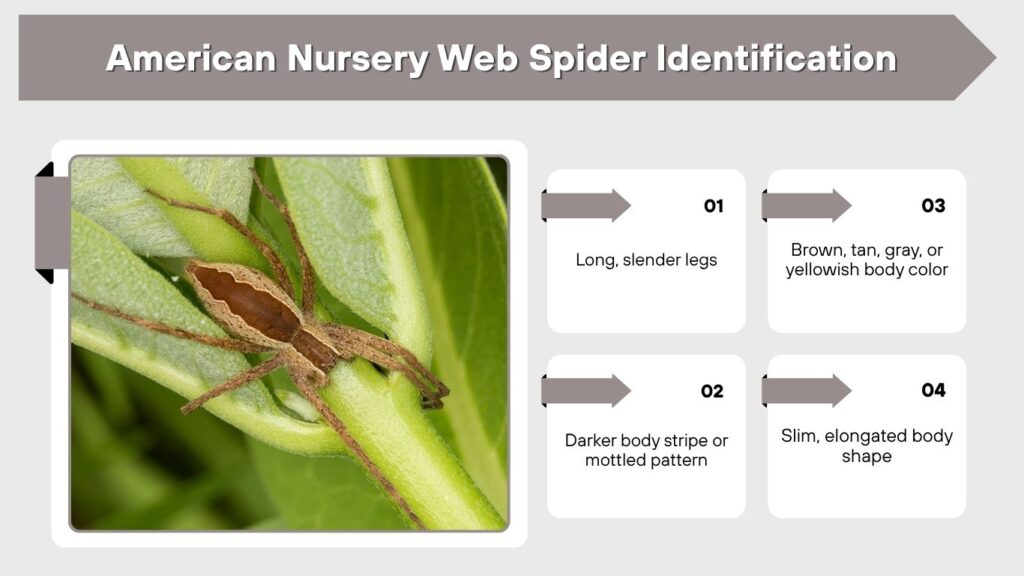
The American nursery web spider is usually brown, tan, or grayish with a long body and long legs. It may have a darker stripe or patterned markings running down the body. Because of its shape and color, people sometimes mistake it for a wolf spider, fishing spider, or even a brown recluse.
Key Identification Features
Look for these features:
- Long, slender legs
- Brown, tan, gray, or yellowish body color
- Darker body stripe or mottled pattern
- Slim, elongated body shape
- Resting posture with legs stretched out
- Active hunting behavior
- Presence on vegetation, shrubs, or tall grass
- Female guarding an egg sac or nursery web
One helpful clue is where the spider is found. Nursery web spiders are often seen on plants, shrubs, and vertical vegetation, while wolf spiders are more often found running along the ground. Some identification sources also note that eye arrangement is important for separating nursery web spiders from similar species, although this can be difficult without a close photo.
American Nursery Web Spider Size
American nursery web spiders are medium to large compared with many household spiders. Their long legs can make them appear bigger than their body actually is. Females are usually larger and heavier-bodied than males.
| Feature | Description |
|---|---|
| Common name | American nursery web spider |
| Scientific name | Pisaurina mira |
| Family | Pisauridae |
| Body color | Brown, tan, gray, or yellowish |
| Common habitat | Meadows, gardens, shrubs, tall grass, wooded edges |
| Web use | Nursery webs, egg protection, safety silk |
| Bite risk | Low, usually mild |
| Human benefit | Helps control insects |
Some spider identification references list females at about 12.5–16.5 mm in body length and males around 10.5–15 mm, with leg spans that can make the spider look much larger.
American Nursery Web Spider Male vs Female
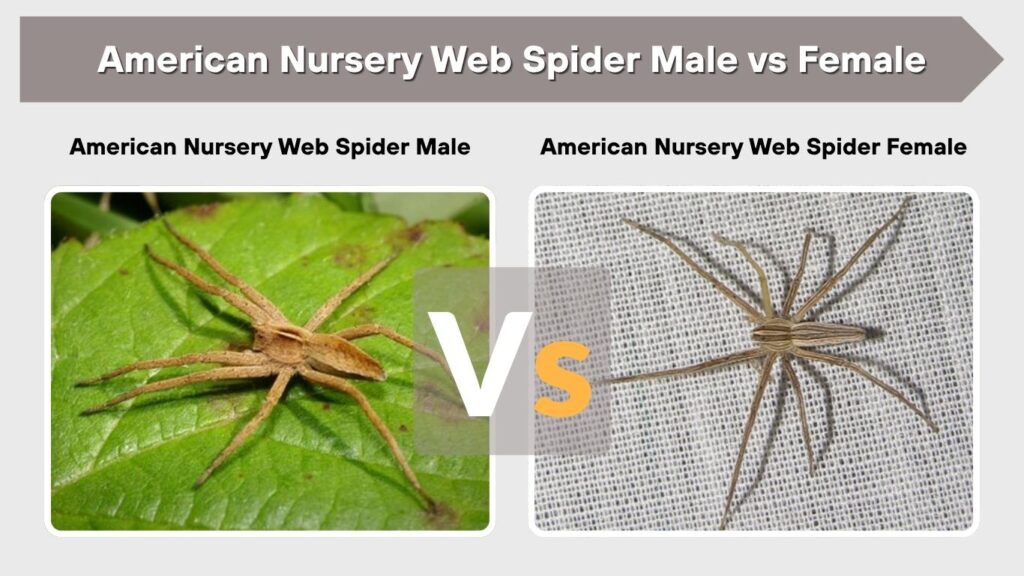
Male and female American nursery web spiders can look similar at first, but there are several differences. Females are usually larger, especially when carrying eggs. Males often appear slimmer and may have proportionally longer legs.
Female American Nursery Web Spider
A female nursery web spider may be easier to recognize during reproduction. She carries her egg sac with her mouthparts and later creates a silk nursery web for the young. She may stay near the nursery and guard it.
Common female traits include:
- Larger body size
- Rounder abdomen when mature
- Egg sac carrying behavior
- Nursery web building
- Protective behavior near spiderlings
- More noticeable body mass than males
This maternal behavior is one of the main reasons the spider is called a nursery web spider.
Male American Nursery Web Spider
Males are usually slimmer and more active during mating season. They may wander while searching for females. In nursery web spiders, mating behavior can be unusual. In Pisaurina mira, males have been documented using silk during mating, and some studies describe males wrapping females’ legs as part of mating behavior.
Male traits may include:
- Slimmer body
- Long-legged appearance
- More wandering behavior
- Enlarged pedipalps near the mouth
- Less involvement in egg care
- Smaller abdomen than females
For casual identification, body size and behavior are usually easier to notice than fine anatomical details.
American Nursery Web Spider Habitat
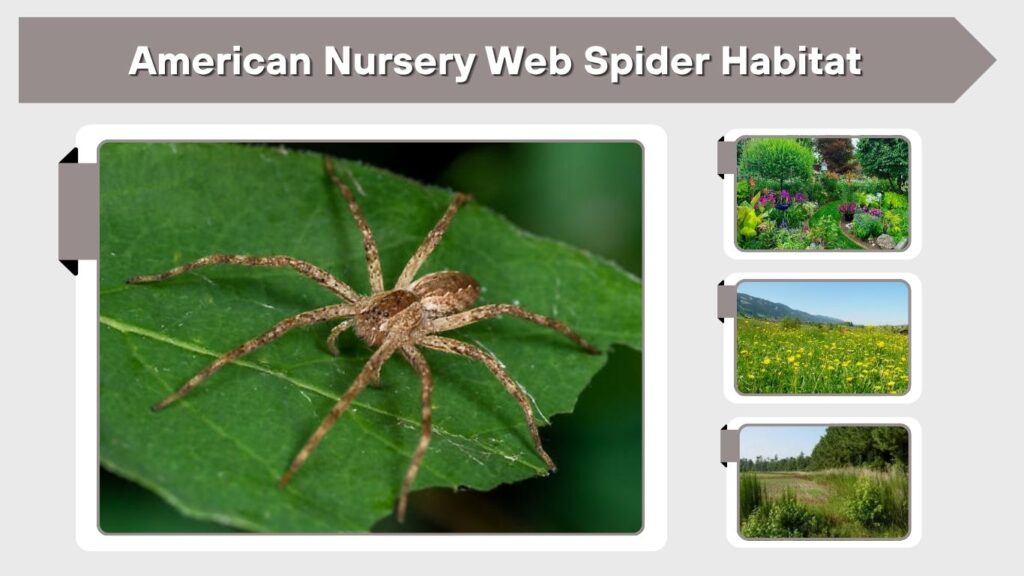
American nursery web spiders are mostly outdoor spiders. They prefer areas with vegetation, insects, and places to hide. Animal Diversity Web describes their habitats as fields, meadows, woods, tall grass, shrubs, and bushes.
Common Places to Find Them
You may see them in:
- Gardens
- Meadows
- Tall grass
- Shrubs and bushes
- Forest edges
- Fence lines
- Around ponds or damp vegetation
- Yard plants
- Outdoor walls or sheds
- Occasionally inside homes
They do not usually infest homes. If one appears indoors, it likely wandered in by accident while searching for prey, shelter, or a mate.
American Nursery Web Spider in Michigan
The keyword “American nursery web spider Michigan” appears because many people in Michigan find large brown spiders in gardens and want to know if they are dangerous. Nursery web spiders are present in Michigan and are often associated with meadows, tall grasses, wooded areas, and gardens. A Michigan-related Ask Extension response describes Pisaurina mira as a native species found throughout the state in these habitats.
In Michigan, this spider may be confused with wolf spiders, fishing spiders, or brown recluse spiders. However, brown recluse spiders are not commonly established throughout Michigan in the way many people fear. When identifying a brown spider, it is better to look at multiple features rather than relying only on color.
American Nursery Web Spider Bite
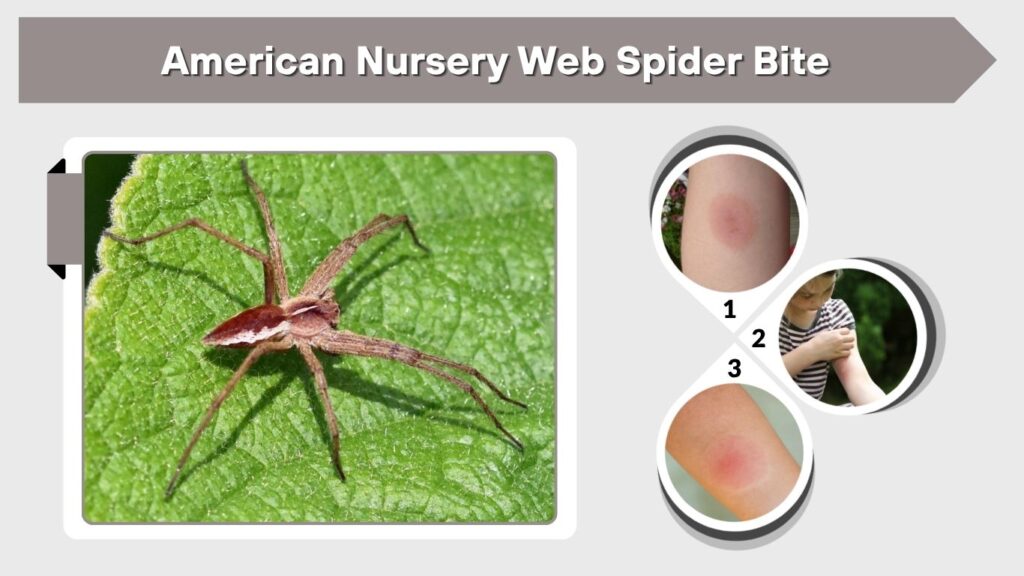
An American nursery web spider bite is possible, but it is uncommon. These spiders are not aggressive toward humans. A bite is most likely if the spider is handled, trapped against skin, or accidentally squeezed.
What Does the Bite Feel Like?
A bite may feel like a small pinch or mild sting. Symptoms are usually local and temporary.
Possible symptoms include:
- Mild pain
- Redness
- Slight swelling
- Itching
- Tenderness around the bite
- A small raised bump
For most people, the bite is not medically serious. Basic first aid is usually enough: wash the area with soap and water, use a cold compress, avoid scratching, and monitor the bite.
When to Get Medical Help
Seek medical advice if:
- Pain becomes severe
- Swelling spreads quickly
- Redness expands over time
- The area becomes hot or infected
- Pus appears
- Fever develops
- The person has trouble breathing
- The bite victim has a known allergy
- You are unsure whether the spider was something more dangerous
Most suspected spider bites are never confirmed by seeing the spider bite. Skin infections, insect bites, and allergic reactions can sometimes look similar.
Is the American Nursery Web Spider Poisonous?
The American nursery web spider is not considered poisonous in the usual sense. Like most spiders, it is technically venomous because it uses venom to subdue prey. However, its venom is not considered dangerous to humans under normal circumstances.
People often use “poisonous” and “venomous” interchangeably, but they do not mean the same thing. A poisonous animal causes harm if touched or eaten. A venomous animal injects venom through a bite or sting. The American nursery web spider is venomous to small prey, but it is not a serious threat to people or pets.
Spider identification sources generally describe nursery web spiders as intimidating-looking but not dangerously venomous to humans or pets.
American Nursery Web Spider vs Brown Recluse
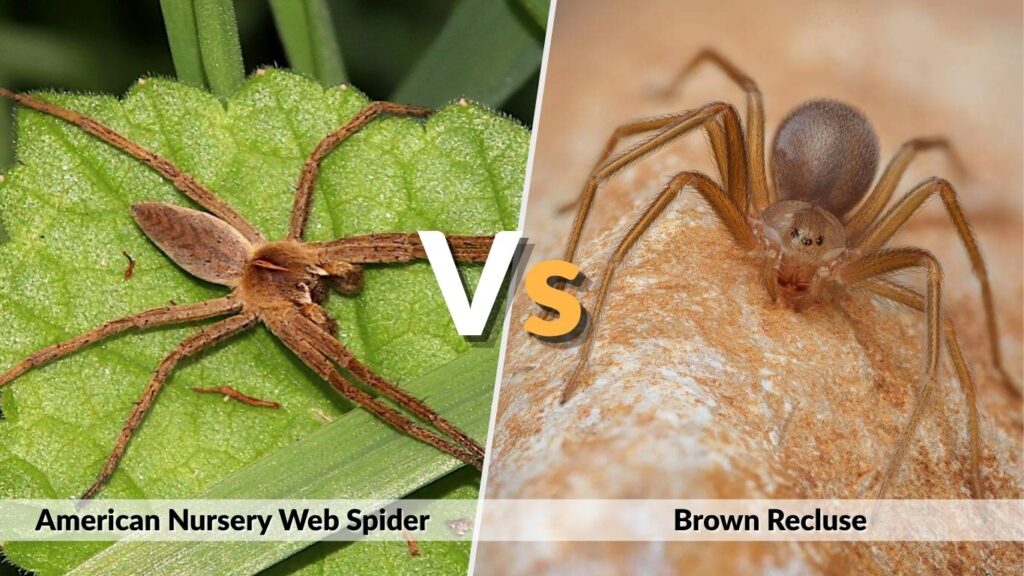
The comparison “American nursery web spider vs brown recluse” is important because both can be brown, and many people worry when they find a large brown spider indoors or outdoors. However, they are different spiders with different appearances and risk levels.
Main Differences
The American nursery web spider is usually larger-looking, longer-legged, and often found on vegetation. It may have more visible striping or mottled markings. Brown recluse spiders are generally more plain-looking and are known for a violin-shaped marking on the cephalothorax, although that marking alone is not enough for identification.
Nursery web spiders usually have longer, more stretched-out legs and are active hunters in vegetation. Brown recluse spiders are more secretive and prefer undisturbed indoor or sheltered areas where they can hide.
Simple Comparison
Use these clues:
- Nursery web spiders often appear on plants, shrubs, and tall grass.
- Brown recluse spiders are more associated with dark, hidden spaces.
- Nursery web spiders may show stripes or mottled patterns.
- Brown recluse spiders are usually more uniform brown.
- Nursery web spiders are not considered medically dangerous.
- Brown recluse bites can sometimes be medically significant.
If you are unsure, take a clear photo from a safe distance and ask a local extension office, pest professional, or spider identification group.
What Do American Nursery Web Spiders Eat?
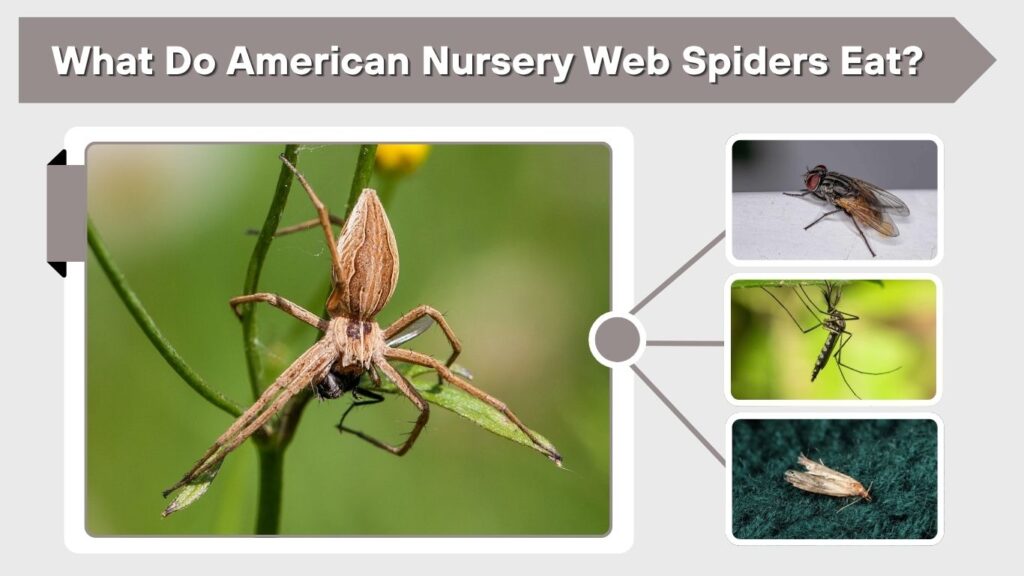
American nursery web spiders are beneficial predators. They help reduce insects in yards, gardens, and natural areas. They do not damage plants, wood, fabric, or stored food.
Common Prey
Their diet may include:
- Flies
- Mosquitoes
- Small moths
- Leafhoppers
- Crickets
- Grasshoppers
- Caterpillars
- Other small insects
Because they hunt insects, nursery web spiders can be helpful in gardens and landscapes. They are part of the natural pest-control system.
Do American Nursery Web Spiders Make Webs?
Yes, but they do not use webs like orb-weavers or house spiders. They do not usually build a large sticky web to trap prey. Instead, their silk is used for egg sacs, safety lines, resting spots, and nursery webs for young spiderlings.
A female may build a tent-like nursery web among leaves, grass, or shrubs. She places the egg sac or young spiderlings inside and guards the area. This protective web is the source of the spider’s common name.
Should You Remove an American Nursery Web Spider?
In most cases, you do not need to remove it. If it is outdoors, it is best left alone. It helps control insects and is not a major threat to people.
If one is inside your home, use a cup-and-paper method to move it outside:
- Place a clear cup over the spider.
- Slide stiff paper under the cup.
- Carry it outside carefully.
- Release it near shrubs, grass, or garden plants.
- Avoid handling it directly.
Killing the spider is usually unnecessary. It is more useful alive in the garden than dead in the house.
How to Prevent Nursery Web Spiders Indoors
Nursery web spiders are not indoor pests, but they may wander inside occasionally. Prevention is mostly about sealing entry points and reducing insects that attract spiders.
Prevention Tips
Try these steps:
- Seal gaps around doors and windows.
- Repair damaged screens.
- Reduce outdoor lights that attract insects.
- Trim vegetation away from the house.
- Keep basements and garages less cluttered.
- Remove insects that attract hunting spiders.
- Use door sweeps where needed.
These steps can reduce accidental spider entry without harming beneficial outdoor spiders.
FAQs
Is the American nursery web spider dangerous?
No, the American nursery web spider is not considered dangerous to humans. It can bite if handled or squeezed, but bites are usually mild. This spider is more beneficial than harmful because it hunts insects in gardens, meadows, shrubs, and wooded edges.
What happens if an American nursery web spider bites you?
A bite may cause mild pain, redness, swelling, itching, or tenderness. Most symptoms are local and temporary. Wash the area with soap and water, apply a cold compress, and avoid scratching. Get medical help if symptoms worsen or signs of infection appear.
Is the American nursery web spider poisonous?
It is not poisonous in the usual sense. Like most spiders, it is venomous to its insect prey, but its venom is not considered medically dangerous to most people. The spider does not seek out humans and usually bites only in self-defense.
How big is an American nursery web spider?
The body is usually around half an inch or a little more, while the long legs can make it look much larger. Females are generally larger and heavier-bodied than males. Males often appear slimmer and longer-legged, especially during mating season.
Is an American nursery web spider the same as a brown recluse?
No, they are different spiders. American nursery web spiders are usually found around vegetation and are not considered medically dangerous. Brown recluse spiders are more secretive and can have medically significant bites. Because brown spiders can be confusing, use multiple features or expert identification.