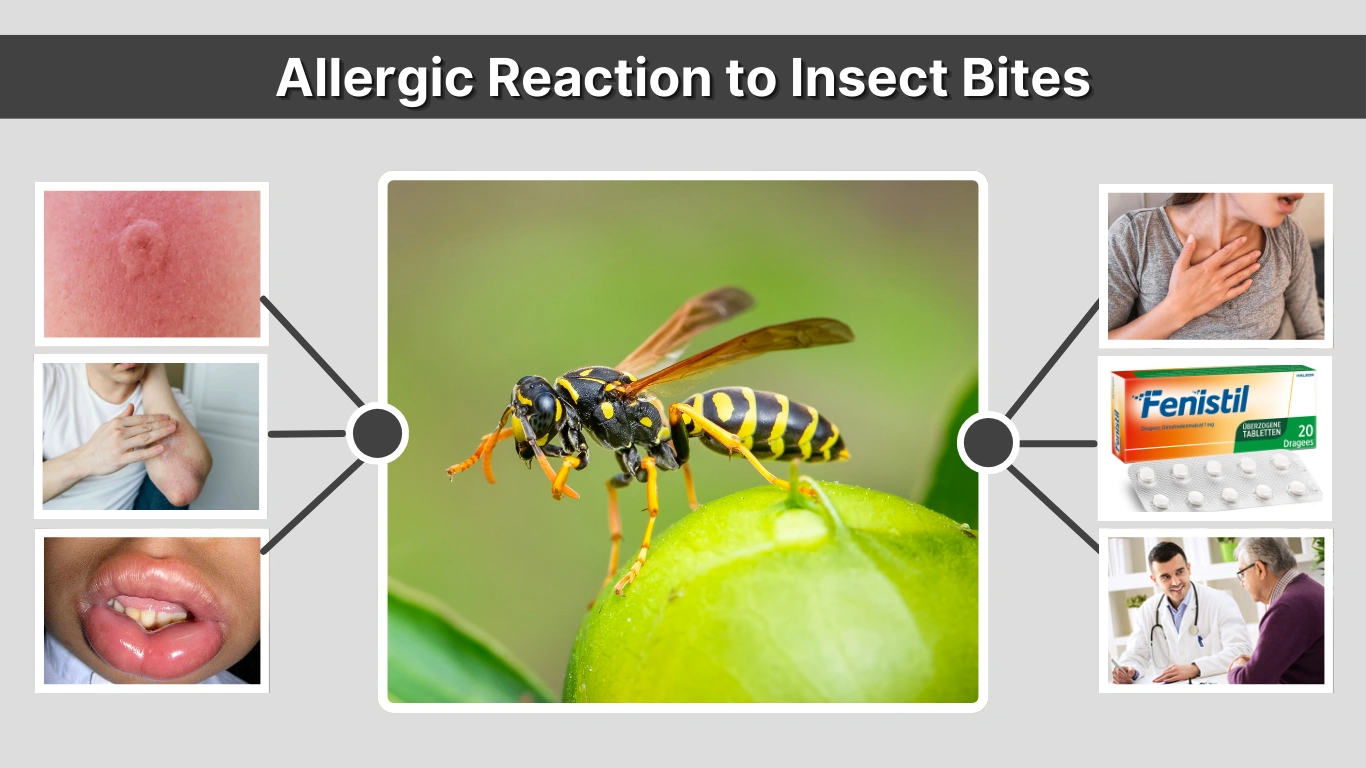
Most insect bites cause only minor irritation—redness, itching, or slight swelling. However, for some people, these bites can trigger allergic reactions that range from uncomfortable to life-threatening. Distinguishing between a normal reaction and an allergy is vital for safety. Knowing the signs, first aid steps, and medical treatments ensures that you can act quickly if symptoms worsen.
What Causes Allergic Reactions to Insect Bites?
When an insect bites or stings, it introduces saliva or venom into the skin. The immune system recognizes these substances as harmful invaders and responds by releasing histamines. These chemicals cause itching, redness, and swelling at the bite site.
While these responses are normal, an allergic reaction occurs when the immune system overreacts. Instead of calming down after a short period, the reaction escalates, spreading symptoms beyond the bite area. Genetics, prior exposures, and overall sensitivity determine why some individuals are more prone to allergies than others.
Types of Allergic Reactions

Not all allergic reactions are the same. They range in severity, from mild irritation to life-threatening emergencies.
Local Reactions
These are the most common and usually involve mild symptoms such as:
- Redness and itching near the bite.
- Slight swelling at the site.
- Warmth or tenderness in the surrounding skin.
Local reactions typically fade within a day or two.
Large Local Reactions
In some people, the swelling and redness extend far beyond the actual bite or sting. For example, a bee sting on the hand may cause swelling of the entire arm. These reactions are not life-threatening but can be painful and may last for several days.
Systemic Reactions
Systemic reactions occur when the immune response affects more than just the bite site. Symptoms may include:
- Hives or rash over multiple areas.
- Dizziness or nausea.
- Swelling in unexpected places like the face or lips.
Such reactions require medical evaluation since they indicate a stronger sensitivity.
Severe Reactions (Anaphylaxis)
The most dangerous form of allergic reaction is anaphylaxis. This condition develops rapidly and can be fatal if untreated. Symptoms include:
- Difficulty breathing or wheezing.
- Swelling of the throat, tongue, or lips.
- Rapid heartbeat or fainting.
- Feeling of panic or impending doom.
Anaphylaxis requires immediate emergency care, including the use of epinephrine.
Common Insects That Trigger Allergic Reactions

Certain insects are more likely to cause allergic responses than others.
Mosquitoes
Most mosquito bites cause mild itching, but sensitive individuals may develop raised hives or clusters of welts known as “skeeter syndrome.”
Bees and Wasps
Bee and wasp venom is a common allergy trigger. While one sting causes only local pain for most, allergic individuals may experience large swelling or systemic reactions.
Ants (Fire Ants)
Fire ants both bite and sting, injecting venom that leads to clusters of swollen, blister-like bumps. Reactions can escalate quickly in allergic individuals.
Horseflies and Deer Flies
These large biting insects cut into the skin, often leaving behind painful wounds. Allergic reactions may involve extensive swelling and rash.
Bedbugs and Fleas
While often considered more of a nuisance, repeated exposure to bedbugs or fleas can cause allergic rashes, hives, or even blistering in sensitive people.
Symptoms of Allergic Reactions
Recognizing symptoms early helps prevent complications.
Mild Symptoms
- Local redness and itching.
- Warmth and slight swelling.
- Discomfort limited to the bite area.
Moderate Symptoms
- Hives spreading across the skin.
- Rash beyond the bite site.
- Large swelling lasting several days.
Severe Symptoms
- Shortness of breath or wheezing.
- Swelling of lips, tongue, or throat.
- Dizziness, fainting, or confusion.
If severe symptoms appear, seek emergency help immediately.
First Aid for Allergic Reactions

Early treatment is essential, even for mild allergic responses.
Immediate Steps
- Clean the bite or sting – Wash with soap and water to prevent infection.
- Apply a cold compress – Helps reduce swelling and numb itching.
- Take an antihistamine – Over-the-counter options like cetirizine or diphenhydramine block histamines.
- Use topical creams – Hydrocortisone or calamine lotion can calm irritation.
When to Use Emergency Care
Call emergency services immediately if you notice:
- Difficulty breathing.
- Rapidly spreading swelling.
- Swelling of lips, tongue, or throat.
- Severe dizziness or fainting.
In such cases, an epinephrine auto-injector may be lifesaving.
Medical Treatments for Allergic Reactions
When allergic reactions progress beyond mild symptoms, medical care may be required.
Common Medical Approaches
- Antihistamines: Oral antihistamines reduce itching, swelling, and hives. They are often the first line of defense.
- Corticosteroids: Doctors may prescribe oral or topical steroids for large local reactions or persistent symptoms.
- Epinephrine: For severe allergic reactions, an epinephrine auto-injector (such as an EpiPen) delivers a rapid, lifesaving dose.
- Antibiotics: If scratching leads to infection, antibiotics may be necessary.
Long-Term Management
For people with recurring allergic reactions, doctors may recommend allergy testing or desensitization therapy. Carrying prescribed medications like antihistamines or an epinephrine injector is strongly advised.
Home and Natural Remedies for Mild Allergic Reactions

For mild cases, natural remedies can provide soothing relief alongside or instead of medications.
- Aloe vera gel: Known for cooling properties, it reduces redness and itching.
- Honey: Naturally antibacterial and soothing, helpful for irritated bites.
- Baking soda paste: Neutralizes skin reaction and relieves discomfort.
- Oatmeal compresses: Ideal for multiple itchy bites, calming inflammation.
- Essential oils: Diluted tea tree or lavender oil can provide antiseptic and anti-inflammatory effects, though they should be used with caution to avoid irritation.
These remedies should never replace medical care in severe cases but can be effective for everyday relief.
Prevention of Allergic Reactions to Insect Bites
Avoiding bites and stings is the best way to reduce the risk of allergic reactions.
Protective Strategies
- Wear protective clothing: Long sleeves, pants, and closed shoes reduce skin exposure.
- Use insect repellents: Products containing DEET, picaridin, or natural oils like eucalyptus can help keep insects away.
- Avoid insect hotspots: Stay away from stagnant water, garbage areas, or flowering plants that attract insects.
- Secure living areas: Use screens on windows and mosquito nets around beds.
For People with Known Allergies
- Carry an epinephrine injector at all times.
- Inform family, friends, or coworkers about the allergy.
- Wear a medical alert bracelet to ensure quick identification during emergencies.
Complications of Untreated Allergic Reactions
Ignoring an allergic reaction can lead to serious health problems.
- Secondary infections: Constant scratching opens the skin, allowing bacteria to enter.
- Scarring or skin discoloration: Large or infected reactions may leave lasting marks.
- Recurring sensitivity: Each new bite or sting may trigger a stronger reaction.
- Anaphylaxis risk: Without treatment, severe allergic reactions can be fatal.
Recognizing complications early and seeking treatment is the safest way to avoid long-term consequences.
Conclusion
Allergic reactions to insect bites are more than just an inconvenience. While many bites cause only mild discomfort, allergies can lead to severe symptoms that require urgent medical care. Understanding the types of reactions, recognizing early warning signs, and knowing when to use first aid or seek medical attention is critical. Prevention—through protective clothing, repellents, and preparedness—remains the best strategy. For those with known allergies, carrying epinephrine and staying alert can make the difference between safety and danger.
FAQs
What does an allergic reaction to an insect bite look like?
It often begins with redness, swelling, and itching but can progress to hives, rash, or even swelling of the lips, eyes, and throat.
How long do allergic reactions to insect bites last?
Mild reactions may last 1–2 days, while large local reactions can persist for up to a week. Severe reactions need medical treatment and may resolve only with medication.
Can insect bites cause life-threatening reactions?
Yes. In rare cases, bites or stings can cause anaphylaxis—a rapid, life-threatening allergic reaction requiring immediate epinephrine and emergency care.
Are natural remedies safe for allergic reactions?
They can be effective for mild irritation but should never replace medical treatment in severe or systemic reactions. Always test for sensitivity before applying.
What’s the best way to prevent allergic reactions to bites?
Wear protective clothing, use repellents, avoid insect-heavy areas, and if allergic, always carry an epinephrine injector and inform others of your condition.