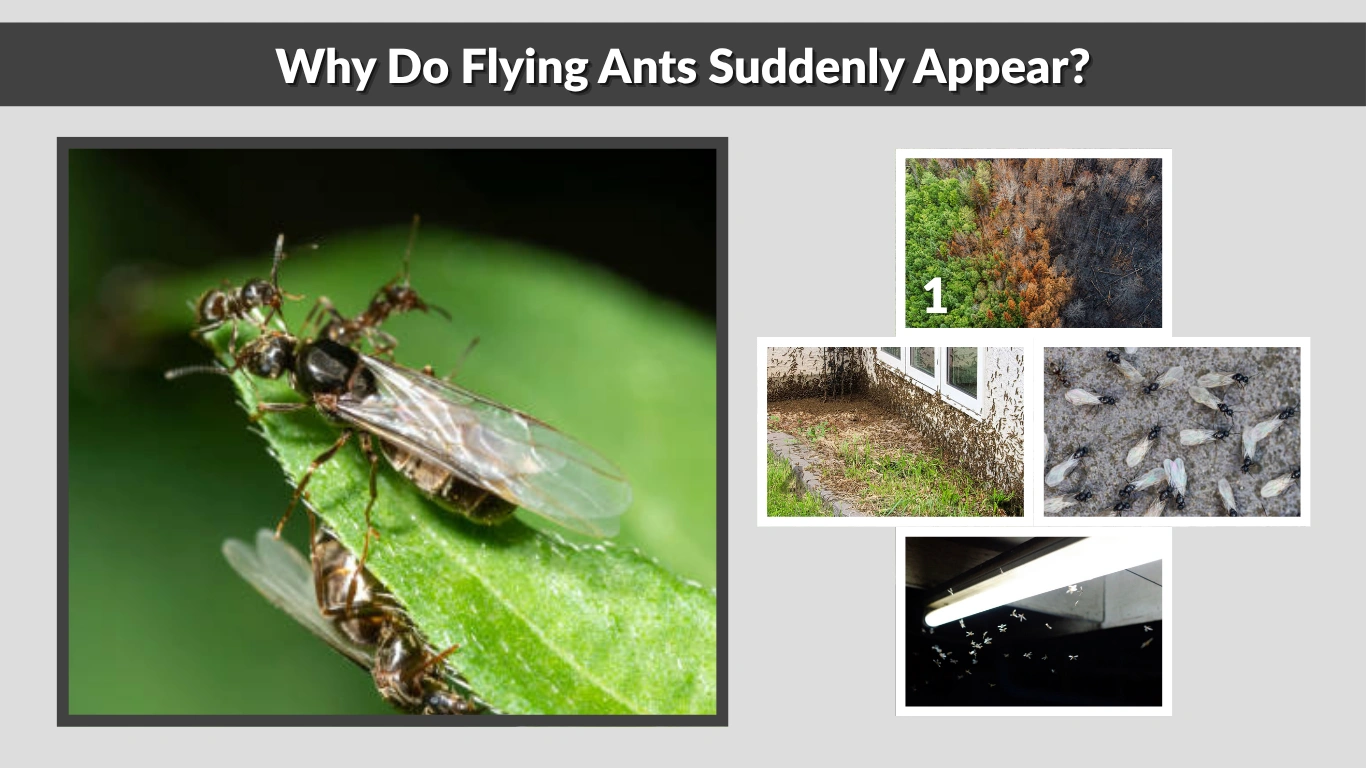
Flying ants seem to appear out of nowhere—swarming around windows, lamps, or even inside homes. Their sudden emergence often causes alarm, especially when they gather in large numbers. However, this event is a natural part of their life cycle known as the nuptial flight. Understanding why they appear, when it happens, and how to manage it can help you stay calm and keep your home pest-free.
What Are Flying Ants?
Flying ants, also called alates, are the reproductive members of an existing ant colony. They include both male and female ants that grow wings and take to the air for a brief period to mate. After mating, males die, and fertilized females shed their wings to start new colonies elsewhere.
These winged ants aren’t a separate species—they come from familiar types like carpenter ants, black garden ants, or field ants. Their short-lived flight phase ensures the survival and expansion of the colony, making it a key stage in their life cycle.
Why Do Flying Ants Suddenly Appear?

Flying ants appear suddenly because their colonies have reached maturity and the weather conditions are just right for mating. This typically happens during warm, humid days, often after rainfall. The humidity softens the ground, making it easier for newly fertilized queens to dig and start new nests.
Colonies synchronize this event with others in the same area, leading to a sudden explosion of winged ants in the air. While it may look like an infestation, this occurrence is natural and usually lasts only a few hours to a couple of days.
Triggers That Cause Flying Ants to Appear

Flying ants don’t emerge randomly. Several environmental and biological factors determine when and where they appear.
1. Weather Conditions
Warmth and moisture are key triggers. Heavy rain followed by sunlight creates perfect mating weather. These conditions occur frequently in summer and early autumn, explaining why swarms often appear during those months.
2. Colony Maturity
Ant colonies need to reach a certain size and age—typically three years or more—before they produce winged ants for reproduction. Once ready, the colony releases hundreds or thousands of alates at once.
3. Light Attraction
Flying ants navigate by light, which is why they often gather around windows, lamps, and TV screens. Artificial lighting confuses them, leading to accidental indoor swarms.
4. Seasonal Timing
In most regions, flying ants emerge between late spring and mid-summer, though in warmer climates, such as Florida or southern states, swarming can happen multiple times per year.
The Nuptial Flight Explained

The nuptial flight is the central reason flying ants appear so suddenly. During this event:
- Males and females leave their nests simultaneously.
- Mating occurs midair, often high above the ground.
- Males die shortly afterward.
- Fertilized queens land, shed their wings, and look for a suitable place to start new colonies.
This synchronized emergence ensures genetic diversity and survival of the species. It’s a short but essential process that may involve thousands of ants from nearby colonies taking flight at once.
How Long Do Flying Ants Stay Around?
Fortunately, flying ants don’t stay for long. The swarming typically lasts a few hours to two days, depending on weather conditions. Once the mating is complete, most ants either die or disperse to new nesting sites.
If you continue seeing them indoors for several days, it may signal a nest inside your home, especially if they are carpenter ants nesting in damp wood or walls. Occasional sightings, however, are perfectly normal and not a cause for concern.
Common Locations Where Flying Ants Appear

Flying ants often appear in areas with high humidity, warmth, or bright lighting. Typical places include:
- Near windows and glass doors — attracted to natural light.
- Bathrooms and kitchens — high humidity provides ideal conditions.
- Gardens, patios, and pools — open, damp areas perfect for swarming.
- Attics and basements — dark, warm, and occasionally moist environments.
If you notice them emerging from walls or wooden structures indoors, it’s best to inspect for carpenter ants or call a pest control specialist.
Are Flying Ants a Sign of Infestation?
Seeing flying ants once or twice a year isn’t a problem—it’s part of their reproductive cycle. However, persistent indoor sightings could indicate a local infestation.
Harmless Swarm
If they appear briefly and disappear within a day or two, it’s a seasonal swarm from nearby outdoor colonies.
Possible Infestation
If flying ants continue appearing from cracks, vents, or wooden areas, it may point to a carpenter ant nest within your home. Signs include discarded wings, sawdust-like debris, and faint rustling inside wooden walls or beams.
Acting early helps prevent long-term structural damage.
Difference Between Flying Ants and Termites

Flying ants and termites look similar but have distinct physical differences. Identifying them correctly helps avoid unnecessary panic.
Body Shape
Flying ants have narrow, pinched waists, while termites have thick, straight bodies.
Antennae
Ant antennae bend at an angle, whereas termite antennae are straight.
Wings
Ants’ front wings are longer than the back pair. Termite wings are equal in size and easily break off after flight.
Why Do Flying Ants Appear Indoors?
Flying ants can sometimes appear inside homes, especially during their mating season. While most enter accidentally, a few may originate from nests built inside wooden structures or damp walls. Common reasons for indoor appearances include:
- Open Windows and Vents: Winged ants follow light and may fly into homes through unsealed openings.
- Indoor Humidity: Bathrooms, kitchens, and basements with high moisture attract them.
- Hidden Nests: Carpenter ants, in particular, may nest inside damp or decaying wood.
- Proximity to Outdoor Colonies: If a colony exists near your foundation or garden, some alates may enter while swarming.
Occasional sightings are harmless, but frequent indoor swarms often mean it’s time for a professional inspection.
How to Get Rid of Flying Ants

Flying ants don’t usually require aggressive control, but if they’re entering your home in large numbers, these steps can help:
Short-Term Control
- Turn Off Lights at Night: Reduce attraction by keeping outdoor and indoor lights dim during swarming periods.
- Use a Vacuum Cleaner: Safely remove ants without spreading chemicals.
- Place Sticky Traps: Position traps near windows and doors to capture them.
- Use Mild Insecticide Sprays: Apply around window frames, doors, and cracks if necessary.
Long-Term Prevention
- Seal Entry Points: Use caulk or weather stripping to close cracks and gaps.
- Repair Leaks: Moisture attracts ants, especially carpenter species.
- Store Food Securely: Keep sugar and crumbs sealed away.
- Inspect Wooden Structures: Replace rotting or damp wood before it becomes nesting material.
If you’re unsure of the infestation source, pest control professionals can locate and treat hidden colonies effectively.
Preventing Flying Ants From Returning
Consistent maintenance is key to preventing flying ants from reappearing each year. Here’s what to focus on:
- Maintain Low Humidity: Use dehumidifiers or fans in damp rooms.
- Fix Leaky Pipes and Roofs: Moisture is the main attraction for most ant species.
- Clean Gutters and Drains: Prevent water buildup near foundations.
- Store Firewood Away: Keep logs and mulch piles at least 10 feet from the house.
- Trim Vegetation: Ants often build nests under shaded soil or overgrown shrubs.
- Schedule Annual Inspections: Detect early signs of nests before swarming season begins.
Preventive care not only stops flying ants but also keeps termites and other insects away.
How to Identify “Flying Ant Day”
In many regions, flying ants appear on specific warm, humid days—often referred to as “Flying Ant Day.” On this day, thousands of winged ants emerge simultaneously to mate. The phenomenon typically happens in mid to late summer and can last for a few hours.
Key signs of Flying Ant Day include:
- Sudden swarms near lights, windows, or gardens
- Piles of discarded wings afterward
- Increased activity around outdoor furniture and patios
While the sight can be overwhelming, it’s a natural event that doesn’t indicate an infestation. The swarm usually disperses by the next day.
Are Flying Ants Dangerous?

Flying ants are not dangerous to humans. They do not transmit diseases or damage furniture. Most species, including black garden ants, simply swarm, mate, and die.
However, carpenter ants can pose risks if they establish colonies indoors, as they burrow into wood to nest. Their activity can weaken structures over time. Fire ants, though less common, may sting if disturbed, causing painful welts.
If you’re unsure of the species, it’s best to have them identified to determine whether professional treatment is necessary.
When to Call Pest Control
You should contact pest control if:
- You see flying ants repeatedly indoors over several weeks.
- There are discarded wings near windows or vents.
- You notice sawdust piles or hear faint rustling in walls (signs of carpenter ants).
- You’ve experienced bites or stings from flying ants.
Professionals can inspect hidden areas, identify species, and recommend the safest removal methods.
FAQs
Why do flying ants appear after rain?
Moist soil makes it easier for queens to dig new nests. Rain also triggers the humidity and temperature conditions ideal for swarming.
How long do flying ants stay?
Most flying ants disappear within 24–48 hours. Once mating ends, males die, and queens look for nesting sites.
Are flying ants harmful to homes?
Most are harmless, but carpenter ants can damage wooden structures if they establish colonies inside walls or beams.
Do flying ants mean termites are nearby?
Not necessarily. While both insects swarm in similar weather, termites have straight antennae and equal-length wings, unlike flying ants.
How can I stop flying ants from returning?
Seal entry points, control indoor moisture, reduce outdoor lighting, and remove nearby nests to keep them from reappearing each summer.