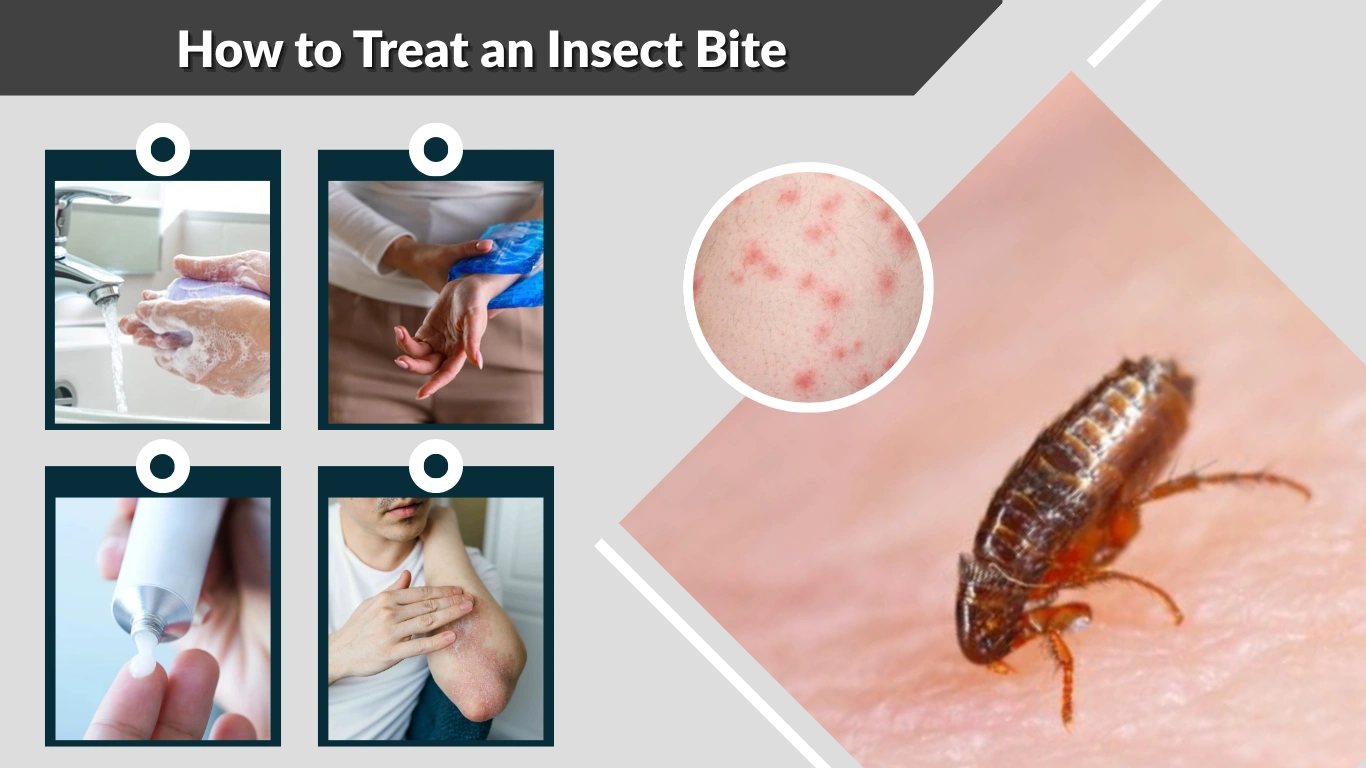
Insect bites are a part of outdoor life, but they can cause discomfort ranging from mild irritation to serious complications. While some bites fade within hours, others may result in swelling, blisters, pus, or infections that require more careful treatment. In certain cases, the location of the bite — such as near the eye or on a pet — makes treatment even more delicate. Knowing the right steps to take can ease pain, prevent infection, and promote faster healing.
General First Aid for Insect Bites

Before looking at specific complications, every insect bite should be treated with some basic first aid.
- Clean the area with mild soap and water to remove saliva, venom, or bacteria.
- Apply a cold compress for 10–15 minutes to reduce pain and swelling.
- Avoid scratching since this increases the risk of infection.
- Use topical creams such as calamine lotion or hydrocortisone for relief.
These simple measures are often enough for mild bites, but in other cases, more targeted care is needed.
How to Treat an Insect Bite with Swelling
Swelling is one of the most common reactions to insect bites. It occurs because histamines are released by the immune system in response to foreign proteins.
For mild swelling, cold compresses work best. Elevating the affected limb can also reduce fluid buildup. Oral antihistamines help if swelling is persistent or spreads. Swelling around sensitive areas like the face, lips, or eyes, however, should never be ignored as it may signal a more serious allergic reaction.
Most swelling subsides within two to three days. If it worsens or continues beyond a week, medical advice is recommended.
How to Treat an Insect Bite that Blisters

Sometimes insect bites develop into fluid-filled blisters. This is usually the body’s way of protecting the skin as it heals.
- Do not pop the blister. Breaking it increases infection risk.
- Cover it lightly with a sterile bandage if it’s in a spot prone to friction.
- Apply antibacterial ointment if the blister accidentally bursts.
The blister should gradually dry out and heal on its own. If redness or pus develops, infection may be present.
How to Treat an Insect Bite with Pus or Infection

Pus signals that bacteria have entered the bite, usually because of scratching. An infected bite is more serious and requires careful care.
Start by gently cleaning the area with warm water and mild soap. Applying an antibiotic ointment helps prevent the infection from worsening. If the bite is painful, hot to the touch, or accompanied by fever, medical attention is necessary. Doctors may prescribe oral antibiotics for more severe infections.
How to Treat an Insect Bite that Has Blistered and Scabbed
As blisters heal, they often scab over. This is normal and part of the skin’s repair process. The main goal is to protect the scab until it falls off naturally.
Keep the area clean and dry, and avoid picking at the scab. Moisturizing with a gentle, fragrance-free lotion can prevent itching and speed up recovery. If the scab becomes unusually red or starts producing discharge, infection may be developing.
Special Cases: Treating Bites in Sensitive Areas
On the Eyelid or Near the Eye
Bites near the eye are especially concerning because swelling in this area can interfere with vision. Treatment must be gentle:
- Apply a cold compress wrapped in a clean cloth.
- Take oral antihistamines to reduce swelling.
- Avoid using creams unless prescribed, as they may irritate the eyes.
If swelling spreads quickly or vision becomes blurred, seek medical care immediately.
On the Lips or Face
Bites on the face can cause noticeable swelling and discomfort. The treatment is similar to other areas: cold compresses, antihistamines, and avoiding scratching. However, because facial skin is more delicate, reactions may appear more severe. If swelling affects breathing or spreads rapidly, professional care is essential.
How to Treat an Insect Bite at Home

Many mild insect bites can be managed with simple home remedies that provide quick relief and reduce the risk of complications.
- Aloe vera gel soothes irritation and cools inflamed skin.
- Honey works as a natural antibacterial agent while reducing itching.
- Baking soda paste (mixed with water) neutralizes skin reactions.
- Oatmeal compresses or baths calm widespread irritation, especially helpful after multiple mosquito bites.
Over-the-counter options, such as calamine lotion or antihistamine tablets, can be used alongside natural methods for stronger relief.
How to Treat Insect Bites on Pets (Dogs as Example)
Dogs are also vulnerable to insect bites, particularly around their ears, belly, and paws.
Recognizing Bites on Dogs
- Excessive scratching or licking.
- Red bumps or swelling on exposed skin.
- Restlessness or whining.
Safe Treatments
Apply a cold compress to reduce swelling and soothe discomfort. Pet-safe creams or sprays, recommended by veterinarians, can also help. It’s important not to use human medications like hydrocortisone or antihistamines unless directed by a vet.
If swelling is severe, the dog has trouble breathing, or multiple stings are involved, immediate veterinary care is necessary.
When to Seek Medical Help
Most insect bites improve with home care, but certain warning signs require professional treatment.
Seek medical help if you notice:
- Severe swelling that spreads beyond the bite area.
- Signs of infection such as pus, spreading redness, or fever.
- Bites near sensitive areas like the eyes, lips, or inside the mouth.
- Multiple stings or bites at once, especially from bees or wasps.
- Symptoms of allergy, including hives, dizziness, or breathing difficulties.
In rare cases, insect bites can cause anaphylaxis, a life-threatening reaction requiring immediate emergency care and the use of epinephrine.
Prevention Tips
The best way to avoid painful or infected insect bites is prevention.
Outdoor Protection
- Wear long sleeves, trousers, and closed shoes when outdoors.
- Use insect repellents containing DEET, picaridin, or eucalyptus oil.
- Avoid strong fragrances, which can attract insects.
Indoor Protection
- Install screens on windows and doors.
- Use mosquito nets if sleeping in high-risk areas.
- Keep bedding and carpets clean to reduce fleas and bedbugs.
Consistent preventive habits not only reduce discomfort but also protect against insect-borne diseases.
FAQs
How long does it take for an insect bite to heal?
Most insect bites heal in 2–3 days, though swelling or blisters may take up to a week to resolve fully.
Is swelling from an insect bite normal?
Yes, mild swelling is a common immune response. However, rapid or severe swelling, especially near the face or throat, can indicate an allergic reaction.
Should you pop a blister caused by an insect bite?
No. Popping a blister increases the risk of infection. It should be left to heal naturally and covered if necessary.
What should I do if my insect bite has pus?
Clean the area gently, apply antibiotic ointment, and cover with a sterile bandage. If redness spreads or fever develops, seek medical attention.
How can I treat insect bites on my dog safely?
Use cold compresses and pet-safe creams. Never give human medications unless prescribed by a vet. If swelling is severe or your dog has trouble breathing, contact a veterinarian immediately.