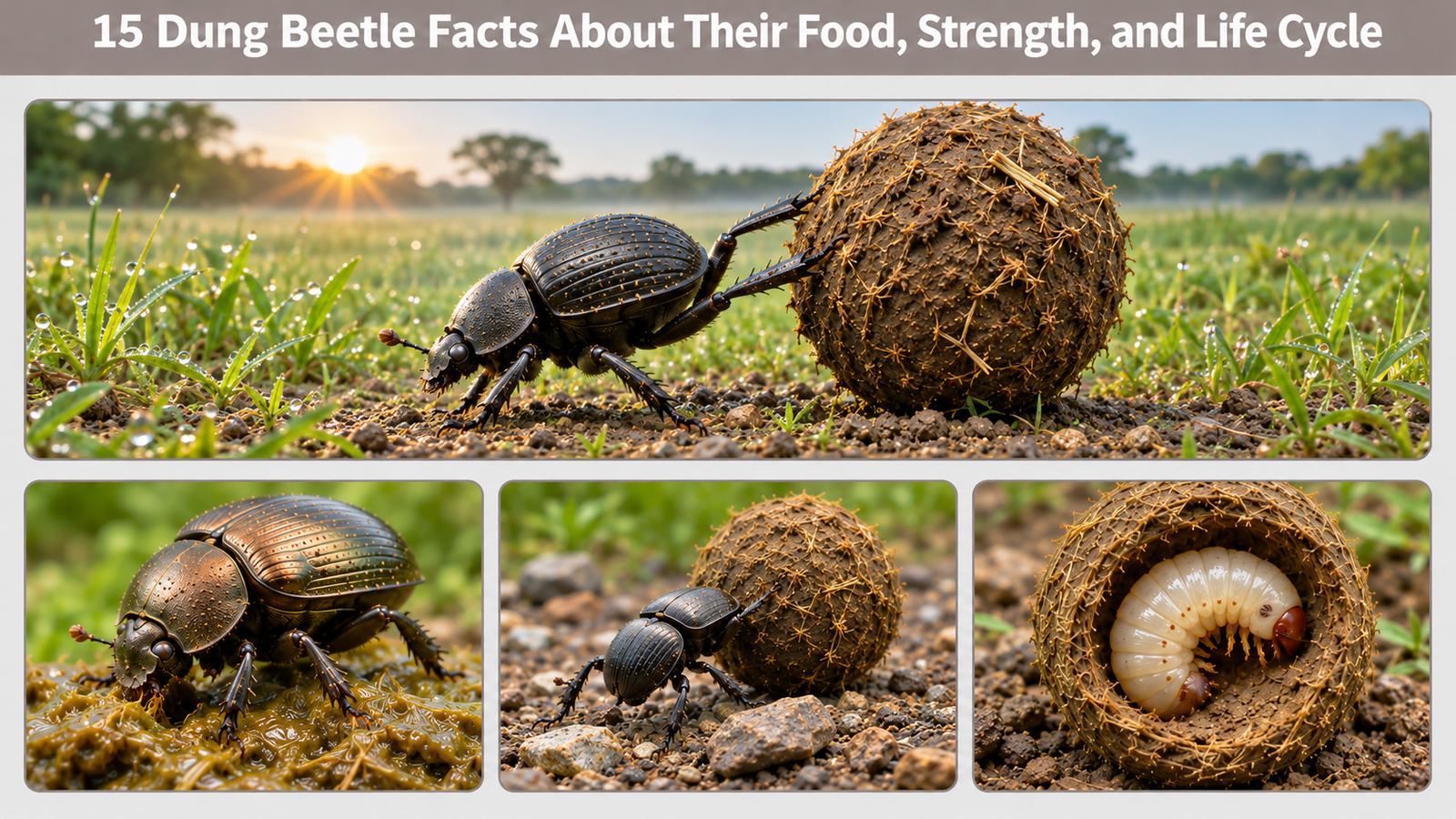
Dung beetles are famous for rolling balls of poop, but many spend their lives digging beneath manure or feeding directly inside it. They use dung as food, store it underground, and pack it into chambers where their young can grow. Some roll backward using their hind legs, while others stay close to the pile where they found their meal. Their work also affects the ground beneath them, moving organic matter into the soil and breaking up manure on the surface. These 15 dung beetle facts explain what they eat, how they raise their young, and where to look for signs of their activity.
1. Dung Beetles Are a Group of Beetles
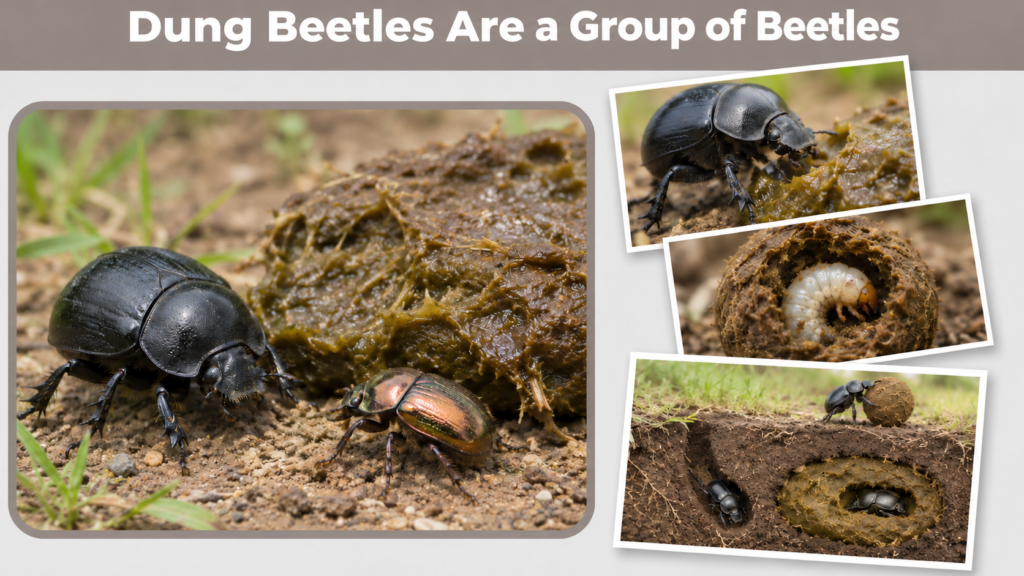
The name dung beetle describes many species that use animal droppings as a major resource. Many belong to the scarab beetle family and have a sturdy body, hardened wing covers, and strong legs. Their appearance varies widely. Some are round and shiny, while others have a dull surface or a more elongated body. Finding a beetle near manure gives you a clue about its identity, especially if you see it moving dung or digging beneath the pile.
2. Adult Dung Beetles and Their Larvae Feed Differently
Adult dung beetles commonly feed on liquids and fine particles in manure. These portions can contain nutrients even after the animal that produced the dung has digested its food. Dung beetle larvae can eat the solid material stored for them in a nest, including coarser matter than adults typically consume. This difference helps explain why fresh, moist droppings can attract adult beetles even though their young may develop inside compact balls of dung underground.
3. Many Dung Beetles Never Roll a Ball
Dung beetles are commonly grouped as rollers, tunnelers, and dwellers according to how they handle dung. Rollers carry a portion away by pushing it across the ground. Tunnelers dig under or beside the pile and take dung into their burrows. Dwellers use the manure where it falls, feeding or developing within it. A single pasture can support all three groups, so watching only for rolling balls can make you miss most of the activity.
| Dung beetle group | What it does | Where to look |
|---|---|---|
| Rollers | Shape a ball and move it away | Bare ground or short grass near fresh dung |
| Tunnelers | Carry dung into burrows | At the base or around the edges of a dung pile |
| Dwellers | Use dung where it falls | Inside the manure or directly beneath it |
4. Rolling a Ball Helps a Beetle Get Away From Competitors
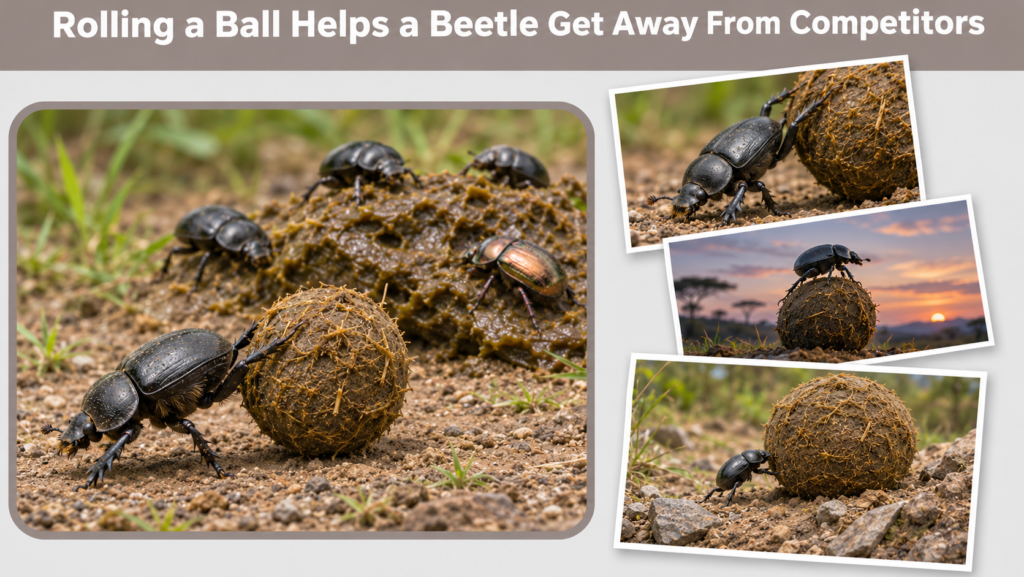
Fresh dung can attract several beetles, as well as flies and other insects. A roller cuts off a piece, shapes it into a ball, and leaves with its share. Moving away quickly can reduce encounters with beetles that might steal the load. Once the roller is farther from the pile, it can search for soil suitable for burial. The ball’s rounded shape keeps the dung together as the beetle crosses uneven ground.
5. Dung Beetles Push With Their Hind Legs
A ball roller usually faces away from the ball and pushes it with its hind legs while moving backward. Its front legs brace against the ground, giving it leverage to keep the load moving. If the ball hits a pebble or slips into a rut, the beetle may pause and change its grip. Watching from the side makes the posture easier to see, especially when the beetle tackles a small obstacle.
6. Some Dung Beetles Use the Sky to Stay on Course
A dung beetle may climb onto its ball and turn around before rolling again. This movement is often called a dung beetle dance, and it can help the beetle get its bearings. Some species use cues from the sun or night sky to hold a steady course. A fairly straight path takes the roller away from the crowded dung pile, where rivals are more likely to challenge it for the ball.
7. Some Species Can Move Loads Much Larger Than Their Bodies
A dung ball can look enormous beside the beetle pushing it. A roller’s grip and body position help it move the load, while the ball’s rounded shape lets it roll over the ground. Tunnelers put their strength to a different use. They push through soil and carry dung into chambers beneath the surface. The size of the load a beetle can handle depends on its species, the terrain, and the condition of the dung.
8. A Dung Ball Can Be Food or a Nursery
Some dung balls are buried so adults can feed on them later. During breeding, beetles may shape dung into a brood ball, which contains a chamber for an egg. In some species, the adult reshapes a rolled ball after burying it or divides the dung into smaller portions for separate brood balls. A single ball seen on the surface can therefore end up as an adult meal or supply food for developing young.
9. Dung Beetle Larvae Grow Up With Their Food Around Them
A dung beetle goes through four life stages: egg, larva, pupa, and adult. After an egg hatches in a brood ball, the pale, curved larva feeds on the dung around it. The chamber provides shelter while the larva grows and eventually pupates. The young beetle emerges as an adult after completing its development. How long this takes varies by species and conditions such as temperature and moisture.
10. Dung Beetles Don’t All Prefer the Same Animal’s Droppings
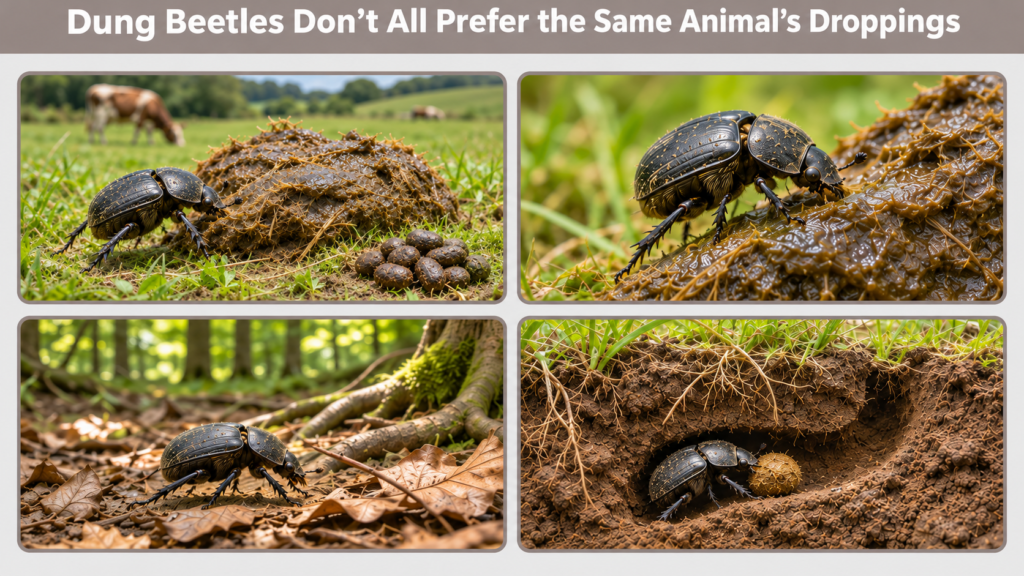
Cattle manure is a familiar place to find dung beetles, but different species may use droppings from horses, sheep, deer, or other mammals. The animal’s diet affects the texture and moisture of its dung. A moist cowpat and a pile of dry pellets, for example, offer very different conditions for feeding and nesting. Which droppings attract beetles in your area depends on the animals present and the species that live nearby.
11. Fresh Dung Is Easier for Many Beetles to Use
A fresh pile usually contains more moisture than an old one, which matters to adults that feed on liquid and fine particles. It can also be easier for rollers to shape and for tunnelers to break into pieces. On a hot, dry day, the surface of a dung pat may form a crust while the underside stays moist. That’s one reason you might see little activity on top even when beetles are working beneath it.
12. Dung Beetles Live in More Than Just Pastures
Pastures offer a steady supply of manure where livestock graze, but dung beetles also live in forests, grasslands, and other habitats where wild animals leave droppings. Some species are active during the day, while others emerge after dark. Soil conditions matter, too. A tunneler needs ground it can dig into, and a roller still needs somewhere to bury its ball once it leaves the pile.
13. Burying Manure Moves Nutrients Into the Soil
When dung beetles take manure underground, they move organic matter from the surface into the soil. As the buried dung breaks down, it adds nutrients below ground. Tunneling also creates small channels through which water can enter. In a pasture, breaking up manure deposits can reduce the area covered by intact dung pats. Small holes and loose mounds of soil beside a pat can be signs that beetles have been working underneath.
14. Dung Beetles Can Reduce Fly Breeding Opportunities
Some flies lay their eggs in fresh manure, where their larvae feed as they grow. Dung beetles can reduce the amount of suitable material available by breaking up the pile or burying portions of it. The effect depends on which insects are present and how quickly the beetles get to work. A pasture can still have flies even when dung beetles are active, especially where fresh droppings are constantly available.
15. Dung Beetles Sometimes Fight Over Prepared Balls
Shaping a ball takes time, so a rival may try to take over one that’s already made. When two beetles struggle over a ball, they may push against each other or try to pull the load in opposite directions. Two beetles near the same ball can also be a breeding pair. The way they move gives you a better clue: repeated pushing and dislodging suggests competition, while coordinated movement can indicate cooperation.
Frequently Asked Questions
Can dung beetles fly?
Yes, many dung beetles can fly. They lift their hardened wing covers to unfold the flight wings underneath. Flying helps them reach fresh droppings scattered across a pasture or other habitat.
What do dung beetles look like?
Many have a rounded or oval body, short antennae with clubbed tips, and legs built for digging or gripping. Black and brown beetles are common, but some species have metallic green, blue, or bronze coloring.
Why do dung beetles roll poop backward?
Rolling backward lets a beetle push the ball with its hind legs while using its front legs to brace against the ground. This gives it traction as the ball moves over soil, stones, and short grass.
Do dung beetles use dog poop?
Some species will use dog droppings if they find them. Others are more often associated with the manure of grazing animals. The beetles present in your area determine whether you’re likely to see them around pet waste.
Where is the best place to see dung beetles?
Look near fresh manure in a pasture where you have permission to walk. Check the edges of the pile and nearby bare ground. Rollers are easiest to spot in the open, while small holes around the pile can point to tunnelers.