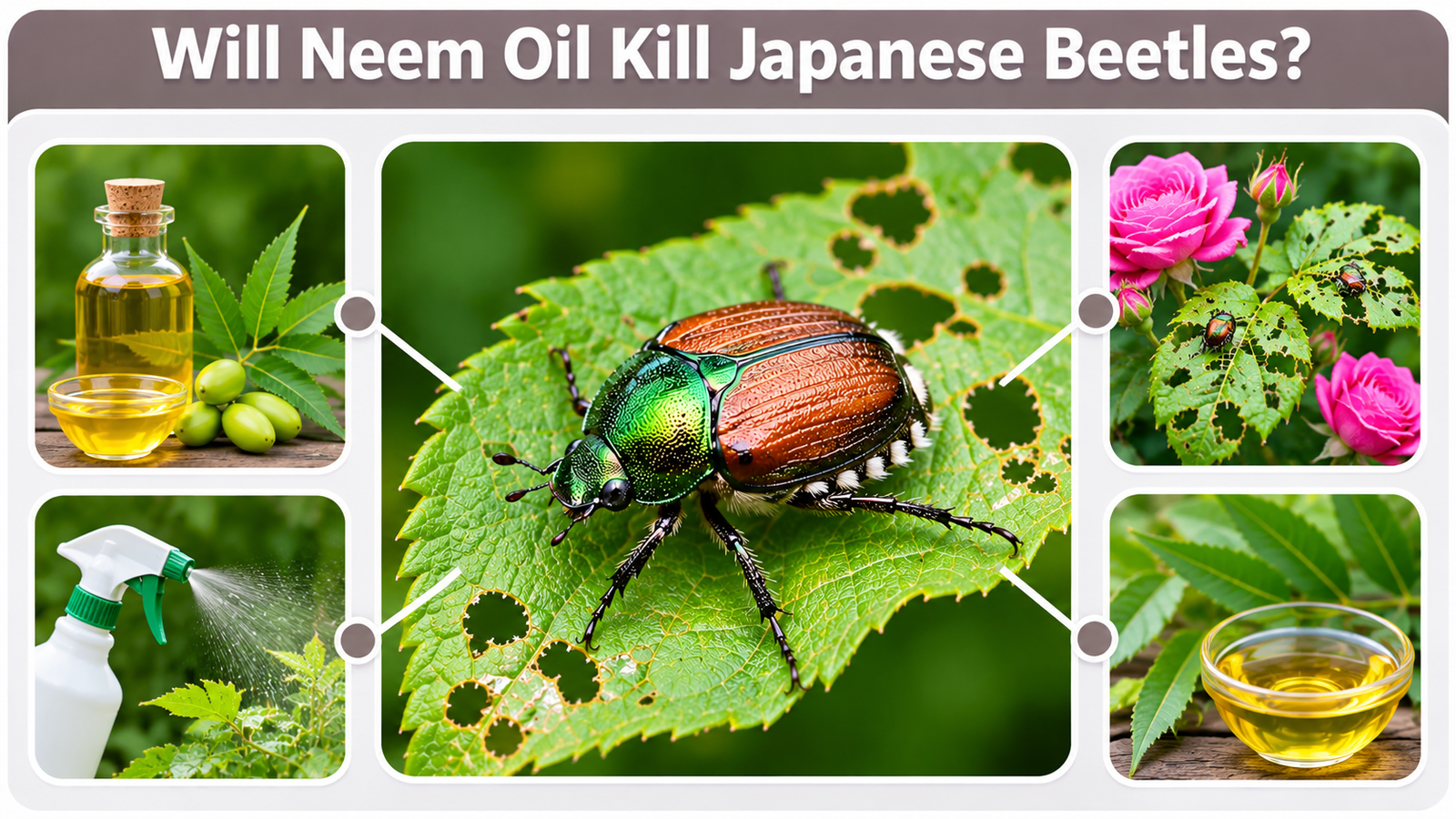
Neem oil is a popular natural insecticide used to protect gardens from destructive pests, including Japanese beetles. But will neem oil kill Japanese beetles, or does it simply keep them away? The answer depends on the type of neem product, application method, and severity of the infestation. Neem oil can discourage adult beetles from feeding, but it is not a dependable contact killer. Understanding how neem oil works, when to spray it, and its limitations can help you protect roses, vegetables, and ornamental plants more effectively.
Will Neem Oil Kill Japanese Beetles?
Neem oil can help control Japanese beetles, but it generally works better as a feeding deterrent than as a direct insect killer. These metallic green and copper-colored beetles have tough outer bodies, making them difficult to control with many natural sprays. Neem products offer temporary protection, particularly when beetle populations are low. However, they rarely eliminate an established infestation.
Does Neem Oil Kill Adult Japanese Beetles?
Neem oil does not reliably kill adult Japanese beetles on contact. Clarified neem oil products can affect certain insects through direct contact, but mature Japanese beetles are comparatively difficult to kill.
Neem-based products containing azadirachtin may interfere with feeding and other biological processes. This can reduce damage without immediately killing the insects.
If beetles are already covering your plants, neem oil alone is unlikely to provide satisfactory control.
How Does Neem Oil Affect Japanese Beetles?
Neem products can make treated foliage less attractive to feeding beetles.
Their main effects include:
- Feeding deterrence: Beetles may avoid eating treated leaves.
- Temporary protection: Applications can reduce feeding for several days.
- Developmental effects: Azadirachtin can interfere with growth and development in susceptible immature insects.
- Reduced plant damage: Less feeding can help preserve healthy foliage.
Results depend on the formulation and application conditions. Neem products should not be expected to prevent every beetle from landing on plants.
Will Neem Oil Repel Japanese Beetles?
Yes, neem oil can temporarily deter Japanese beetles from feeding on treated plants. However, its repellent effect is limited and gradually declines after application.
Neem-based treatments are generally most useful when beetles first appear. Regular monitoring and repeat applications may be necessary during the summer feeding season.
How to Use Neem Oil for Japanese Beetles
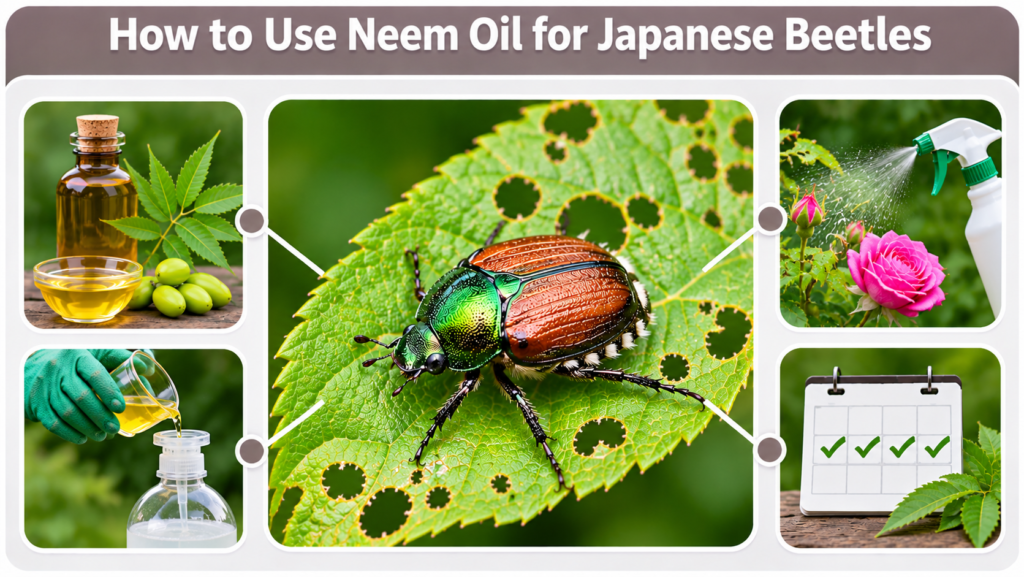
Applying neem oil correctly can improve its effectiveness while reducing the risk of plant damage. Always use a commercially formulated neem product labeled for the plants and pests being treated. Different neem products contain different active ingredients and concentrations. Following the instructions carefully is especially important when treating roses, vegetables, fruit trees, or plants visited by pollinators.
Choose the Right Neem Oil Product
Not every neem oil product works the same way. Some contain clarified hydrophobic extract of neem oil, while others contain azadirachtin extracted from neem seeds.
Before purchasing a product:
- Check whether Japanese beetles are listed on the label.
- Confirm that the product is approved for your plants.
- Read the dilution and application instructions.
- Check restrictions for edible crops.
- Review pollinator and environmental precautions.
Avoid assuming that pure neem oil and concentrated commercial insecticides require the same mixing instructions.
Apply Neem Oil to Infested Plants
A properly applied neem spray can temporarily reduce Japanese beetle feeding.
Follow these steps:
- Inspect leaves and flowers for adult beetles.
- Remove visible beetles by hand when practical.
- Prepare the neem product according to its label.
- Test a small area of foliage for sensitivity.
- Spray the permitted plant surfaces evenly.
- Avoid spraying during extreme heat or strong sunlight.
- Monitor plants for additional beetle activity.
Evening applications may reduce exposure to active pollinators. Never spray bees directly or apply products contrary to label restrictions.
How Often Should You Spray Neem Oil?
Neem oil typically provides only short-term protection against Japanese beetles.
Some extension recommendations indicate approximately three to four days of feeding deterrence, although effectiveness varies.
Continue monitoring after application and repeat treatment only at the intervals permitted by the product label.
Heavy rainfall, new plant growth, and continued beetle arrivals can reduce the usefulness of previous applications.
Why Neem Oil Sometimes Fails Against Japanese Beetles
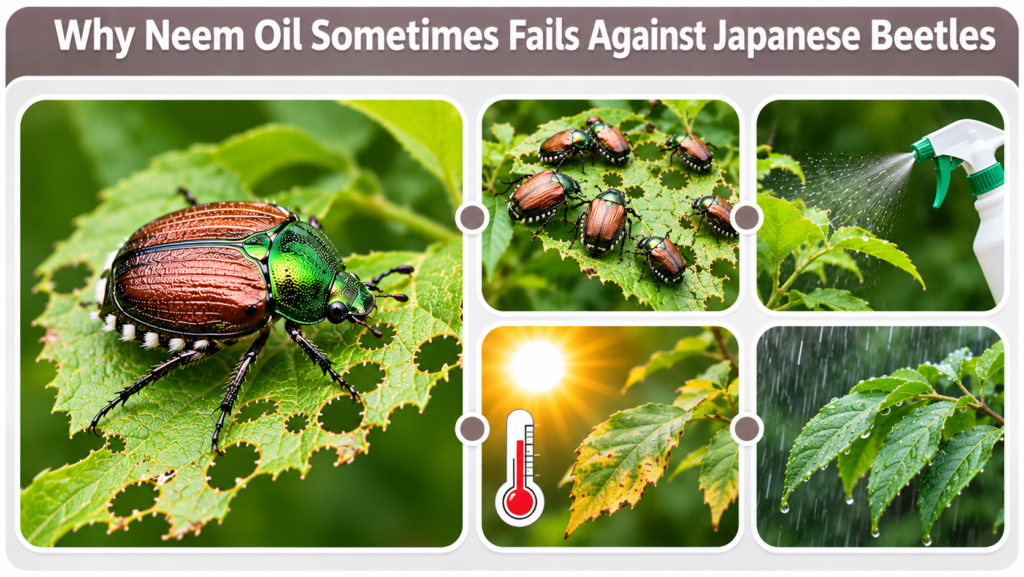
Neem oil is not a complete solution for every Japanese beetle infestation. Its performance depends on beetle numbers, product formulation, coverage, weather, and plant conditions. Understanding these limitations can prevent unnecessary applications and help gardeners choose more effective control methods. When adult beetles appear in large groups, combining neem treatments with physical removal is usually more practical than spraying alone.
Heavy Japanese Beetle Infestations
Adult Japanese beetles often feed together on roses, grapevines, fruit trees, and ornamental shrubs.
Damaged leaves can attract additional beetles, making infestations increasingly difficult to manage.
Neem oil may temporarily discourage feeding, but large groups can continue damaging plants despite treatment.
Handpicking beetles and protecting valuable plants with fine netting can provide more immediate results.
Common Neem Oil Application Mistakes
Several mistakes can reduce effectiveness or damage plants.
- Applying neem oil without checking the product label.
- Expecting it to kill adult beetles immediately.
- Spraying sensitive plants during hot weather.
- Using an incorrect concentration.
- Spraying open flowers visited by bees.
- Depending entirely on neem oil during heavy infestations.
Correct application improves consistency, but no neem treatment guarantees complete Japanese beetle control.
What Works Better Than Neem Oil for Japanese Beetles?
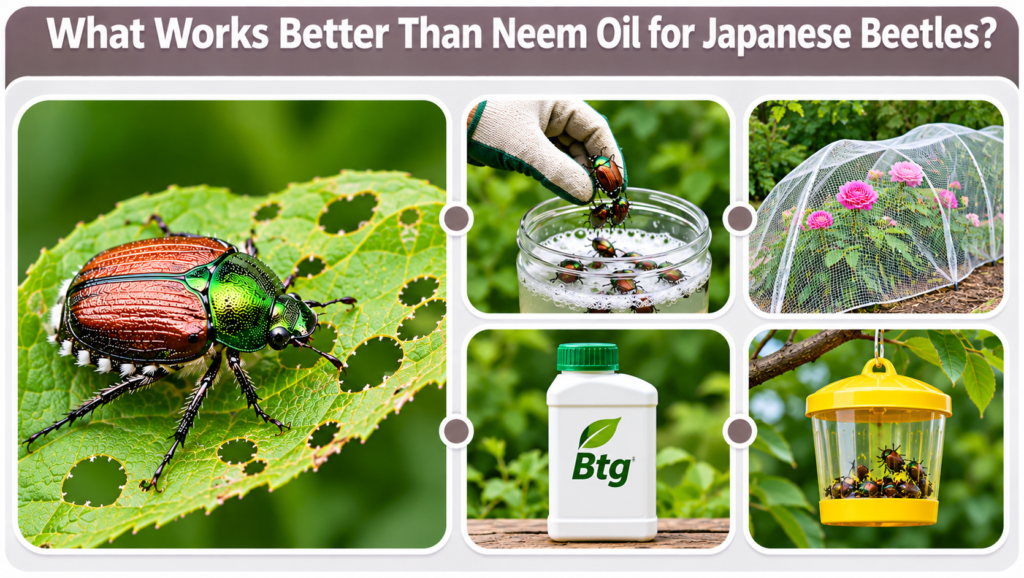
When neem oil provides insufficient protection, gardeners can combine several additional control methods. Physical removal works well for small infestations, while protective barriers prevent beetles from reaching vulnerable foliage. Some biological insecticides also provide useful control. Choosing the right approach depends on the plant species, infestation severity, and whether beneficial insects are present.
Remove Japanese Beetles With Soapy Water
Handpicking remains one of the simplest ways to remove adult Japanese beetles.
For effective removal:
- Inspect plants during the cooler morning hours.
- Place a bucket of soapy water beneath infested foliage.
- Shake or knock beetles into the water.
- Repeat regularly while beetles remain active.
The soapy water prevents captured beetles from escaping and allows them to drown.
Protect Plants With Fine Netting
Fine-mesh garden netting prevents Japanese beetles from feeding on covered plants.
This method is particularly helpful for small shrubs, vegetables, and valuable ornamentals.
Secure the netting around the entire plant without crushing leaves or flowers.
Remove barriers when pollinators need access to flowering crops, or install them after pollination when appropriate.
Consider Biological Insecticides
Products containing Bacillus thuringiensis galleriae (Btg) can help control adult Japanese beetles.
These bacterial insecticides may provide longer protection than neem-based feeding deterrents.
Spinosad is another biologically derived insecticide that can control adult beetles, although it can harm bees and other beneficial insects.
Always select a product specifically labeled for Japanese beetles and follow its application and environmental safety instructions.
FAQs
Will Neem Oil Kill Japanese Beetles on Contact?
Neem oil is not a reliable contact killer for adult Japanese beetles. Its primary benefit is discouraging feeding on treated foliage. Some neem formulations have insecticidal properties, but they should not be expected to kill adult beetles immediately. Handpicking provides faster removal.
Will Neem Oil Keep Japanese Beetles Off Roses?
Neem oil can temporarily reduce Japanese beetle feeding on rose leaves. However, it cannot completely prevent beetles from landing on roses or damaging flowers. Regular handpicking and protective barriers may be necessary during heavy infestations. Avoid spraying open blooms visited by pollinators.
How Long Does Neem Oil Work Against Japanese Beetles?
Neem oil may discourage Japanese beetle feeding for approximately three to four days. Its effectiveness depends on the product, weather, and infestation level. Repeat treatments may be necessary, but always follow the manufacturer’s application intervals rather than using an automatic spraying schedule.
Will Neem Oil Harm Bees and Beneficial Insects?
Neem products generally present less risk to bees than many broad-spectrum insecticides, but they are not completely harmless. Direct spraying, certain formulations, and improper application can affect beneficial organisms. Avoid spraying active pollinators and flowering plants, and follow all product-specific environmental restrictions.
What Is the Best Natural Alternative to Neem Oil?
Handpicking Japanese beetles into soapy water is often the best alternative for small gardens. Fine-mesh netting also provides dependable physical protection. For larger infestations, appropriately labeled biological treatments containing Bacillus thuringiensis galleriae may provide additional control without relying on conventional broad-spectrum insecticides.