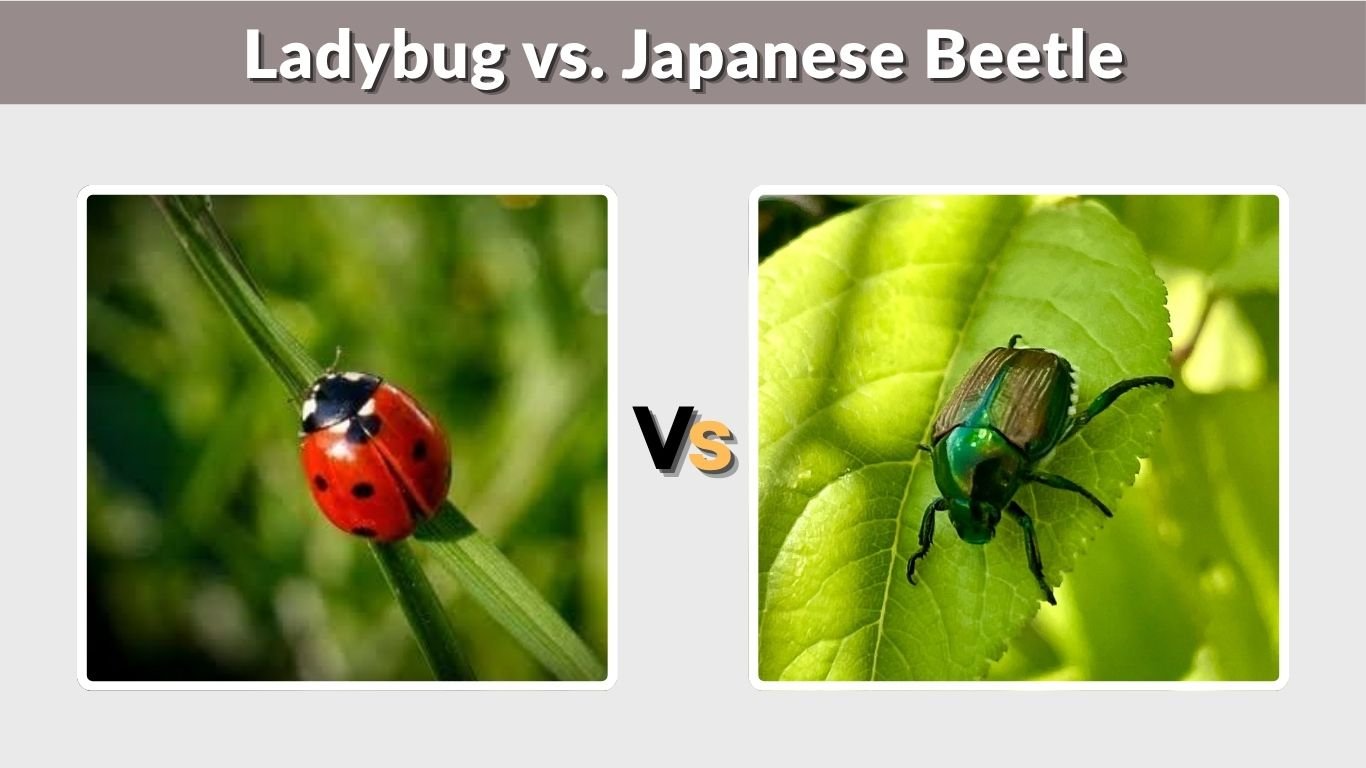
Ladybugs and Japanese beetles may look similar at first glance, but they have very different appearances, feeding habits, and effects on gardens. Ladybugs are generally beneficial insects that eat aphids and other soft-bodied pests, while Japanese beetles are destructive plant feeders known for damaging leaves, flowers, and lawns. Both belong to the order Coleoptera, but they come from different beetle families. Understanding their colors, sizes, diets, and behaviors can help gardeners identify these insects correctly and protect valuable plants.
What Is the Difference Between a Ladybug and Japanese Beetle?
The main difference between a ladybug and a Japanese beetle is their appearance and feeding behavior. Ladybugs are usually small, rounded beetles with red, orange, yellow, or black wing covers. Japanese beetles have metallic green bodies and copper-brown wing covers. Most ladybugs help control garden pests, while Japanese beetles damage plants by feeding on their foliage.
What Is a Ladybug?
A ladybug, also called a lady beetle or ladybird, belongs to the family Coccinellidae. There are thousands of ladybug species worldwide, with different colors, sizes, and markings.
Many ladybugs feed on aphids, scale insects, and other small pests. Their beneficial feeding habits make them valuable insects in gardens and agricultural landscapes.
What Is a Japanese Beetle?
The Japanese beetle (Popillia japonica) belongs to the family Scarabaeidae. It is native to Japan but has become an invasive agricultural and garden pest in North America.
Adult Japanese beetles feed on leaves, flowers, and fruits, while their larvae consume grass roots underground.
Ladybug vs. Japanese Beetle Identification

Although both insects are beetles, their physical characteristics make them relatively easy to distinguish. Ladybugs usually have rounded, dome-shaped bodies with distinctive spots or contrasting markings. Japanese beetles are slightly elongated and have shiny metallic colors. Their wing patterns, body sizes, and antennae also provide useful identification clues.
Physical Appearance and Size
Important differences include:
- Ladybug size: Most familiar species measure approximately 4–8 mm long.
- Japanese beetle size: Adults generally measure 8–11 mm long.
- Ladybug color: Usually red, orange, yellow, or black, depending on the species.
- Japanese beetle color: Metallic green head and thorax with copper-brown wing covers.
- Ladybug markings: Many species have black spots, although some have no spots.
- Japanese beetle markings: Five white hair tufts along each side of the abdomen and another pair near the rear.
- Body shape: Ladybugs are generally more rounded and dome-shaped, while Japanese beetles have a broader oval appearance.
Ladybug vs. Japanese Beetle Comparison
| Feature | Ladybug | Japanese Beetle |
| Family | Coccinellidae | Scarabaeidae |
| Body shape | Rounded, dome-shaped | Oval |
| Color | Red, orange, yellow, or black | Metallic green and copper |
| Main diet | Soft-bodied insects | Plant material |
| Garden role | Usually beneficial | Destructive pest |
| Larvae | Elongated, often spiny | C-shaped white grubs |
| Plant damage | Usually minimal | Can be extensive |
What Do Ladybugs and Japanese Beetles Eat?

Ladybugs and Japanese beetles have significantly different diets. Many ladybug species are predators that consume harmful garden insects, while Japanese beetles primarily feed on living plants. Their feeding habits explain why gardeners generally welcome ladybugs but often need to manage Japanese beetle populations.
What Do Ladybugs Eat?
Most predatory ladybugs feed on small insects and other arthropods. Common food sources include:
- Aphids: One of the most important prey groups for ladybugs.
- Scale insects: Certain ladybug species specialize in feeding on scale pests.
- Mealybugs: Some species consume these soft-bodied plant pests.
- Mites: Certain ladybugs feed on spider mites.
- Insect eggs: Some species eat the eggs of other insects.
Ladybugs may also consume pollen and nectar, depending on their species and food availability.
What Do Japanese Beetles Eat?
Adult Japanese beetles feed on hundreds of plant species, including roses, grapes, raspberries, Japanese maples, and linden trees.
They often chew the tissue between leaf veins, leaving a skeletonized appearance. Their larvae feed on grass roots and can damage lawns when present in large numbers.
Ladybug vs. Japanese Beetle Life Cycle
Both ladybugs and Japanese beetles undergo complete metamorphosis, meaning they develop through egg, larva, pupa, and adult stages. However, their immature forms have very different appearances and feeding habits. Ladybug larvae usually live above ground, while Japanese beetle grubs develop beneath the soil surface.
Ladybug Life Cycle
Female ladybugs typically lay clusters of eggs on plants near available insect prey. After hatching, the larvae begin feeding on aphids or other suitable insects.
The larvae grow through several stages before pupating on vegetation. Adults emerge after metamorphosis and continue feeding and reproducing. Many species produce multiple generations annually.
Japanese Beetle Life Cycle
Female Japanese beetles lay eggs in the soil during summer. The eggs hatch into white, C-shaped grubs that feed on grass roots.
The grubs typically overwinter underground and resume development in spring. Adults usually emerge during early summer, with the timing depending on temperature and geographical location.
Are Ladybugs or Japanese Beetles Harmful to Gardens?

Ladybugs and Japanese beetles play opposite roles in most garden ecosystems. Ladybugs help reduce populations of pests that damage crops and ornamental plants. Japanese beetles can cause noticeable damage through their feeding activities, particularly when large numbers gather on susceptible plants.
Benefits of Ladybugs in Gardens
Ladybugs provide several important benefits:
- Reduce aphid populations naturally.
- Help control certain scale insects and mealybugs.
- Support biological pest management.
- Reduce dependence on broad-spectrum insecticides.
- Contribute to garden biodiversity.
However, not every ladybug species has the same diet. Some members of the family feed on plants rather than other insects.
Damage Caused by Japanese Beetles
Japanese beetles can damage roses, fruit trees, vegetable crops, and ornamental plants.
Adult feeding creates irregular holes or skeletonized leaves. Severe infestations may cause extensive defoliation, particularly on young or weakened plants. Underground grubs can damage turfgrass roots, resulting in brown patches and weakened lawns.
Asian Lady Beetle vs. Japanese Beetle
Asian lady beetles and Japanese beetles are sometimes confused because both originated in Asia and are now widespread in parts of North America. However, they are different insects with distinct appearances and feeding behaviors. The multicolored Asian lady beetle is actually a type of ladybug, while the Japanese beetle belongs to the scarab beetle family.
How to Identify an Asian Lady Beetle
The multicolored Asian lady beetle (Harmonia axyridis) often has orange, red, yellow, or black wing covers. A characteristic black M-shaped or W-shaped marking may appear on the pale area behind its head.
It primarily feeds on aphids but can become a household nuisance when large numbers enter buildings during autumn.
Japanese Beetle vs. June Bug
June bugs are another group of beetles frequently confused with Japanese beetles. Many common June beetles are larger and brown, while Japanese beetles have metallic green and copper-colored bodies.
June beetles often fly around lights at night. Japanese beetles are primarily active during daylight and commonly gather on plants to feed.
How to Control Japanese Beetles Without Harming Ladybugs

Protecting beneficial insects is important when managing Japanese beetles. Broad-spectrum insecticides may kill ladybugs and other natural predators along with the target pests. Gardeners should identify the insects correctly before applying treatments and prioritize methods that minimize unnecessary harm.
Safe Japanese Beetle Management Tips
- Handpick beetles: Remove Japanese beetles from plants and drop them into soapy water.
- Inspect plants regularly: Check roses, grapes, and other susceptible plants during summer.
- Protect valuable plants: Use suitable physical barriers where practical.
- Avoid unnecessary spraying: Broad-spectrum insecticides can harm beneficial insects.
- Monitor lawn grubs: Treat only when grub populations and damage justify intervention.
- Encourage natural predators: Provide habitat for birds and beneficial insects.
Should You Kill Ladybugs?
Generally, no. Most ladybugs are beneficial predators that help control harmful garden insects.
Even multicolored Asian lady beetles provide pest-control benefits outdoors, although they may become nuisances indoors. Correct identification helps avoid unnecessarily removing helpful insects.
FAQs
1. Are Ladybugs and Japanese Beetles the Same?
No. Ladybugs belong to the family Coccinellidae, while Japanese beetles belong to Scarabaeidae. Ladybugs are generally beneficial predators that eat aphids and other soft-bodied insects. Japanese beetles primarily feed on plants and can cause significant garden damage.
2. Do Ladybugs Eat Japanese Beetles?
Ladybugs are not important predators of adult Japanese beetles. Most predatory ladybugs feed on smaller, soft-bodied insects such as aphids. They generally do not attack large adult scarab beetles, so releasing ladybugs is not an effective Japanese beetle control method.
3. What Beetle Looks Like a Ladybug?
The multicolored Asian lady beetle resembles many familiar ladybugs because it is itself a ladybug species. Its coloration ranges from yellow and orange to red or black. Many individuals have a distinctive dark M-shaped marking behind their heads.
4. Are Japanese Beetles More Dangerous Than Ladybugs?
Japanese beetles are more damaging to plants because they consume leaves, flowers, and fruits. Ladybugs generally benefit gardens by feeding on harmful insects. Neither group is typically dangerous to humans, although some lady beetles can occasionally deliver minor bites.
5. How Can You Tell a Japanese Beetle From a Ladybug?
Look at the body color, shape, and markings. Japanese beetles have metallic green bodies, copper-brown wing covers, and distinctive white hair tufts along their abdomen. Ladybugs are usually more rounded, with red, orange, yellow, or black wing covers that may have spots.